We're going to tell you how to automatically back up your phone's photos to Proton Drive. We'll cover more than just the process. on iOS and Androidbut also of the advantages which it offers compared to traditional solutions (iCloud and Google). In the end, you'll understand why Proton and its services continue to gain ground.
How to automatically back up photos from your mobile phone to Proton Drive
There's no doubt: our mobile phones have become the ultimate family albumThat's where we store everything: our children's first steps, dream trips, and everyday moments we don't want to lose. However, relying exclusively on a device's internal memory is a risk that sooner or later takes its toll: loss, theft, breakage, or simply running out of space.
The solution to this problem is automatic cloud backups. And if you're also worried about who might see those photos, Proton Drive It is the most robust alternative to traditional solutions like Google Drive or iCloud. This is thanks to its end-to-end encryptionAre you interested in learning how to automatically back up your mobile phone photos to Proton Drive?
How to enable automatic backup on Android
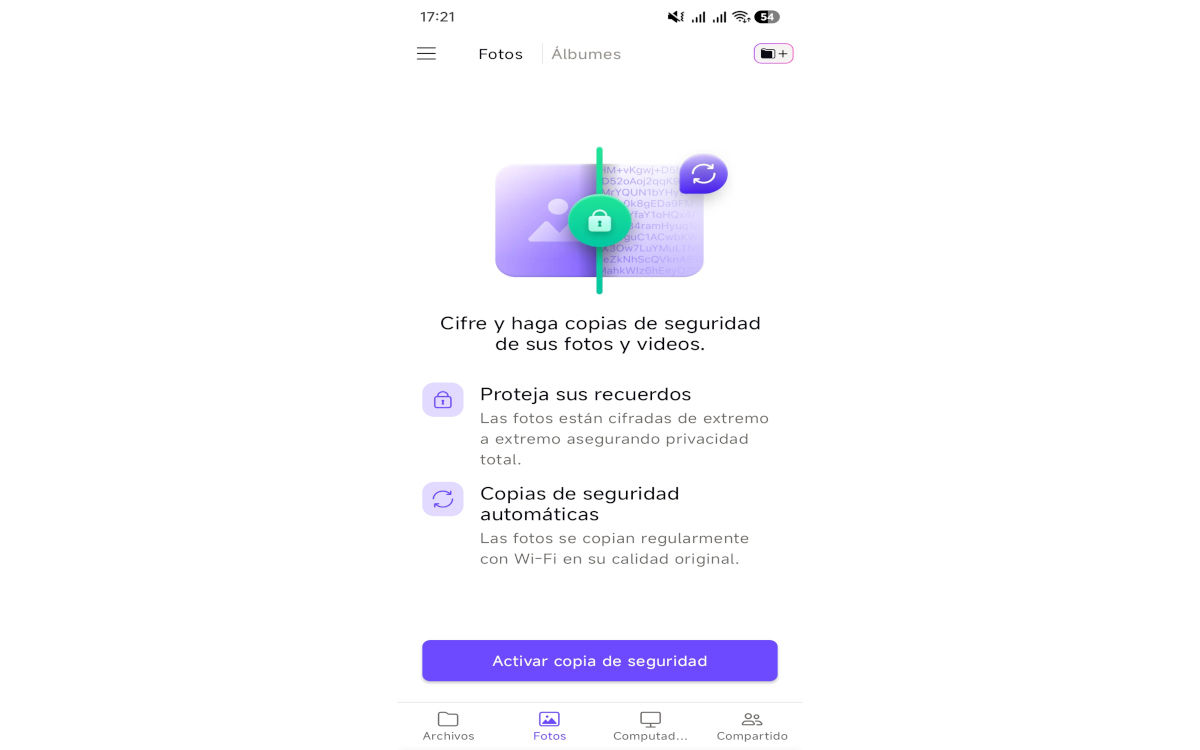
Let's start by automatically backing up your phone's photos to Proton Drive from an Android device. The process is simple, although there are a few things to keep in mind. Details to ensure the copy is completed without interruption.
First, download the official Proton Drive app from the Google Play Store and log in with your Proton account. Once logged in, you'll see a tab at the bottom called Photos. When you tap it, the app will display a button to activate backup.
When you press that button, Proton Drive will begin encrypting and uploading the photos from your library. You'll see a progress bar indicating how many items remain to be copied. The process can take quite a while if you have a large photo library, so it's recommended to wait. Have your mobile phone charging and connected to a stable Wi-Fi network.
Make a complete and uninterrupted automatic backup of your mobile photos to Proton Drive.

By default, Proton Drive only copies photos that are in the camera folder. If you have images in other folders (for example, Downloads or WhatsApp screenshots), you will need to... add it manually. As?
To do this, open the sidebar by tapping the menu icon, then enter Settings and select Photo backupIn the section Load fromActivate the switch for each folder you want to include. It's quite simple and gives you granular control over which photos to include in the copy.
Finally, a couple of tips for automatically backing up your mobile photos to Proton Drive without interruption. Due to how the system manages background tasks, Backups work faster during the day than at night.
Furthermore, if forces the application to closeThe copying process may stop. To prevent this, you can Disable battery optimization for Proton Drive in your phone's settings. This will automatically back up your phone's photos to Proton Drive as quickly and easily as possible.
How to enable automatic backup on iPhone
On iOS, the process is just as straightforward. After installing the app from the App Store and logging in, go to the Photos tab and tap Enable Backup. The system will ask for permission to access your photos. It's essential that you select Allow full accessOtherwise, Proton Drive will only be able to see a limited selection of the images, and the copy will not be complete.
Once permission is granted, the app will begin automatically backing up your phone's photos to Proton Drive. As with Android, this process can take some time, especially if you have a large photo library. Also, It's best to leave the app running in the background instead of forcing its closure, as the latter may stop the copying process completely.
If you're coming from iCloud and want to stop relying on Apple's service, you can disable iCloud backup Once Proton Drive has finished uploading your photos, go to Settings, tap your name, enter iCloud, select Storage, and choose the option to disable and delete photos from iCloud.
Advantages of automatically backing up your mobile photos to Proton Drive
Why is it worth automatically backing up your phone's photos to Proton Drive instead of sticking with Google Photos or iCloud? The answer lies in control. With Proton Drive, your photos are truly yours. no one else can access themnot even the company that stores them. This is especially relevant if you're uncomfortable with the idea of an algorithm analyzing your memories to show you ads or train AI models.
Another advantage is that Proton has built a Complete ecosystem including email, VPN, password manager and calendarAll these services operate under the same privacy philosophy that characterizes the company. So, automatically backing up your mobile photos to Proton Drive allows you to manage your digital life more effectively.
Of course, like any tool, Proton has its limitations. The free space is 5 GBEnough to try the service, but insufficient if you have thousands of photos. Paid plans start at 200 GB and increase in size; plans starting at 500 GB also include a VPN. On the other hand, the app's interface is functional, but not as polished as Google Photos' and could be improved in terms of synchronization speed.
However, if you prioritize privacy over speed or need to use other services within a single ecosystem, Proton Drive comes out on top. It offers the perfect balance between the convenience of automatic backups and the peace of mind of knowing your photos are safe. end-to-end encryptedAnd the setup process takes just a few minutes, and once activated, you can forget about it: your memories will be safe, in your private cloud.

From a young age, I've been fascinated by all things scientific and technological, especially those advancements that make our lives easier and more enjoyable. I love staying up-to-date on the latest news and trends, and sharing my experiences, opinions, and tips about the devices and gadgets I use. This led me to become a web writer a little over five years ago, focusing primarily on Android devices and Windows operating systems. I've learned to explain complex concepts in simple terms so my readers can easily understand them.