- Selection of language-independent board games based on easily recognizable icons, colors, and patterns.
- Options for playing with children who cannot yet read, with international groups or as a family without the need for complex rules.
- Recommendations divided by type of experience: abstract, family, party, cooperative and flicking games.
- Tips for choosing an edition, getting rules online, and adapting text-based games for multilingual tables.
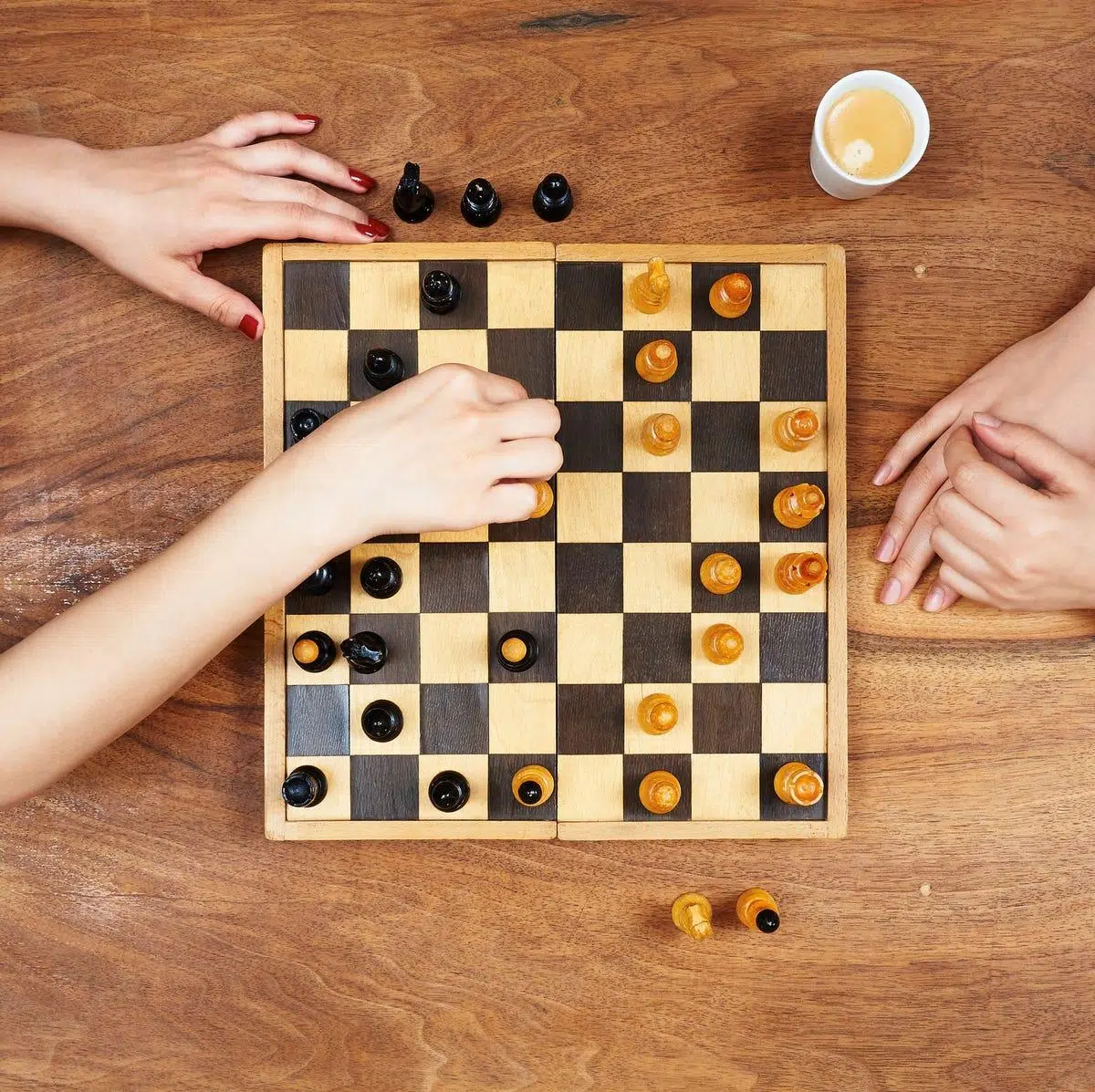
There's something magical about sitting down at the table with people from different countries, with little ones who can't read yet, or with friends who aren't big gamers, and coming up with a game that everyone understands in five minutes. Board games without text or cumbersome rules They have become the Swiss Army knife of any toy library: they work with almost any group, they are explained in a jiffy and they make the language barrier disappear.
In addition, many veteran gamers who enjoy heavyweights like Terra Mystica, Agricola, or Gloomhaven also look for titles they can share with their family, with children who don't yet read, or with colleagues who don't feel like tackling a 20-page manual. The aim of this article is to compile, organize, and break down a good number of games that are understood through symbols, colors, and patterns.which require very little text in their components and yet still deliver memorable games at any table. Let's get started with the board games without text or complicated rules that are a hit at any table.
Why are textless games with simple rules interesting?
When you live in a country where English or Spanish is hardly spoken, or when your group mixes several languages, Each letter with paragraphs of text becomes a small wallAnyone who has tried to play King of Tokyo or many dungeon crawler games in a language that the group doesn't understand knows what it's like to stop the game every two minutes to translate.
Many players who live outside their home country take advantage of cheap local editions (for example, Carcassonne in Chinese at a bargain price) whenever possible the components are language-independentIf the text only appears in the rulebook, simply download the manual in English or Spanish and you're done; the problem arises when the entire deck is full of written abilities.
On the other hand, there are parents with children aged 4, 5 or 6 who already want to play "the real thing": children who enjoy Terra Mystica, Carcassonne, Agricola or even Gloomhaven by looking at icons and remembering effects, but who still cannot read. In these cases, clear and consistent symbolism is pure gold.The child recognizes figures, colors, and shapes, and can make decisions without needing an adult to read each card to him.
Finally, at family gatherings, parties and large get-togethers, games with few rules, quick turns and lots of interaction are usually the most successful. Party games, light cooperative games, dexterity games, and family titles with a one-page explanation They guarantee that no one gets left behind or bored looking at their mobile phone.
Textless family games that always work
If your idea is to organize a session with a diverse group of people (family, friends, visitors from other countries), family games that can be explained in two minutes and use very little text are a sure thing. Here, tiles, colors, and visual patterns rule.much more than words.
A perfect first example is CarcassonneThe game can be in Chinese, German, or French, because in the end it all comes down to placing terrain tiles, following roads, cities, and monasteries, and deciding where to put your meeples. It's advisable to have the rulebook in your own language, but once you've learned it, Nobody needs to read anything during the game.It's ideal for people who don't speak your language, for children, and for those who are just getting started with light eurogames.
In the same line, Ticket to Ride (Ticket to Ride) works very well with international groups. The map has hardly any relevant text, and the carriage cards are entirely iconographic. The destination tickets do include city names, but They are used more as visual code than for actual reading.With a short explanation, anyone can understand that he is trying to connect points on the map with his trains.
Another well-known relative that usually gets in easily is KingdominoBuilding a 5x5 or 7x7 kingdom (depending on the number of players) with dominoes of different terrains and crowns is very intuitive. You show a couple of examples and people immediately grasp how to score points.There are no cards with text or complicated abilities, just the spatial management of your tiles and the turn order linked to the value of each token.
The modern classic Blue It also shines as an accessible, language-independent title. You steal tiles from factories, place them in your rows, and then transfer them to the central mosaic. The symbolism is minimal and perfectly recognizable. Although underneath there's a very interesting tactical point (especially with 2 players, where it becomes almost a knife fight), the explanation is simple and you can play with people who have barely touched a eurogame in their lives.
Abstract designs with clear icons for international tables
The potential of abstract games is immense when we talk about language independence. In most cases, the board, the patterns, and the pieces speak for themselves.Depth comes through positioning and planning, not from paragraphs of special rules.
One of the best examples of elegant abstraction is PatchworkTwo players compete to complete their mat with polyominoes while managing time and buttons. Beyond the numbers printed on each tile, There is no special rules text or skills to decipherIt's so visual that, after the first round, everything flows on its own.
If you're looking for something with a puzzle feel and lots of board interaction, Brilliant It's another hidden gem that fits perfectly. You place tiles with symbols and colors, trying to create long lines. The scoring is "Knizia-style," where your final result is the lowest-scoring color. It forces you to diversify without needing to read cards or effects.The new editions with cleaner artwork make it even more intuitive.
In the arena of a direct two-way confrontation, Spell And other similar modern abstract games offer fast-paced duels, with very striking productions and crystal-clear rules. The important thing is how you move and position your pieces to create patterns. not how you interpret a text hidden in the reference cardThese types of games, usually 15 to 25 minutes long, are ideal for filling gaps or for a "best of three" session.
We cannot forget the classic abstractions of control such as Samuraiwhere you place tiles to compete for three types of figures on the map of Japan. Each tile has a value and an icon that indicates its effect. But once the few symbols are explained, there's no need to read anything else.It's one of those games that can be explained in 5 minutes and will stay in your collection forever.
Parties and light games that are easy to understand on the fly
When the goal is to laugh, break the ice, and get everyone involved, the Party games with few rules and ultra-fast turns They are the best tool. The important thing here is that no one gets lost, so the fewer words, the better.
In the field of drawing, Pictomania Vlaada Chvátil demonstrates how the classic "drawing game" can be modernized without overloading it with words. The cards list concepts, yes, but You can prepare a version with images, icons, or very simple words in the group's language.Because the heart of the game is that everyone draws and guesses at the same time, with a timing and scoring system that punishes both drawing badly and taking too long.
Another staple at family parties is Time's Up FamilyThis version uses everyday words (objects, animals, simple professions) instead of historical or famous figures. It's true that there is text in the letters, but You can easily adapt it to a single language or even prepare your own cards with drawings.The three-round structure (describe, one word, mime) makes each game more challenging, without complicating the explanation.
If we're talking about card games, Skull King It shines as a lighthearted trick-taking game. There are clear icons (colors, skulls, pirates) and a bidding system based on how many tricks you think you'll win. Although the cards have some descriptive text in some editions, The effect can be explained in 30 seconds, and the icons end up being sufficient.What matters is bluffing, remembering past cards, and reading the table.
For family audiences, toy stores and large retailers often recommend titles such as UNO, Party & Co Family, Parents vs. Children or crazier games like Caca Chaf or Botched Plumber, and also video games in consoles like Nintendo Switch 2They have minimal or no text in components, and they rely on colors, numbers, and easy laughterThese are very valid options when the group is large and varied, although logically they do not offer the strategic depth of other titles.
Accessible cooperative learning: playing together without reading paragraphs
Cooperative games have carved out a huge niche among modern board games, and some of them, despite having a good dose of tension, They function almost without text during the gamePerfect for groups where someone is the one who knows the rules and the rest want to focus on the decisions.
Two well-known examples are The Mind y HanabiIn The Mind, the cards only have numbers, no text; the challenge is to order the sequence by playing without speaking. In Hanabi, besides the values and colors of the cards, there are only a few tokens that mark clues and mistakes. A five-minute initial explanation is enough for anyone, even if they don't share your language, to understand how to collaborate..
For groups looking for something a little more demanding without going overboard, The Crew (The Crew) is a cooperative trick-taking game where the objectives of each mission are summarized with icons on task cards. The rulebook explains specific situations, yes, but during the game, You are not reading long texts, but interpreting simple symbols.That's why it scales so well with people from different countries if someone takes charge of introducing the missions.
Other cooperative games that are frequently mentioned in gaming circles include The Inseparables o Aeon's EndThey do use more text on cards, so they're not ideal if no one at the table speaks the game's language. However, if you're the one translating and everyone else is just handling icons, They can work when the group is stable and willing to learn little by little..
Flicking and dexterity: when language doesn't matter at all
If you want to disconnect from the rules and focus on manual dexterity, flicking games (pushing discs or tiles with your finger) are your best ally. Here, language is completely irrelevant.All you need is a good board and a desire to compete with the rest.
The most iconic example is CrokinoleA round wooden board, pieces that you have to get into the center while knocking out your opponent's, and little else. Everyone understands in seconds that you have to get the discs in and mess with your opponent. Its only "drawback" is the price, because a good handmade board isn't cheap.But those who try it usually say it's one of the best gaming purchases they've ever made.
Within the lane-based and racing games with flickering, Pitchcar It's the dream of those who grew up playing with bottle caps on the ground or in the street. You build a track with wooden pieces, place your disc-shaped car at the starting line, and race by tapping it. There isn't a single word on the components; The experience is pure reflexes, strength calculations, and lots of laughter when someone goes off the track..
If you prefer something even more chaotic, Tumblin' Dice It relies on dice rolls that fall through different levels and land in scoring zones. There are no deep decisions or combos, but Anyone, from children to grandparents, grasps the idea instantly.It's the kind of game you don't buy thinking about strategy, but about creating epic moments of "it can't be that it landed right there."
Tactical games and light eurogames with almost no text
Beyond family games, there's a good collection of mid-range Eurogames that, despite having considerable depth, are hardly language-dependent. They typically use consistent icons, very clear boards, and cards or tiles without any written text. They're perfect when you want something with more substance, but your group isn't up for dense regulations..
A great representative of this line is Blue Lagoon by Reiner Knizia. With a rule sheet and a handful of components, it presents a struggle for majorities and control in an archipelago. You place pieces, block paths, score sets, and connect islands. Everything is explained with icons and visual examples; No one needs to interpret text during the gameAnd yet the interaction is constant.
KingdomsAlso by Knizia, this game focuses on placing castles and scoring tiles on a grid. Each element has a clear symbol (positive values, negative values, dragons, mountains) that defines how it affects rows and columns. After a brief initial explanation, Everyone knows when someone is being a nice person and when they're saying something really awful to everyone else.Not even a text message in between.
If you're looking for something with a bit more production value and a "city building" feel, Quadropolis It fits together perfectly. You steal building tiles with your numbered architects and place them in your personal city, which scores points based on adjacency patterns. Everything is based on recognizable icons: houses, factories, parks, ports… The explanation fits perfectly into a brief chat, and during the game nobody opens the manual again..
And if you want something more cerebral but equally visual, you can check out titles like Calico, Cascadia or Clans of CaledoniaThey use more iconography and pattern requirements than literal text, so that, once the scoring tiles and objectives are internalized, All decisions are made by looking at shapes, animals, colors, or resourcesThese are great options for players who already master the world of board games and want to gradually introduce others without overwhelming them with reading.
Playing with children who don't read (but can handle anything you throw at them)
Some kids get bored with a basic memory game, while others, at 5 years old, can sit with you playing Terra Mystica or Gloomhaven and endure like true champions. Its only limitation is not strategic complexity, but readingIf they are not yet fluent readers, you need games that rely on icons, colors, and repeating patterns.
In the world of hardcore eurogames, Terra Mystica It's an example of design that's practically language-independent: the faction board and map use consistent icons, and special abilities are summarized with drawings. A child with a good visual memory can learn "what each thing does" without reading. However, It requires an adult to lead the explanation and handle specific questions..
For lighter sessions, return to titles like Kingdomino, Carcassonne, Blue or Great It's a great idea. In all of them, children can make meaningful decisions by looking at colors and shapes. They don't need to read complex rules or letter texts; You can join them for a couple of games and then let them decide for themselves.That's when they really start to enjoy themselves.
In the more festive part, games like Time's Up Family, Pictomania, or certain memory games with clear drawings They allow children to participate on the same level as adults, as long as the concepts on the cards are objects they already know. The reading barrier disappears and you see them laughing, guessing, and clowning around like everyone else..
A very useful trick is to prepare small visual aids: sheets with the key icons explained in your language, examples already set up on the board, or even reminder stickers. This way you can try more complex games without the printed text becoming a barrier.
Tips for choosing an edition and adapting games with text
When building a “multilingual” collection, there are some details to keep in mind to avoid surprises. Not all games are equally language-independent, even if they seem so at first glance..
Before buying a very cheap local edition (for example, in Chinese or German), check carefully if the game Use text only in the rulebook or also on the cards and tilesIn the first case, you can simply download the manual in your language from the publisher's website or a gaming database; in the second, you will have to use translated player aids, stickers, or simply another edition.
There are titles, like King of Tokyowhere the power cards have so much text that playing with an edition you're not familiar with is torture. If you love the game, then it's worth paying more for the version in your language. However, with Carcassonne, Genial, Azul, Pitchcar, Crokinole, or almost any abstract game, you can confidently go for the cheapest edition.because everything is understood through symbols.
If you already have a text-heavy game in a language the table doesn't support, there's still hope: you can prepare printed aids with the summary of effects...or even stick small translations on card sleeves. It's more work, sure, but for titles you love (Gloomhaven, some narrative co-op games, etc.) it can be worth it if you want to share them outside your usual circle.
Finally, if you often play with diverse groups, it's highly recommended to have a small “baseline” of textless games ready for any occasionA couple of abstract games, one or two family games like Carcassonne/Kingdomino, a simple party game, a light cooperative game, and a dexterity game. With that mix, you can adapt to almost any table, no matter what language they speak.
Looking at this whole range of options, it's clear that you don't have to sacrifice depth or fun to avoid text: There are tons of games that combine clear rules, careful iconography, and intense gameplay.These games are equally successful with veteran gamers and your neighbor who barely speaks English. Having them on hand is the best way to ensure that, every time you open the game box, no matter where people are from, everyone can sit down, understand it quickly, and, above all, have a great time.

Index
- 1 Why are textless games with simple rules interesting?
- 2 Textless family games that always work
- 3 Abstract designs with clear icons for international tables
- 4 Parties and light games that are easy to understand on the fly
- 5 Accessible cooperative learning: playing together without reading paragraphs
- 6 Flicking and dexterity: when language doesn't matter at all
- 7 Tactical games and light eurogames with almost no text
- 8 Playing with children who don't read (but can handle anything you throw at them)
- 9 Tips for choosing an edition and adapting games with text

Passionate about technology since he was little. I love being up to date in the sector and, above all, communicating it. That is why I have been dedicated to communication on technology and video game websites for many years. You can find me writing about Android, Windows, MacOS, iOS, Nintendo or any other related topic that comes to mind.