- Codex Mortis is presented as the first Steam game developed entirely with artificial intelligence.
- Its necromantic roguelite premise is very reminiscent of Vampire Survivors, with uneven gameplay results.
- The project was created in about three months using models such as Claude Code Opus and ChatGPT, assembled in TypeScript and PIXI.js.
- The case reignites the debate in Spain and Europe about the role of AI in the creation of video games and the risk of saturating the market with clone products.
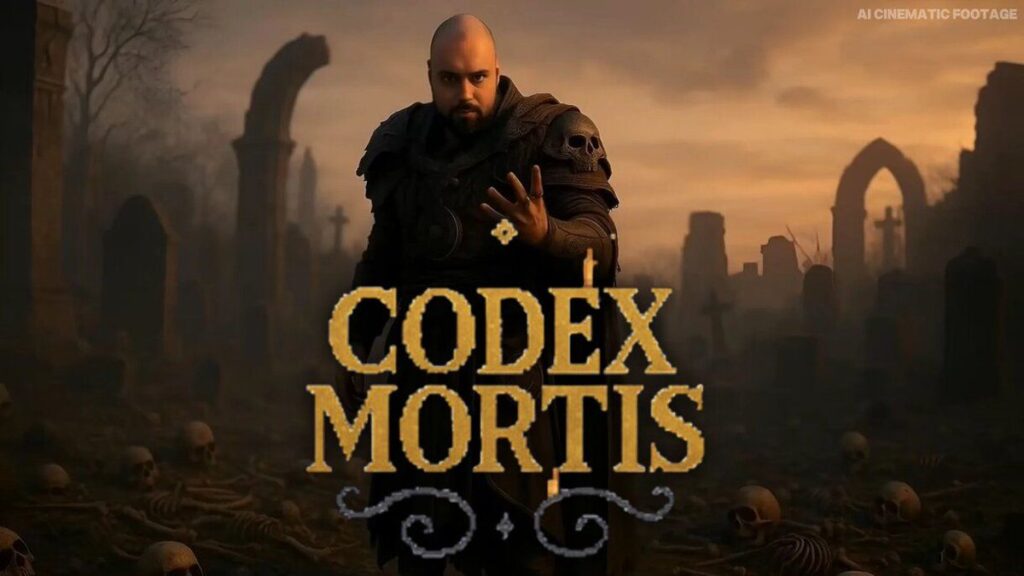
The name of Codex Mortis It has entered the conversations of the European gaming community not so much for its quality as a video game, but for the claim with which it is advertised: Its creators present it as the first Steam game developed entirely with artificial intelligenceFrom the code to the art, including the music and the lyrics, the label is eye-catching, but after trying the demo, the general feeling is that the technical experimentation is several steps ahead of the creative substance.
Anyone who approaches this proposal will find a title that blends survival roguelite with a necromantic setting and a very similar approach to the indie phenomenon Vampire Survivors. However, the initial reception among players and the specialized press is far from unanimous: for some it is a technological milestone worthy of study, for others a warning of what can happen if development is delegated almost entirely to algorithms.
A project that boasts of being 100% powered by artificial intelligence
The development of Codex Mortis It is run by a team that goes by the name of The Codex Mortis Team, with GROLAF as the public face and main person responsible for the project. On the Steam page and in various forums, the developer himself explains that the title was built in barely three months using generative AI tools, with a final assembly based on TypeScript, PIXI.js, bitECS and Electron to package everything into a PC application.
According to his explanation, Claude Code (Opus versions 4.1 and 4.5) It has been used to generate much of the code, animation systems, and shaders, while ChatGPT has been used for the game's art, icons, and images.. The soundtrack and sound effects They are also described as AI-generated content, which reinforces that "100% AI" product message that serves as their main marketing element.
Although the developer admits that there are human intervention in orchestrating, correcting, and assembling what comes out of the modelsHe insists that they haven't used engines like Unity or Unreal, nor traditional artists. This combination of prompts, manual review, and technical assembly is precisely what has sparked the debate about what we mean by "developing" a game in this new phase of the industry.
A necromantic roguelite that borrows (heavily) from Vampire Survivors
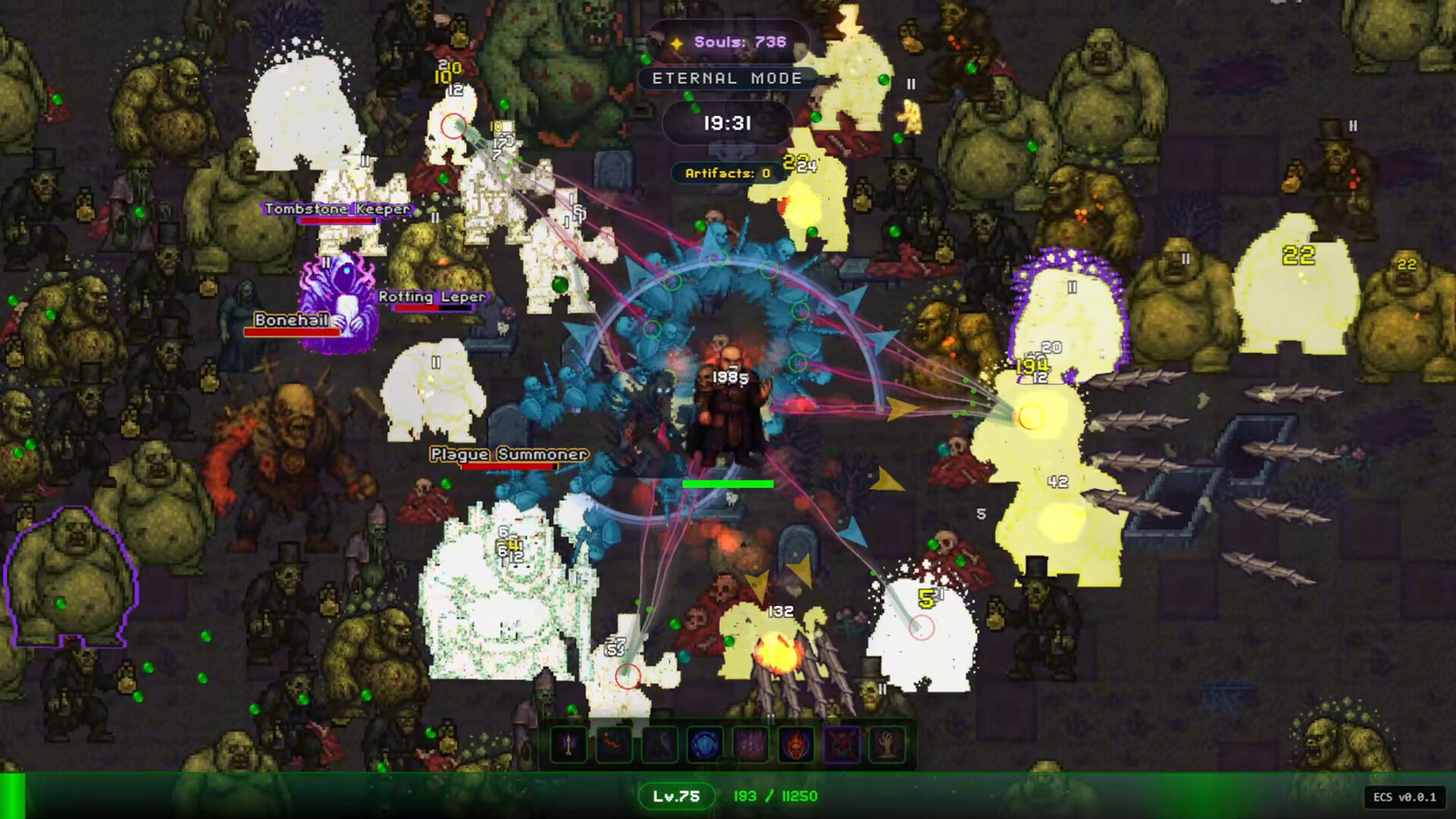
In purely playable terms, Codex Mortis is a survival bullet hell game. in which you control a necromancer from a top-down perspective, moving through relatively contained maps while facing growing waves of enemiesThe formula is familiar to anyone who has tried Vampire Survivors or its countless spin-offs, something that many players in Spain and Europe have pointed out as one of its biggest weaknesses: the feeling of being faced with a clone that contributes little to an already saturated genre.
The core of the proposal revolves around five schools of dark magicNecromancy, summoning, blood, souls, and curses. Different builds are constructed from these by mixing active and passive abilities, with the intention of generating spectacular synergies on the battlefieldBone spears, corpse explosions, skeletal golems, blood spells that sacrifice life in exchange for power, soul manipulation, and curses that weaken enemies form the main arsenal.
The idea, on paper, is that the player can experiment with almost infinite combinations of spellsWhether playing solo or in local co-op, where up to four people can coordinate builds and watch each other's backs as the screen fills with monsters. The demo also includes progression elements and achievement unlocking that seek to encourage repeating games to test new configurations.
A functional story: ancient pages, portals, and an immortal hunter
In the narrative, Codex Mortis It does not attempt to compete with the great Western role-playing games or with complex narrative productions, but rather remains in a simple structure designed to justify the actionThe player embodies a necromancer who must Gather five old pages and close a portal before it appears Lothar, an immortal hunter which acts as a constant threat in the background.
This invisible pursuit functions as a kind of internal clock that adds urgency Each game pushes the player to decide whether to explore further for upgrades or focus on completing the main objective before it's too late. In parallel, there are dark rituals, special guardians, and cursed artifacts that provide small variations and permanent rewards, but always without stealing the spotlight from the combat.
The texts, also generated by AI, are limited to to provide context and color to the necromantic universe Without delving into complex plots, this minimalist approach may work for those who prioritize fast-paced action, but it makes it clear that the project's goal isn't to tell a grand story, but rather to demonstrate the current state of creative automation.
Game modes and demo structure
The preview version currently available on Steam is structured as follows: several modes designed to test the different facets of the systemThe so-called escape mode presents timed matches where efficiency matters more than exploration, as the player must complete objectives before the immortal hunter catches up with the character.
Another mode, more focused on the challenge, allows gradually empower the necromancer before a final battle against Lothar, in a boss-like manner. Finally, there is a eternal mode which eliminates the time limit and prioritizes the farming, obtaining fallen heroes and artifacts and experimentation without so much pressure. In all cases, the procedural generation of enemies and dispositions aims to avoid memorizing fixed patterns, although some players point out that, in practice, the sensations tend to repeat themselves.
The demo supports local cooperative and stored in the cloud, and at the time of writing this text it accumulates a small number of reviews with mixed ratingswith around two-thirds positive reviews. Although the sample is limited, it already serves to detect the division between those who are drawn in by the technological curiosity and those who believe that the AI's appeal doesn't compensate for a gameplay design that, for some, falls just short.
Functional gameplay, but far from memorable
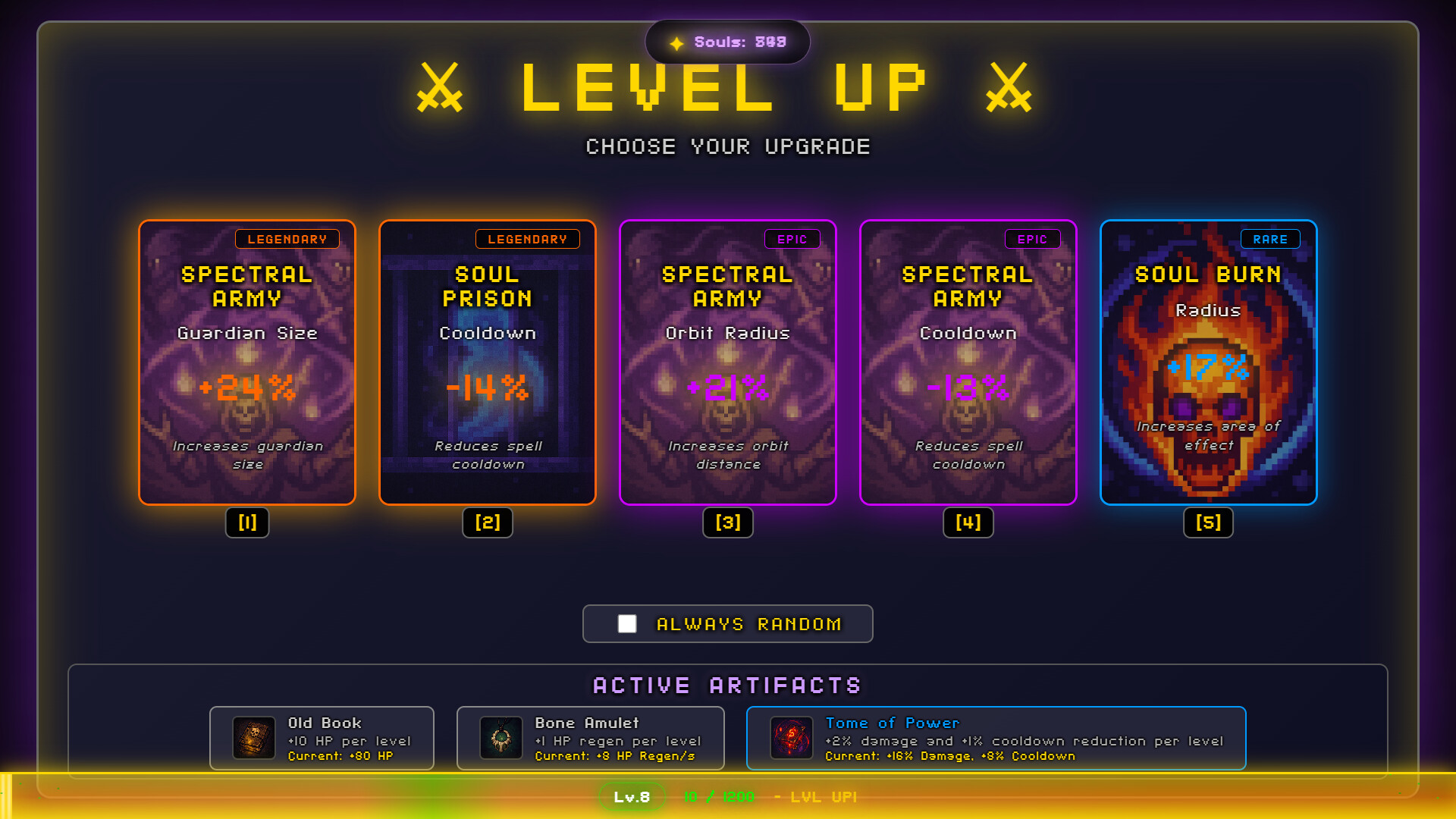
Regarding the feel of the controls, the opinions gathered from veteran players coincide on several points: The gameplay of Codex Mortis is adequate, but it lacks a distinctive rhythm.The combat revolves around managing increasingly large waves of enemies, activating abilities, and dodging projectiles, but the progression feels unstimulating and repetitive after a few matches.
While Vampire Survivors and other titles in the genre have managed to hook thousands of players in Spain and the rest of Europe thanks to a carefully measured balance between risk, reward, and a sense of constant growthIn Codex Mortis, much of that spark seems to dissipate. The roguelite structure is present, achievements are unlocked relatively quickly, and there's room to tweak builds, but many describe the result as a game Correct, yes, although easily forgettable.
This contrast has led some critics to point out that the AI has been able to replicate the surface of a successful design without capturing its essence.The mechanics are recognized, the intentions are intuited, but what is missing is that layer of creative intention and fine-tuning that usually arises from iterating, testing and redoing by hand until each design decision has a clear purpose.
Graphics, sound, and the visible footprint of automatic generation
The audiovisual section of Codex Mortis It reinforces the feeling of being dealing with a product clearly marked by its automated origin. Visually, the game opts for a retro-style pixel art which many compare to old minigames from the Adobe Flash era, with characters and effects that fulfill their function but sometimes show that lack of stylistic cohesion so typical of AI-generated assets.
When in motion, the screen fills with colorful spells, exploding corpses, and hordes of enemieswhich helps to convey the chaos inherent in the genre. However, in trailers and screenshots Small artifacts and visual design decisions are noticeable that betray the intensive use of algorithms, something that the team itself does not try to hide and even uses as an advertising claim.
In the sound section, the AI-generated music tracks and audio effects The music accompanies the action with compositions that fit the game's dark atmosphere, though they don't particularly stand out for their personality. Again, the dominant feeling is that of a functional whole, coherent in broad strokes, but with Irregular details remind us that this is more of an experiment than a meticulously polished production..
Technical requirements and current status on Steam
From the technical point of view, Codex Mortis It's a very accessible game. The demo available on Steam indicates that all you need is a Modest PC with Windows 11, 4 GB of RAM and a low-end graphics card (or even integrated) to move it smoothly. The disk space required round the 140 MB, a small size that makes it easy for many European users to download and try it almost without thinking.
The title offers local co-op, cloud saves, and multilingual supportIncluding Spanish, which is relevant for a market like ours where not all indie developers prioritize localization. For now, though, There is only one free demo and the full release doesn't have confirmed publication dateSo the current state can be interpreted as a public laboratory in which the team tests ideas and gauges the public's reaction.
Regarding reception, the Steam page shows mixed opinions, with a percentage of positive ratings around 66%. at the time of its observation. A modest but significant fact: it indicates that there are those who enjoy the experiment, especially if they are attracted by the roguelite genre, while others make it clear in their reviews that the most interesting thing about the project is the conversation it generates, not so much what it offers in terms of pure fun.
The controversy: creative revolution or publicity stunt?

The big question surrounding Codex Mortis It has less to do with its specific gameplay and more to do with what it symbolizes: Is this really a step forward for video game development in Europe, or is it more of a marketing ploy that relies on the "100% AI" label?The way GROLAF and the team promote the game leaves no room for doubt: the use of algorithms is not a technical detail, it is the selling point.
European critics and players are divided on this strategy. Some see it as a a way to democratize access to developmentallowing a single person, supported by generative models, to assemble something playable in a few months that previously would have required a small team and more time. Others, however, perceive the project as a This sets a dangerous precedent that could flood platforms like Steam with soulless, cheap-to-produce clone products..
The debate intensifies when the current context is taken into account, with Millions invested in AI by major technology companies and generative models capable of producing images, music, and text at a speed that seemed like science fiction just a few years ago. In that scenario, projects like Codex Mortis function almost as Public case studies on where the real limits of automation lie today in a medium as demanding as video games.
Risks for the European market: clones, saturation and dubious quality
In the European and Spanish PC market there is already a growing concern about the saturation of low-cost games, asset flips, and uninspired copiesThe emergence of titles that boast of having been generated almost entirely by AI reinforces the fear of a new wave of products created from prompts and pre-trained modelswith hardly any creative supervision.
Some developers and players suggest that if this type of proposal finds a profitable niche, We could see a flood of clone releases which further complicates the visibility of traditional independent projects. The history of video games has already seen periods of overproduction with highly uneven quality, as happened during the Atari era, and part of the community fears that indiscriminate automation will reproduce this phenomenon in today's digital stores.
Faced with this scenario, a more nuanced alternative is proposed: using AI as a tool at the service of human teamshelping with repetitive tasks or rapid prototyping, but maintaining creative control with designers, artists, and writers. Otherwise, there is a risk that what is presented today as a revolution will end up generating a a tide of mediocre and forgettable games that only increase the noise on already crowded platforms.
The reaction to Codex Mortis Within Spanish-speaking communities, this tension is well reflected: curiosity to see how far the experiment goes, yes, but also I am wary of the possibility that a development model based almost exclusively on algorithms will become the norm.with quality as a secondary issue.
What does Codex Mortis really prove about AI in video games?
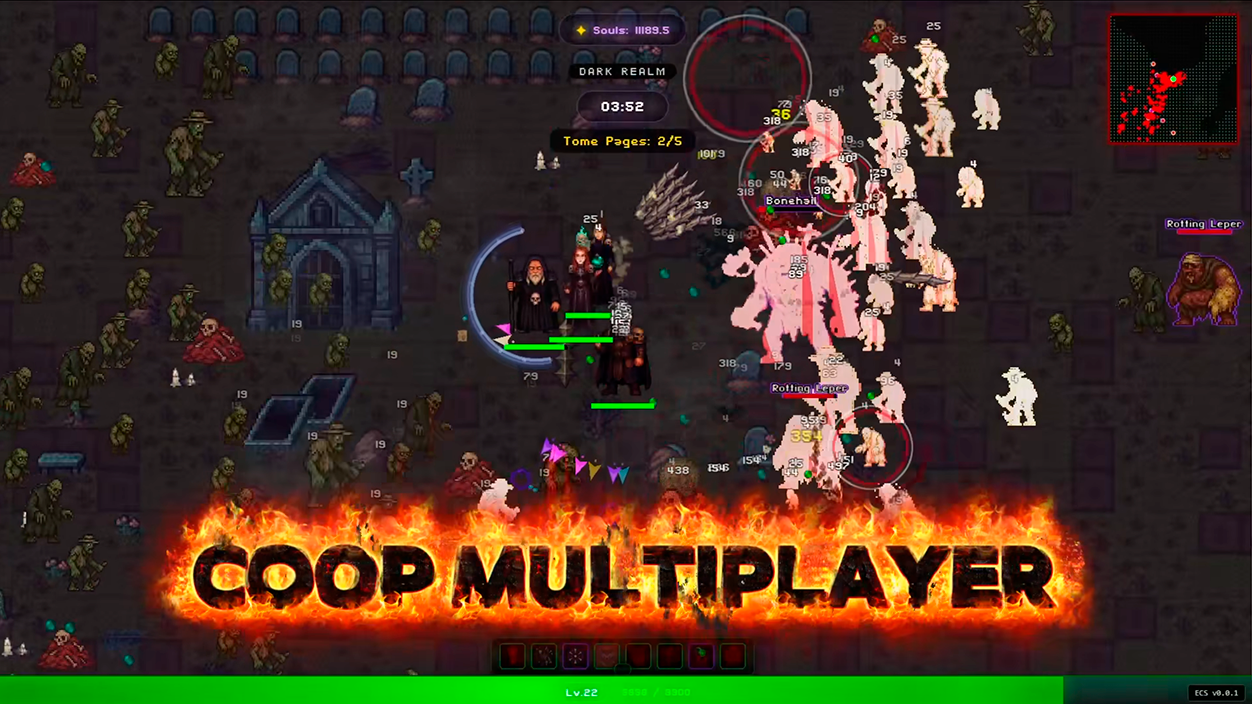
Beyond likes and dislikes towards artificial intelligence, the case of Codex Mortis It leaves several provisional conclusions. The first is that AI is already capable of producing, with human supervision, a fully functional gameIt features menus, cooperative gameplay, progression systems, striking visual effects, and a recognizable gameplay structure. We're not talking about a simple academic experiment, but a product that any European user can download for free from Steam and try on their own PC.
The second conclusion is less encouraging: Functional does not necessarily equal memorableThe demo shows that automating the production of code, art, and music It does not guarantee creative vision or a unique identity.The spark that makes a roguelite a phenomenon, that makes a minimalist design captivating for hundreds of hours, or that makes a retro aesthetic charismatic, still depends, for now, on human criteria that are difficult to encapsulate in prompts.
From a practical perspective, the project suggests that the most promising future lies in a A hybrid model in which human teams integrate AI as a powerful tool, but not as a replacement.Using models to accelerate tasks, generate variations, or provide support in early stages can free up time and resources, but the final result will still need direction, judgment and human sensitivity to stand out in a market as competitive as the European one.
As it stands now, Codex Mortis It doesn't seem destined to enter the rankings of the best roguelites or to compete with the genre's biggest hits, either in Spain or in the rest of the continent. However, It has earned its place as an early warning of what's to come.It demonstrates that it is already possible to create a playable product that attracts media attention in a few months with the help of algorithms, but it also shows that Programming a game isn't the hardest part of the process.The complex thing, and what AI has not yet been able to replicate, is that authorial touch capable of turning a repeated idea into something truly special.

I am a technology enthusiast who has turned his "geek" interests into a profession. I have spent more than 10 years of my life using cutting-edge technology and tinkering with all kinds of programs out of pure curiosity. Now I have specialized in computer technology and video games. This is because for more than 5 years I have been writing for various websites on technology and video games, creating articles that seek to give you the information you need in a language that is understandable to everyone.
If you have any questions, my knowledge ranges from everything related to the Windows operating system as well as Android for mobile phones. And my commitment is to you, I am always willing to spend a few minutes and help you resolve any questions you may have in this internet world.