You may have already heard about the NVIDIA DGX Spark, the world's smallest desktop AI supercomputer. You might even have considered buying one, especially if you're a hardware and computer enthusiast. Well, in this post we'll tell you all about it. What makes the DGX Spark so special, and does it make sense to make this investment in 2026?.
What is NVIDIA DGX Spark?
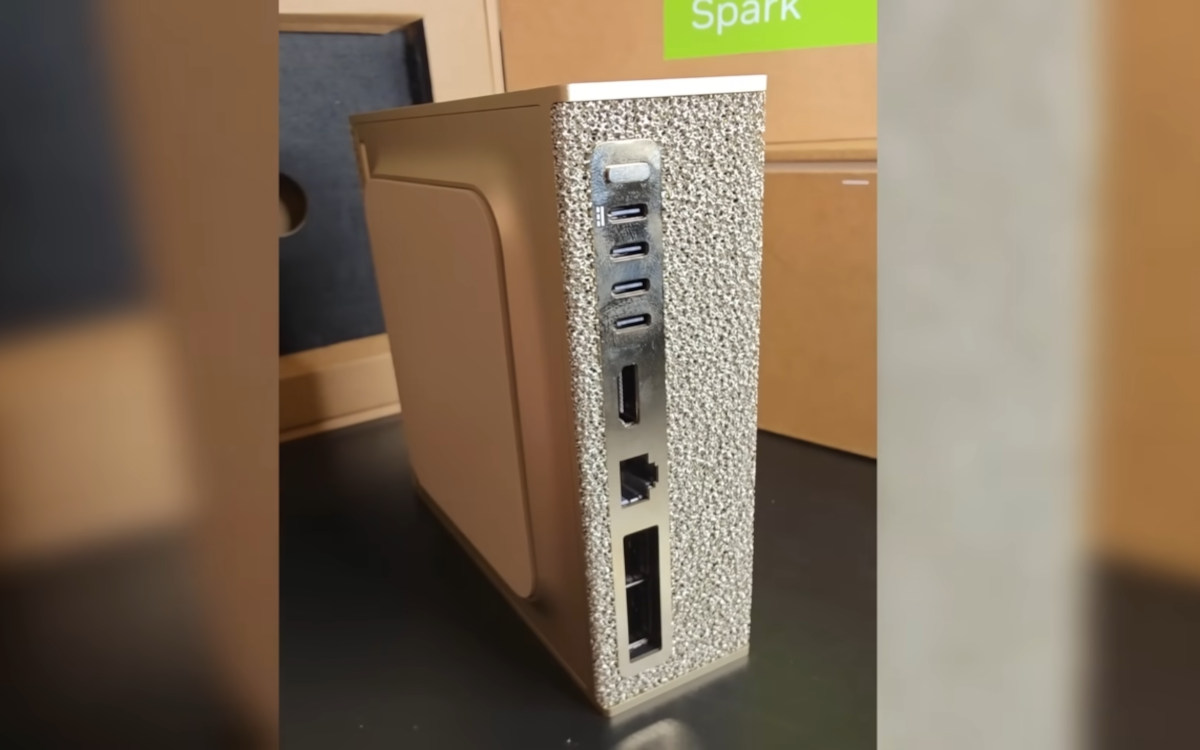
Imagine to have the power of a data centerThe one that used to take up entire rooms and cost millions, now condensed into a metal box that fits on your desk. Is it really possible? Yes: NVIDIA has made it a reality with its NVIDIA DGX Spark supercomputer, which was officially unveiled in late 2025 and began global distribution in 2026.
But what exactly is the NVIDIA DGX Spark? Essentially, it's an AI "mini-supercomputer" designed for the desktop. It's capable of run large artificial intelligence models locallywithout relying on the cloud. Nor do they depend on multiple external components, like traditional workstations. Instead, the DGX Spark is an integrated system based on the NVIDIA Grace Blackwell GB10 architecture.
Grace Blackwell Architecture GB10
Forget the Intel or AMD processors you're used to. Beneath the chassis of the NVIDIA DGX Spark, with a volume of just 1.5 liters (150 mm x 150 mm x 50.5 mm), lies the Grace Blackwell architecture from NVIDIAThis combines different components with amazing capabilities:
- A Grace CPU with 20 ARM cores.
- A state-of-the-art Blackwell GPU.
- 128 GB of CPU-GPU unified memory.
- 4TB SSD storage in the Founders edition.
Much of the magic of NVIDIA DGX Spark lies in the unified CPU-GPU memoryAs you know, most computers separate system RAM and graphics VRAM. In contrast, the DGX Spark uses a single 256-bit LPDDR5x memory pool that powers both the processor and the graphics card. This allows it to load language models with up to 200 billion parameters entirely into local memory.
Speaking of performance, The DGX Spark can achieve token processing speeds far exceeding those of a high-end laptop. For example, it reaches up to 1 petaFLOP in FP4 precision, a lighter and more efficient 4-bit format. Furthermore, it allows for fine-tuning of tokens up to 70.000 billion without requiring additional infrastructure.
Pre-installed software and NVIDIA ecosystem
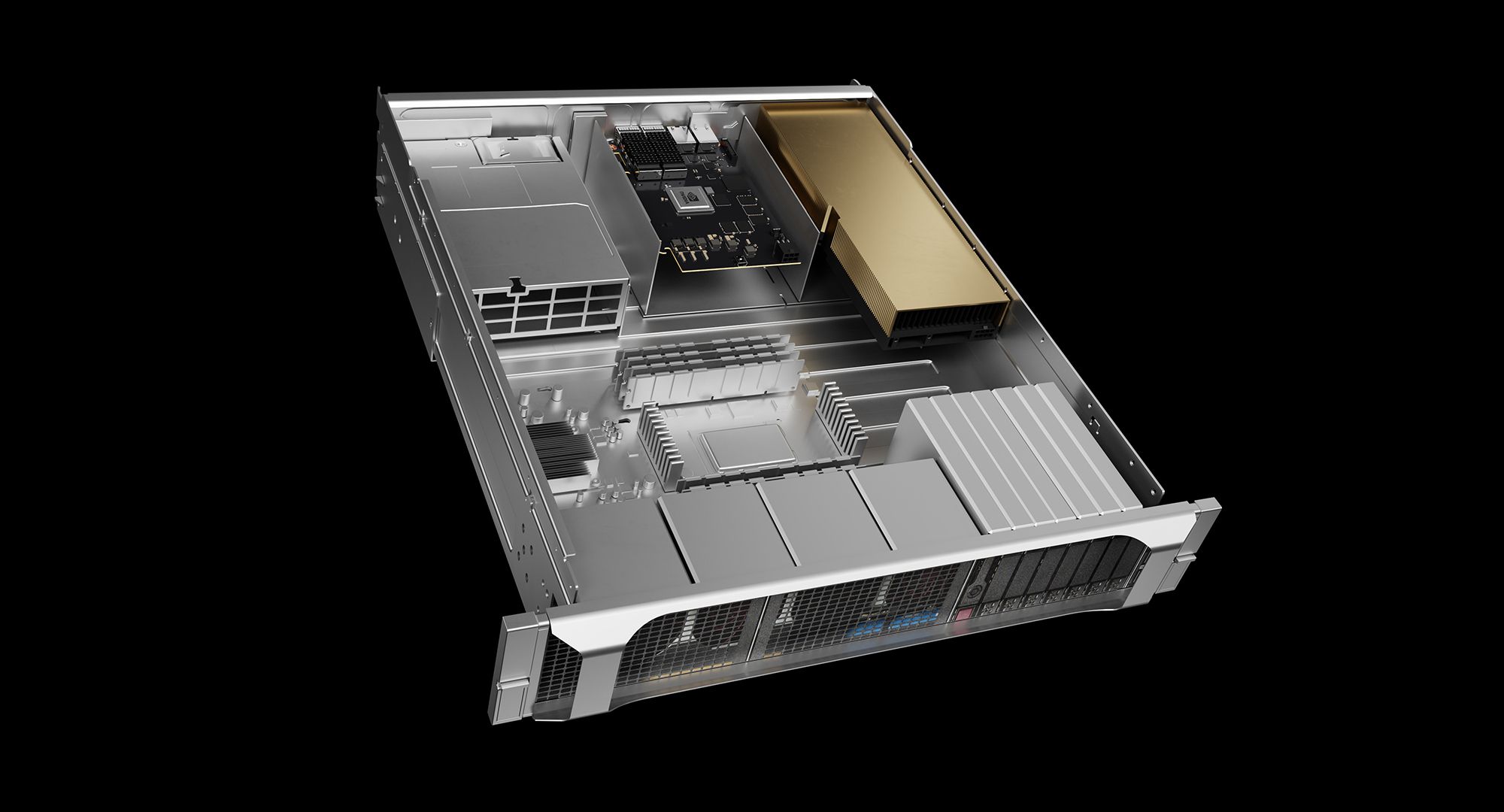
But if there's one thing that sets the NVIDIA DGX Spark apart from a high-end PC, it's its software stackThis particular hardware comes with NVIDIA AI Enterprise pre-installed, which includes:
- CUDA and optimized AI libraries.
- Ready-to-use containers.
- Development tools such as NVIDIA NemoClaw for self-employed agents.
- Playbooks and guides for AI projects.
- Integration with NVIDIA tools and the open source community.
So, from the first time it's switched on, the user has a whole complete development environment Ready to use. Furthermore, it requires no complex configuration, and even It can be climbedFour DGX Spark units can function as a single compute node. This is thanks to its inclusion of a 200 Gbps ConnectX-7 NIC via QSFP ports.
NVIDIA DGX Spark: Who will it make sense for to buy it in 2026?

With such unique specifications, it's clear that the NVIDIA DGX Spark isn't for everyone. It certainly promises to democratize access to cutting-edge artificial intelligence, but... a price that is already around $4.700It's worth mentioning that it was initially launched at $3.999, but in February 2026 its price increased due to memory supply issues.
Who would make sense to buy it in 2026? Let's be honest: the NVIDIA DGX Spark isn't for the average user who wants to try Stable Diffusion or play games. If you're into video games or traditional 3D rendering, you're in the wrong place.The Spark's Blackwell GPU is stripped of RT cores and isn't designed for rasterization. So, who is it a good option for?
For developers of AI agents and physical systems
This is a sector that is taking advantage of the low latency and privacy of DGX Spark. The environment it offers is ideal for developing autonomous AI agents with capabilities such as make real-time decisionsThe same applies to those who need process large volumes of sensitive data or interact with physical systems, as in robotics or industrial automation.
For data scientists and academic labs
Likewise, for researchers who need to experiment with fine-tuning of medium-to-large models, the NVIDIA DGX Spark is a lifesaver. It offers a fast, private, and always-available experimental environment.This eliminates the need to book a slot at a university cluster or pay for cloud computing hours to run preliminary tests.
For companies focused on rapid prototyping
Going from an idea to a functional prototype It requires not only advanced software but also fast hardware. And speed is what DGX Spark has in abundance, guaranteeing a rapid workflow for businesses where time is money. Furthermore, since it uses the same software stack as NVIDIA's large data centers, migrating this scalable product will be seamless.
For companies with strict privacy policies

Training AI with confidential or sensitive data can pose a real legal problem for anyone. But this is solved with NVIDIA DGX Spark, since its greatest strength is that can handle large volumes of data locallySectors such as legal, medical, or financial overcome this obstacle while optimizing their overall functioning.
The NVIDIA DGX Spark is undoubtedly an impressive piece of engineering: an AI supercomputer the size of a mini PC. But it's not for everyone. Its price and focus make it a highly specialized productBuying it in 2026 makes sense for researchers, companies with sensitive data, developers of autonomous agents, or advanced creative studios. workstation Powerful or cloud-based options will remain more balanced, at least for now.

From a young age, I've been fascinated by all things scientific and technological, especially those advancements that make our lives easier and more enjoyable. I love staying up-to-date on the latest news and trends, and sharing my experiences, opinions, and tips about the devices and gadgets I use. This led me to become a web writer a little over five years ago, focusing primarily on Android devices and Windows operating systems. I've learned to explain complex concepts in simple terms so my readers can easily understand them.