- Explorer.exe is the process that displays the desktop, taskbar, and Start menu; if it fails, Windows starts but everything appears black.
- The most common causes are damaged system files, registry errors, malware, low disk space, or corrupt user profiles.
- Tools such as SFC, DISM, the Registry Editor, and creating a new user allow you to repair many cases without reinstalling Windows.
- Only when these solutions do not work should you consider resetting or reinstalling the operating system after saving a backup of your data.
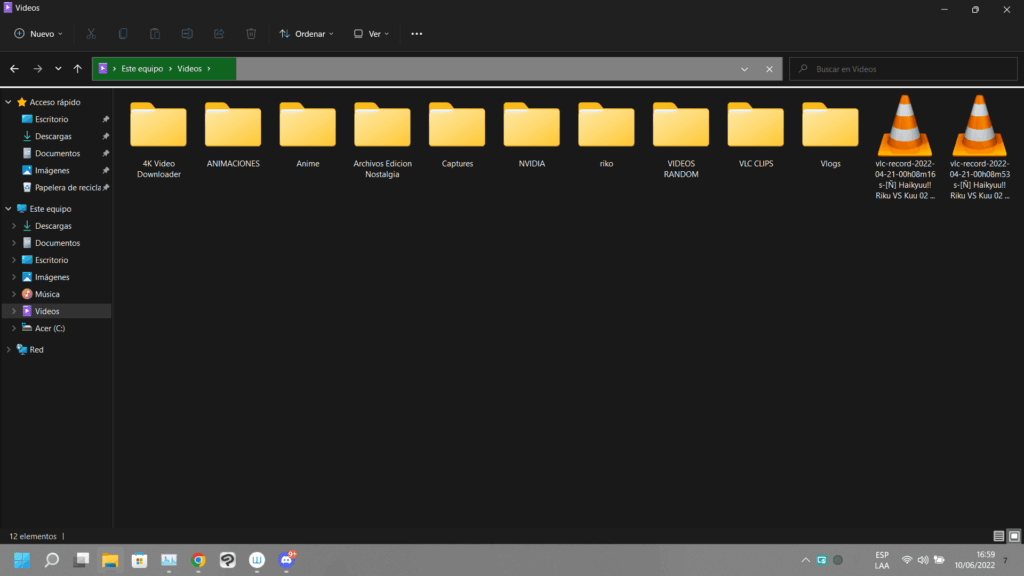
When Windows logs in and the screen stays blackWithout a desktop or taskbar, the explorer.exe process is most likely not loading correctly. When Explorer fails to load at login, it's extremely frustrating: there's no Start menu, classic shortcuts stop working, and in many cases, you can only do anything from the Task Manager.
This error can occur in Windows 11, Windows 10, 8 or 7This problem manifests in various ways: the Start button is present but unresponsive, the desktop doesn't appear, the system displays Windows-related error messages, or it may even prevent login by showing warnings about the User Profile Service. Below you'll find a comprehensive guide with all the common causes and the most effective solutions, ordered from simplest to most advanced.
What is explorer.exe and why is it so critical when logging in?
The process explorer.exe is the Windows Explorer and the main interface of the system: it is responsible for displaying the desktop, the taskbar, the Start menu, and the windows for managing files and folders. It replaced the old Program Manager in Windows 95 and has been a key component of the operating system ever since.
When Internet Explorer fails to load at login, the system is actually running: you can hear sounds, and some key combinations even work, but the graphical interface that allows you to use the computer normally is malfunctioning. Therefore, even though the screen is black, it's often possible to open Task Manager or Command Prompt and try to restore the desktop environment.
The most frequent causes of this problem are usually corrupted system files, errors in the Windows registryinsufficient space on the system partition, conflicts after a important updateMalware infections or a corrupted user account can cause this. In some cases, an error message such as “Windows file error (-2018374635)” or warnings related to explorer.exe may appear.
In more serious situations, the system may even show that “The user profile service failed to log in” and prevent access to the account, which further complicates the repair and forces the use of alternative methods to restore the Windows environment.
Typical symptoms when explorer.exe fails to load
Before embarking on blind repairs, it's helpful to identify how exactly does the failure manifest itself?Although the underlying problem is the same (explorer.exe doesn't start or closes immediately upon startup), the symptoms may vary slightly from one computer to another. They are as follows:
- Completely black screen or with a simple mouse cursor. No icons, taskbar, or Start menu appear. The system is running, but the desktop graphical interface never loads.
- The Start button and taskbar are visible but unresponsiveYou click on the Start menu and nothing opens, the Windows key on the keyboard doesn't work either, and you can't open certain system apps like Settings. Even shortcuts like Windows + Shift + S (screen snipping) may stop working.
- Windows file errors with negative codes (for example, -2018374635) or messages indicating that Windows Explorer has stopped working. Sometimes, after several repair attempts, tools like SFC or DISM stop displaying output in the console, indicating that something deeper has been damaged.
- Message “The user profile service failed to log in. The user profile could not be loaded.”This not only breaks explorer.exe but also completely blocks access to the affected account. It's the most extreme case.
Common causes of explorer.exe not loading at startup
This failure usually originates from a combination of software, configuration, and system status issuesThe most common causes identified in the various real-life cases are the following:
On one hand, there are the corrupted or missing system filesA sudden shutdown, a power outage, or a Windows update that doesn't complete correctly can corrupt key files related to Windows Explorer or the loading of the user session itself.
Another very common cause is misconfigured Windows registry entriesespecially those found in the Winlogon keys. If the value that specifies which shell to start at login is modified (by a third-party program, malware, or an incorrect manual setting), explorer.exe may stop starting automatically.
We must not forget the role of the viruses and malwareMany types of malware attach themselves to the explorer.exe process to run alongside it, and in doing so, they can prevent it from loading normally or replace it with a modified shell. One of the typical symptoms of an infected computer is precisely the malfunctioning of Windows Explorer; it's also helpful to understand how it works. Windows Defender SmartScreen in these cases.
Issues of system maintenanceA nearly full hard drive, especially the C: drive where the operating system is located, can cause strange behavior and block essential processes. Similarly, incompatible display settings, a heavily corrupted File Explorer history, or damaged user account configurations can contribute to the problem.
Finally, some major Windows updates They can trigger the failure: the update is installed, the computer restarts seemingly fine, but upon logging in explorer.exe stops working, the Start menu freezes, and system apps become unresponsive.
Check the basics: restart and access to Task Manager
The first thing you should always try is a complete system rebootAlthough it may seem obvious, sometimes explorer.exe fails only during a specific startup and returns to normal after restarting the computer. If the taskbar or Start menu is unresponsive, you can force a shutdown by holding down the power button for a few seconds until the computer completely shuts down, and then turning it back on.
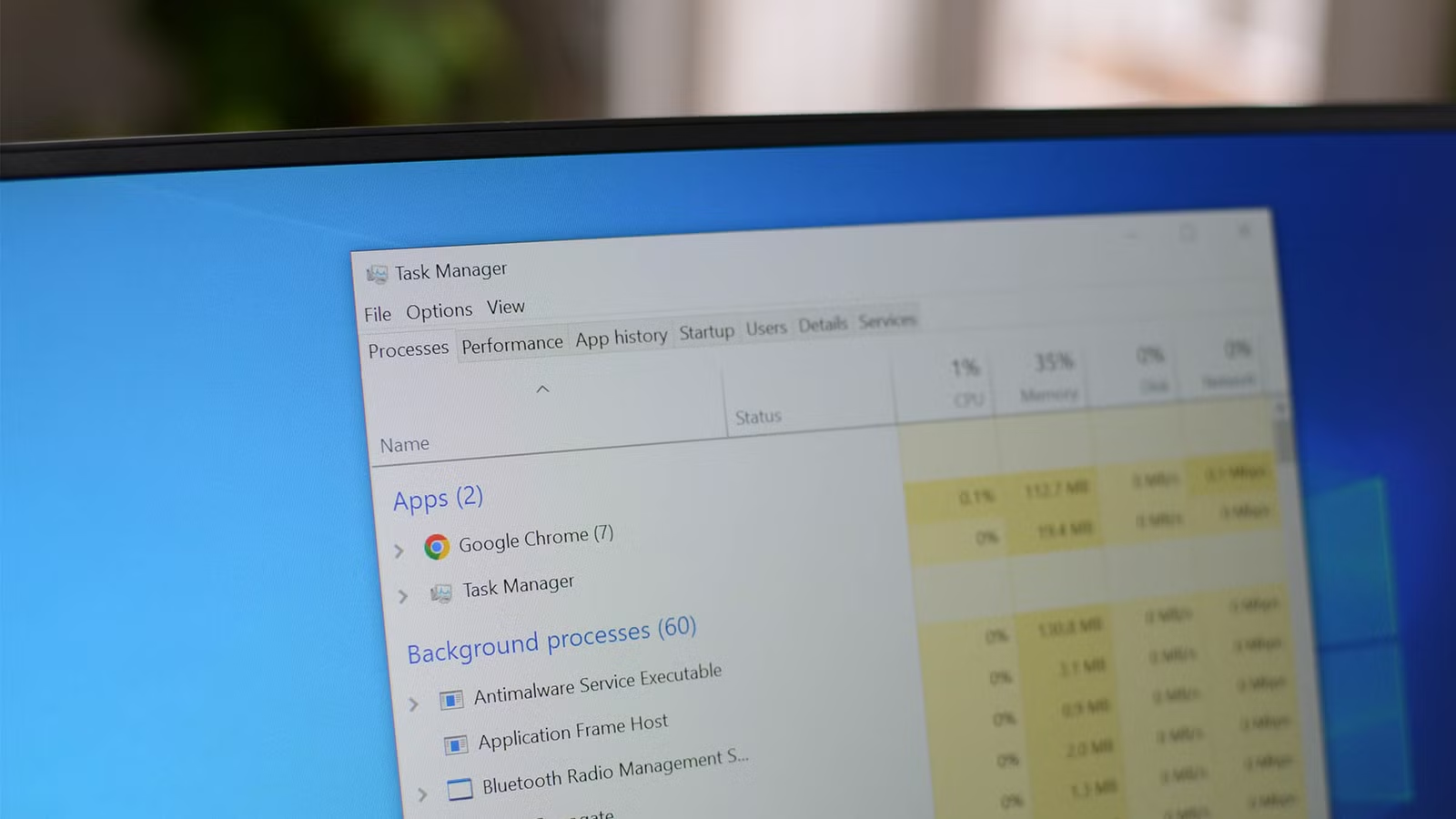
If after restarting the screen remains black or the desktop does not appear, the most practical thing to do is to use the Task Manager as the "gateway" to the system. Press Ctrl + Shift + Esc (or Ctrl + Alt + Delete and then select Task Manager) to open it. From there you can check if explorer.exe is running, restart it, or launch other diagnostic tools.
In Task Manager, check the tab for Processes to search for “Windows Explorer”If it appears, select that process, right-click on it, and choose Restart. It's normal for the desktop to disappear briefly and then reappear; if everything is working correctly, the Start menu and taskbar should be functional again.
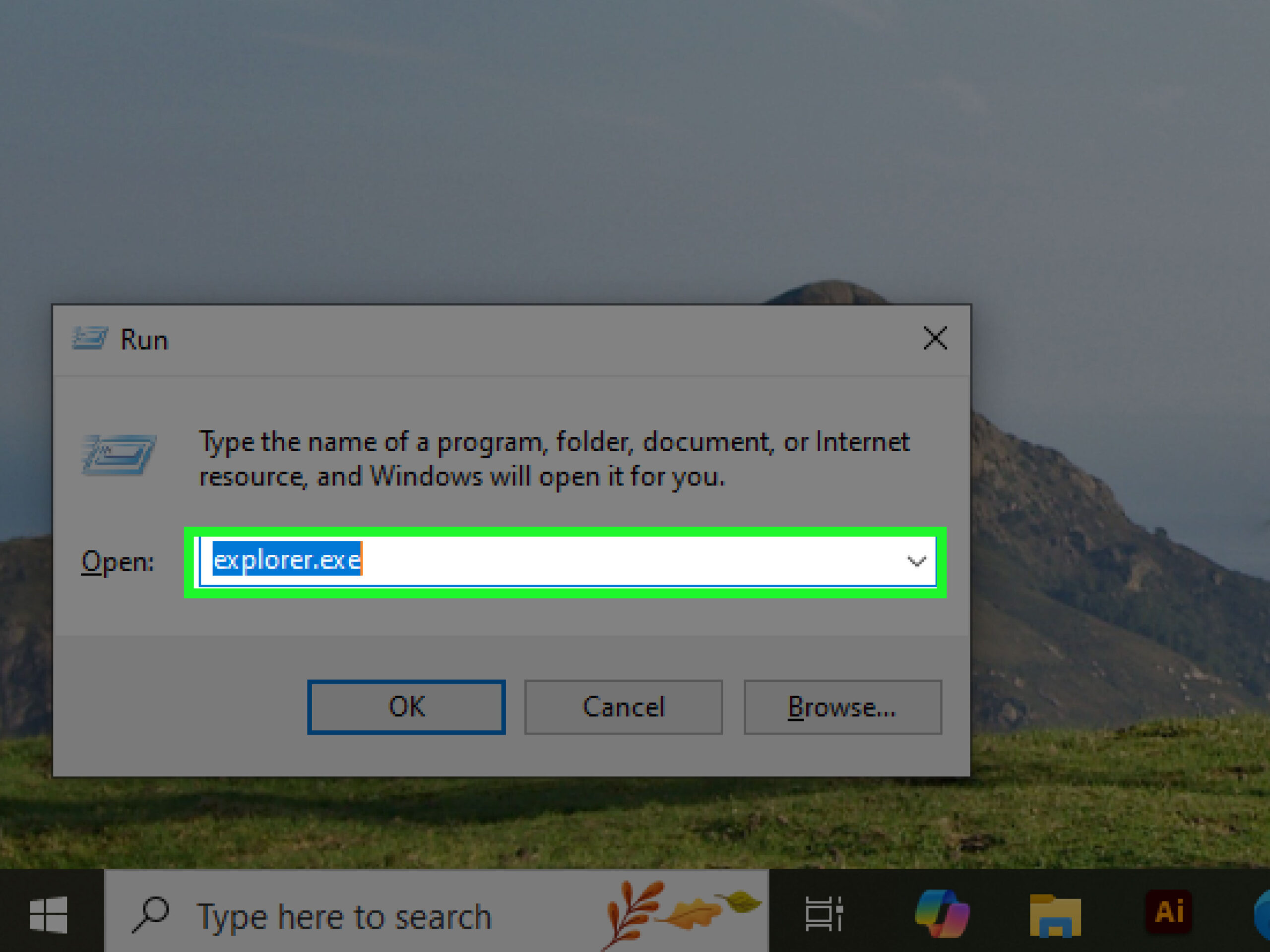
If there is no active Windows Explorer process, from the option File > Run new task You can try launching it by typing explorer.exe and checking the box to run it with administrative privileges. If it still doesn't open or closes immediately, it indicates a deeper problem that will need to be addressed using other methods.
If you also can't access Settings or the Start menu, Task Manager will allow you to open the Run tool by typing cmd, powershell, regedit or other utilities that will be needed in the following steps to repair the system.
Restart explorer.exe from CMD and Task Manager
If restarting from Task Manager isn't enough, you can resort to more direct commands from the console to force the complete stop of explorer.exe and its subsequent clean boot.
Open the Run tool with Windows + R, type cmd Then press Ctrl + Shift + Enter to open Command Prompt as administrator (if you don't have a Start menu, you can launch Run from Task Manager). In the command window, first enter:
taskkill /f /im explorer.exe
This command completely closes any instance of explorer.exeIt's normal for any remaining visible desktop to disappear instantly. To relaunch Windows Explorer, run:
start explorer.exe
If the problem was a temporary process blockage, The desktop should reappearas well as the taskbar and Start menu. Then close the CMD window and check if everything responds normally or if the freezes persist.
If explorer.exe still fails to start or opens and closes immediately, it is a clear indication that there is damage to system files, associated libraries (such as ExplorerFrame.dll), or a registry setting that prevents it from loading properly.
Repair system files with SFC and DISM
When you suspect corrupted system filesThe built-in tools SFC (System File Checker) and DISM are your best allies. Both analyze the operating system for corrupt or inconsistent files and attempt to restore them from the Windows image.
To run SFC, open a Command Prompt as administrator (from Run, Task Manager, or even from the recovery environment if you can't log in) and type:
sfc /scannow
This command Checks and repairs critical system filesOn severely damaged systems, it can take a long time; in some cases, the first pass only detects errors and partially corrects them, so it's advisable to restart the system and repeat the scan. It's important to let it finish: repeatedly interrupting SFC with Ctrl+C can cause strange behavior or prevent the tool from displaying results.
If the problem persists after one or more SFC scans, supplement the process with DISM. In another console with administrator privileges, run the following commands in this order:
dism.exe /online /cleanup-image /scanhealth
dism.exe /online /cleanup-image /restorehealth
dism.exe /online /cleanup-image /startcomponentcleanup
DISM is responsible for Check and repair the Windows image which SFC depends on. After completing these commands, restart your computer and run sfc /scannow again. If everything goes well, on one of these passes the system should return a message indicating that no violations were found or that any detected problems were successfully repaired.
When SFC and DISM end without errors but explorer.exe still won't loadYou need to start thinking about other elements: from specific libraries like ExplorerFrame.dll to registry problems or problems with the user account you are using.
Clear Explorer history and check disk space
Sometimes the failure doesn't stem from a major internal disaster, but from File Explorer settings and temporary data that have become corrupted. Clearing the Explorer history can resolve persistent crashes when opening file windows or loading the desktop.
If you have access to the desktop or manage to launch it temporarily, open the control Panel (You can type "control panel" in the Windows search bar or access it from the Run dialog box.) In the large or small icon view, go to "File Explorer Options".
In the window that opens, at the bottom of the General tab you will see the section PrivacyThere you'll find the option "Clear File Explorer history" next to a Delete button. Click that button to completely delete the history and then accept the changes.
Another basic aspect is to check the available space on drive C:If the system partition is almost full, Windows may have serious problems starting essential processes, creating temporary files, or applying updates. Open File Explorer (if available) or type C: in the Run dialog box and check the free space. If it's nearly full, move large files to other drives (D:, E:, external drives, etc.) and free up space in the Recycle Bin.
These more "maintenance" steps don't always fix a broken explorer.exe on their own, but They eliminate factors that can aggravate the problem and help to increase the chances of success for the other solutions.

Check and repair the Shell key in the Windows Registry
One of the most delicate but also most effective causes to correct is the shell configuration in the registryIf for any reason the entry that indicates which program should be loaded as the shell at login does not point to explorer.exe, the desktop will never appear.
To check this, open the Registry Editor typing regedit in the Windows search box or in the Run window (you can also use Task Manager > Run new task > regedit and check “Create this task with administrative privileges”).
There are two particularly important routes that should be checked. The first, machine-level route, is:
HKEY_LOCAL_MACHINE\SOFTWARE\Microsoft\Windows NT\CurrentVersion\Winlogon
With the Winlogon key selected, look in the right panel for the string value called ShellIts content should be, on a normal system, “explorer.exe”. If you see something else (a strange path, an unknown executable, etc.) or the value is empty, edit it and write exactly:
explorer.exe
The second route, which affects the current user, is:
HKEY_CURRENT_USER\SOFTWARE\Microsoft\Windows NT\CurrentVersion\Winlogon
This key should also contain a string value named Shell. If it's not present, right-click on Winlogon, select New > String Value, and name it Shell. Then, double-click it and in the "Value data" field, enter:
C:\Windows\Explorer.exe
If the problem persists after trying the full path, you can edit that value again and simply leave it as "explorer.exe" in the computer key. Once these modifications are made, Restart your computer and check if the desktop starts normally.
Modifying the registry is very sensitive, so it is advisable Make a backup of the keys you are going to touch. (File > Export within Regedit itself) in case you made a mistake and need to go back.
Replace and re-register ExplorerFrame.dll
The file ExplorerFrame.dll is a key shared library This DLL is required for Windows Explorer to function. If this DLL is corrupted, incompatible, or has been modified, it can cause explorer.exe to fail to load, crash immediately upon startup, or display persistent errors.
One possible solution is to obtain a healthy copy of ExplorerFrame.dll From another computer with the same version of Windows (ideally the same system, edition, and 32-bit or 64-bit architecture). DLL repositories also exist, but it's much safer to extract the file from a trusted installation.
Once you have the file, copy it to a USB drive or external media and paste it into the corresponding path on the affected computer, usually:
C:\Windows\SysWOW64 (on 64-bit systems)
If an ExplorerFrame.dll file already exists there, you can replace it with the new one (It's recommended to back up the old one by renaming it first.) After copying it, open a Command Prompt as administrator and re-register the library with the following command:
regsvr32 ExplorerFrame.dll
If the registration completes successfully, you will see a confirmation message. After this, restart your PC and check if explorer.exe loads without errors upon login. In many cases where the DLL was corrupt, this action Restores stability to Windows Explorer.
Scan for malware and use Safe Mode
When you notice strange behaviors like explorer.exe not starting, menus freezing or Windows file errors when logging in, one possibility that cannot be ruled out is the presence of a virus or malware.
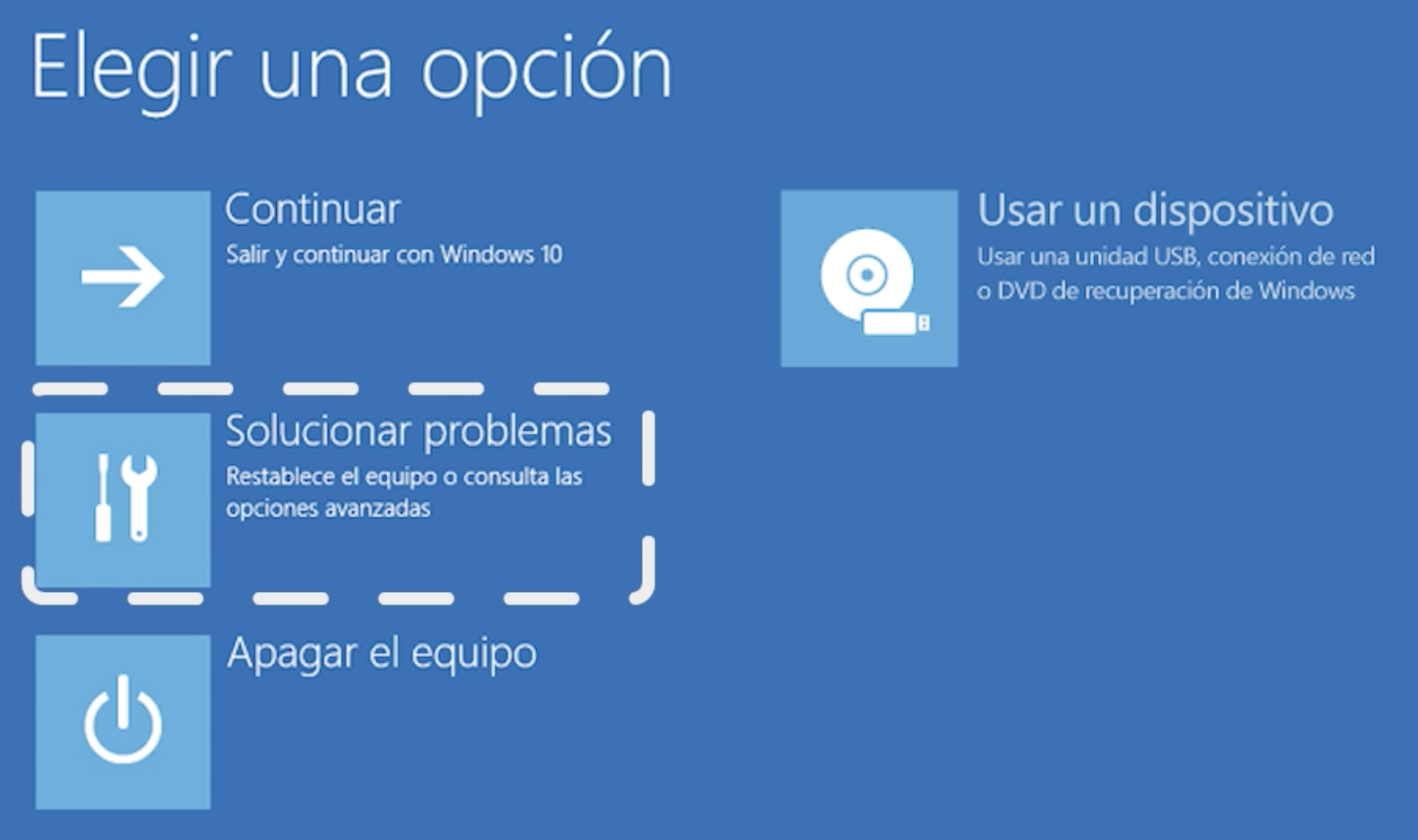
To perform a thorough check, it is recommended to start the computer in Safe Modewhere only basic services and drivers are loaded. On many older computers, this could be accessed by holding down the F8 key at startup, but on more modern systems, it is common to have to enter the advanced recovery options in Windows (for example, by forcing several consecutive shutdowns during startup until the repair environment appears).
Once in Safe Mode, run a full scan with your trusted antivirus or with Windows Defender. Make sure the scan is thorough and covers all drives. If it detects infected files, quarantine or delete them according to the antivirus's instructions; it's also helpful to consult the Differences between SmartScreen, Defender and firewall to know what to expect from each tool.
After the cleanup is complete, restart your computer in normal mode and check if explorer.exe loads correctly. Many malicious codes "latch onto" the Explorer process, so Removing the malware can resolve the desktop failure. without the need for more drastic measures.
Try using a different user account or create a new one.
In many cases the problem is not system-wide, but is linked to a corrupted user profileIf a specific account has corrupted settings, broken profile files, or malformed registry entries, it can cause explorer.exe to fail only when logging in with that user.
If your team already has more than one account, tap Press Ctrl + Alt + Delete and use the "Switch user" option To log in with a different profile. If the desktop appears without problems with that account, the problem is most likely with the original profile.
In that case, you can assess migrate permanently to the new accountThis involves copying your documents, images, and other important data from your old user folder to your new one (for example, from C:\Users\OldUser to C:\Users\NewUser). However, you may need to reinstall some applications or reconfigure your custom preferences.
If you don't have another account, it's a good idea to create one. This is usually done from Settings > Accounts > Other users > Add account. If the Start menu and Settings aren't working, you can use the Control Panel or specific commands, but when they are working, you can choose the option when creating a new account. “I don’t have this person’s login information.” and then “Add a user without a Microsoft account” to create a traditional local account.
After creating the new user, Log out and log in with that account.If explorer.exe works perfectly there, you'll save yourself the headache of trying to repair a badly damaged profile and you can continue using the computer normally from the new user account.
When to consider reinstalling or resetting Windows
If you've already tried restarting explorer.exe, running SFC and DISM, clearing history, repairing the registry, checking ExplorerFrame.dll, and scanning for viruses, use another user account And yet explorer.exe still fails to load or Windows is practically unusable, the installation is likely too corrupted.
In that situation, it's necessary to assess a Windows reset or reinstallationIn Windows 10 and 11, there's a "Reset this PC" option that you can launch from Settings or the recovery environment. It allows you to reinstall the system while keeping (or not) your personal files, but it removes installed programs and restores many settings.
To avoid losing data, it is recommended perform a backup of the system partition beforehandYou can manually copy your user folders to another drive or use backup tools, as long as the system allows you to access them in some way (safe mode, another account, boot from USB).
On systems where even the recovery environment is damaged, the alternative is to resort to a clean Windows installation medium (created with the official Microsoft tool), boot from it, format the system partition, and install from scratch. It's more drastic; reinstalling everything takes time, but it guarantees a fresh environment where explorer.exe and the rest of the components will function normally again.
In short, when explorer.exe fails to load at login, it's a symptom that something has gone seriously wrong in Windows, but it doesn't mean your computer is beyond repair. From checking processes and repairing system files to editing the registry, reviewing key DLLs, scanning for malware, switching users, or even reinstalling the system, there are solutions. a complete battery of solutions which, when applied calmly and in the correct order, allow you to recover your desktop and return to working with your PC without having to give up your data.


Editor specialized in technology and internet issues with more than ten years of experience in different digital media. I have worked as an editor and content creator for e-commerce, communication, online marketing and advertising companies. I have also written on economics, finance and other sectors websites. My work is also my passion. Now, through my articles in Tecnobits, I try to explore all the news and new opportunities that the world of technology offers us every day to improve our lives.