- Jimeng AI combines advanced models to generate 4K images and 2K videos from text or references.
- Its official CLI allows you to integrate visual authoring into agents like Claude Code and terminal workflows.
- The Jimeng 2.1 model radically improves the generation of Chinese text within posters and images.
- Compared to Midjourney or DALL·E, it stands out for its video generation and optimization for the Chinese language.
If you move in the world of AI image and video creationThe name Jimeng AI (known as Dreamina outside of China) may already sound familiar. In a very short time, it has become one of the most powerful solutions for generating visual content from text, and now it's taking a significant leap forward with its own command-line tool and multiple specialized models.
In this comprehensive guide you will see, in great detail, how Create images with Jimeng AI From the web, its official CLI, and within agents like Claude Code or Cursor, we'll explore what models it offers, how it differs from Midjourney or DALL·E, and what kind of real-world projects you can build on top of it. The goal is that, by the time you finish reading, you'll have a clear understanding of how to integrate it into your daily workflow, whether you're a developer or a content creator.
What is Jimeng AI and why is it generating so much buzz?
Jimeng AI is a image and video generation platform Powered by ByteDance, the same tech giant behind TikTok, Dreamina is also known internationally and is part of a broader ecosystem of AI tools for image, video, and chatbots.
Their main proposition is to allow you to create high-resolution still images and short videos Simply describe in text what you want to see, or provide one or more images as a reference. It's designed for both professionals (designers, marketing teams, product managers) and users who want to produce visual content quickly and easily.
In addition to the web version and integration into desktop applications using WebCatalog-type wrappers, Jimeng AI has invested heavily in the usage from the terminal and AI agents with its official CLI, which makes it especially attractive for developers and advanced users who want to automate their creative pipeline.
On the creative front, Jimeng AI stands out for its ability to understand descriptions in Chinese With a fidelity far superior to many Western models, which is especially noticeable in posters with text, covers, or advertising materials. Even so, it also responds well to prompts in other languages thanks to its latest generation models.
How to install and use Jimeng AI CLI to create images and videos
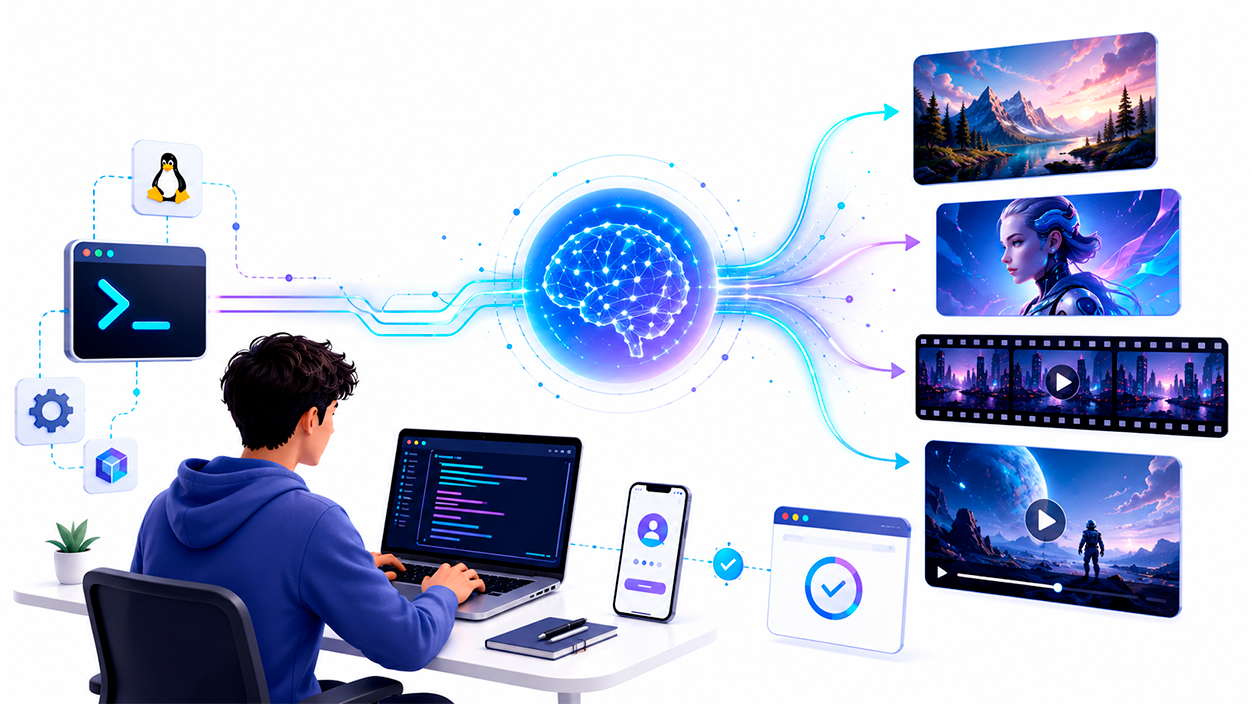
One of the platform's major new features is the Jimeng AI Official CLI, a command-line tool designed to let you invoke image and video generation from any compatible AI agent: Claude Code, Cursor, other IDEs with integrated agents, or directly from the terminal.
The philosophy behind this CLI is simple: with a single instructionAny agent who knows how to call tools can leverage the full power of Jimeng's models without you having to open a browser. This fits perfectly with the current trend of "terminal-first" ecosystems, where developers live in the console.
Quick installation on macOS and Linux
The installation of the Jimeng AI CLI is done with a single curl commandThis is very much in line with what already happens with tools like Claude Code or Gemini CLI. The official script downloads and configures everything necessary in seconds, as long as you're on macOS or Linux.
curl -s https://jimeng.jianying.com/cli | Bash
This command installs the tool on your system, assuming you already have curl Available (comes standard in most Linux distributions and macOS). The process usually takes about 30 seconds and requires no complex manual steps.
Login and usage within an agent
Once the CLI is installed, the next step is Log in with your Jimeng AI accountThe usual way is to do it from the AI agent you are using, for example Claude Code, which will guide you to complete the authentication through the browser.
The typical flow is as follows: the agent executes a CLI command, which opens a URL in your browser to authorize access with your account, and when you confirm, the tool is linked. This step usually takes around one minute.
After authentication, you can begin to invoke the generation of images and videos Simply describe what you want to achieve in natural language during the conversation with the agent. The agent will then translate your request into CLI calls, which will connect to Jimeng's servers.
System requirements for Jimeng AI CLI
For everything to work smoothly, there are a number of basic requirements that your environment must comply with:
- Operating system: macOS or any compatible Linux distribution.
- Departments: curl is installed (it usually comes by default).
- Connectivity: Access to the URL jimeng.jianying.com without blocks.
- Account: prior registration on the Jimeng AI platform.
- Agents: Claude Code, Cursor or another agent that supports tool calls via CLI or MCP.
In Windows, official usage focuses on combining with WSL (Windows Subsystem for Linux)In other words, you can open a Linux terminal within Windows, run the installation command, and operate the CLI normally from that environment.
Key features of image generation with Jimeng AI
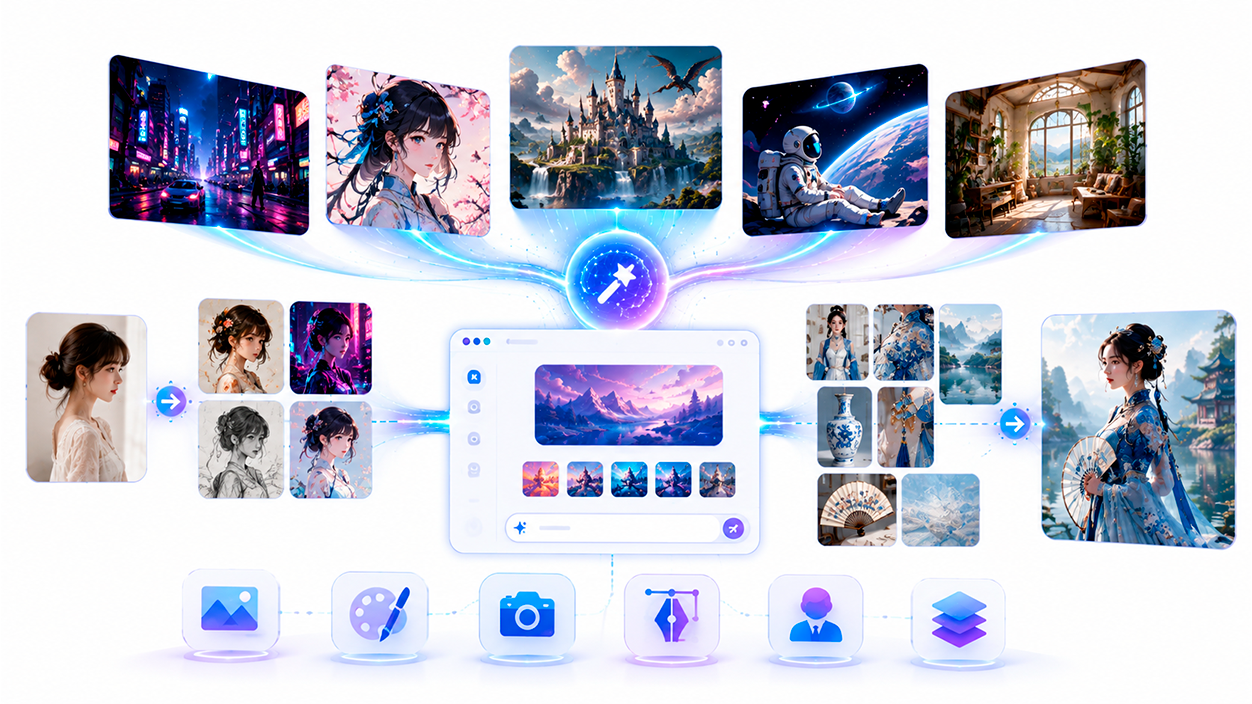
Jimeng AI's visuals rely on its own family of models Seedream and in several versions of Jimeng (3.1, 4.0, etc.), which compete in quality with any leading generator on the market. Its objective is to produce images 2K-4K very detailed, with great stylistic control and good consistency between elements.
Text to high-resolution image
The function of text to image This is the basis of the system: you write a description in natural language and the model returns one or more images that match your prompt. You can play with styles (realistic, anime, pixel art, technical illustration…), framing, lighting, atmosphere, and much more.
Jimeng's current models allow us to reach resolutions up to 4KThis makes them suitable for posters, large banners, book covers, or any resources requiring high definition. From the CLI, you can also specify output directories or specific filenames.
A practical example within an agent like Claude Code would be something like this (at a conceptual level): asking the agent to “help you generate a cyberpunk style urban night scene in 2K with Jimeng.” The agent, in turn, will make the corresponding CLI call to produce the image and save it in your project.
Image by image and styles with multiple references
Another important function is the ability to transform an existing image in another with a different style, while retaining part of the composition or key elements. This allows for variations of the same design, adapting a character to another context, or unifying the visual style of a series of resources.
Jimeng AI also supports the synthesis with multiple reference imagesYou can provide up to 12 images as a guide to ensure the model maintains consistency in color, style, characters, or overall composition—very useful for branding projects, comics, or game interfaces.
The available models include versions such as Jimeng 4.0, Jimeng 3.1 and Seedream 5.0, in continuous iteration. This means that quality, fidelity to prompts, and generation speed improve over time, and you can try different versions depending on what you want to prioritize (detail, speed, specific style, etc.).
Jimeng Model 2.1: Chinese text inside the image
One of the major recent developments is the imaging model Jimeng 2.1, focused on solving a classic problem of generative AI: the correct generation of text embedded in the image, especially in Chinese.
This model allows you to create posters, red envelopes, festive banners and promotional materials where the textual content is part of the design. Simply write a description that includes both the visual elements and the desired text, and optionally, the calligraphy style.
For example, you can order a “poster for a period drama about a eunuch from the Qing Dynasty, with calligraphy by Zhao Mengfu and the title 'Reincarnation: I am a eunuch in the Qing Dynasty'”. The model generates a complete composition where the main text usually comes out with great accuracy; the smaller font sizes may still have some errors, but the leap in quality compared to previous models is remarkable.
Another very interesting case is the red envelopes and festive designsBy specifying elements such as the logo, calligraphy (e.g., Yan Zhenqing), dominant colors (red and gold), and decorative motifs (such as a snake totem), Jimeng 2.1 produces materials with a much more reliable typographic representation for Chinese campaigns.
Creative applications of the text-to-image model
The possibilities offered by advanced text management within images are quite extensive. Some of the clearest applications are:
- Custom posters: posters for movies, theater, events or promotions, with eye-catching titles and specific fonts.
- Book and novel covers: Generation of complete covers by entering only a thematic description and the cover text.
- Comic book scenes: Images with characters, backgrounds, and labels that inspire or are even used directly for webcomics.
- Images for social media: Posts with eye-catching text integrated into the image to enhance visual impact.
- Greeting cards: festive or personalized designs with written messages.
- Design of virtual characters and game elements: characters, HUDs, icons, and other interface resources.
Currently, this model is in beta phaseTherefore, it may not yet be available to absolutely all users or regions, but it is expected to be rolled out gradually for widespread use.
Generating video with Seedance 2.0 from the CLI
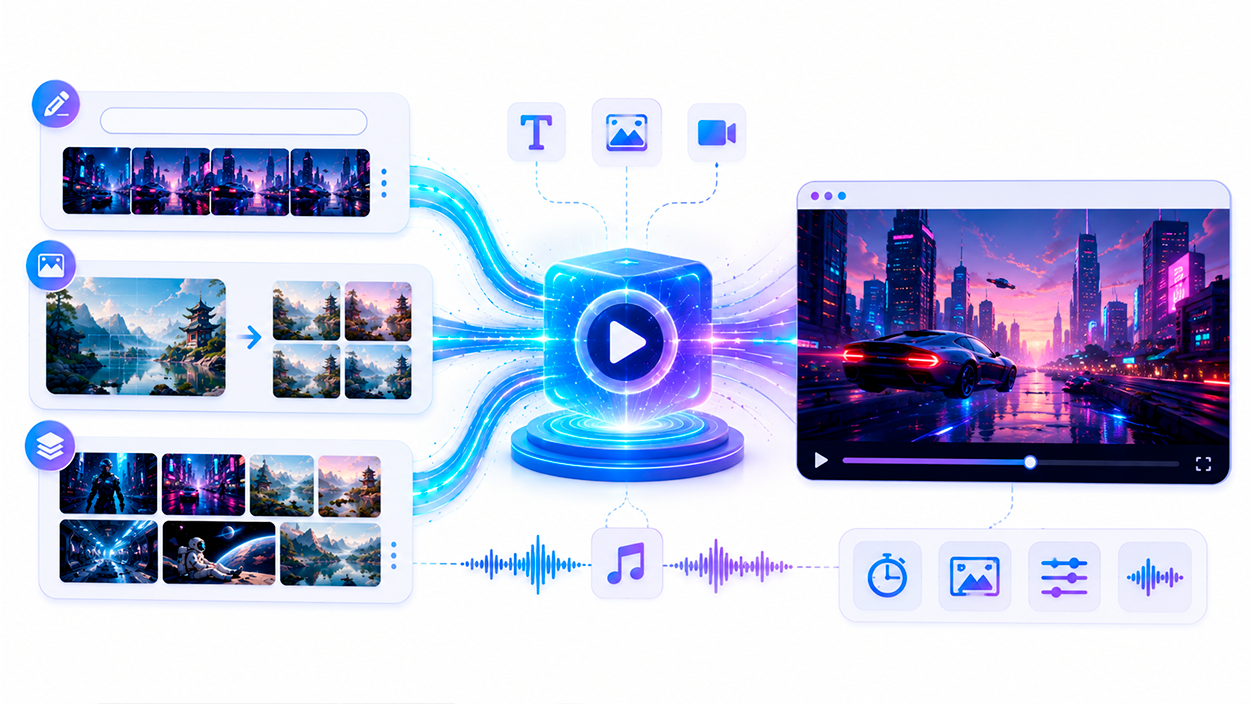
In addition to the image processing component, Jimeng AI offers a powerful engine for video generation called Seedance 2.0, launched in early 2026. This model is designed to produce clips of up to 15 seconds in 2K resolution from text, still images or combinations of various resources.
Seedance 2.0 is considered one of the major competitors in the field of generative video AIIt competes with solutions like Sora or Kling. Its main advantage is that you can access it directly from the same CLI you use for images, without changing tools.
Text to video and animation from images
The option of text to video It allows you to describe a short sequence and let the model generate an animation consistent with that scene. For example, something like “5-second app interface animation, swiping from the login screen to the home page” for a product prototype.
It is also possible to start with a static image and use the function of image to video To add movement: zooms, pans, small animations of elements, or transitions between scenes. The system supports start and end frame control, which helps you plan the clip's structure.
Another interesting feature is the ability to combine multiple reference files (up to 12), so that the animation respects the visual style of a series of images or the coherence between several scenes.
AI-generated ambient audio
Seedance 2.0 doesn't just focus on the visual aspect: it incorporates AI-generated native audio which acts as ambient sound within the video itself. This can range from simple effects (city noise, footsteps, wind) to more complex soundscapes that better complement the scene.
For many use cases (e.g., social media videos, quick product demonstrations, or internal presentation clips) this integrated audio It avoids having to go through an additional editor just to add a basic sound track, saving time and effort.
Integration with Claude Code, Cursor, and other AI agents
One of the keys to Jimeng AI CLI's success is its natural integration into the AI agent ecosystemThe tool is designed to work “on any agent” that supports calls to MCP (Model Context Protocol) type tools or protocols.
In practice, this means that if you are already using Claude Code, Gemini CLI, Codex CLI or GitHub Copilot CLI For programming and DevOps, you can add Jimeng AI CLI as your creative arm for images and video without changing the way you work.
Workflows combining code and creativity
A typical high-performance workflow might look something like this: you use Claude Code, with the Claude API managed via APIYITo generate code, documentation, and text; when you need visual resources (diagrams, illustrations, mockups, short interface videos), you invoke Jimeng CLI from the same conversation.
This allows you to set up a pipeline where You don't leave the terminalThe agent writes the article or generates the script, Jimeng produces the images and videos in specific project folders, and finally, a deployment script uploads everything to the corresponding CMS or repository.
For example, while writing a technical post in Claude Code, you can ask: “generate with Jimeng a MoE architecture diagram with dark background and professional style.” The agent will call the Seedream model to create the high-definition graphic and leave it ready in your assets directory.
In a product environment, you can do something similar for demo videos, requesting interface animations of just a few seconds that explain the main flow of the app without having to record the screen or edit manually.
Overview of Jimeng's AI CLI and Positioning Tools
The launch of Jimeng AI CLI comes at a time when the AI CLI tools They are becoming the standard for developers. Until now, most of these solutions focused on code generation and programming assistance; Jimeng is expanding this battle into the creative arena.
If we look at the console tools market, we find options such as Claude Code (Anthropic), Gemini CLI (Google), Codex CLI (OpenAI) or GitHub Copilot CLI (Microsoft)all of them geared towards coding, reasoning, repository management and DevOps.
Jimeng AI CLI, for its part, clearly positions itself as a creative agent at the terminalspecializing in images and video. In this way, it completes the cycle: you have coding agents to write and debug code, and creative agents to generate the associated visual content, all without leaving the console.
This approach fits with the trend of “the terminal as the operations centerAnd with the standardization of tools driven by the Model Context Protocol. As more agents adopt MCP and similar mechanisms, it will become easier to plug CLIs like Jimeng into any working environment.
Free trial event and membership model
To accompany the launch of CLI, Jimeng AI launched a free experience event Focused on premium users. During a specific period (from April 1, 2026 to May 1, 2026), those who installed the CLI and authenticated with their account could access the Premium membership at no extra cost.
This membership gives access to all advanced features Image and video generation, including the latest text-to-image versions (Jimeng 4.0/Seedream 5.0) and the Seedance 2.0 video engine at its full potential.
Once the promotional period has ended, to continue using the full set of features it is necessary subscribe to a payment planIt is expected that there will be a free tier with certain basic capabilities, but the top-of-the-line models and maximum resolutions are usually reserved for paying users.
Comparison: Jimeng AI versus Midjourney, DALL·E and Stable Diffusion
To better place Jimeng AI on the map, it's helpful to compare its offering with other leading names in the sector such as Midjourney, DALL·E 3 or Stable Diffusionespecially from the perspective of someone who wants to work comfortably with images and video.
Regarding the how to useMidjourney primarily runs from Discord; DALL·E 3 is integrated into ChatGPT-like experiences or via API; and Stable Diffusion requires local models or external services, often with its own GPU. Jimeng, on the other hand, relies on a Native CLI and AI agentsprioritizing integration into automated workflows and at the terminal.
Regarding the video generationJimeng (with Seedance 2.0) offers this capability directly. Midjourney and DALL·E 3 do not yet include it as standard, and in the case of Stable Diffusion, extensions and complementary models are needed to achieve something similar.
In terms of resolution, Jimeng can reach up to 4K In still images, compared to the usual 2K of Midjourney or the 1024×1024 associated with many DALL·E 3 configurations. Stable Diffusion, by its open nature, depends on the configuration and power of the machine where it is run.
Where Jimeng particularly excels is in the Understanding and generating content in ChineseThis applies to both prompts and text embedded in the image. Midjourney and DALL·E are more optimized for English, and Stable Diffusion is highly dependent on the base model and the fine-tunes used.
Finally, the barrier to entry It's also different: to use Jimeng CLI you just need to run a command; Midjourney requires using Discord; DALL·E requires managing API keys or subscriptions; and Stable Diffusion requires technical knowledge and GPU hardware to get the most out of it locally.
Using Jimeng AI from the web and desktop applications
Beyond the terminal, you can also create images and videos with Jimeng AI from its official web interface or through desktop applications that encapsulate the web in a separate window, such as WebCatalog Desktop.
The basic flow on the website is very simple: you enter the Jimeng site, register or log in, and choose if you want generate image or videoYou write your prompt (or upload your reference images), adjust the parameters that interest you (styles, duration, resolution, etc.) and press the generate button.
When the content is ready, you can download it or share it directly. This approach is ideal if you don't want to deal with CLIs or agents, or if you're quickly testing prompts before integrating them into more advanced flows.
Desktop applications like those offered by WebCatalog allow the use of Jimeng AI in a dedicated window, without distracting browser tabs And with the ability to quickly switch between accounts and applications, it's a convenient option if you work with multiple AI services and want to visually separate them without cluttering your browser with sessions.
Smart Canvas: Advanced composition with editing tools
Within its ecosystem, Jimeng also offers an environment of “intelligent canvas” It goes beyond simply generating a single image. This canvas integrates puzzle capabilities (assembling multiple pieces on the same surface) and advanced editing functions such as partial redrawing, image expansion, element removal, and smart cropping.
The beauty of this approach is that you can go composing a complex scene in partsensuring that all elements maintain a consistent style and integrate seamlessly. For example, you can generate a background, then add characters, objects, and text, and ask the model to unify the style across the canvas.
Tools such as local repaint (repainting specific areas), canvas expansion to convert a square format into a panoramic one, and the removal of annoying objects allow you to polish the final image without resorting to external editors, always maintaining the consistency of the AI model.
Frequently Asked Questions about Jimeng AI CLI and the Platform
To wrap up the more practical aspects, it's worth reviewing some common questions that arise when starting with Jimeng AI and its CLI.
Does Jimeng AI CLI work on Windows? The official script is natively designed for macOS and Linux. If you use Windows, it is recommended to install it in a Linux environment. WSLThis will allow you to run the CLI as if you were on Linux. More direct options for Windows will likely appear later, but the currently supported path is through WSL.
Can I use Jimeng AI CLI together with Claude Code? Yes, in fact, it's one of the star use cases. Jimeng CLI is designed to "work with any agent," and Claude Code is on the list of compatible agents. You install the CLI, authenticate your account, and from there you can ask Claude to call Jimeng to create images or videos in your projects.
What happens when a free trial period ends? If you are taking advantage of any promotional event With a temporary premium membership, once the indicated date expires, you'll need to review Jimeng AI's subscription plans to continue using all the advanced models. A free tier with certain limitations may still exist, but more powerful versions like Jimeng 4.0 or Seedance 2.0 are usually tied to paid plans.
Overall, Jimeng AI has established itself as a A very complete solution for creating images and videos with artificial intelligenceThis is especially appealing if you work in a terminal environment or if your target market includes Chinese content. Between the power of its Seedream and Seedance models, integration with agents like Claude Code, the intelligent canvas, and web or desktop options, you have a suite of tools capable of covering everything from text-based poster ideation to generating product clips, including covers, social media materials, and video game assets.

I am a technology enthusiast who has turned his "geek" interests into a profession. I have spent more than 10 years of my life using cutting-edge technology and tinkering with all kinds of programs out of pure curiosity. Now I have specialized in computer technology and video games. This is because for more than 5 years I have been writing for various websites on technology and video games, creating articles that seek to give you the information you need in a language that is understandable to everyone.
If you have any questions, my knowledge ranges from everything related to the Windows operating system as well as Android for mobile phones. And my commitment is to you, I am always willing to spend a few minutes and help you resolve any questions you may have in this internet world.