Would you like to transform your TV into a personal media center using Jellyfin? In this guide We'll show you how to use Jellyfin on Android TV and Google TVFirst, we'll see how to install the application, then how to connect your local service, and finally, how you can optimize playback settings to enjoy multimedia content with the highest quality.
What is Jellyfin and what is it used for?
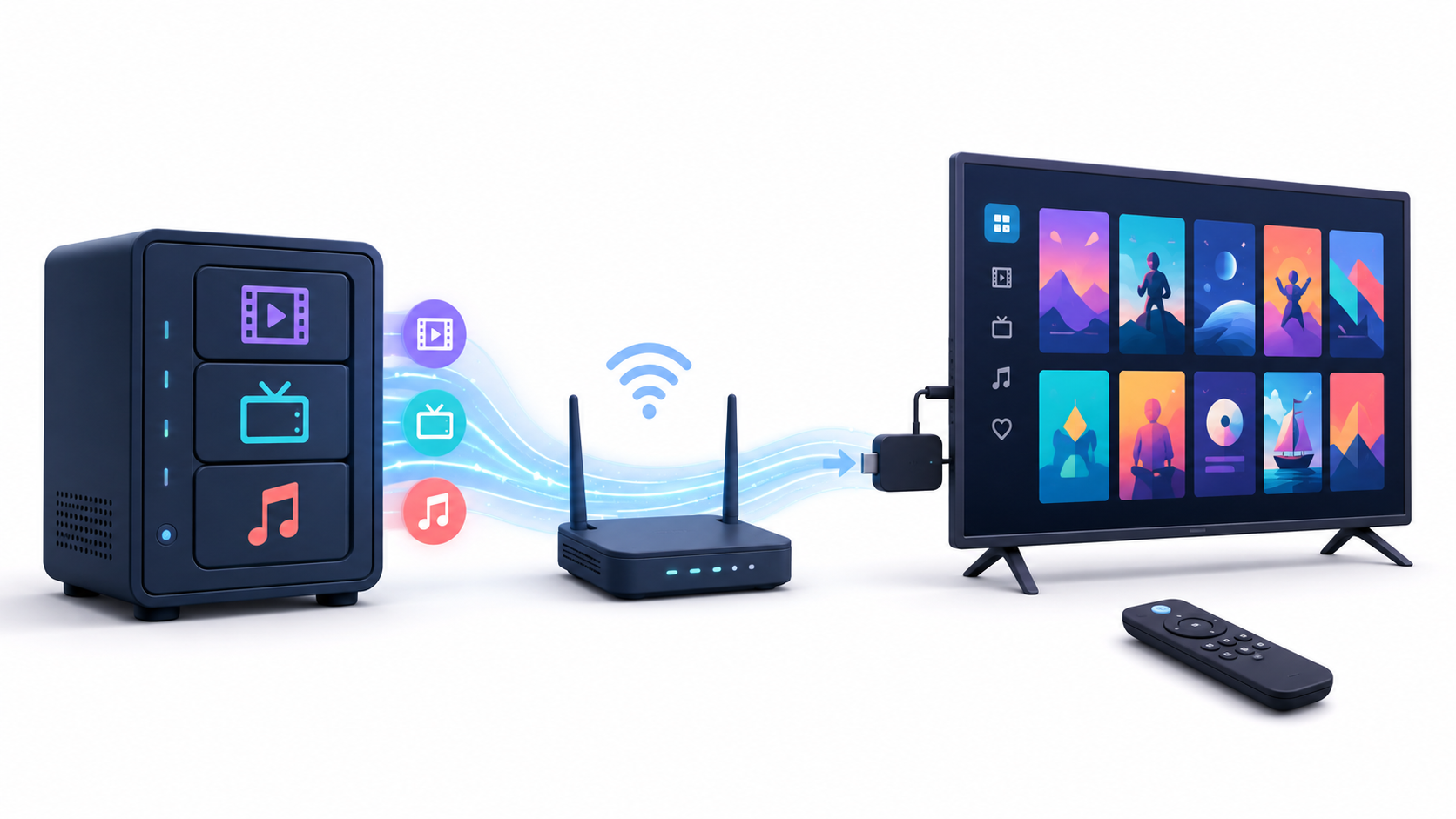
How does Jellyfin work? The ecosystem operates through an architecture known as Server – Client.
- The Server or Hosting: The first thing you need to do is install the Jellyfin Server application on a host computer, a NAS server, or using Docker containers.
- Automatic organization: Jellyfin analyzes your folders and automatically downloads metadata from the internet, creating a catalog similar to Netflix or Spotify.
- The Client: Next, install the Jellyfin app on your playback devices (Android TV, Google TV, phones, tablets, browsers, or Roku devices) to connect to your server and stream content over your local network or the Internet.
- Transcoding: If the device you are watching the video on does not support the original file format, the server processes and converts the video in real time to a compatible format before sending it.
Once you have your files organized into folders on your computer, You need to link that folder to JellyfinThe system reads the file name, searches public internet databases, and automatically downloads the covers, actors, databases, etc., so you don't have to do it manually.
How to use Jellyfin on Android TV and Google TV
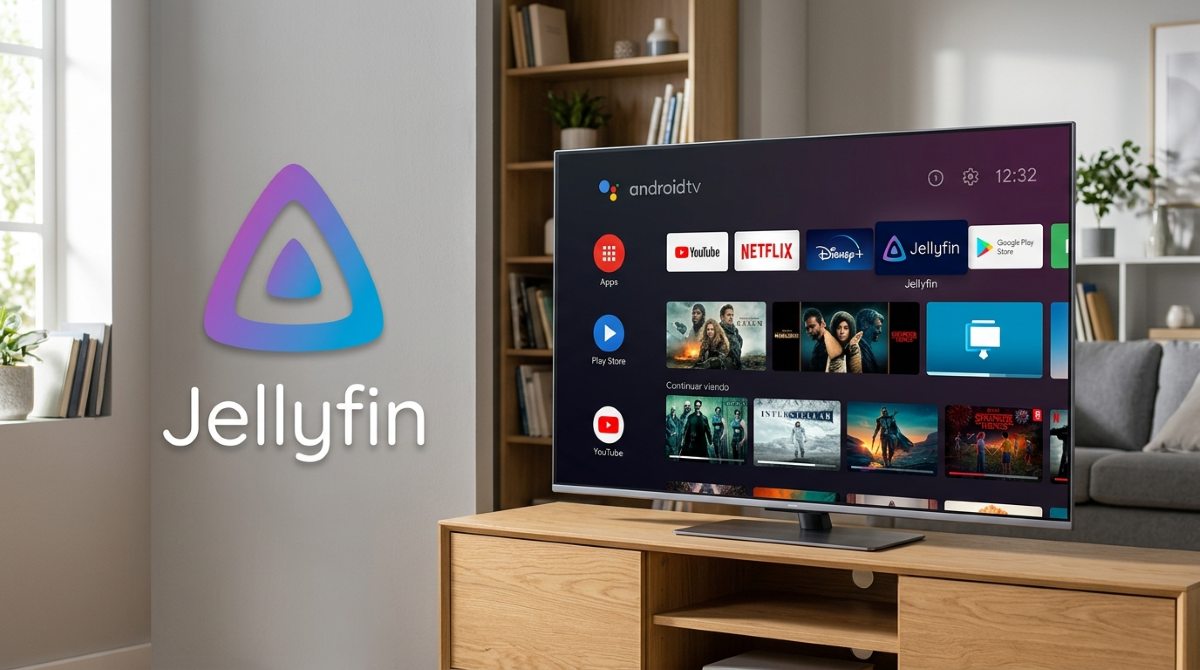
Learning how to use Jellyfin on Android TV and Google TV will allow you to enjoy your favorite content from anywhere, without ads and without paying subscription fees. However, before launching it on your TV, Make sure you have your Jellyfin server set up and powered on on your main computer or deviceYou also need to know your server's local IP address or your remote access URL.
Once your Jellyfin server is set up, follow these steps Steps to use Jellyfin on Android TV and Google TV.
1. Download the application
- Download the app from your TV's app store: On the home screen of your Android TV or Google TV, open the Google Play Store.
- In the search bar, type Jellyfin and install the official app. Jellyfin for Android TV.
2. Link to your server
Once the application is downloaded on the TV, Open it and select Add server / Add Server. Enter the complete server address, including the port (which by default is :8096If the app supports Quick Connect, even better. You can link it by scanning the QR code or entering the PIN code from your phone/PC browser by accessing your server.
3. Log in
Finally, Select your username and enter your Jellyfin password.When you log in, you'll see all your libraries automatically synced with their cover art, synopses, and playback status. As you can see, it's very easy to start using Jellyfin on Android TV and Google TV.
Recommended settings when using Jellyfin on Android TV and Google TV
There is some adjustments we recommend you make When using Jellyfin on Android TV and Google TV:
- Avoid transcoding (Direct Play): It's better to adjust the app settings on your TV. Set the playback quality to Original or the bitrate to maximum.This allows the television to play the video directly without overloading the server's processor.
- Refresh rate settings, If this option is available in the application: Go to Settings – Display and activate the option to match the content frames to avoid stuttering when watching movies at 24 fps.
- Subtitle adjustments: In the playback options, configure the subtitles to be in the correct format.
.srto.assPrioritize text rendering mode. This prevents the server from having to "burn" the subtitles into the video on the fly.
Advantages of using Jellyfin on Android TV and Google TV
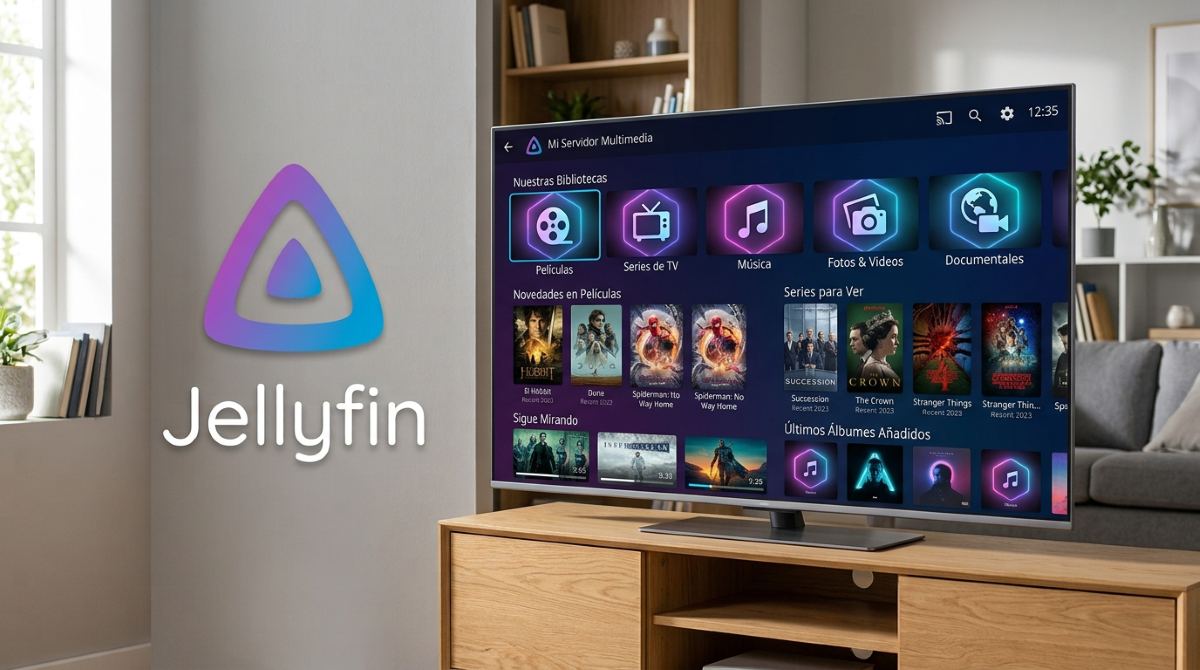
Using Jellyfin on Android TV and Google TV has many advantages. It's like having a home media streaming server To watch your personal library of movies and TV shows on any TV or device in your home without paying a subscription. However, you must have the content downloaded or saved to your storage beforehand to be able to view it.
Among the Main uses and advantages of using Jellyfin Android TV and Google TV include:
- Streaming service replacement: Centralize digital collections of movies, TV series, comics, and documentaries to stream them on a Smart TV within your home network. You can even read collections of digital books using this tool.
- High-quality film preservation and playback: Jellyfin allows you to play files in original quality without compression (for example, 4K HDR, Dolby Vision or Dolby Atmos/DTS audio formats), which are usually limited or more expensive on commercial streaming services.
- Personal music server: If you use client applications like Finamp, you can turn your computer into a Spotify-like music server with high-fidelity files. This allows you, for example, to listen to your local collection from your mobile phone.
- Remote access: Whether you are traveling or away from home for any reason, you can configure access to view content saved on your main computer on any of your devices (phone, tablet, laptop, etc.).
- Alternative to a TV decoder: You can also connect an antenna or TV tuner to Jellyfin to watch and record live over-the-air television.
In conclusion, using Jellyfin on your Android TV and Google TV is the definitive step to take full control of your entertainmentBy synchronizing your server and adjusting the live playback, you can enjoy all your multimedia content with good visual quality without interruptions, completely free and without subscriptions.

From a young age, I've been fascinated by all things scientific and technological, especially those advancements that make our lives easier and more enjoyable. I love staying up-to-date on the latest news and trends, and sharing my experiences, opinions, and tips about the devices and gadgets I use. This led me to become a web writer a little over five years ago, focusing primarily on Android devices and Windows operating systems. I've learned to explain complex concepts in simple terms so my readers can easily understand them.