- The Windows Feedback Hub allows you to report bugs and suggestions directly to Microsoft with detailed descriptions and specific categories.
- The tool supports attaching screenshots, files, and step recordings, as well as performance logs in Windows 11 to diagnose slowness issues.
- The reports rely on user consent to send diagnostic data and are key for Microsoft to detect and correct errors in future updates.

El Windows Feedback Hub It's Microsoft's official tool for any user to report what's wrong, what's slow, or what could be improved in Windows 10 and Windows 11. Although many people are unaware of it, it's the direct way for your problem to reach the development team, with technical data and, if you want, screenshots or recordings of what's happening. That's how important it is. Report bugs in the Windows Feedback Hub.
If you have ever experienced a system crash, deleted files after an update, or a agonizing slowness When performing simple tasks, using the Feedback Hub is the recommended way to report issues. Additionally, in newer versions of Windows 11, the system can automatically generate performance logs. so that, when you submit your report, Microsoft has much more information to diagnose the cause of the problem.
What is the Windows Feedback Hub and what is it used for?
The Opinion Center is a application integrated into Windows It is also available in the Microsoft Store under the name Feedback Hub. Its function is to centralize user feedback on technical issues and suggestions for improvements, both from those who are part of the Insider program and those who use stable versions of the system.

Thanks to this tool, users can communicate directly with Microsoft Any errors they detect—from graphical glitches, update errors, File Explorer problems, or random crashes, to ideas for improving existing features—are welcome. These reports are grouped into collections of related topics to help engineers identify patterns and review the most voted-for bugs.
The Feedback Hub became particularly well-known after some serious incidents, such as a Windows 10 update that He even deleted files from user folders (Documents, Images, etc.) on certain devices. Several users had been reporting this issue on Feedback Hub for some time, which showed that, although the tool is there and works, it is crucial that incidents are reported properly and have sufficient visibility so that the company can react in time.
It's worth noting that Microsoft It depends largely on reports from users and insiders. to detect many errors before updates reach the general public. That's why it's so important to know how to use the Feedback Hub correctly and provide as much information as possible when something goes wrong.
In Windows 11, the Feedback Hub is also complemented with new diagnostic features, such as performance drop logwhich helps identify bottlenecks and situations of extreme slowness, generating log files that can be attached with one click when submitting a report.
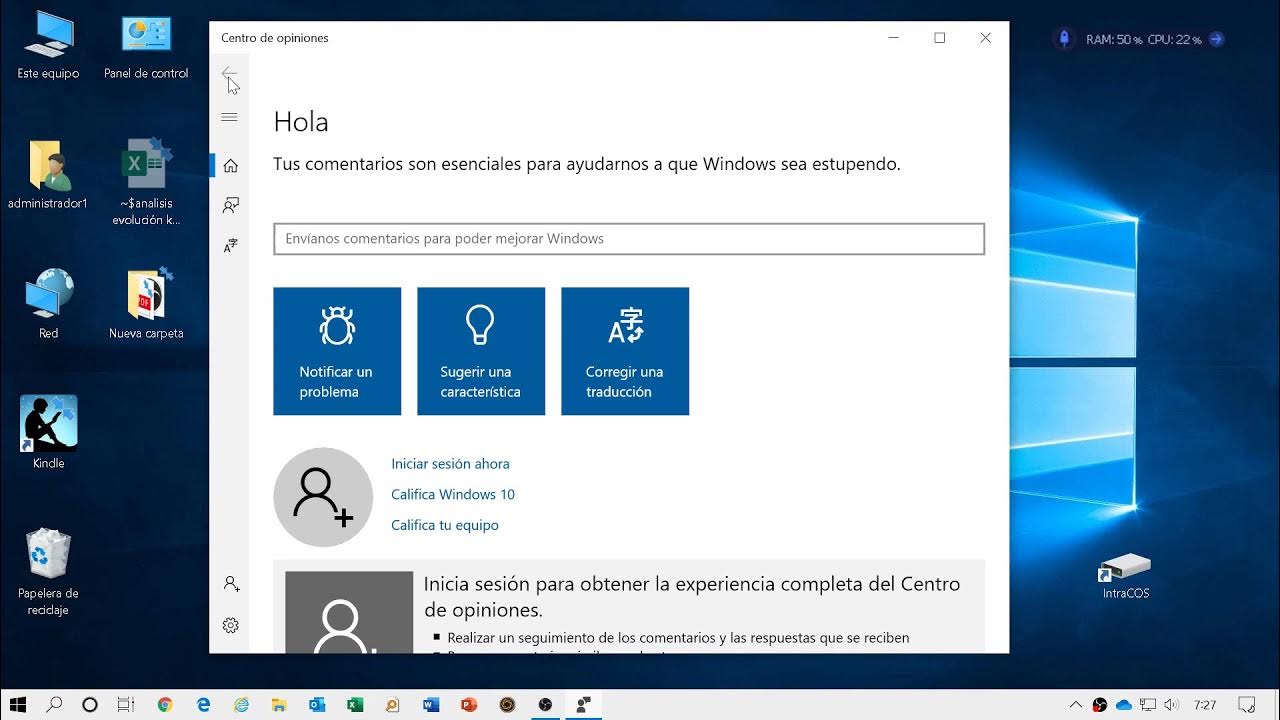
How to open the Feedback Hub in Windows 10 and Windows 11
The quickest and easiest way to access the Feedback Hub is through the keyboard shortcut Windows + FPressing these keys simultaneously opens the Feedback Hub application directly on the screen, without needing to search for it in the Start menu.
If you prefer to open it manually, you can search for “Feedback Hub” or “Review Center” In the Windows search box, next to the Start button, simply click on the application to begin using it. It's also available in the Microsoft Store, so if you uninstalled it or it's not showing up, you can download it again from there.
In some cases, especially when there are serious problems and You can't get in touch with Microsoft through other meansThe support itself recommends Use the Feedback Hub as your primary channel to document the error. Even independent advisors within the community point to this method as an alternative when it's not possible to open a traditional support case.
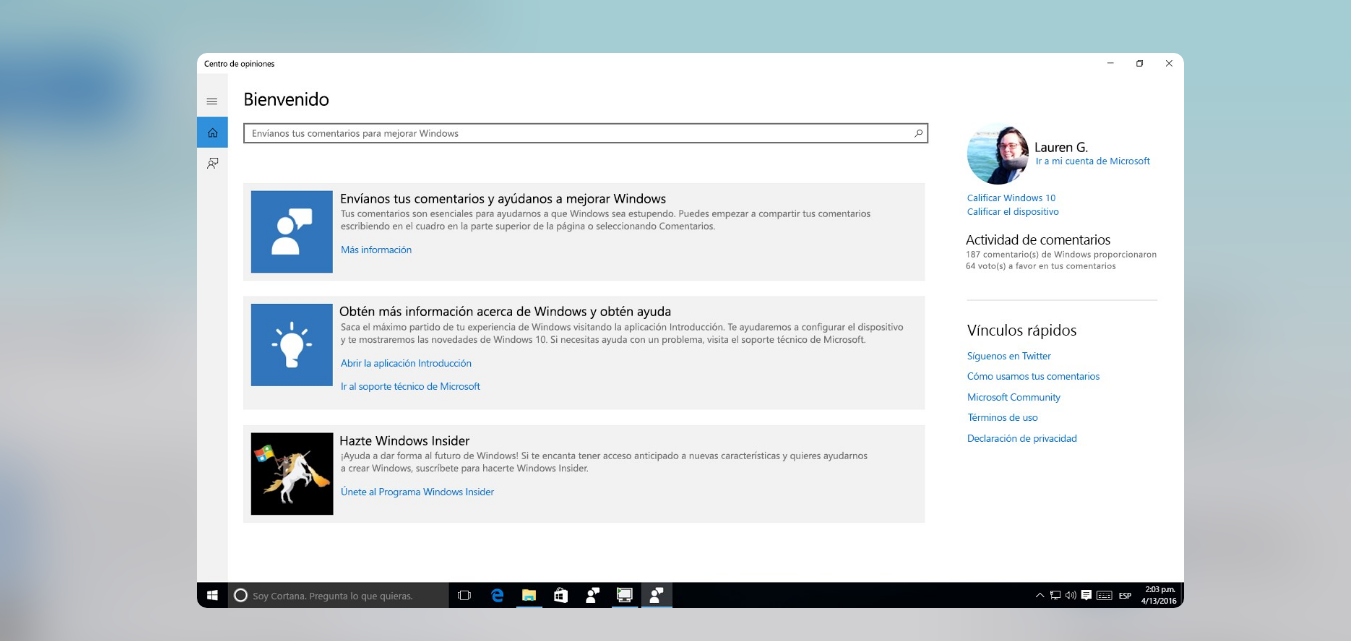
The app's interface is quite simple: you'll find sections to view existing comments, create a new report, and review the attached data or diagnostics that will be sent with your comment. Everything is designed to allow you to describe the problem step by step without needing to be a technical expert.
Write and submit a problem or suggestion report.
When you want to report a bug or suggest an improvement, the Feedback Hub will guide you through a multi-step wizard. The first step consists of Write your commentsThat is, give a title and a slightly more detailed description of what is happening to you.
At the top you will see the section “Comments” or “New Comments”The "Summarize comments" box appears, where you should write a short but clear title, for example: "Windows 11 freezes when opening Explorer with two monitors" or "Windows 10 deletes Documents files after updating." The more specific you are in the summary, the easier it will be for the system to match your report with similar ones.
Below you will find the field “Explain in more detail (optional)”Although it says it's optional, it's highly recommended that you fill it out. Here you can calmly describe what you were doing when the error occurred, what you expected to happen, and what actually happened. It's helpful to include specific steps, whether the problem always happens or only sometimes, and any error messages that appear on the screen.
After completing the summary and explanation, simply click on "Following" To continue the process. So far you have only described the problem in your own words; in the next step you will have to fit it into the categories that Microsoft uses to classify reports.
Choose whether it's a problem or a suggestion and select the category.
The next step in the wizard is called “Choose a category”The first thing it asks you to do is indicate whether what you are going to send is a problem (that is, something that doesn't work as it should) or a suggestion (an improvement, a new feature, or a change in the current behavior of the system).
Once you select this option, you will see fields of category and subcategoryWindows tries to automatically fill in the fields based on the title you typed, but it's not always accurate. It's important to double-check that the chosen area truly matches the problem: for example, "Desktop and File Explorer," "Windows Updates," "System Performance," or "Graphics and Display."
If the proposed category does not correspond to your case, you can change it manually from the dropdown menuThis classification is key to ensuring your report doesn't get lost mixed up with unrelated topics and reaches the appropriate team within Microsoft.
Once you have it correct, simply press again on "Following"The assistant will then move on to the part where it helps you find similar comments already submitted by other users, so that reports are not duplicated and information is concentrated in common threads.
Find similar reviews and link your report
At the step of “Search for similar comments”The Feedback Hub will display a list of reports similar to yours, based on the title and category. This is helpful for avoiding duplicating the same issue a thousand times and instead combining your efforts into a single report with more votes.
If you see that there is Comments very similar to what you're experiencingYou can select them and then choose from several options: “Link to,” “Create new bug,” or “Allow feedback evaluation.” If you’re unsure which is best, the tool itself recommends choosing “Allow feedback evaluation,” so that your contribution is associated with that topic without creating an unnecessary duplicate.
If nothing related to your problem appears, you can continue with “Create a new error” within “New comment”This will generate an independent report that can be found and voted on by other users later if they encounter the same issue.
Once you have linked your comment to an existing one or indicated that you want to create a new one, click again on "Following"From here, the assistant will ask you for more technical details and allow you to attach additional information, such as screenshots, files, or even a complete recording of the problem.
Add technical details and prioritize the problem
The next part of the process is called “Add more details”This step appears when you've marked your comment as a problem. If, instead, you've indicated it's a suggestion, the application will take you directly to the attachments section without showing this intermediate block.
In “Add more details” you can select the option “Consider this blocking problem” If you believe the error is critical or prevents normal system use, this type of signal helps ensure more urgent attention is given to serious failures, such as complete system crashes, data loss, or recurring freezes.
In addition, you will see the question “Which of the following options best describes the problem?”This involves choosing from a series of predefined descriptions, such as crashes, unexpected closures, poor performance, interface errors, etc. Selecting the option that most closely matches your experience helps engineers group reports coherently.
This level of detail, combined with attachments and automatic performance logs in Windows 11, ensures your report goes beyond a simple "this isn't working," becoming a comprehensive analysis. complete and technically useful description which can make the difference between a fault being detected quickly or taking months to come to light.
Once you have completed these fields, the wizard will take you to the block of “Attachments (optional)”which is especially useful when you want to show exactly what is happening on screen or provide files related to the problem.
Attachments: screenshots, files, and step recordings
In the section of “Attachments (optional)” You can enhance your report by including visual materials or files related to the error or suggestion. The application offers several options: attaching a screenshot, attaching a file, and the "Recreate my problem" or "Record my suggestion" functions.
The option “Recreate my problem” It allows you to record the exact steps you take until the error occurs. When activated, the tool records your actions and, if you choose, takes screenshots of each step. This is very useful for errors that only occur after a specific sequence of actions, because the Microsoft team can follow the same path and see the same thing you do.
To use it, select “Recreate my problem” and, next to “Include data about”, choose the types of data you want to send (for example, additional diagnostic information) and check “Include screenshots of each step” If you want images to be generated automatically, click "Start Recording," perform the actions that trigger the error, and when you're finished, click "Stop Recording."
If instead of a bug you want to suggest a specific improvement, the equivalent function is “Record my suggestion”By selecting this option and clicking "Start Recording," you can navigate the system while visually explaining what change you'd like to see, what option is missing, or what interface you think could be clearer. When finished, the recording stops and is attached to the report.
Along with these functions, you also have the possibility of attach screenshots manually or specific files. If the problem is related to a document, a specific file type, or a log entry you already have saved, this option will be especially useful.
How to take and attach a screenshot to a report
To ensure Microsoft sees exactly what you see when a problem arises or when you want to display a suggestion, the most practical approach is to include a screenshotWindows offers a very convenient shortcut to do it on the fly and save it in the corresponding folder.
First, position the cursor on the screen where the error or the function you want to comment on is visible. Then press the Windows logo key along with the Print Screen keyThis combination creates a screenshot of the entire screen and automatically saves it to your user's Pictures > Screenshots folder.
Then, in the Feedback Hub, select the option “Attach a screenshot” and then “Choose a screenshot”The file explorer will open directly to the images folder, where you can choose one or more screenshots. Select the ones that correspond to the problem and confirm with the "Open" button.
If the report requires it, you can also attach other types of filesThis includes files such as logs generated by diagnostic tools, documents that fail to open, or files that become corrupted after certain operations. To do this, simply click "Attach a file," locate the item you want to include, and select "Open."
The more visual and contextual information you provide, the easier it will be for technical teams to understand the conditions under which the error occurs and which parts of the system are involved, ultimately leading to faster and more accurate solutions.
Recording performance drops in Windows 11 and sending logs
In recent Windows 11 builds for the Dev channel, Microsoft has introduced a feature designed to automatically record system performance dropsThis feature is geared towards situations where the computer is very slow, freezes, or responds with a delay when performing routine tasks.
The feature appears in the update identified as 26200.5710 (KB5062676) It's located within the Settings app, in the Desktop section, under an option called "System sluggishness". When activated, Windows begins monitoring events related to performance drops and generates diagnostic files each time it detects one of these episodes.
These records or logs are stored in the path %systemRoot%\Temp\DiagOutputDir\Whesvcwithin the system itself. The data is stored locally and, most importantly, is not automatically sent to Microsoft: it only travels to the company when you choose to report a problem from the Feedback Hub and include those records as part of the report.
Although Microsoft hasn't provided every single detail about what these files contain, it's reasonable to assume they include Metrics on response times of key processes, CPU usage, memory, disk and networkas well as kernel or graphics subsystem events. They can also reflect bottlenecks that cause the computer to freeze for several seconds or crash.
The underlying idea is that by attaching these logs when reporting a performance issue through the Feedback Hub, engineers gain a fairly accurate picture of what was happening internally in the system at the time of the slowdown or freeze. And if you're not interested in this type of monitoring, you can always disable the “System Slowness” option in the settings to stop it from collecting data.
Privacy, consent and final submission of the report
Before you send your feedback to Microsoft, the Feedback Hub offers you some options related to privacy and handling of attachmentsIt's important to review them carefully, especially if your report includes screenshots or files that may contain sensitive information.
The final screen usually displays the box “Save a local copy of diagnostics and attachments created when submitting feedback”If you select this option, the system will keep a copy of everything sent on your computer, so you can review it later or save it if you wish to share it with other support services.
Depending on the telemetry level configured in your Windows, the option may also be displayed. “I agree to send Microsoft attachments and diagnostics along with my feedback.”It is essential to check this box if you want the company to receive not only the text you have written, but also screenshots, recordings, and log files related to the problem.
Once you have reviewed these fields and are satisfied with what will be sent, all that remains is to press the button. "Send"From that moment on, your report will be registered on Microsoft servers, integrated into the corresponding thematic collections, and can be reviewed, voted on, and commented on by other users and internal staff.
Although you won't always receive an individual response, in many cases you'll see annotations like this: “We've got it” or similar messages, indicating that the Microsoft team has taken note of the issue. If the report gains visibility and more cases are detected, you'll typically see related fixes in future cumulative updates or major new system releases.
Regularly using the Feedback Hub, especially when you notice recurring errors, unusual crashes, or performance drops after an update, helps ensure these issues don't remain isolated complaints but become more effective solutions. Useful technical reports for improving WindowsUltimately, the more users who report issues clearly and completely, the easier it will be for Microsoft to locate and fix problems before they affect millions of computers.
This entire process of reporting bugs, attaching screenshots, recording steps, and leveraging new slowdown logs makes the Feedback Hub a key component for the continued improvement of the operating system. While it may not be a highly visible tool in daily use, having it readily available and knowing how to use it makes all the difference between silently experiencing an error and actively contributing to its correction for yourself and other users.

Editor specialized in technology and internet issues with more than ten years of experience in different digital media. I have worked as an editor and content creator for e-commerce, communication, online marketing and advertising companies. I have also written on economics, finance and other sectors websites. My work is also my passion. Now, through my articles in Tecnobits, I try to explore all the news and new opportunities that the world of technology offers us every day to improve our lives.