- The message that a file or disk is badly formatted usually indicates damage to the file system or partition table, not necessarily total data loss.
- Before formatting, it is crucial to avoid writing to the drive and to use recovery software to rescue as many files as possible.
- Tools such as CHKDSK, DISKPART, Disk Management, and third-party partition managers allow you to repair or recreate the disk structure.
- If there are serious physical symptoms or the software fails to recover anything, the safest option is to use a professional data recovery service.
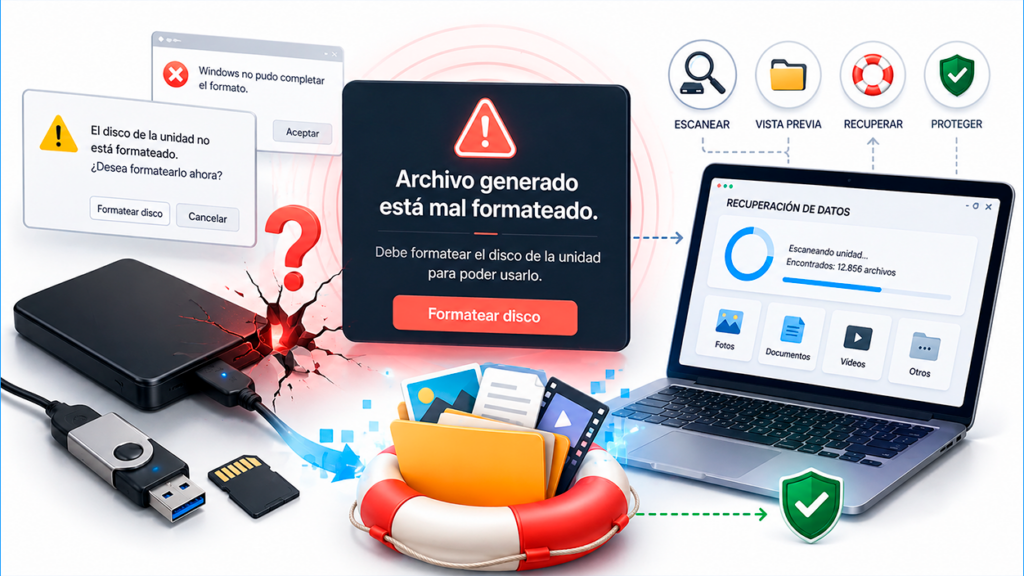
Connect an external hard drive, USB flash drive, or SD card and encounter warnings like “The generated file is incorrectly formatted” The message "You must format the drive to use it" is one of those shocks that sends shivers down anyone's spine. This message is usually accompanied by the inability to open the drive or access your documents, photos, and videos.
The first thing you should know is that, even if Windows asks you to format, It doesn't necessarily mean that all is lost.In many cases, the problem lies in the drive's file system, the partition table, or minor logical errors that can be repaired or circumvented to recover data. The greatest danger isn't the error itself, but rather rushing into things: formatting without thinking, copying files haphazardly, or running tools without proper procedure can significantly worsen the situation.
What does the message “generated file is incorrectly formatted” really mean?
When you see messages like “generated file is incorrectly formatted”, “format the disk in the drive to use it” or “the disk is not formatted”, what Windows is essentially telling you is that It cannot correctly read the file system structure of that device. That is, the information that tells it where each file begins and ends, what folders exist, what size they occupy, etc., has been damaged or has become unreadable.
In many cases, the unit comes to be shown as RAW in Disk ManagementOr a pop-up window may appear with phrases like: “You must format the disk on drive X: before you can use it,” “Drive X: cannot be accessed. The volume does not contain a recognized file system,” or “The volume is not formatted.” Windows interprets the disk as “raw” and offers to create a new file system from scratch.
This doesn't mean your files have disappeared instantly. What's been lost is, above all, the “telephone directory” of the data (the file table)Without that table, or with it damaged, the operating system is left blind; it doesn't know what's there or where it is, and therefore considers the disk empty or unformatted.
It's important to distinguish here between the generic formatting message and the warning "Windows could not complete the formatting" or "the formatting did not complete successfully." The latter appears when You try to format and even that process can't be completed, usually due to damaged sectors, viruses, physical problems with the device, or blockages of the Disk Manager itself.
Common causes of formatting errors on disks, USB drives, and SD cards
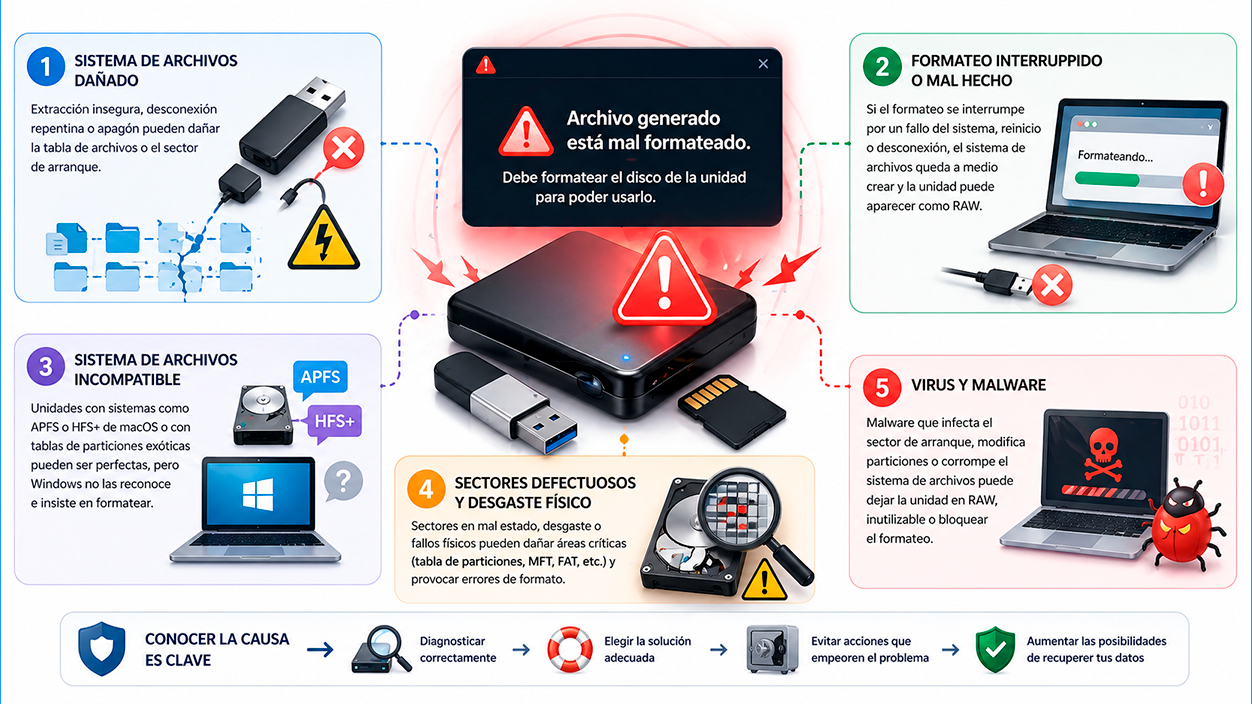
Behind a warning that a file or disk is incorrectly formatted, there is usually not a single culprit. In practice, most cases are explained by... a set of logical and, sometimes, physical factorsUnderstanding them helps in choosing the best solution and, above all, in not making the problem worse.
One of the most frequent causes is a corrupted file systemRemoving a USB drive or SD card without using "Safely Remove Hardware," unplugging a drive while writing to it, or experiencing a sudden power outage can interrupt critical write operations to the file table or boot sector. The result: Windows no longer recognizes the drive's structure and prompts you to format it.
It is also very common to interrupted or poorly done formattingIf you were formatting the hard drive and your PC froze, restarted, the cable disconnected, or you removed the USB drive prematurely, it's quite likely that the file system was only partially formatted. This explains errors such as "formatting did not complete successfully" and why the drive appears as RAW.
Another possibility is that the unit uses a file system incompatible with Windowssuch as macOS's APFS or HFS+, or it may have an exotic partition table. In these cases, the disk may be perfectly fine, but if you connect it to a Windows computer, it will insist on formatting because it doesn't recognize the current structure, even though the data is intact.
We must also take into account the defective sectors and physical wearHDDs, SSDs, USB drives, and memory cards can all develop bad sectors. If any of these bad sectors are located in critical areas (partition table, MFT, FAT, etc.), the file system becomes inconsistent, and the dreaded formatting or incomplete formatting message appears.
Last but not least, there are the viruses and malwareHistorically, threats have existed that could infect the boot sector, modify the partition table, or corrupt the file system. Even today, certain malware can still render a disk RAW or unusable, or even prevent formatting from Disk Management.
Before touching anything: check the unit and perform basic tests
Before you start using aggressive commands or tools, it's a good idea to do a round of simple connectivity and compatibility checksMany seemingly serious errors are solved with something as simple as changing the port or cable.
If it's an external hard drive, USB flash drive, or SD card, try first connect it to another USB port of your computer, ideally alternating between USB 2.0 and USB 3.0 ports. Sometimes, certain ports don't deliver enough power or have driver problems, resulting in read errors that Windows interprets as a formatting failure.
Next step: Try the device on another computerIf the hard drive works fine on the new computer, opening files without any strange warnings and not prompting you to format, then the problem is clearly with your Windows installation (drivers, updates, security, etc.), not the drive itself. If it also fails, then you know the issue lies with the device.
It's worth checking how Windows sees the drive from Disk ManagementSimply press Windows + R, type diskmgmt.msc and press Enter. There you can see if the drive is detected, if it shows its actual capacity, if it's in RAW or "Unassigned" mode, if it doesn't have a drive letter, etc. If the capacity appears as 0 bytes or something ridiculous, or the drive doesn't even appear in the list, serious physical problems are likely.
Another quick check is to perform a I scanned with my antivirus or with Microsoft Defender.A quick scan, and if possible an offline scan, can rule out infections that are affecting the disk structure or blocking access to certain volumes.
Why you shouldn't press "Format" at the first opportunity
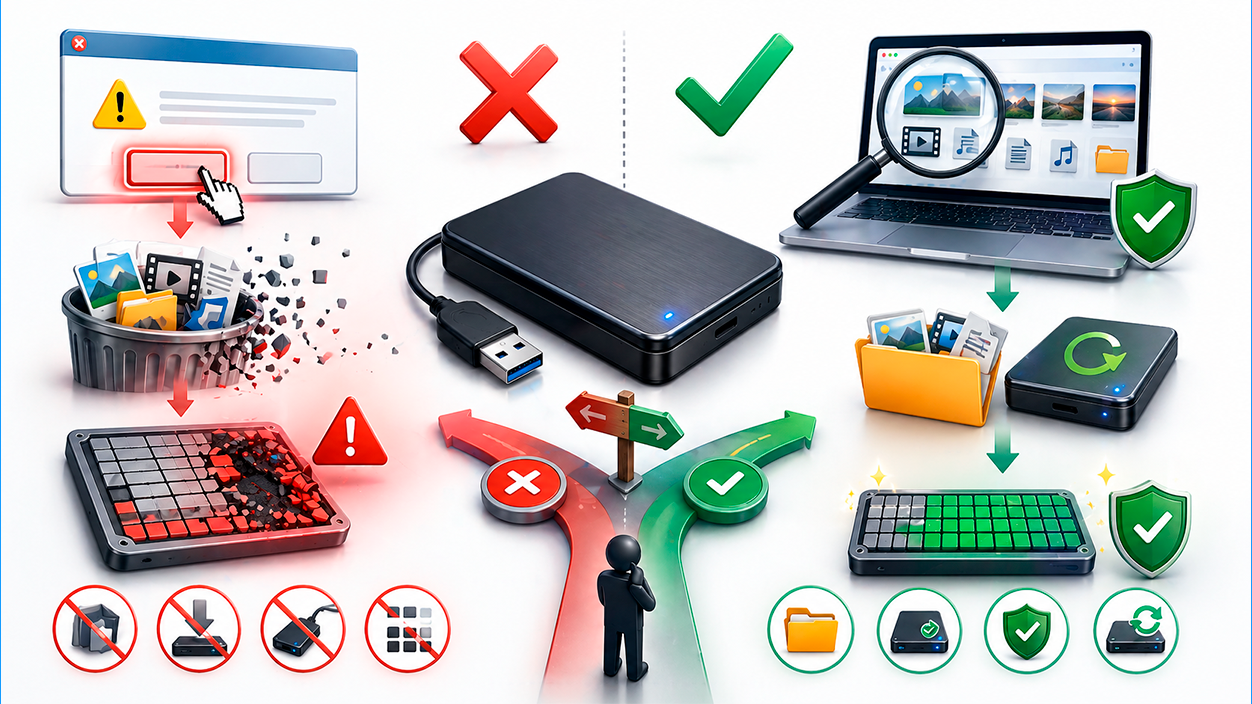
When the pop-up window appears asking you to format, the most logical thing for many people to do is exactly what Windows suggests. However, if you care about what's on your hard drive, the wisest course of action is Ignore that button until you have recovered the data or, at the very least, until the extent of the damage is understood.
In a quick formattingWindows essentially deletes the file table and the partition reference, marking the space occupied by the old data as free. The files aren't physically erased at that point, but any subsequent writing can overwrite sectors that previously contained useful information. The more data you store on the drive, the less chance you have of recovery.
If the formatting doesn't even complete ("Windows could not complete the format" or "the format was not completed successfully"), you might find yourself in a mixed situation: part of the new structure created, part of the old one still present, sectors damaged along the way... A minor chaos that It greatly complicates the subsequent recovery. if you start insisting with multiple formatting and random testing.
The golden rule is simple: First recover the data, then repair or format.Any action that involves writing to the drive (copying new files, repeating formats, defragmenting, etc.) should only be done when there is nothing left that you want to recover.
Recovering files from a disk or USB drive that is requesting formatting
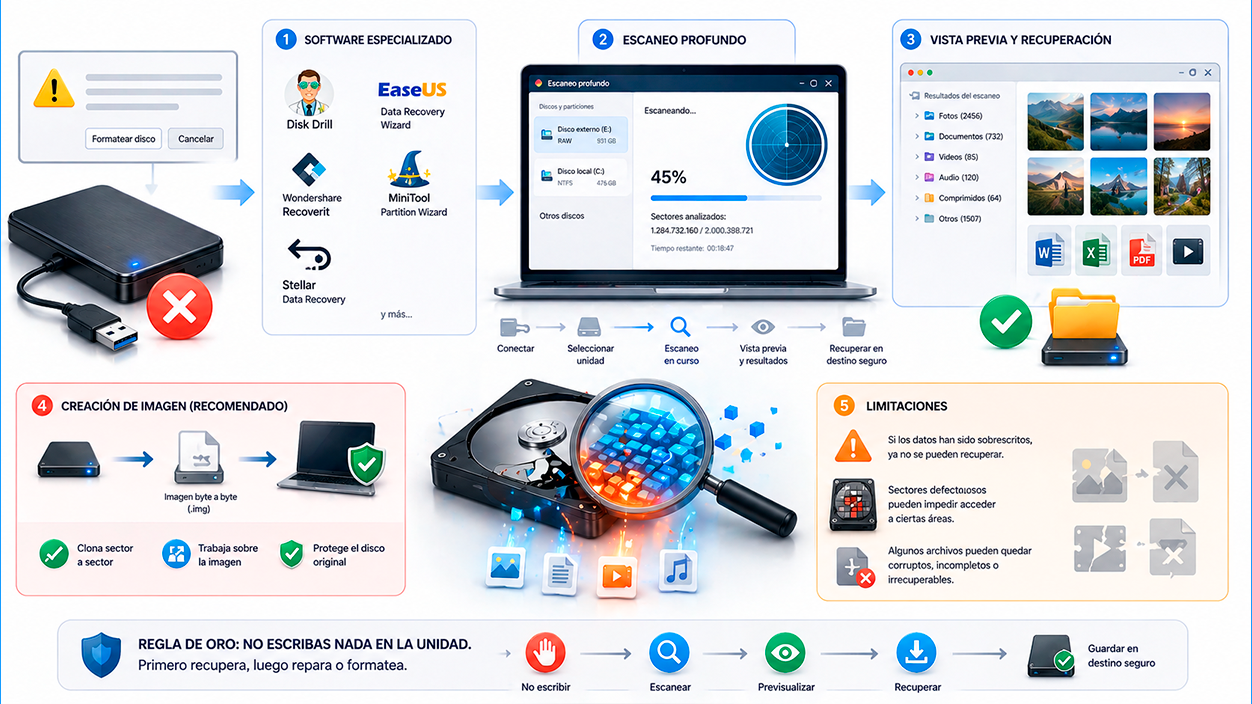
The fact that Windows cannot read the drive does not mean that specialized software cannot. The tools of Data recovery tools are designed to scan damaged disksRAW partitions and drives with the file table erased, searching for remnants of the previous structure and reconstructing the files that are still physically on the device.
Programs such as Disk Drill, EaseUS Data Recovery Wizard, Recoverit, MiniTool Partition Wizard (in its recovery module), or Stellar Data Recovery, among others, are capable of scan the disc sector by sector. searching for file signatures (photos, documents, videos, etc.), even if the partition has been quickly formatted several times.
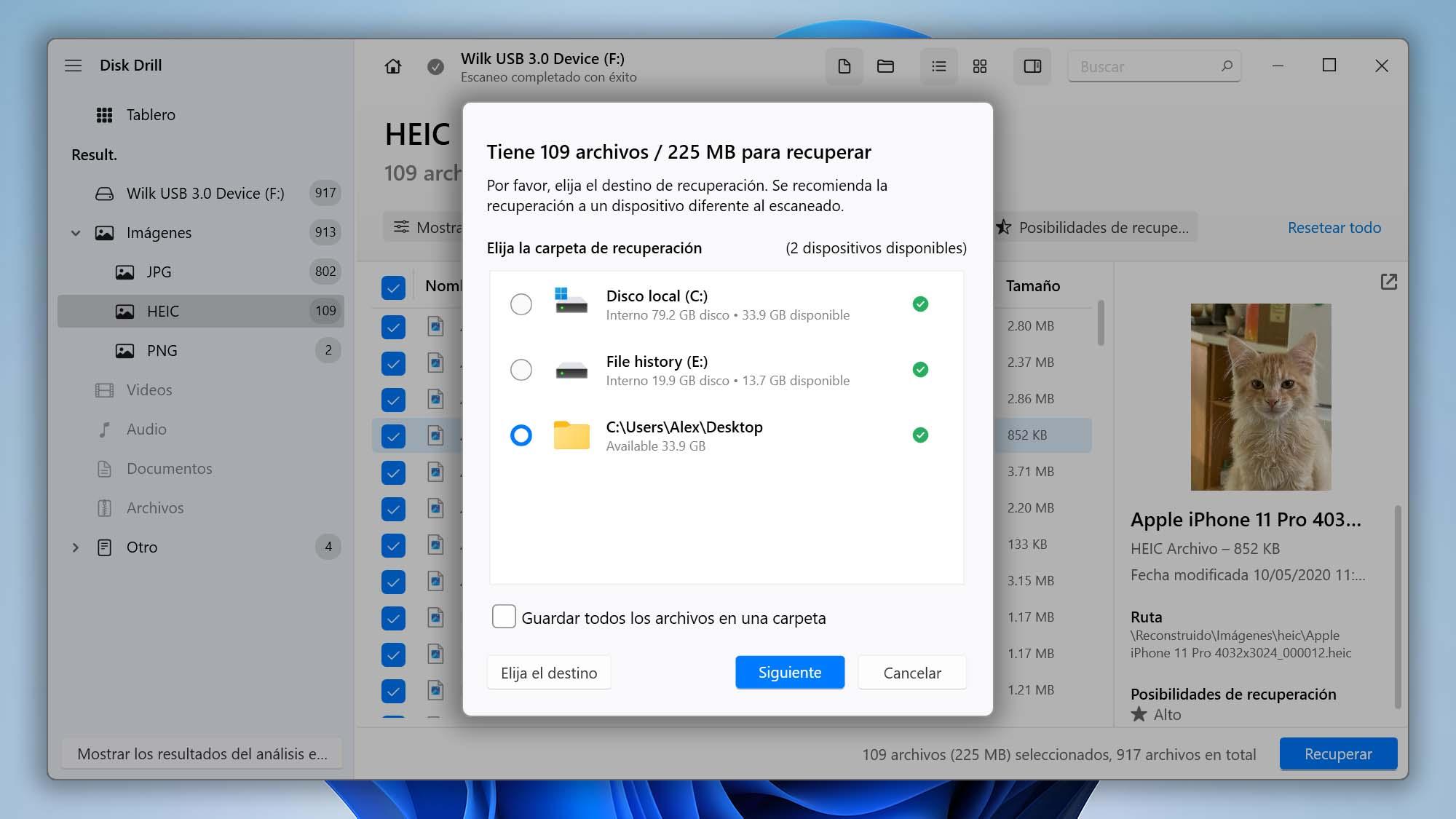
The general idea behind working with one of these tools is similar: the software is installed in another different album For the problematic drive, the drive requesting formatting is selected, a deep scan is launched, and when it finishes, the results are reviewed, previewing files and choosing what to recover to a safe destination (another disk, never the same one).
Some programs add advanced options such as the creation of a byte-by-byte image of the damaged drive. That is, its contents are cloned sector by sector into an image file, and all subsequent scans are performed on that image. This minimizes the risk of the original drive failing completely during recovery, which is highly recommended when there are signs of physical failure.
It's important to keep in mind, however, that no tool can perform miracles. If part of the disk has been overwritten after a full format, if there are many bad sectors, or if the data was already corrupted, it's possible that certain files appear corrupt, incomplete, or simply unrecoverableIt's normal to have individual photos missing from a folder, a document that won't open, or videos that cut off midway.
When to seek professional recovery services
Home recovery programs have their limits. If the disk does strange noises (clicks, squeaks, tapping)If it doesn't spin, if the displayed capacity is 0 bytes, if the BIOS doesn't detect it, or if the software finds absolutely nothing, it's time to stop trying and consider sending it to a specialized laboratory.
Professional data recovery services work in cleanrooms and specialized hardware to directly intervene in the disk components: heads, platters, PCB, memory chips, etc. They can extract information from drives with severe physical damage, something completely beyond the reach of a home user.
However, it is by far the most expensive option, and is usually reserved for truly critical data (professional work, legal documents, unique projects, precious memories...). In any case, if the storage device doesn't appear in Disk Management or each access attempt only makes it worse, the best way to avoid damaging it completely is to stop trying random tools and consult a technician.
How to repair the disk or USB after saving the data
Once you've retrieved everything that interests you, you can focus on try to return the unit to a usable state Without fear of losing anything important. Depending on the type of problem, a couple of adjustments may suffice, or a complete reformat may be necessary.
The first step is usually to check the unit again in Disk ManagementIf it appears as RAW but with the correct capacity, you can try assigning a new drive letter, checking if the system allows you to explore it, or launching certain logical repair tools before doing anything more destructive.
A widely used tool is CHKDSKThe classic Windows disk check command. Run from the Command Prompt with administrator privileges (for example, chkdsk X: /r /f(replacing X with the drive letter), it is responsible for finding logical errors, marking bad sectors, and repairing part of the file system structure, when possible. You have to be patient, because it can take a while.
If corrupted drivers are suspected as the cause of the problem, it's advisable to check the Device ManagerExpand "Disk drives," uninstall the problematic device, and restart your computer so Windows reloads the driver. Similarly, in some cases, updating chipset and USB drivers from the PC or motherboard manufacturer's website can help.
In situations where Disk Management displays the message “formatting did not complete successfully” when attempting to create or format a partition, it may be helpful to resort to DISKPART and third-party toolsWith DISKPART you can completely clean partitions and create new ones from scratch, and with programs like MiniTool Partition Wizard you can delete, recreate and format volumes that the standard Disk Manager cannot handle.
Format properly when there is no other alternative
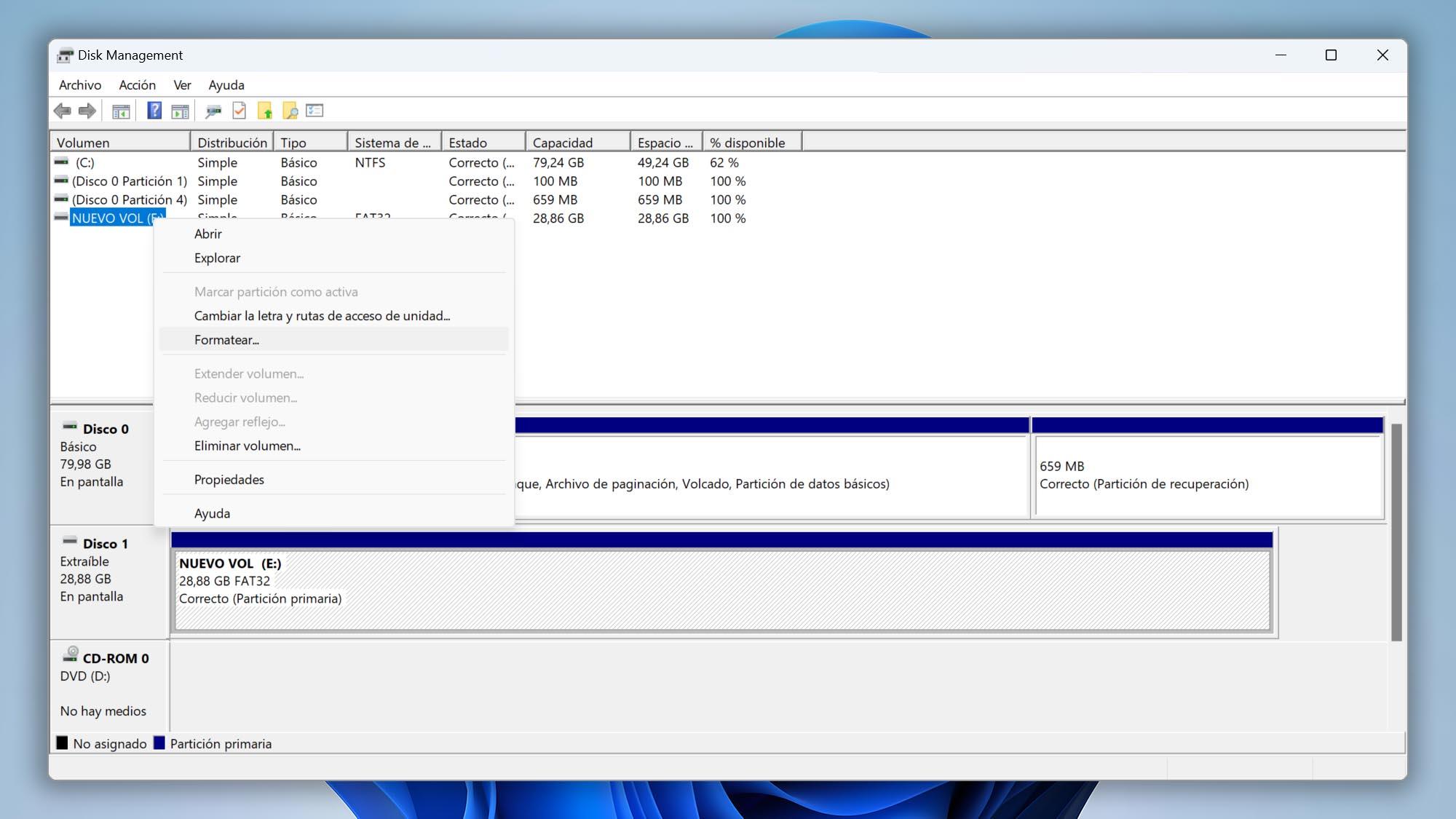
If all the above solutions fail, or if you simply want to reuse the drive after recovering your files, there is no other option but to format the disk, USB drive or SD cardBy doing it correctly, in many cases logical errors are corrected and the device returns to normal operation.
For most users, one is sufficient. quick format from File ExplorerRight-click on the drive, select "Format…", choose the file system (NTFS if you're only going to use it on Windows, exFAT if you want it to be compatible with Windows and macOS), leave the allocation unit size at "Default", assign a name, and make sure the "Quick Format" box is checked. After clicking "Start", the volume will be ready in a few seconds.
In other cases, especially when Disk Management has previously given errors, it is better to perform the formatting from scratch. Disk Management or from a dedicated partitioning tool. There you can delete the problematic partition and create a new one, assigning it the appropriate file system and size, avoiding remnants of old partition tables that could continue to cause problems.
If the problems originate from bad sectors, some advanced utilities allow mark and isolate those sectors so they can't be used in the future. This doesn't physically "fix" the disk, but it can return it to a relatively stable state for non-critical use. If the density of bad sectors is high or increasing rapidly, it's wise to consider the drive obsolete.
When you need to completely delete content for security reasons or because there are too many errors, certain tools add features to secure erase or complete disk cleanupThese write patterns across all sectors to restore the drive to factory-fresh condition, albeit with accumulated wear and tear. After that, you can recreate partitions and format normally.
Related errors: “Windows could not complete the formatting” and other typical messages
Closely associated with the message that the file or disk is incorrectly formatted is the warning of “Windows could not complete the formatting” or “the format did not complete successfully”. This appears when you try to format from Explorer or Disk Management and the process is interrupted before finishing.
The causes are usually very similar: viruses that block the device, bad sectors right in the area where the file system is created, significant damage to the partition table, unstable storage controllers, outdated BIOS, or even security restrictions of Windows itself.
To tackle this problem, the same recipes usually work well: remove malware, check the disk surface with tools that mark bad sectors, use DISKPART to clean the disk and recreate the partition, and, if all else fails, resort to third-party partitioning programs that offer finer control than the standard Disk Manager.
On SD cards and USB drives, it's relatively common to have to resort to different external readers, other ports, or even another computer in order to complete the formatting. Sometimes the original PC has a specific conflict with that device that disappears as soon as it is tested on another machine.
Other related errors include “the disk is not formatted,” “the volume does not contain a recognized file system,” or “the drive appears as unallocated.” All of these essentially point to the same core problem: the file system or partition is damaged or missingTherefore, the sequence of steps to follow (recover data, attempt to repair and, as a last resort, format) is practically the same.
When you encounter any such warning—whether it's "generated file is incorrectly formatted," "you must format the disk before you can use it," or "Windows could not complete the format"—the most important thing is to remain calm, avoid writing anything new to the drive, prioritize recovery with appropriate tools, and only then resort to repair or formatting. With this order and a little patience, the chances of preserving your files skyrocket compared to the instinctive reaction of pressing "Format" without thinking.

I am a technology enthusiast who has turned his "geek" interests into a profession. I have spent more than 10 years of my life using cutting-edge technology and tinkering with all kinds of programs out of pure curiosity. Now I have specialized in computer technology and video games. This is because for more than 5 years I have been writing for various websites on technology and video games, creating articles that seek to give you the information you need in a language that is understandable to everyone.
If you have any questions, my knowledge ranges from everything related to the Windows operating system as well as Android for mobile phones. And my commitment is to you, I am always willing to spend a few minutes and help you resolve any questions you may have in this internet world.