- The second digital brain allows us to better organize and leverage our personal knowledge in the age of information overload.
- Methods like CODE and PARA help transform information into concrete ideas and actions that adapt to your goals and routines.
- There are multiple digital tools that facilitate the construction and use of the second brain, with customization and periodic reviews being key.

We live in the digital age, surrounded by data and to-dos, where the pressure to remember everything becomes stressful. How can we solve this overload and simultaneously take advantage of so much knowledge? This is where the concept of second digital brain, a true personal revolution in productivity and knowledge management.
The second digital brain is much more than a fad or a notes app. It is a knowledge organization system designed to free your brain from the impossible task of retaining everything, allowing you retrieve information when you need it, enhance your creativity and, ultimately, transform the way you live and work.
What is a second digital brain?
The idea of the second digital brain has gained enormous popularity in recent years, but its origins are not so recent. The concept refers to creating an external digital system (usually using digital tools and platforms) to collect, organize and transform all the relevant information in your life. The goal is for your physical brain to be less overwhelmed. and you can dedicate your mental capacity to creating, thinking, making decisions and enjoying, instead of wasting resources memorizing and remembering.
El second digital brain is a repository of personal knowledge, accessible anytime, anywhere, where you not only store information but also turn it into learning, ideas, and actionable projects. It's not just a collection of notes. In fact, this system seeks to replicate and improve the way the brain associates, remembers, and retrieves data, allowing you to create connections, summaries, compilations, and, above all, facilitate action and creativity.
The second digital brain is born from the need to adapt to contemporary information overload and turn it into an ally for productivity, personal and professional development, and continuous learning.
History and evolution of the concept: from Vannevar Bush to Tiago Forte
It may seem that the second digital brain It is a recent invention, but Its roots go back almost a centuryOne of the pioneers was the American scientist and inventor Vannevar Bush, who in the 1940s proposed the Memex, a mechanical device designed to store books, recordings, and notes, allowing access and connection of information quickly and intuitively, emulating associative thinking and anticipating the structure of hypertext and the web.
Bush's vision was based on the realization that The human mind needs external support to handle the increasing complexity of informationThe Memex was never physically built, but its philosophy inspired the development of systems like Tim Berners-Lee's hypertext and laid the groundwork for the current concept of the second brain.
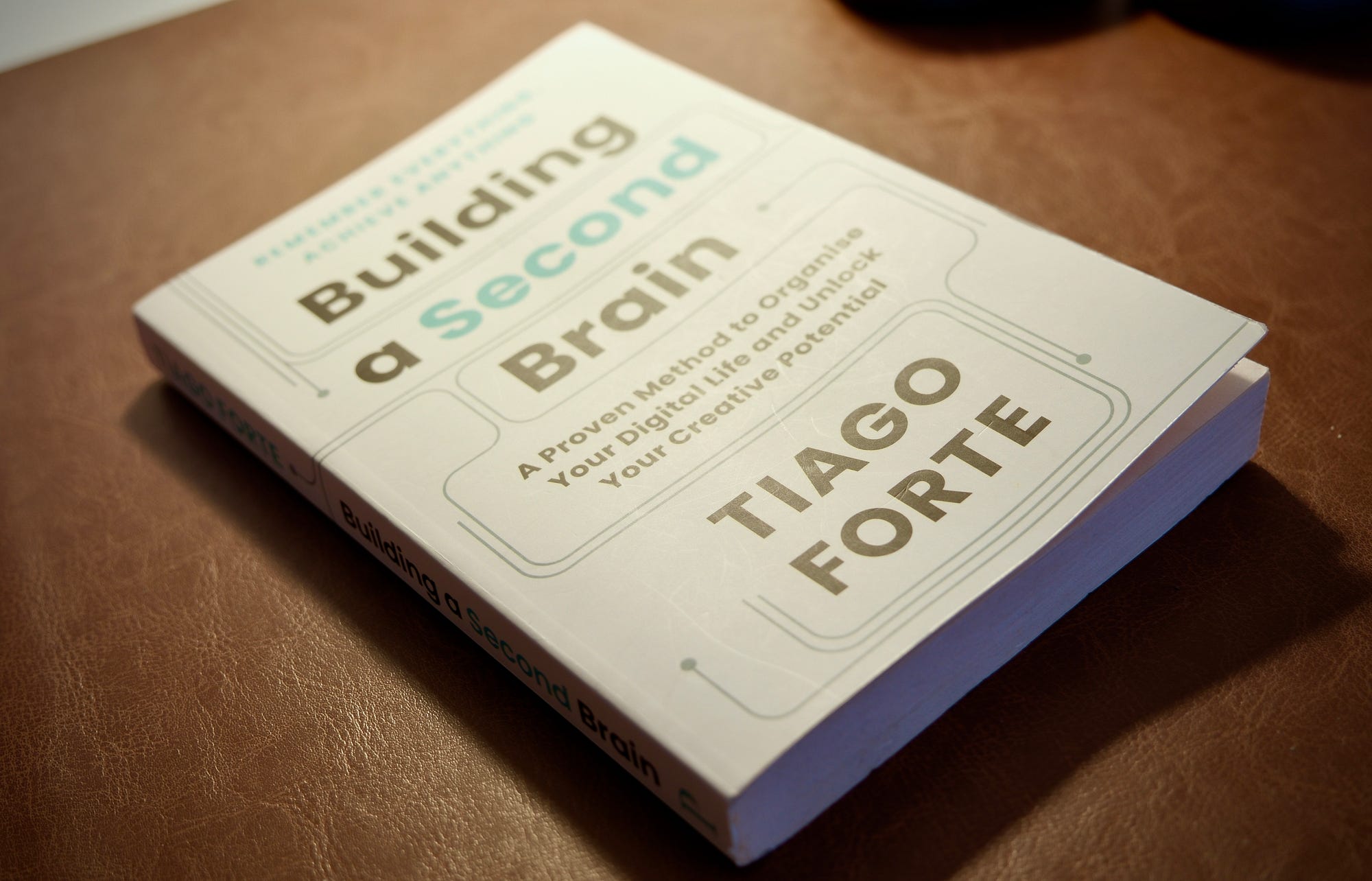
Decades later, Ari Meisel in 2015 and Tiago Forte In 2017, they took a leap forward by adapting these ideas to today's digital world. Forte popularized the term “second brain” and developed methodologies such as FOR (Projects, Areas, Resources, Archive) and (Capture, Organize, Distill, Express), giving rise to a practical, systematized and adaptable approach that connects personal productivity with digital knowledge.
The method's success lies in combining organizational techniques with simple and powerful digital tools, allowing anyone, regardless of their profession or field, to build their own personalized and replicable system. Thus, second digital brain evolves from a theoretical idea to a daily practice of self-management, creativity and growth.
What is the purpose of a second digital brain? Real benefits and advantages
Implanting a second digital brain is not just a technological issue. It's about Radically transform the way you process information, learn, create, and face daily challengesLet's review the main proven advantages:
- Reduces mental overload: Delegate data management and storage to a digital system free your mind, lowers your stress level and helps you focus on what's important.
- Boost creativity: By collecting ideas, reflections and learnings in an orderly environment, connections arise more easily, stimulating new perspectives and projects.
- Facilitates continuous learning: You don't just store data, but You elaborate them, you underline the relevant, you generate summaries and you promote long-term memory.
- Allows rapid retrieval of informationForget about searching through hundreds of documents or emails. Everything key is accessible in seconds., organized according to your own criteria.
- Improves decision-making: By having data, references, your own analysis and well-classified background, you can decide better and faster.
- Promotes collaboration and teamworkMany systems allow you to share parts of your second brain with colleagues or collaborators, facilitating remote work and knowledge transfer.
Fundamental principles: CODE and PARA
The success of second digital brain It lies in following certain simple but very effective methodological principles. The two most relevant, devised by Tiago Forte, are CODE y FORLet's look at them in detail:
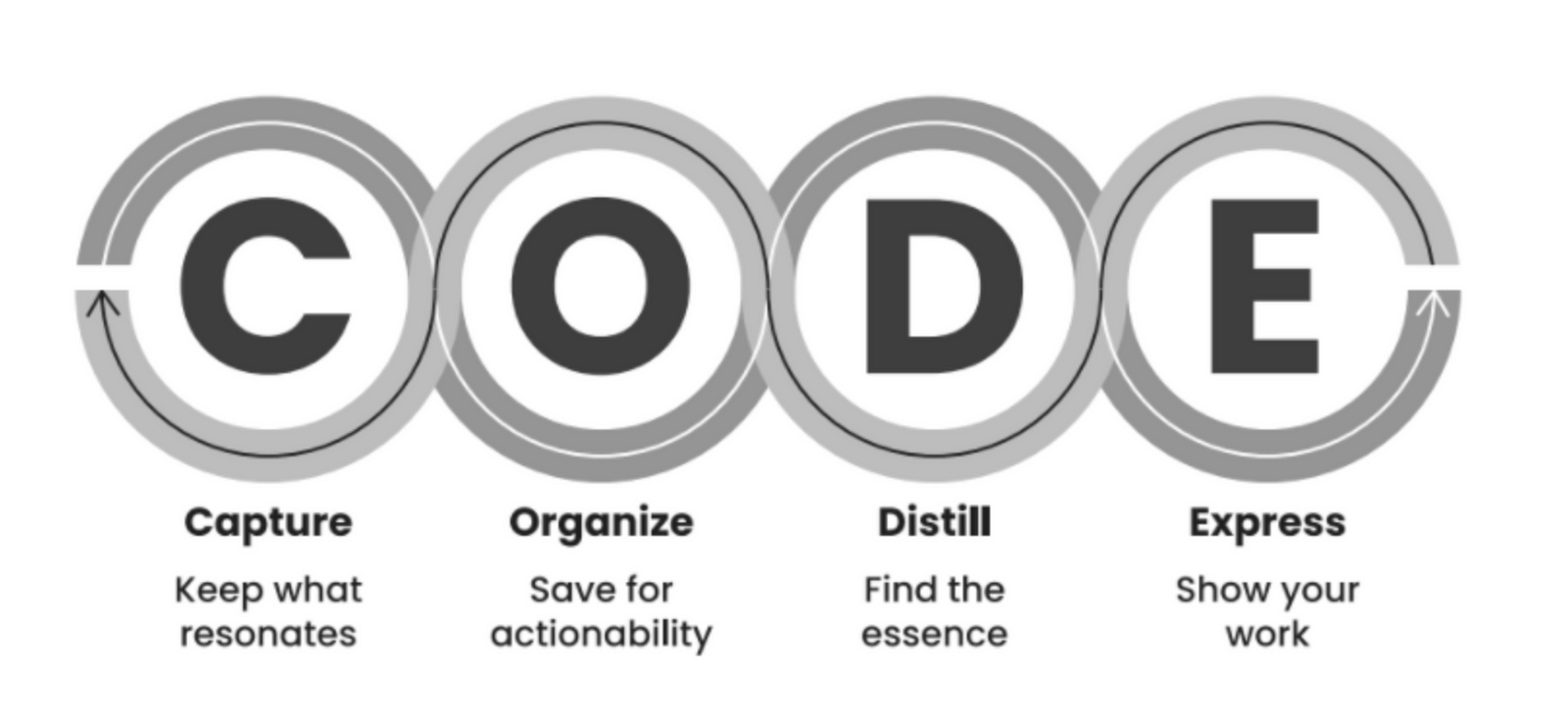
CODE: Capture, Organize, Distill, Express
- Capture: It consists of systematically gathering relevant information from any source: books, conferences, articles, brainstorming sessions, podcasts, meetings, personal notes, videos, social media, etc. It's vital to do this continuously and without putting too much strain on yourself initially so you don't miss out on valuable ideas.
- OrganizeOnce captured, the information must be categorized and structured so it can be easily found when needed. Each piece of information, note, or reflection should go into its corresponding place within your system.
- Distill: This is about extracting the essentials, summarizing, highlighting, noting the most important and personalizing them to your needs. It's not about storing them willy-nilly, but about keep the useful essence.
- ExpressThe final phase involves transforming that information into something active: articles, presentations, projects, your own ideas, solutions, etc. Your second brain is the raw material that fuels your creativity and your actions.
Each stage is essential so that you don't just accumulate data, but authentic, actionable knowledge linked to your goals.
TO: Projects, Areas, Resources, Archive
- ProjectsActivities with a defined goal and timeframe. Examples: launching a website, organizing an event, writing a book.
- Areas: Permanent or long-term responsibilities, both personal and professional: health, finances, work, continuous learning, etc.
- Resources: Useful and relevant information for your current or future interests or needs: articles, manuals, templates, tutorials, databases, references, etc.
- Archive: Anything you no longer need but worth keeping just in case: completed projects, historical information, old materials.
The PARA system is transversal and helps keep all information well categorized and accessible, preventing it from getting lost in a sea of unconnected notes.
What kind of information can you collect in your second brain?
The second digital brain is so flexible that it serves both your work and personal life. There are no limits to the content you can collect, as long as it is meaningful to you.Some common ideas include:
- Book notes, articles and papers: Summaries, key ideas, relevant quotes you want to remember.
- Personal notes from meetings, webinars, podcasts, or talks: Keys and lessons summarized.
- Daily reflections, goal journals, spontaneous ideas: Spaces for self-knowledge and creativity.
- Visual inspirations, quotes, images, and creative projects: Anything that feeds your artistic or innovative side.
- Project documentation, breakdowns, resources, strategies, and checklists: That allow for detailed and orderly monitoring.
- Useful information about work, study, health or leisureFrom cooking recipes to workout routines, financial plans, and language learning resources.
Each person adapts their second brain to their own interests, and this customization is one of its greatest virtues.
Digital tools to build your second brain
Choosing the right digital tool is key to the success of your system. In recent years, solutions specifically designed for this purpose have emerged. Some of the most popular are:
- NotionIdeal for its flexibility, ability to create databases, linked pages, templates, and its large community of resources. It allows for the design of highly customized and collaborative systems.
- Roam Research: Famous for its ability to link notes bidirectionally, emulating the brain's associative thinking. Useful for researchers, writers, and content creators.
- Obsidian: Similar to Roam but geared toward storing all information locally, with a highly visual linking system and advanced file management in Markdown.
- EvernoteAlthough somewhat older, it's still very versatile and is even used by Tiago Forte himself. It facilitates synchronization between devices and efficient searches.
- ClickUp: An increasingly powerful alternative that allows you to integrate task management, collaborative documents, mind maps, and digital whiteboards, ideal for teams and businesses.
The best tool will be the one that fits your workflow, is convenient, and motivates you to keep your system up to date. Choosing the most complex doesn't necessarily mean you'll get better results.
Building your second brain step by step
You don't need to be an expert or block out a week of your schedule to build your second digital brain. Simply follow a progressive process, adapted to your needs. And, above all, avoid obsessing over initial perfection. Here's a practical roadmap:
1. Define your challenges and goals
Before you start capturing unfiltered information, Identify the challenges you want to solve With your second brain: Do you struggle to retain learning? Do you forget important ideas? Do your projects lack order? Do you want to tap into your creative side? Write down these problems and keep them in mind to guide your system.
2. Start capturing relevant information
Not all information is worth saving. Learn to filter and capture what is relevant to youBrainstorming ideas, reflections, key quotes, meeting summaries, resources for your projects. Use different formats: text, images, links, audio, diagrams, concept maps, etc.
3. Choose the tool and technology that best suits you
Start with the simplest: a note-taking app (like Notion, ClickUp, Obsidian, Evernote, etc.) or even Google Docs. Consider whether you prefer an online system (accessible from anywhere) or a local system (focused on your own device), ease of search, integration with other apps, and the ability to share or collaborate.
4. Organize your second brain following the CODE and PARA structure
Classify each piece of information according to the principles of FOR (Projects, Areas, Resources, Archive) and process your notes following the cycle CODE (Capture, Organize, Distill, Express). This way, you'll avoid accumulating useless information and ensure everything is at hand when you need it.
5. Schedule regular check-ups
Un second effective brain is reviewed and updated. Set aside some time each week to review your system: reorganize, eliminate what no longer serves a purpose, summarize what you've learned, highlight the essentials, and archive what you no longer use. This way, you'll keep your system alive and relevant, not just as a "digital repository," but as a true companion in your daily life.
Common mistakes when building a second digital brain
To ensure the system truly works and doesn't remain just another experiment, avoid these common mistakes:
- Accumulate raw informationIf you never review, summarize, or categorize, you'll just have a chaotic digital warehouse.
- Obsessing over perfectionThe system should serve you, not hold you back. Start simple and improve as you go.
- Neglecting reviews: They are essential for knowledge to remain up-to-date, useful and connectable.
- Trying to imitate other people's systems to the letter: Get inspired, but adapt everything to your context, interests and needs.
How to integrate the second brain into your daily routine
The biggest challenge is making your second digital brain a natural part of your workflow and your life. To achieve this:
- Capture instantly: Write down ideas, lessons learned, or tasks at the moment, so you don't have to rely on your memory.
- Organize each week: Take some time to review and categorize notes, update projects, and highlight what's relevant.
- Use templates and mind maps: They facilitate the connection of ideas, the prioritization of tasks and the creation of content.
- Set reminders and alarms: Help you avoid postponing reviews or forgetting key information.
- Explore collaborationIf your tool allows it, share useful parts with colleagues, friends or family.
The future of the second digital brain: AI, collaboration, and continuous learning
Tools for personal knowledge management are constantly evolving. Artificial intelligence already makes it possible to automate many aspects of capturing, organizing and retrieving information, personalizing suggestions and facilitating the analysis of large volumes of data.
Besides, the collaborative dimension is on the riseDistributed teams can share, co-create, and expand their second brain together, avoiding the stagnation of individual knowledge and fostering collaborative innovation.
Finally, the learning curve for these methodologies tends to be easier, thanks to more intuitive interfaces, ready-to-use templates, and abundant training content. The second digital brain is no longer a niche for enthusiasts but is becoming more popular as the foundation of modern productivity..
Key tips to optimize your second digital brain
- Customize your system to the maximum: Don't copy, adapt. Your priorities and your way of thinking are unique.
- Less is more: Better a simple and functional system than a mega-file that is impossible to maintain.
- Integrate a learning routine: Use your second brain to foster new ideas and identify recurring themes that interest you.
- Learn from the best: Consult expert resources, test their templates, but always adjust them to your reality.
The implementation of a second digital brain It marks a turning point in the way we manage our time, our ideas, and our memory. With the right tool, a proven methodology, and consistent revisions, anyone can enjoy the benefits of a well-built second digital brain. The key is to start today, with what you have on hand, and let the system evolve with you.

Editor specialized in technology and internet issues with more than ten years of experience in different digital media. I have worked as an editor and content creator for e-commerce, communication, online marketing and advertising companies. I have also written on economics, finance and other sectors websites. My work is also my passion. Now, through my articles in Tecnobits, I try to explore all the news and new opportunities that the world of technology offers us every day to improve our lives.