- Emails marked as unread are usually due to IMAP synchronization, previews, and messages hidden in other sections.
- Gmail allows you to locate and mark messages as read/unread in bulk using filters such as is:unread and bulk selection options.
- Using "unread" as a reminder creates chaos; it's more effective to combine flags, folders, and a clear classification system.
- By switching from “reading” to “classifying”, notifications become less erratic and email becomes manageable.
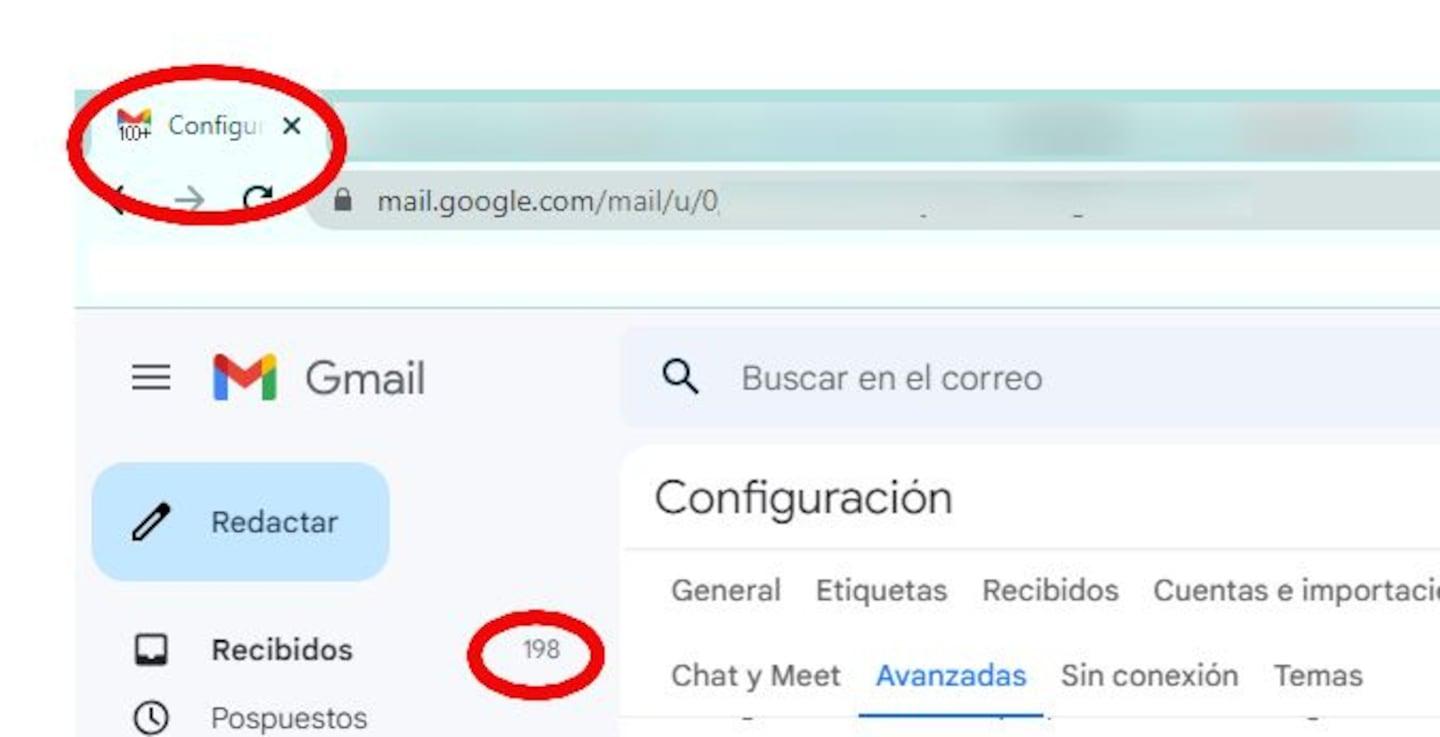
¿Why does Gmail show emails as unread even though you've already opened them? If you've been seeing that number for days "Unread" emails in Gmail that won't download no matter what. Even though you've already opened everything, you're not alone. It's a fairly common problem and can be incredibly frustrating: you check your inbox, spam, "All Mail," sync your phone, delete the app… and those pesky phantom messages are still there. If you use an iPhone, you can also try… Delete all unread emails on iPhone to rule out a local problem with the device.
In many cases, the situation is even more surreal: Gmail says you have unread emails, you open them one by one and the counter doesn't change.Even on iPhones or in Apple's Mail app, the new message notification keeps appearing, no matter how many times you reinstall the app or unlink your account. Let's break down all the possible causes and real solutions to get rid of that counter once and for all.
Why does Gmail show emails as unread even though you've already opened them?
The first thing to understand is that Gmail doesn't always handle your messages in isolation.Often, it's synchronized via IMAP with other devices, email programs, and apps that also handle the "read/unread" status. If one of them marks an email in a certain way, this action is replicated on all the others.
In addition to synchronization, The way you view emails (preview, reading pane, etc.) can automatically mark messages as read.You may simply be "skimming" it, but the system interprets that you have already read the entire message and updates its status.
As if that weren't enough, It's important to consider how Gmail interprets filters, labels, and searches.You may think you've read everything in your inbox, but there may still be unread emails in other sections: Spam, promotions, social, forums, or even custom labels that you almost never look at.
In some isolated cases, The problem of emails being incorrectly marked as read or unread may be related to external programs that access your account (old email clients, desktop tools, third-party apps) or, in the worst case, with suspicious activity such as malware or spyware that automatically checks your email (see How to know if they are spying on my phone).
The typical case: everything appears to have been read, but the counter keeps registering new emails.
Many people tell the same story: On the Gmail website, they don't see any unread messages, but a fixed number (for example, 4) appears on the Mail app icon on the iPhone.They delete the app, disconnect the account, log back in… and the number reappears.
In these cases it usually happens that Unread emails are not in the main inbox view, but buried in other sectionsThey may be in Spam, in "All", in a specific tag, or even archived but still marked as unread.
Another possibility is that The counter of an email client (such as Apple Mail) may be "stuck" at an old state.In other words, the app thinks there are unread messages because there were some at some point, but it hasn't properly updated the information with the Gmail server. Often, this can be fixed by forcing a synchronization or completely removing the account from the device and adding it again, but that's not always enough.
It also happens that The account is configured as IMAP on more than one device or userThus, a message might appear as read on your computer, but remain unread in another session of the same email on a different program. Ultimately, the status that Gmail sees may not match what you perceive on a single device.
If you recognize yourself in this scenario, it's worth reviewing step by step the options that Gmail itself offers to locate those rogue emails and force all devices to be aligned from now on.
IMAP settings and other devices: when synchronization works against you
One of the most common causes is that your Gmail account is configured as IMAP in one or more email clients (Outlook, Thunderbird, Apple Mail, Android apps, etc.) that are not behaving as you expect.
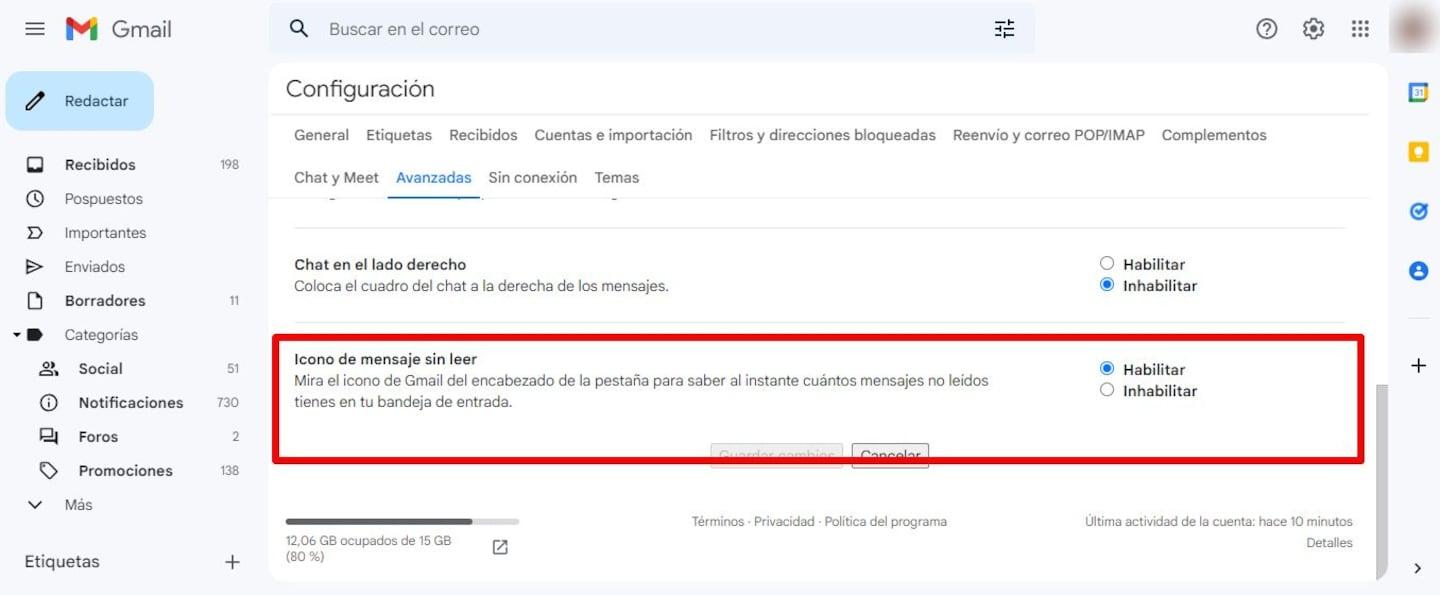
With IMAP, Everything that happens on one device is reflected on all the others.If you mark an email as read on your mobile phone, it will also be marked as read on the Gmail website, your tablet, and your laptop. This is very convenient… except when one of the programs acts up on its own.
Several annoying situations can occur: that a program marks emails as read simply by selecting them from the list, that the status changes when showing an automatic preview, or that a secondary user who shares the account opens messages that you didn't even know had arrived.
If you don't want this to happen, the ideal thing to do is Review the reading settings of each email clientAnd on mobile devices, check specific options for managing read receipts, such as in guides on how to mark emails as read in Gmail for Android.
In work environments with specific email management tools (for example, corporate solutions such as MN Program and similar), It is common for the IMAP account to be shared among several users.In those cases, someone may be managing part of the email without you seeing it, and the "read/unread" statuses are updated in the background.
The preview and the reading pane: the fake “I have read this email”
Another source of confusion is the very way in which Gmail or your email client displays the message content.When you have a preview panel enabled (for example, a column on the right or a bottom panel where the message opens when you click on it), the software usually marks the email as read as soon as you select it.
This means that, even if you think you're just "skimming" a message to see what it's about, The system has already changed its state to readThen, when you return to your inbox, it's difficult to distinguish which emails you've actually read carefully and which ones have just passed through the reading pane.
To avoid this confusion, many apps offer different email view modesSome programs refer to "previews," "reading pane," or numbered "inbox views." The clearest alternative is usually the "list view," where you only see the subjects and senders, and the message doesn't open until you actually click on it.
In desktop software that works with Gmail accounts, switching to a List view (without preview pane) is usually the safest option so that emails are marked as read only when you expressly decide to do so.
If you suspect this behavior is affecting your account, it's worth running the test: Deactivate the reading panel or switch to list-only mode and see if from then on the emails behave as you expect.
How to manually locate and mark messages as read or unread in Gmail
When you've already got the mess going and you don't know which messages are keeping the counter alive, the best thing to do is take action using Gmail's built-in tools. Fortunately, Gmail offers very comprehensive features for marking messages as read or unread. without having to go one by one endlessly.
On a computer, the basic process for mark an individual message as read or unread It is as follows:
- Open Gmail in your browser.
- Check the box to the left of the message you want to modify.
- At the top, click on the "Mark as unread" or "Mark as read" option, depending on what you want.
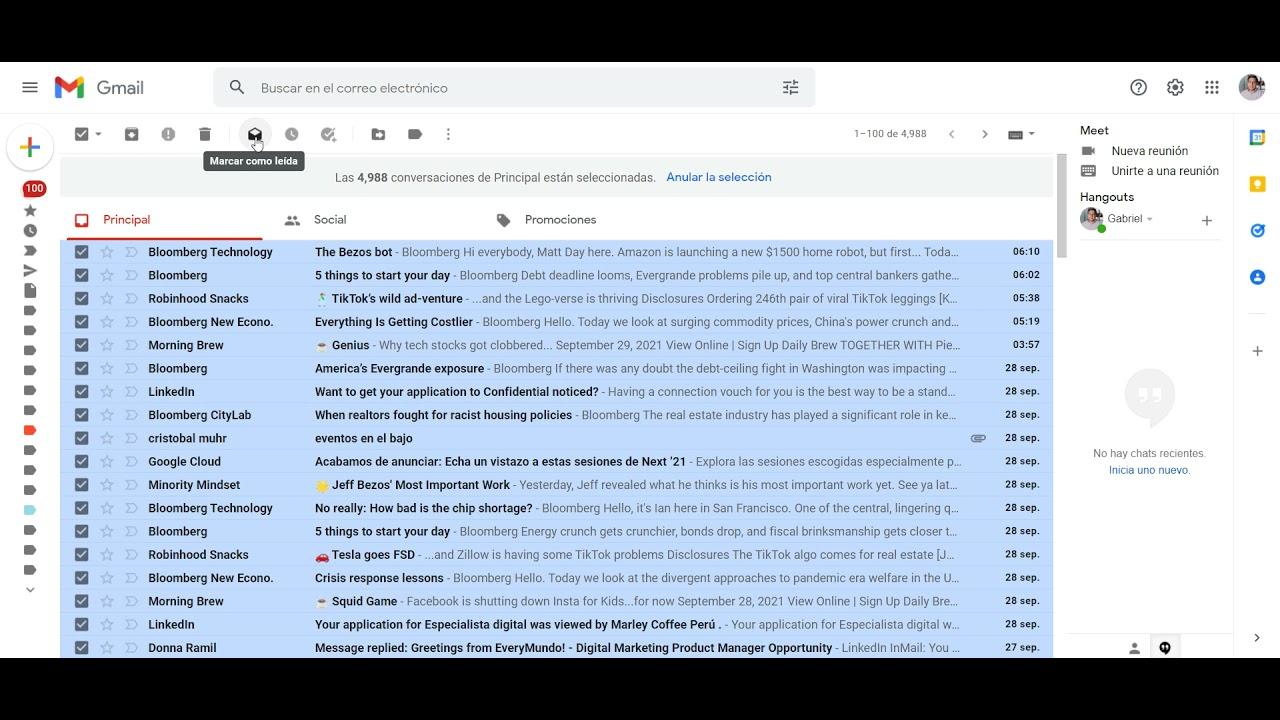
If what you want is Mark all visible messages as read at onceThe flow is very similar:
- Log in to Gmail from your computer.
- Click the box at the top left of the message list to select all emails on the current page.
- At the top, tap "Mark as read".
If you've performed a specific search (for example, only unread messages) and want mark absolutely all resultsGmail may offer you an option to select not only the messages visible on that page, but all those that match the search; it's important to look at the notice that appears above the list.
Keep in mind that You can also use these options in reverse.If you usually mark an email as "unread" that you want to review later, you can easily locate it with the filters that we will see in the next section, although this system has its drawbacks, as we will see later.
Filter only unread emails: useful searches in Gmail
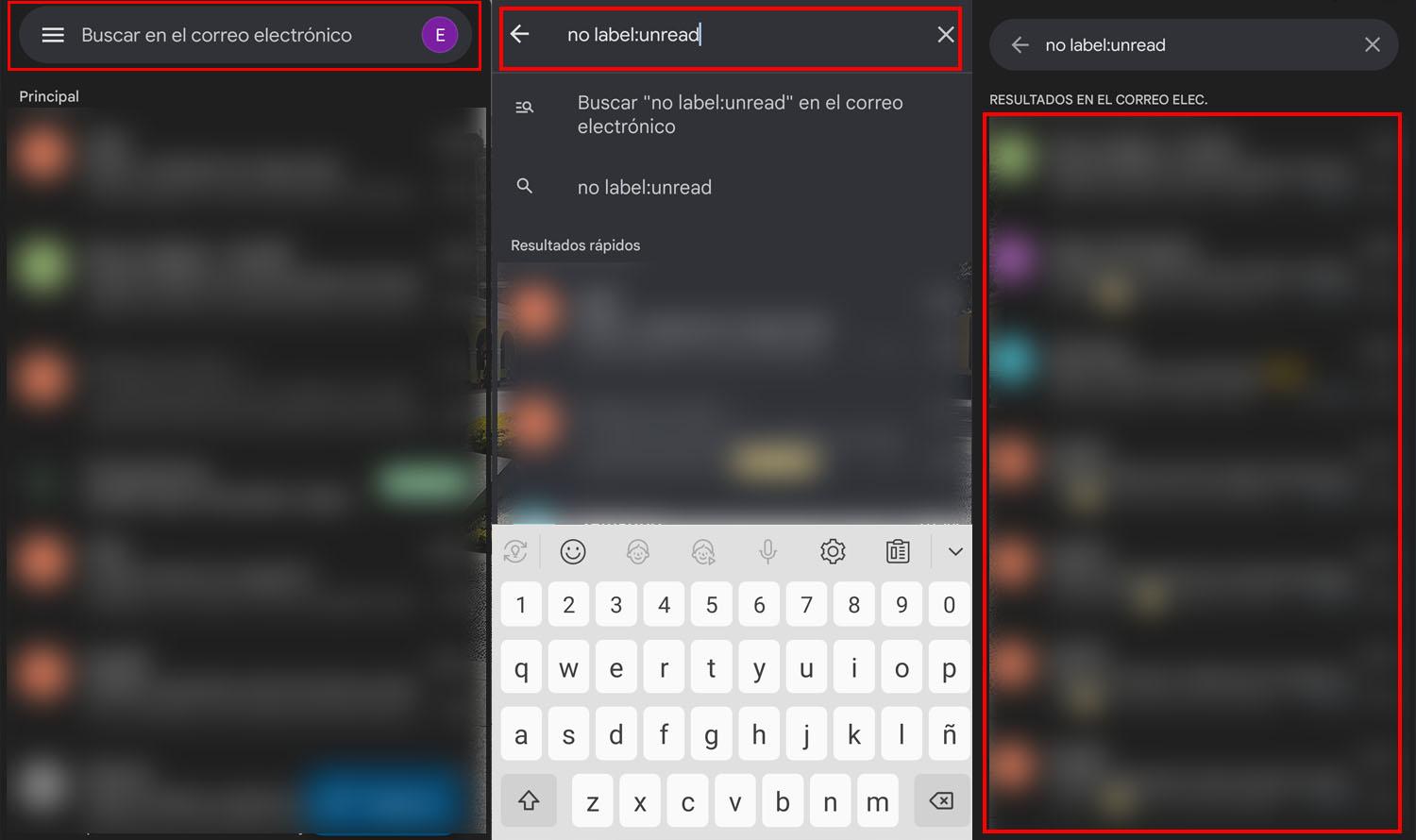
To find the messages that are keeping the unread counter alive, Gmail has a very powerful trick: search by operatorsSpecifically, the most useful one in this context is the famous is:unread (or its equivalent in Spanish «es:sinleer»).
In the search bar at the top, you can type is:unread o is:withoutreading and press Enter. Gmail will show you all emails that are still marked as unread, regardless of the folder or category they are in.
From there it's very simple:
- You select all the messages on the page.
- If you want to include all results that match the search (and not just those on the first page), use the option that Gmail offers to select all results.
- You click on "Mark as read" and let Gmail process the change.
In addition, you can combine is:unread with other conditions: for example, limiting it to a specific label, excluding the Spam folder, or focusing only on certain senders. For the phantom counter problem, a global search of all unread messages and bulk marking are usually sufficient.
Don't forget to also check out the views of Spam and "All Mail"because sometimes the spam filter or auto-archiving moves messages that continue to count as unread, even though you don't see them in the main inbox.
Viewing unread messages in other apps: iPhone, Mail, and other clients
When the problem manifests itself mainly on mobile (like the infamous 4 eternal emails on iPhone), you have to consider how Each app handles synchronization with Gmail.Not all of them interpret the reading states in the same way, nor do they refresh the counter at the same speed.
The Mail app on iOS, for example, sometimes maintains a local count of unread messages which may become outdated if the connection fails, if a synchronization is interrupted, or if there are significant changes to the account settings.
When simply reinstalling the app doesn't work, try these slightly more drastic steps:
- Completely remove the Gmail account from the Mail app (not just disabling email synchronization).
- Restart the device to force the deletion of all temporary data from that account.
- Add the account again from scratch, using the official Google option within email accounts.
If the counter still keeps appearing, it's very likely that Those emails are still marked as unread in Gmail "for real"Even if you don't see them in your main inbox. Again, searching the web for "is:unread" or "es:sinleer" often reveals these phantom messages.
In other email apps (Android, Outlook mobile, third-party clients), the approach is similar: Check your sync settings, clear the app's cache or data, and relink your account.It will always be more reliable to first check the actual status of emails in the web version of Gmail, which is the "source of truth".
What do bold emails mean and how to interpret them correctly?
By default, Gmail and most email clients use Bold text indicates which messages have not yet been readIt's a quick way to scan the tray and see what's new versus what you've already seen.
The problem arises when You start using several strategies simultaneously to manage your messages: mark as unread what you want to review, add flags or stars, move emails between folders and, in addition, let the program automatically change the status when showing them in preview.
In that scenario it's easy to lose track of what it really means for an email to be in bold or notIt could be a completely new message… or one that you opened, marked as unread to remind yourself of it, and then it was marked as read again without you noticing.
That's why many productivity experts recommend Do not overuse the "unread" status as a task reminderIt has its uses, but if you mix it with genuinely new emails and your email client's automations, you'll end up with a chaotic inbox where nothing is clear.
Instead, it is usually more effective Reserve the "unread" status only for things you haven't actually opened. and use other systems (flags, folders, an external task manager) to track pending actions, as we will see now.
Marking something as "unread" to remember it: why it might be a bad idea
One of the most widespread strategies for controlling email is Mark as "unread" again those messages that still require actionIt's a quick way of telling yourself, "I need to look at this calmly later."
If you look at it with a bit of irony, the "mark as unread" button could be called something like "I've already read this message, but I haven't decided what to do, so I'll just waste time reading it again later."Because, in reality, that's what usually happens: we reopen the same email several times without making any progress.
In most applications, The state of reading is something very fragileIt can change simply by moving from one message to another, by selecting multiple emails, or due to an unexpected synchronization. This makes it a less than reliable system for organizing work.
In addition, several practical problems arise:
- You can't easily distinguish which emails are truly unread. of those you have already read and have marked as unread again to remember them.
- If you're not careful, Your email client can re-mark those emails as "read" without you noticing.and you'll lose track of your tasks.
- By mixing new, archived, and pending emails in the same inbox, It's much easier to get distracted and lose sight of what's important.
All this translates into Your inbox fills up with mixed messages: things already resolved, open tasks, informational emails… And the unread counter stops telling you anything useful. You usually end up ignoring it or, worse, feeling like you always have something pending without knowing exactly what it is.
More effective alternatives: flags, folders, and task manager
Modern email applications typically offer better tools than the classic "unread" for flagging important messagesSome allow you to add colored flags, stars, labels, or specific categories to emails that require further action.
Putting up a flag or a star is, in general, smarter and more reliable than just playing with the read stateBecause the program doesn't automatically remove that mark when you reopen the message. They remain until you decide otherwise.
Even so, it's not a cure-all either. If you mix the following in the same tray:
- Messages you haven't checked yet.
- Emails marked with a star that need a response.
- Messages that have already been archived but that you haven't moved from the inbox.
You end up with a difficult cocktail to manageThat's why many organizational systems recommend going a step further and creating a minimal structure of folders or labels by status.
A very simple but effective strategy consists of:
- Reserve your inbox only for new messages that you haven't yet sorted..
- Create a specific folder or label for actionable messages (things you have to do).
- Use another folder or label like archive for everything that's already settled or that you simply want to keep.
This way, When you open your email, you know what you want to focus on.If you go into the actions folder, you'll only see tasks; if you go into the archive, nothing demands your immediate attention. It's much easier to concentrate and avoid being swept away by email from one issue to another aimlessly.
The biggest problem with continuing to rely on "unread" or a simple flag is that You keep postponing the decisionYou know that "something has to be done about that message," but you don't define what that something is or what the first step should be. This leads directly to the next point.
Vagueness as the origin of the delay with the mail
For many professionals overwhelmed with email, the underlying problem is not technical but one of approach. They keep delaying the decision about what to do with each message.They open it, skim it, mark it as unread again, leave it in the tray... and so on, day after day.
This lack of specificity causes email becomes a constant source of stressIt always feels like there are things left undone, but it's never clear exactly what they are or when they'll be resolved.
A much healthier way to relate to email is shift the mindset from “reading” to “classifying”In other words, instead of simply opening messages, actively decide what you're going to do with each one as soon as you see it.
Classifying involves, at a minimum:
- Briefly analyze the content of the message.
- Decide what specific action is required (answer, file, delegate, note a task, etc.).
- Record that decision in a reliable system, such as a task manager, a specific folder, or a clear label.
Thus, instead of depending on the "unread" state (which is ephemeral and can be changed unintentionally), Your actual commitments are recorded in a stable placeEmail ceases to be a disorganized list of other people's business and becomes a simple inbox that you empty regularly.
When you combine this approach with proper Gmail setup, judicious use of IMAP, and good organization in folders or labels, The problem of emails appearing as unread even though you've already opened them practically disappears.The counter makes sense again, notifications stop being phantoms, and you can focus on what really matters, instead of fighting with numbers that don't add up.
All these technical adjustments and habits make email management a much less chaotic task: New messages are clearly identified, those requiring action are separated and defined, and read states are no longer a headache.With a few well-thought-out changes, that constant feeling of having "something pending" in Gmail is significantly reduced.


Passionate about technology since he was little. I love being up to date in the sector and, above all, communicating it. That is why I have been dedicated to communication on technology and video game websites for many years. You can find me writing about Android, Windows, MacOS, iOS, Nintendo or any other related topic that comes to mind.