- WiFi 8 (IEEE 802.11bn) prioritizes stability, low latency and fewer dropouts over increased peak speed.
- The first WiFi 8 routers and chipsets were showcased at CES 2026, with prototypes from Asus, MediaTek, and Broadcom.
- Official approval of the standard is not expected before 2028, but advanced commercial hardware is anticipated by 2027.
- Key improvements include multi-AP coordination, better coverage, less congestion, and greater energy efficiency.
La The next generation of wireless networks is already starting to emergeAlthough the standard is not yet finalized, major manufacturers have taken advantage of the CES 2026 to teach their first routers and chips compatible with WiFi 8, a leap that will focus less on top speed and more on reliability and real-time response.
With more and more connected devices, cloud services, and artificial intelligence-based solutions, Current WiFi is starting to fall short in saturated environments. The future WiFi 8, identified as IEEE 802.11bnIt arrives precisely to address that bottleneck: Fewer outages, lower latency, and a more stable network even under full load.
What is WiFi 8 and why does it change the approach to WiFi
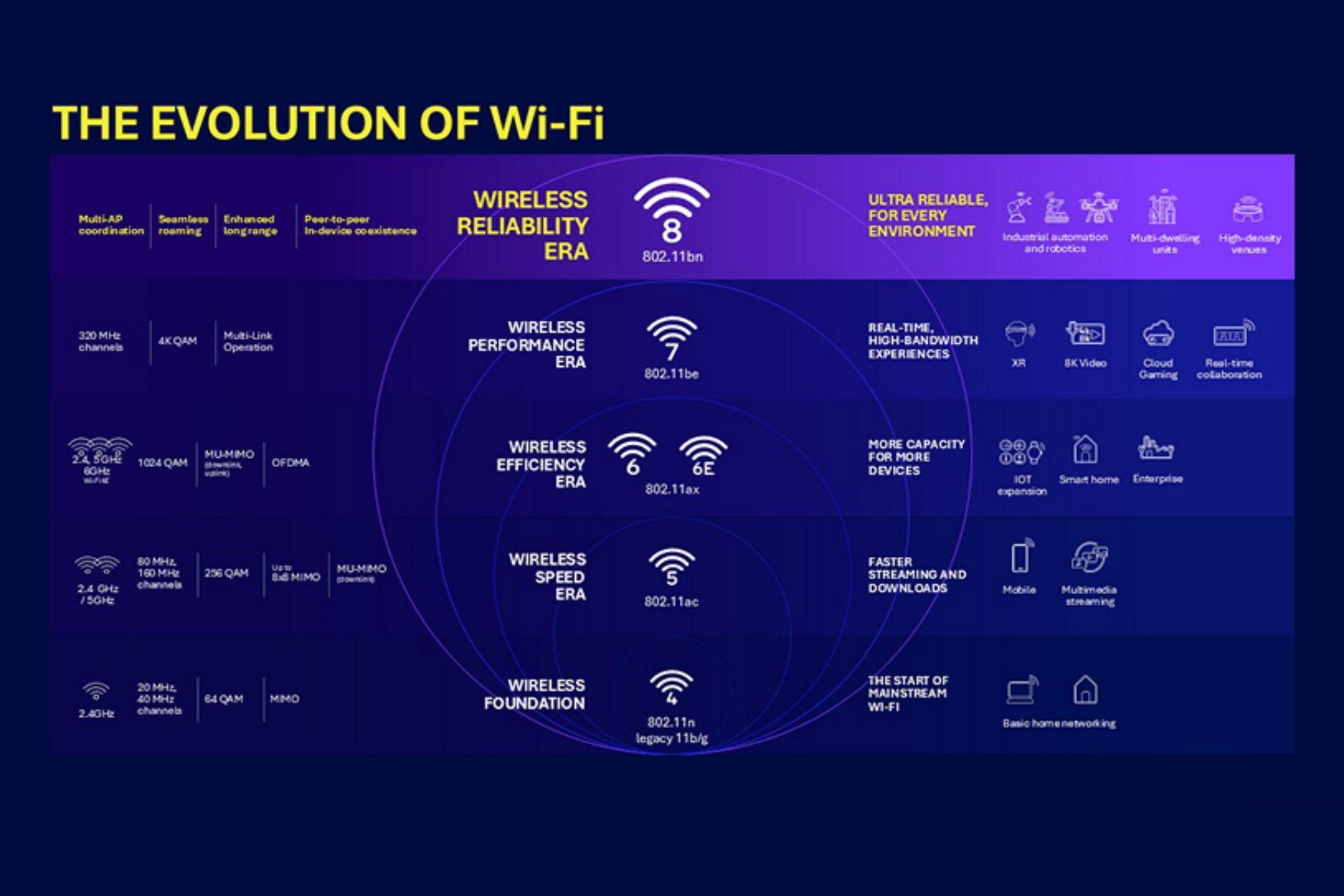
Unlike previous generations, where the main selling point was megabits per second figures, WiFi 8 focuses on connection qualityThe Wi-Fi Alliance and the IEEE are working on a standard that, according to current drafts, will be known as 802.11bn and that, on paper, will not significantly increase peak speed compared to WiFi 7, but will improve performance when the network is crowded.
Preliminary specifications indicate that the new standard will offer at least 25% more performance under adverse conditionsAlong with a similar reduction in latency and packet loss compared to WiFi 7. Today, WiFi 7 already allows multi-gigabit speeds, latencies below 10 milliseconds, and loss rates below 0,1%, but the leap to WiFi 8 will be especially noticeable when there many connected devices, interference, and mobility within the same network.
The philosophy is clear: fewer errors and fewer latency spikes in data transmission. This benefits both leisure uses —cloud gaming, virtual reality, and 4K streaming— such as professional environments, industrial automation, or sensitive applications where any micro-cut can cause problems.
CES 2026: The first WiFi 8 routers and chips take shape
CES in Las Vegas has become the perfect showcase for the industry to show its hand. Although The WiFi 8 standard has not yet been ratifiedSeveral brands have showcased prototypes and hardware platforms designed for the next wave of devices.
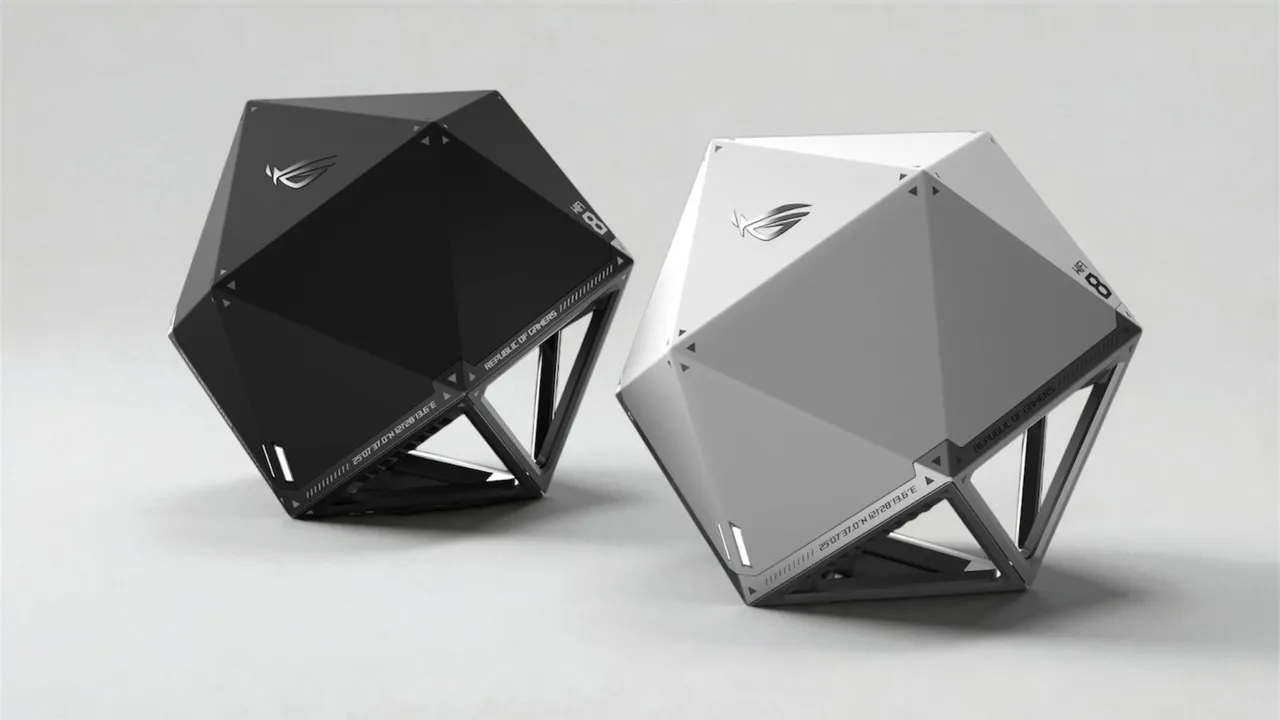
ASUS has positioned itself at the forefront with the ROG Neo CoreA concept router that boasts being one of the first functional devices with WiFi 8 support. The company claims to have achieved one of the initial performance tests under real-world conditions, focused on 4K gaming scenarios and high user density environments.
According to data provided by the brand, this prototype is capable of offering Double the speed at medium range and double the coverage for IoT devices compared to equivalent WiFi 7 solutions. Furthermore, in 4K gaming tests, the average latency dropped from approximately 3 ms (with WiFi 7) to around 0,5 ms with the WiFi 8 prototype, representing a P99 latency reduction of about six times.
The design of the ROG Neo Core is also noteworthy: a polyhedral chassis without visible external antennasDesigned to blend seamlessly into your living room or office without sacrificing high-end features. Beyond its aesthetics, the router boasts an intelligent multi-access point system and multi-client functionality to better distribute traffic and minimize queues and delays.
ASUS has presented this device as the beginning of a "new era" of home and professional connectivity, although it makes it clear that for now it is a concept model. The brand hints that It could reach the market sometime this year.but without a fixed schedule and always subject to the evolution of the standard.
MediaTek Filogic 8000: The WiFi 8 engine for mobile, PC and connected home
In the field of chips, one of the most talked-about announcements has been that of MediaTek, which the family has revealed Filogic 8000, a platform designed to bring WiFi 8 to a wide variety of equipment, from broadband gateways and enterprise access points to client devices such as smartphones, laptops, televisions or tablets.
MediaTek's idea is to offer a cross-cutting solution: the same technology blocks as WiFi 8 These guidelines would be applied both at the network core (routers, enterprise access points) and at the edge (mobile devices, computers, IoT devices). This aims to ensure a consistent and stable user experience, regardless of the type of connected device. If you need to check compatibility, learn how to... to know if I have a WiFi card in my PC.
To achieve this, the Filogic 8000 incorporates a number of key innovations. One of the most important is the Multi-AP coordinationThis includes features such as Coordinated Beamforming, Coordinated Spatial Reuse, and Multi-AP Scheduling. Thanks to this coordination, multiple access points can work in an orchestrated manner, reducing interference between them and making better use of the available spectrum.
Another important piece is the spectral efficiency and coexistence in saturated environmentsFeatures such as Dynamic Subband Operation and Non-Primary Channel Access allow devices to dynamically utilize subbands and secondary channels, preventing congestion on a single channel. Additionally, In-Device Coexistence technology helps different wireless radios within the same device organize themselves without interfering with each other.
MediaTek also emphasizes the improved coverage and reachTechnologies such as Enhanced Long Range and Distributed-Tone Resource Unit allow for optimization of the uplink at the network edges, reducing latency and maintaining a more stable connection even for remote or low-power terminals, which is crucial in scenarios with many sensors and IoT equipment.
Regarding latency and reliability, the platform uses intelligent adaptation of the data rate and mechanisms such as Aggregated PPDUwhich help consolidate storylines and avoid the lag spikes that are so annoying in video calls, competitive games, or extended reality (XR) experiences. The company has hinted that the The first Filogic 8000 chipset will begin reaching its customers towards the end of this year., which fits with a wider commercial rollout starting in 2027.
Broadcom and other players: WiFi 8 as a platform for AI and complex networks
Broadcom, another giant in the networking sector, has also revealed its hand. The company has unveiled a platform that integrates the APU BCM4918 WiFi 8, described as a next-generation system-on-a-chip aimed at unifying high-performance computing, advanced networking functions, and artificial intelligence acceleration on a single silicon chip.
This approach makes a lot of sense if we think about the types of workloads expected in the coming years: real-time data analysis, traffic prioritization based on application type, AI algorithms for managing queues and quality of serviceor detection and correction of network anomalies without manual intervention. The goal is for the router or access point itself to be able to make intelligent decisions about which traffic to prioritize and how to allocate resources.
Broadcom's proposal is completed with two dual-band WiFi 8 radios The new generation of the BCM6714 offers three spatial streams in the 2,4 GHz band and four in the 5 GHz band, while the BCM6719 raises the bar to four spatial streams in both bands. These configurations are designed for high-end equipment, advanced mesh networks, and deployments with particularly high user and device density.
Both products are now available to customers and partners through early access programs. This means that router and professional solutions manufacturers can begin integrating them. WiFi 8 in their upcoming designs, fine-tuning the hardware while the IEEE and the Wi-Fi Alliance finish polishing the details of the standard.
Prioritize reliability: fewer outages, less congestion, and greater reach
If you compare the early drafts of WiFi 8 with what WiFi 7 offers today, the change isn't so much about "faster speeds" as it is about "better network performance." The new generation places particular emphasis on reducing connection drops, micro-latencies and variations in packet arrival time (jitter), a key aspect for any real-time application.
One of the technical pillars is the real-time coordination between access pointsThanks to Multi-AP Coordination, multiple routers or mesh nodes can transmit cooperatively and avoid interfering with each other, resulting in smoother roaming within the network and eliminating the typical lag spikes when moving from room to room. This improvement will be especially noticeable in large houses, open-plan offices, or spaces with many walls.
Specific mechanisms have also been designed to combat congestion. Technologies such as Dynamic Sub-band Operation or the Non-Primary Channel Access They allow the load to be distributed among different sub-bands and non-primary channels, reducing bottlenecks when there are a large number of devices connected at the same time, something increasingly common in homes with home automation, teleworking and streaming entertainment coexisting on the same network.
Regarding range, WiFi 8 introduces concepts such as Distributed‑Tone Resource Unit y Enhanced Long RangeThese features aim to improve long-distance connection quality, especially for low-power devices located far from the router. This helps mitigate common problems such as signal loss in distant rooms or interference from appliances and neighboring networks, and facilitates tasks such as Connect the WiFi printer in domestic settings.
Finally, the Energy efficiency is also in the spotlightThe new standard aims to better manage device sleep states, reduce unnecessary transmissions, and optimize power consumption in congested environments. This is especially relevant for mobile phones, laptops, and connected sensors, which will be able to maintain more stable connections without significantly impacting battery life.
Calendar: a standard designed for 2028, but with hardware sooner
All this deployment of prototypes and platforms might give the impression that WiFi 8 is just around the corner, but things are moving somewhat more slowly in the regulatory arena. The Wi-Fi Alliance and the IEEE are maintaining a relatively steady pace: between four and six years between one ratified generation and the nextWiFi 7 was officially launched in 2024, and the roadmap places the approval of WiFi 8 around 2028.
That doesn't stop the industry from getting ahead. The devices showcased at CES 2026, both in the form of concept routers and ready-to-use chipsets, are a kind of preview of what will eventually reach the consumer and professional markets. We will most likely see the first commercial products with preliminary support for WiFi 8 around 2027.especially in high-end and business solutions.
For users in Spain and the rest of Europe, the rollout will also depend on the adaptation of frequency bands and regional regulationThis has already happened with previous generations when new bands or channel widths were introduced. In any case, the timeline suggests that the majority of homes and small businesses will continue to use WiFi 6, 6E, and 7 for several more years.
Meanwhile, manufacturers like Asus, MediaTek, and Broadcom are already looking to position themselves with platforms and designs that can update via firmware As the standard approaches its final version, an increasingly common practice to shorten time to market without breaking future compatibility.
Everything suggests that WiFi 8 will mark a turning point that is less visually striking in terms of numbers, but very relevant in everyday life: Fewer outages, fewer latency spikes, and smarter networks adapted to the age of artificial intelligenceAlthough it will still be several years before it is installed on a massive scale in European homes and offices, the movements seen at fairs like CES 2026 make it clear that the sector is already working with that horizon in mind.

I am a technology enthusiast who has turned his "geek" interests into a profession. I have spent more than 10 years of my life using cutting-edge technology and tinkering with all kinds of programs out of pure curiosity. Now I have specialized in computer technology and video games. This is because for more than 5 years I have been writing for various websites on technology and video games, creating articles that seek to give you the information you need in a language that is understandable to everyone.
If you have any questions, my knowledge ranges from everything related to the Windows operating system as well as Android for mobile phones. And my commitment is to you, I am always willing to spend a few minutes and help you resolve any questions you may have in this internet world.