
Were you working peacefully with your external SSD and suddenly heard the characteristic Windows shutdown sound followed by the drive disappearing from File Explorer? You may have panicked for a few moments. However, This is a very common problemespecially in Windows 11. In this article, we'll see why Windows disconnects the external SSD when it hasn't been used for a while and how to prevent this from happening.
Why does Windows disconnect the external SSD when it hasn't been used for a while?
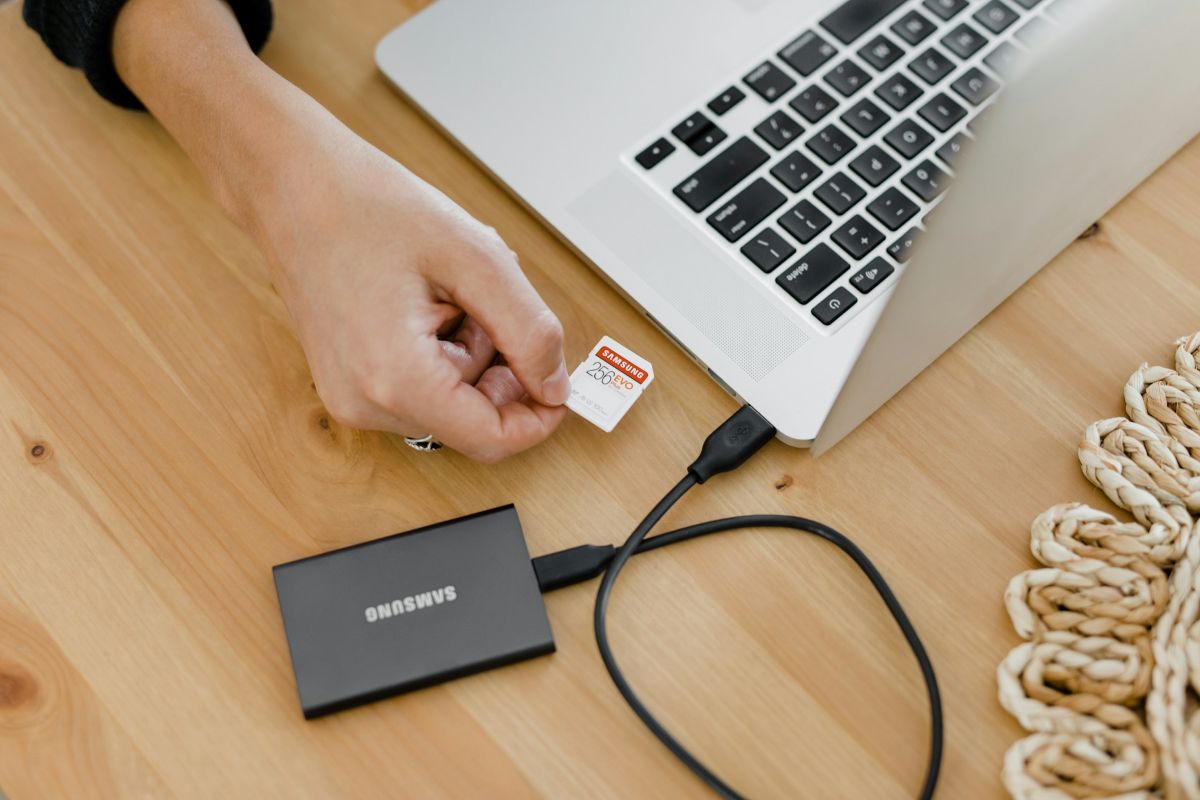
Why does Windows disconnect the external SSD after a period of inactivity? The main cause is usually... an energy-saving setting While useful for laptop battery life, this can be a real nuisance for those who rely on an external SSD. The feature we're talking about is called Selective USB SuspensionIf a USB device is inactive for a while, Windows cuts off its power supply. save energy.
The problem is that Windows doesn't always correctly understand what "idle" means. For example, perhaps you're performing a large file backup on your external SSD, but If there is a momentary pause, Windows may interpret it as disuse. and disconnect it. This can also happen if you have the Explorer window open but don't interact with it for a few minutes.
So Windows disconnects the external SSD not because of problems with the SSDbut rather due to an operating system decision aimed at saving energy. The drawback is that this sudden disconnection can interrupt critical transfers or corrupt data if the disk disconnects in the middle of an important task.
Windows disconnects the external SSD when it hasn't been used for a while: how to prevent it

Fortunately, These restrictions can be completely disabled. In no time, by following the right steps. Let's look at the most effective methods to ensure your external SSD doesn't disconnect unexpectedly in the middle of something important. We'll also discuss an additional step that many people forget, but which you shouldn't overlook.
Method 1: From the Control Panel
The first and most effective method is to modify the advanced power settings from the Windows Control Panel. In fact, it's the most reliable way, as it works on many versions of Windows 10 and 11. If Windows disconnects the external SSD after it hasn't been used for a while, Follow these steps to avoid it:
- Open the control PanelYou can find it from the start menu or by running the command
controlfrom the Run window (Windows + R). - Go to Hardware and sound and then click on Energy options.
- There you'll see the active energy plan. Click on the link that says "Change plan settings".
- Now it's time to "Change advanced power settings" and a floating window will open.
- In that window, look for the section USB configuration and click on the sign + to expand it.
- Inside, you'll find USB selective suspend configurationUnfold it.
- You'll see two settings, one for "On battery" and one for "Plugged in". By default, both are set to "Enabled". Change them to Disabled.
- Click on Apply and then in Accept to save the changes.
Method 2: The Windows 11 Fast Track
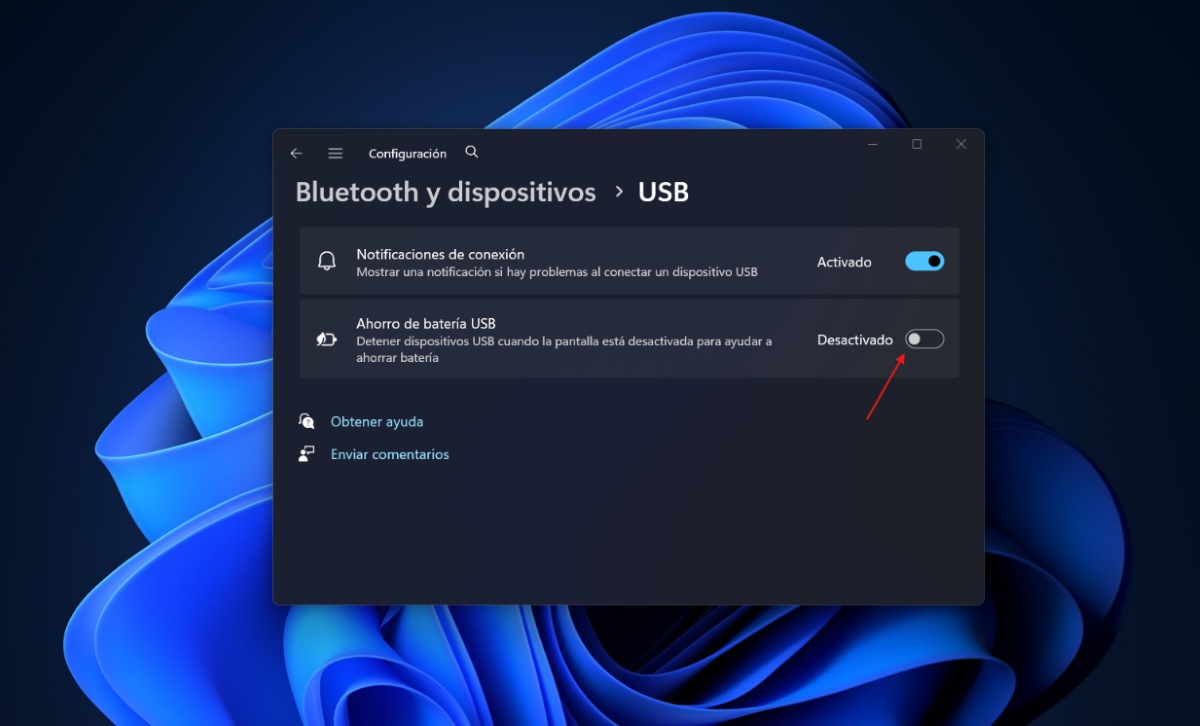
Now, if you have a updated version of Windows 11, Microsoft has simplified access to this settingTo change it, follow these steps:
- Open Configuration.
- Click on Bluetooth and devices.
- Look for the section USB.
- You will come across an option called "USB battery saver"Deactivate it and you will achieve the same result as with the previous method.
An additional step if Windows disconnects the external SSD
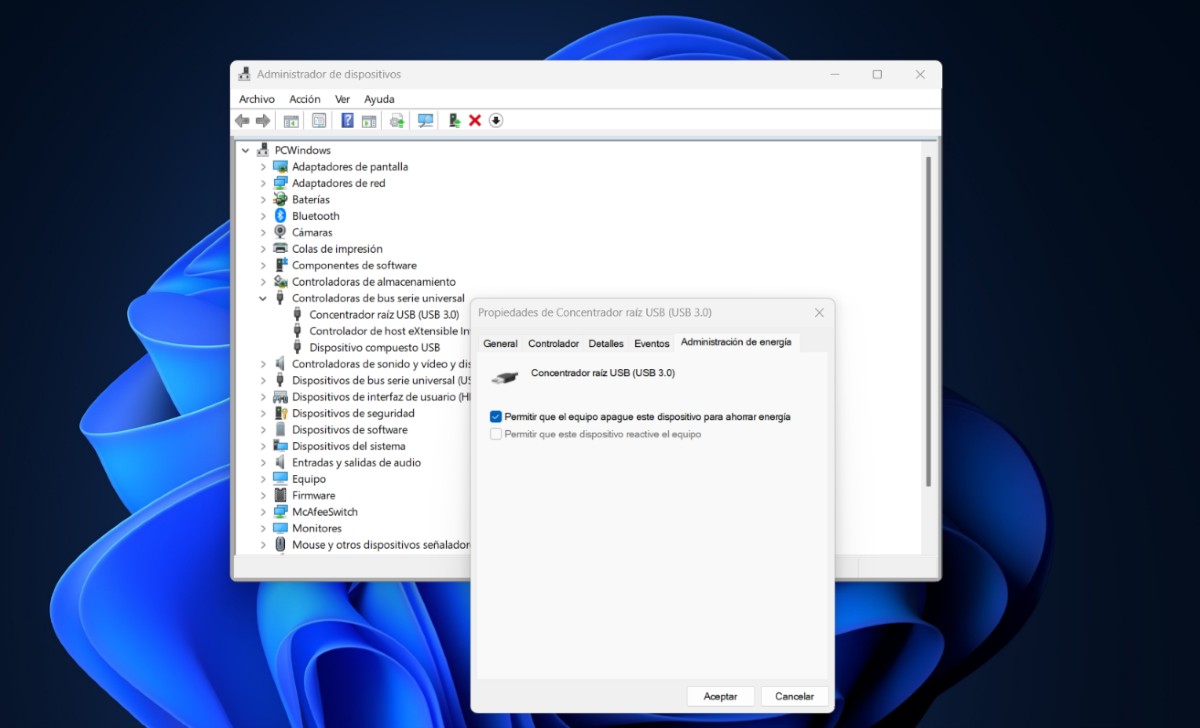
If after following the steps above Windows disconnects the external SSD, you have to mModify the permissions in Device ManagerIn other words, you need to tell Device Manager that it doesn't have permission to disconnect your external drive under any circumstances. How do you do that?
- Right-click on the Windows Start button and select Device Manager.
- Look for the section Universal serial bus controllers.
- You will see a list with several items mainly called USB Root Hub (USB Root Hub) or eXtensible Host Controller.
- Beam right-click on the first USB Root Hub and select Properties.
- Go to the tab Energy management.
- Unmark the box that says "Allow the team to pay for this device to save energy".
- Click on Accept.
- Repeat this procedure with all the USB root hubs and host controllers you find on that list.
These settings operate at the individual controller level, while Selective Suspension is a global policy. When you disable both, You close all the ways Windows disconnects the external SSD when it hasn't been used for a while.
Why is it important to fix this bug?
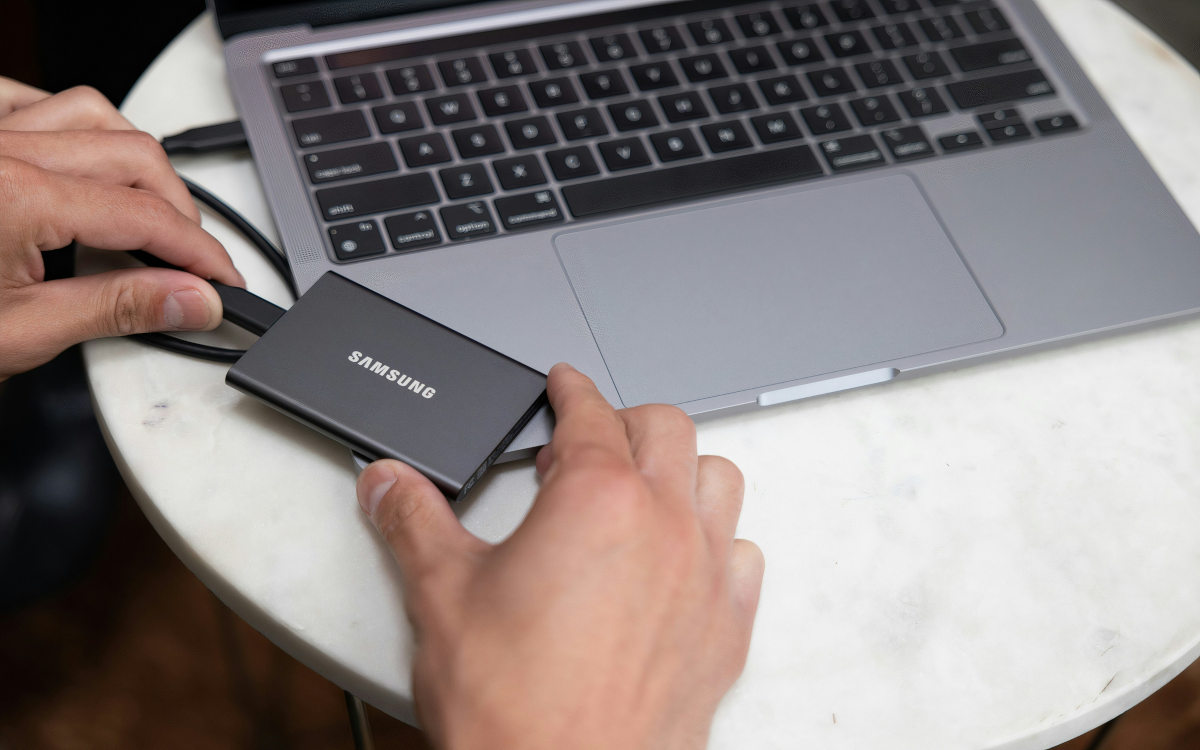
If Windows disconnects your external SSD after it's been idle for a while, it's important to address this issue promptly. Why? An unexpected disconnection of an external SSD isn't just an annoyance. If it disconnects while Windows is writing data to it, There is a real risk of file system corruptionYou might even lose data, or your PC might stop recognizing the drive.
Your work can also be affected. For example, if you're using the drive to edit videos or write an important document, a disconnection could disrupt your work. This could mean losing any progress you haven't saved.And, to be honest, the price you pay to avoid this problem is slightly higher energy consumption. The difference in battery life is minimal, and the benefit of stability and data security far outweighs that small loss.
In conclusion, if Windows disconnects the external SSD when it has been unused for a while, It's normal that it causes you annoyance and frustration.However, if you apply the adjustments mentioned in this article, you can prevent this from happening again under any circumstances. This way, you'll regain full control over your hardware and won't have to worry about unexpected delays caused by your hard drive disconnecting.

From a young age, I've been fascinated by all things scientific and technological, especially those advancements that make our lives easier and more enjoyable. I love staying up-to-date on the latest news and trends, and sharing my experiences, opinions, and tips about the devices and gadgets I use. This led me to become a web writer a little over five years ago, focusing primarily on Android devices and Windows operating systems. I've learned to explain complex concepts in simple terms so my readers can easily understand them.