- Windows allows you to safely move user folders (Desktop, Documents, Downloads, etc.) using the Location tab and Storage Settings.
- Critical folders such as AppData, the entire Program Files folder, or system directories should not be moved lightly to avoid crashes and permission problems.
- Adjusting the browser's download folder and using reliable migration tools, if necessary, also helps free up space on C without destabilizing the system.
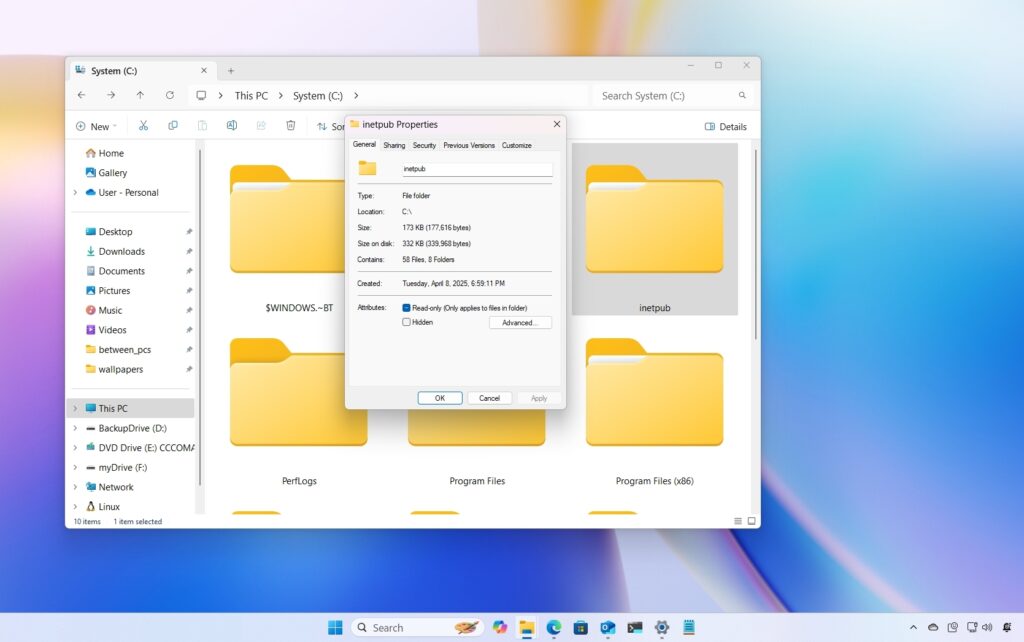
Sometimes it is necessary Move Windows system folders to another system drive To free up space, better organize your files, or for any other reason. The problem is that not all folders can be touched lightly: some are critical, and others should only be moved using the appropriate methods.
In this article you will see Which system folders can be moved without causing problems?which ones are best left untouched (such as AppData or certain program directories), and all the safe methods for changing paths in Windows: from folder properties, from Settings, through the Registry, and even with symbolic links and third-party tools, or for migrate your data between locations. The idea is that you can reorganize your PC sensibly and without breaking anything.
Which system folders can be moved (and which ones shouldn't be touched)
In a typical Windows 10 or 11 installation, your personal data is stored in C:\Users\YourNamewhere you'll find subfolders like Desktop, Downloads, Documents, Pictures, Music, and Videos. These folders are designed to help the user organize their files. Store virtually all your personal content there..
The good news is that Windows allows you to change the location of many of those user folders. Officially and securely. We're talking about Desktop, Documents, Pictures, Music, Videos, and Downloads, among others. The system itself includes a "Location" tab in its properties to do this easily.
However, there are other areas of the system, such as C:\Windows, C:\Program Files, C:\Program Files (x86) or the AppData folder within the profileThese files are part of the core of the system and many applications. Moving them haphazardly, or using commands like mklink / robocopy / rmdir without fully understanding what you're doing, can cause very serious errors and permission problems. updates that fail or programs unable to start.
In particular, the folder AppData (within C:\Users\YourName) contains critical configuration data, caches, and application profiles. Although some of its content can technically be redirected, It is not recommended to migrate the entire drive to another unit Nor can you delete it from the system disk: Windows won't let you delete it because it's essential, and forcing poorly configured symbolic links can result in programs that don't read their data correctly or updates that become corrupted.
Another important warning: if you decide to move system folders to a external hard drive or drive that is not always connectedWhen you start your PC without that drive connected, you may encounter an empty desktop, path errors, system messages, and an unstable Windows system. The safest course of action is Always use internal drives (SSD/HDD) that are present at every boot.
Advantages of moving system folders to another drive
When you install Windows on a low capacity SSD (for example, 120 or 250 GB) and you have a large 1 or 2 TB HDD for data, it's normal for the C: drive to fill up quickly with documents, downloads, or files accumulated on the Desktop. That's where the possibility of move user folders to another disk.
When moving folders such as Desktop, Documents, Pictures, or Downloads to a large HDD, You free up space on the system driveleaving the SSD for what truly benefits from its speed: Windows itself and the most demanding applications or games (for example, the Explorer preloadingThis not only helps maintain performance, but also makes the system more stable by preventing C: from running out of free space.
Furthermore, by customizing the locations you can decide that each type of file goes to a specific folder (For example, work documents on one drive, multimedia on another, etc.). This way, you avoid having to chase after lost downloads across your hard drive and greatly improve the organization of your computer.
Another advantage is that, if you already usually save your files manually to another drive, configure default folders It saves you steps: simply save everything "as always" in Documents, Pictures or Downloads, knowing that they are actually in D: or E:, even though Windows already thinks the programs are still "in the same place".
Change the location of user folders from Properties
The most direct and secure way to move user folders (Desktop, Documents, Pictures, Music, Videos, Downloads…) is by using the Location tab in the properties of each folderThis method is integrated into Windows and is recommended for most users.
Before we begin, it's a good idea create the destination folders in the new drive with any name you like (for example, D:\Desktop, D:\Documents, etc.). This ensures that Windows doesn't convert the drive's root directory into the folder itself, which can happen if you select the drive directly without creating a subfolder.
To change the location From File Explorer, do the following:
- Open the File Explorer from the taskbar or the Start menu.
- In the left panel, locate the folder you want to move (for example, Desktop, Documents, or Downloads) under "This PC" or under your username.
- Right-click on the folder and select Properties.
- In the window that opens, go to the tab Location.
- Press the button Move and navigate to the destination folder you created on the other drive (for example, D:\Desktop).
- Select the folder and click on Select folderand then in Apply.
- Windows will ask you if you want to Move all files from the old location to the new one.The most logical answer is yes, so that no data is left loose in the old route.
After accepting, you'll see how Windows transfer the content (Sometimes it takes a while if there are many files; if Explorer is slow, consult Why is it taking so long?When finished, click OK and that folder will have been relocated to the new drive, although for you and the programs it will still appear as "Desktop", "Documents", etc.
It is important to repeat the process for each folder you want to moveThere is no option to replace them all at once. If your system drive was already very close to its storage limit, you'll notice a significant improvement after moving the heaviest files.
If you ever change your mind, you can use the button on the same Location tab. “Restore defaults” To return the folder to its original profile path, Windows will ask you again if you want to move the files back, and you can then restore everything to its original state.
Change the default drive from Windows Settings
In addition to the method described above, Windows 10 and 11 offer another way to control where certain types of new content are stored by default (documents, music, photos, videos, applications…). In this case, you don't customize the folder name, but you do customize the drive where they will be stored.
This approach is useful if you simply want the system to stop using the C: drive as the destination for new files, but you're not too concerned about the exact folder names. Essentially, you're telling Windows that Save the new content to another drive.
The steps are as follows:
- Open the Configuration from Windows by clicking on the gear icon in the Start menu or with the Win + I combination.
- Enter the section System.
- In the menu on the left, select Storage.
- Look for the section called something like More storage configurations and click on Change the storage location for new content.
- You'll see several drop-down lists for apps, documents, music, images, videos, and maps. In each one, you can choose the destination unit (C:, D:, E:, etc.).
- Choose the unit you are interested in for each type of content and click on Apply for the changes to take effect.
From that moment on, Everything you create or download as new content will automatically go to the drive you've chosen.It is recommended to restart your computer after adjusting these parameters to ensure that everything is applied correctly.
Keep in mind that this method doesn't allow you to change folder names or exact paths; it simply redirects the destination of new files. If you want full control over a specific folder, the Location tab in each folder's properties remains more flexible.
Advanced usage: changing paths from the Registry Editor
For advanced users who need finer control, it is possible modify the paths of some special folders directly from the Windows RegistryThis is done through the keys where the system stores the paths to user folders (such as Desktop, Pictures, etc.).
The problem is that working in the Registry has its risks: an incorrect modification can seriously damage the operating systemThis can cause Windows to fail to find certain folders or generate unstable behavior. If a serious failure occurs, you may need to Repair Windows that won't startTherefore, it is only recommended if you have experience and know exactly what you are playing.
Before doing anything in the Registry, it is advisable to take two basic precautions:
- Create a system restore pointso we can go back if something goes wrong.
- Export a full backup of the registry (File > Export in Registry Editor) and save it in a safe place.
If you still want to continue down this path, the general procedure To change user folder paths, you would do the following:
- Open the Run dialog box with Win + R and write regeditthen click OK.
- When it opens Registry EditorNavigate in the left panel to the key:
HKEY_CURRENT_USER\Software\Microsoft\Windows\CurrentVersion\Explorer\User Shell Folders - In that list you will see entries with names like Desktop, My Pictures, Personal, etc., which correspond to the Desktop, My Pictures, Documents, etc.
- Double-click on the entry you want to modify and Write the new complete route where do you want that folder to be located?
By changing these paths, Windows will begin to consider these new locations as the "official" ones for each special folder. However, it is recommended that First, create the physical folders in the new drive (such as D:\Desktop, D:\Pictures…) and that you use valid paths.
Again, the recommendation for most users is to use the Location tab or Settings, and leave the Registry Editor only for very specific cases or when correcting a previous mistake.
Moving the Desktop to another drive in Windows
The Desktop is usually one of the folders that consumes the most space, because many people It accumulates all kinds of files there.Installers, photos, documents, temporary projects… If you have a small SSD, moving your Desktop to an HDD can free up quite a few gigabytes.
On Windows, the recommended method is the same as always: Use the Location tab in the Desktop folder propertiesHowever, you must avoid making a very common mistake: directly choosing the root of the drive as the destination (for example, selecting X: instead of X:\Desktop).
If you select the root of the drive, Windows will treat that entire drive as if it were the Desktop folder, with the effect that Everything you copy to the desktop will appear loose in the root directory of X:And any folder you create in X: will appear as if it were on the Desktop. This is very inconvenient and can also cause problems when trying to undo the change.
If you experience something similar, one possible solution is to use the same Location tab and click on “Restore default values”Sometimes, when answering "No" When Windows asks you if you want to move the files, it restores the original Desktop path to C: and you can move it again correctly, this time to a specific folder within the other drive (for example, X:\NewDesktop).
Move the Program Files folder to another drive
Many people wonder if it's possible move the “Program Files” folder to another drive to save space on C:. The short answer is that it can be done, but it's tricky and not always recommended, because many installers assume that C:\Program Files is the "normal" location. If you need tools to audit what's taking up space or identify processes, consult this list of NirSoft tools.
If you're still interested in freeing up space, there are three main approaches that are commonly used:
1. Use an automated migration tool
Some specialized programs allow Move installed applications and their program folders to another drive relatively automatically. A typical example is EaseUS Todo PCTrans, which offers an “Application Migration” or “Move Large Folder” mode.
The idea behind these tools is that you choose which programs you want to migrate. define the new unit and let the software handle copying files, adjusting paths, and resolving internal links. They typically include features such as:
- Transfer applications and data between drives or between PCs.
- Migrate PC games without reinstalling them.
- Clean up large or temporary files to free up space.
- Support for multiple versions of Windows.
These types of solutions are very convenient if you don't want to fighting with symbolic links or the RegistryHowever, it's advisable to use them wisely, checking which applications are affected and ensuring they continue to function properly after the change.
2. Manually move program files using directory merges
Another more technical option involves Copy the Program Files folder to another drive and then create a directory junction link so that Windows continues to believe it is in C:, even though it is physically somewhere else.
A general outline This method would involve:
- On the destination drive, create a folder where you want to store the programs (for example, D:\Programs).
- From the Explorer, copy the contents of C:\Program Files or from the specific program folder you want to move, and paste it into that new D: folder.
- Next, delete or rename the original folder (or part of it) on C:, being careful not to touch anything critical that is in use.
- Open a command prompt window as administrator and use the command mklink /J to create a link between the old and new routes.
Done correctly, everything pointing to C:\Program Files\YourApp will actually end up in D:\Programs\YourApp. But if you make a mistake with the paths or delete something you shouldn't, you can leave the system in a rather delicate state, so it's crucial to be careful. Have backups and know exactly what you're doing.
3. Use the “Move” option in Apps & features
In Windows 10 and 11, some applications installed from the Microsoft Store or packaged as modern apps allow Change drive from Settings > Apps & featuresIt's not suitable for everything, but it can be useful for certain resource-intensive apps.
If the app allows it, you'll see a button. "Move" in its entry within the program list. The process would be:
- Open Settings > System > Apps & features.
- Find the application in the list and select it.
- If the option appears, click on Move and choose the new unit.
- Repeat with the other apps that support this feature.
Thus, Don't move the entire Program Files folderbut rather specific applications that do support official relocation. It's a safer way to gain some space without completely reconfiguring the system.

What not to touch: AppData and other sensitive folders
The temptation to “clean up” C: by moving everything around is great, but there are folders that shouldn't be touched Except in very specific cases and knowing exactly how to revert changes. Two of the most sensitive are AppData and certain directories linked to the system and updates.
Inside C:\Users\YourName, the folder AppData It stores settings, caches, application profiles, and a bunch of files that programs need to run. Windows doesn't let you delete it or rename it happily because it is essential to the system.
Attempt to move AppData completely to another drive using combinations of mklink, robocopy or rmdir This can cause serious problems: inconsistent local permissions, programs that cannot read your settings, errors when updating Windows, or even strange messages such as a folder being a "reanalysis point" not backed up in backups.
There have also been documented cases where major Windows updates (such as the Fall Creators Update) introduce Internal redirects and symlinks in Program Files (x86)which further complicates things if you've been moving routes in an unsupported way.
If you've gotten yourself into trouble with symbolic links or strange system folder movements, the solution often involves remove or reverse those linksFollow specific guides (for example, from Microsoft forums) and, if storage is a recurring problem, consider a expansion of the system unit instead of forcing drastic changes to the Windows structure.
Final tips and best practices when moving system folders
When reorganizing your PC, it's best to combine all these techniques with a bit of common sense: Not everything that can be moved should be movedAnd it's always better to go step by step than to make radical changes all at once.
As a general rule, it is safe to use the built-in Windows options (Location tab, Storage settings, Move button in Apps & features) to Move user folders and compatible appsThese functions are designed precisely for that purpose and greatly reduce the risk of breaking the system.
However, you should be extremely careful with AppData, the entire Program Files folder, Windows folders, and any path where the system doesn't offer a graphical interface for relocating it. If you ever need to change these things, you'll probably be more interested in... upgrade the SSD or install one with greater capacity than spending hours on potentially problematic hacks.
If you plan carefully which folders you want to move, create the new paths on the appropriate drive, use the official Windows mechanisms, and check your browser settings, you will be able to free up a lot of space on the C drive, keep your PC tidy, and avoid errors.all this without sacrificing stability or performance.


Editor specialized in technology and internet issues with more than ten years of experience in different digital media. I have worked as an editor and content creator for e-commerce, communication, online marketing and advertising companies. I have also written on economics, finance and other sectors websites. My work is also my passion. Now, through my articles in Tecnobits, I try to explore all the news and new opportunities that the world of technology offers us every day to improve our lives.