- OpenAI activates an age prediction model in ChatGPT to detect possible users under 18 years of age and apply more security filters.
- The system analyzes behavioral signals and account data, and allows errors to be corrected through selfie verification and official document via Persona.
- When a minor's account is identified, access to sensitive content such as graphic violence, sexual role-playing games, or dangerous viral challenges is restricted.
- The rollout is global and will reach the European Union in the coming weeks, in a context of increased regulatory pressure and plans for a future "adult mode".
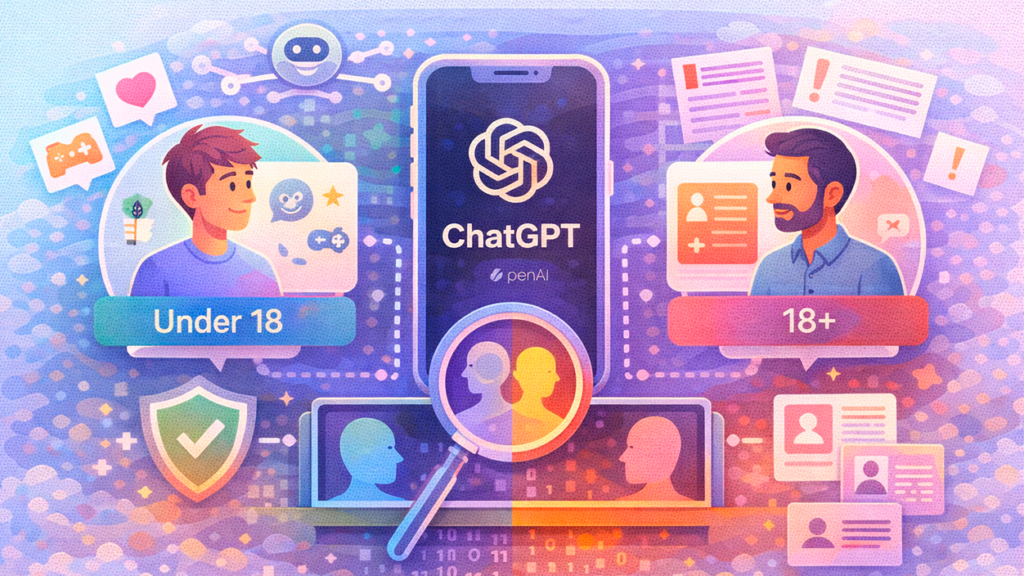
OpenAI has begun deploying in ChatGPT, an age prediction system which significantly changes the way the chatbot treats users under 18 years oldThe company seeks to automatically adjust the experience and security measures based on whether an account appears to belong to a teenager or an adult.
The decision comes at a delicate time, with increasing regulatory pressure on the impact of AI on minors and ongoing lawsuits against the company and its CEO, Sam Altman, in cases investigating the role of the conversational assistant in high-risk situations. At the same time, the firm wants to prepare the ground for new content formats without leaving the youngest audience unprotected.
How ChatGPT's age prediction model works
The new feature is based on a artificial intelligence model capable of estimating if an account belongs to someone under 18 years oldThis is based on multiple signals generated by the service itself. It's not just about what the user declares upon registration, but a combination of indicators that allow for a more accurate deduction of the user's age profile.
According to OpenAI, the system takes into account the age of the account, typical activity hoursThe data also includes usage patterns over time and the age the user entered when creating their profile. With this massive rollout, the company aims to identify the most reliable factors in order to further refine the model and reduce errors.
The approach involves moving from a focus based almost exclusively on the self-declaration of age, easy to circumventThis leads to a more automated system that activates additional protections when there are reasonable doubts. In practice, it's an extra layer that complements existing parental controls and family settings.
OpenAI insists that no age prediction system is infallibleThe company acknowledges that there will be cases where an adult is treated as a minor, or conversely, scenarios where the AI fails to detect in time that it is interacting with a teenager. Therefore, the company is proposing an additional verification mechanism to correct these errors.
What changes for minors: limits on sensitive content
When the model considers that An account likely belongs to someone under 18 years oldChatGPT automatically activates a more protected experience. The goal is to reduce exposure to certain types of content that, according to child development literature, can have a greater impact on adolescents.
In that context, the platform will apply Additional filters for graphic violence, gore scenes, or particularly graphic descriptionsin addition to restricting participation in role-playing games with sexual componentsRomantic or violent content will be prohibited. Viral challenges that may encourage risky or harmful behavior will also be limited.
Another area where OpenAI wants to put the brakes on is Content that reinforces extreme beauty standardsUnhealthy diets or narratives that promote body shaming will be addressed with more caution or blocked altogether if the system deems the user too young.
These additional safeguards are in addition to the security controls that ChatGPT already applied to all usersregardless of age. The assistant itself states that it does not generate pornography or explicit sexual descriptions, avoids instructions on self-harm or suicide, does not explain how to commit crimes, and does not provide personal data of third parties.
On topics such as health, basic sexuality, violence or politicsThe chatbot already operated with an educational and neutral approach, avoiding sensationalist tones or any intention of persuasion. The difference now is that, if the account appears to belong to a minor, certain matters will be handled with even more caution or filtered out entirely.
Verify age with Person: selfie and official document
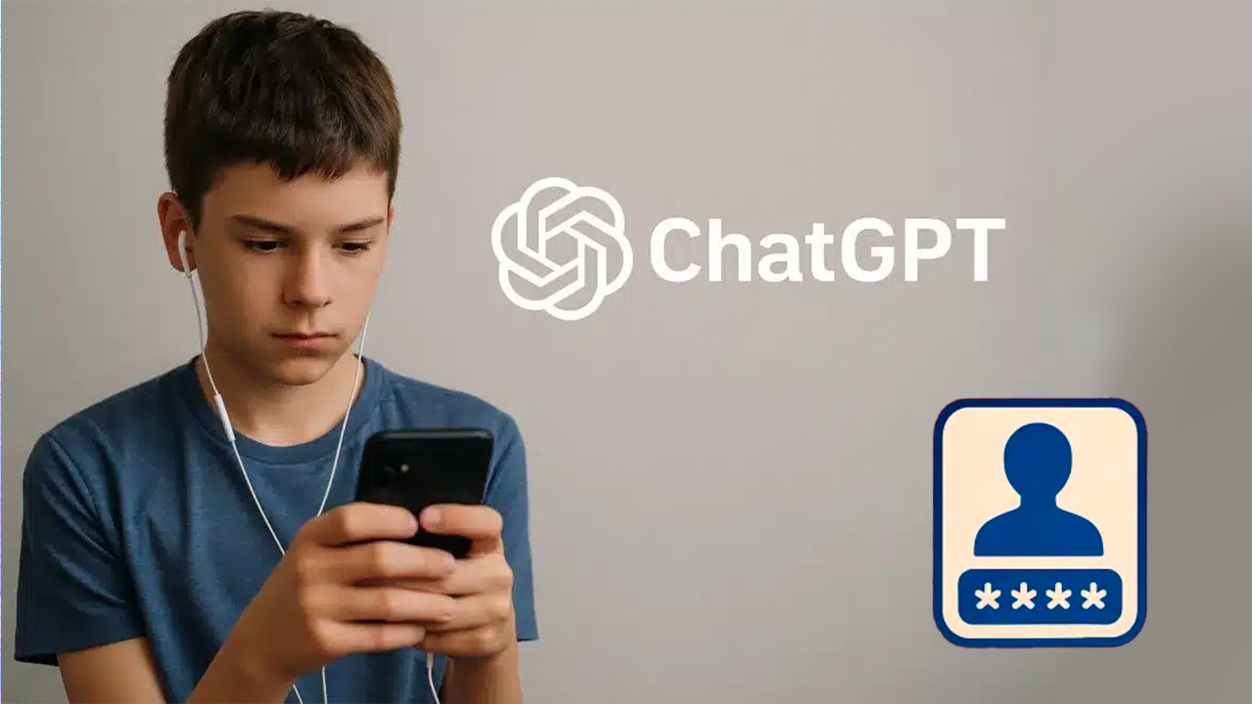
For cases where AI makes a mistake, OpenAI offers a age verification process through Persona...a third-party provider specializing in identity verification. The idea is that an adult who has been mistakenly classified as a minor can regain full access to ChatGPT's features.
The procedure begins in the service settings, in the account section, where the option to “Age verification”From there, the user is redirected to Persona, who can request a live selfie using your mobile phone or computer camera to confirm that the person has reached the age of majority.
Depending on the country, the system may also require an official identity documentsuch as a national identity card, passport, or driver's license. With this information, Persona verifies whether the user is 18 years of age or older and communicates only the result to OpenAI, without sharing the images or original documents.
Once the check is passed, The extra restrictions associated with the experience for minors are removed. The account then functions like any adult's, within general security limits. OpenAI warns that this change may take some time to be reflected across all linked services and devices.
Regarding privacy, the company emphasizes that The person deletes the selfie and documents within a maximum of seven days. and that OpenAI does not access those files. It only receives the date of birth or an equivalent adult signal, enough to disable prediction on that account in the future.
A move amidst intense regulatory pressure and with Europe in the spotlight
The implementation of age prediction cannot be understood without the regulatory context. OpenAI acknowledges that the measure responds to the need for adapting ChatGPT to the reality of teenagers as well as the demands of authorities and legislators who are asking for more guarantees for minors in AI services.
In the United States, the Federal Trade Commission (FTC) It maintains ongoing investigations into the effect of these technologies on young users.Meanwhile, the company faces lawsuits debating the chatbot's liability in extreme risk situations. The new safeguards aim to ease these tensions and demonstrate a proactive commitment to safety.
In the European Unionthe system deployment will arrive “in the coming weeks”OpenAI must take into account additional regional requirements stemming from EU regulations on data protection and digital services. Europe has been particularly strict regarding the processing of minors on online platforms, including generative AI systems.
The measure also aligns with practices of other platforms, such as YouTube, which uses additional age verification when it suspects that a minor may be behind an account. In this case, ChatGPT partially mimics that approach, but with a model that attempts to anticipate exposure to sensitive content before it occurs.
OpenAI states that the system design has been completed with the participation of experts in child development and relying on academic studies on the differences between adolescents and adults in aspects such as risk perception, impulse control, or vulnerability to certain types of messages.
800 million users, future “adult mode” and the need for control
The announcement of the age prediction feature coincides with a period of strong expansion for ChatGPT. OpenAI estimates that the service already has approximately 800 million active users per week, a scale that forces order in how content is offered and limited depending on who is on the other side.
The company has also announced in recent weeks that ChatGPT will start showing ads in the free version. For some users in the United States, while maintaining ad-free access to its more expensive paid subscriptions. The move is part of a broader strategy to increase revenue.
In fact, the company itself has indicated that its Annualized revenues would have exceeded $20.000 billion by 2025, compared to the 6.000 billion estimated a year earlier, driven by the expansion of its computing capacity and the growth in the use of its models.
In parallel, OpenAI is working on a future “Adult mode” for ChatGPTThis feature would allow access to more sensitive content categories, provided the user verifies their age. The company's director of applications, Fidji Simo, indicated its arrival would be in the first quarter of 2026, contingent upon robust safeguards being in place to block this option for minors.
The age prediction fits into that plan as the necessary piece to separate, with a certain margin of safety, the adolescent experience from the adult oneWithout that separation, enabling a mode with more explicit content would be difficult to justify to regulators and the public.
An invisible infrastructure that will shape how children use AI
Beyond the headline, age prediction on ChatGPT works like silent infrastructure that will shape the daily lives of millions of young usersThe system decides what is seen and what is not, what conversations are possible and which are limited, even when the teenager has not openly declared their age.
The success of this bet will depend on two factors: the accuracy of the model and the level of friction it introducesIf you mislabel too many adults, complaints will soon follow; if you fall short, criticism will focus on the lack of protection for minors, especially in Europe and other demanding jurisdictions.
Even with its limitations, the new feature represents a significant step in how major AI platforms take concrete responsibility for who uses their products, including online security alliancesIn the case of OpenAI, it comes after months of public debate, regulatory advances, and commercial growth that requires combining expansion, monetization, and security in one move.
With this global rollout and its imminent arrival in the European Union, ChatGPT is moving towards a model in which Age is no longer just a piece of data entered into a form to become a central variable that determines the type of conversations, content, and limits that the chatbot will offer to each user.


I am a technology enthusiast who has turned his "geek" interests into a profession. I have spent more than 10 years of my life using cutting-edge technology and tinkering with all kinds of programs out of pure curiosity. Now I have specialized in computer technology and video games. This is because for more than 5 years I have been writing for various websites on technology and video games, creating articles that seek to give you the information you need in a language that is understandable to everyone.
If you have any questions, my knowledge ranges from everything related to the Windows operating system as well as Android for mobile phones. And my commitment is to you, I am always willing to spend a few minutes and help you resolve any questions you may have in this internet world.