- Elon Musk challenges Faker's team, T1, to face Grok 5 in League of Legends under human conditions.
- The AI will play using only pixel vision and a reaction time limited to that of a person.
- The experiment will serve as a testbed for technologies applied to the Optimus robot and other xAI and Tesla systems.
- The esports community and figures in the video game industry are divided between enthusiasm and skepticism.
The crossing between artificial intelligence and esports It has taken a remarkable leap with Elon Musk's new experiment. The entrepreneur has decided Testing Grok 5, the advanced AI model developed by xAI, in such a demanding environment as League of Legends, facing the historic South Korean team T1, led by the legend FakerThe proposal, planned for 2026, has generated intense debate in the gaming and technology community, including in Europe, where esports and AI have been gaining ground for years.
Far from being a simple publicity stunt, Musk presents this duel as a serious test of capabilities for AI systems that, in the future, could operate humanoid robots such as Optimus from Tesla. The showdown aims to test whether Grok 5 is capable of making complex decisions, adapting on the fly, and competing against elite humans in a title as tactical, chaotic, and demanding as the MOBA from Tesla. Riot Games.
A direct challenge: Grok 5 against the best League of Legends team
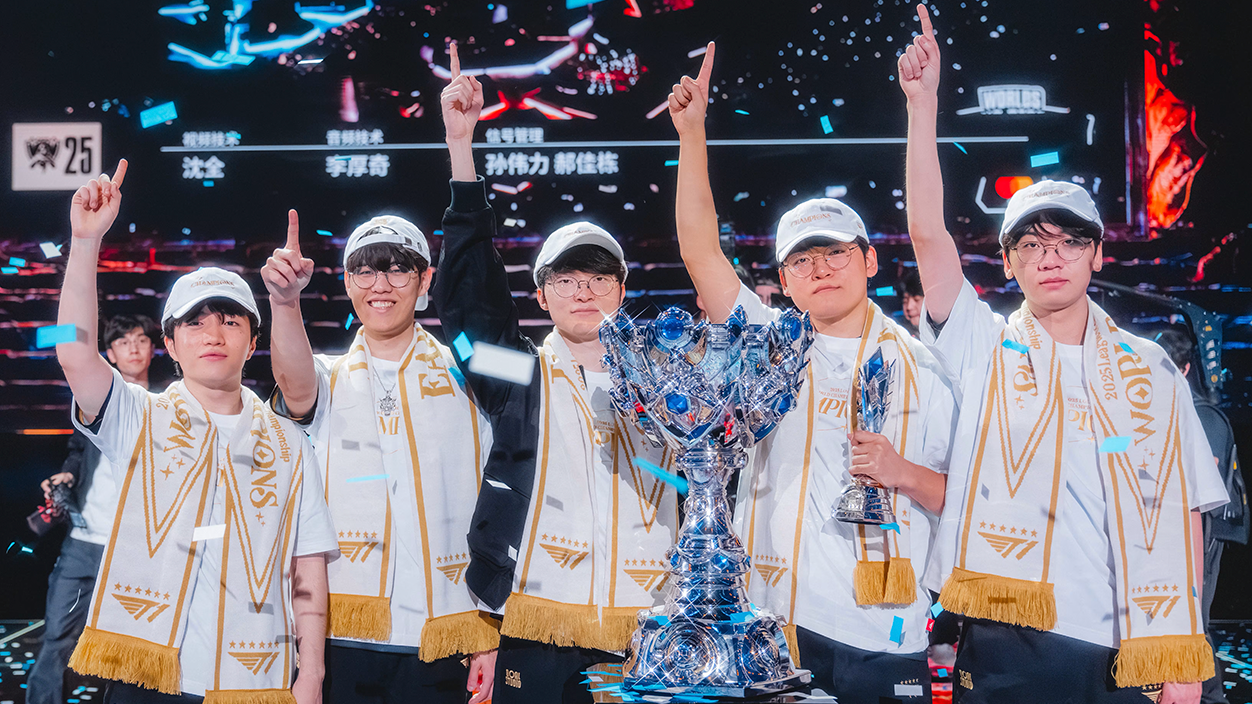
Elon Musk publicly issued a challenge to T1, considered by all as the best competitive League of Legends team of history. The owner of Tesla, X and xAI maintains that his AI model will be able to defeat the South Korean team in organized matches next year, when Grok reaches version 5. The goal is to measure whether artificial intelligence can keep up with the pace, coordination, and map reading of a professional squad at the peak of the game..
Musk's message, posted on his X profile, was forceful: “Let’s see if Grok 5 can beat the best human team in 2026”These are not bots designed for a specific title, but a system that, according to the businessman himself, would have the capacity to “Play any video game simply by reading the instructions and experimenting”That is, a closer approximation to a Generalist AI than to a closed program.
From the human side, the response was swift. T1, the current global benchmark for the game, He immediately accepted the challenge. with a direct message: “We are ready, are you?”, accompanied by an image of Lee 'Faker' Sang-hyeokThe most decorated midlaner in the title's history. The Korean team arrives at the potential match with a roster that includes Doran, Oner, Faker, Peyz y Dig it up, names that have been protagonists in recent World Cups.
Human limitations for AI: the rules set by Musk
To prevent Grok 5 from competing with advantages impossible for an ordinary player, Musk has established a series of very specific restrictionsThe first is how the AI will perceive the game: You will only be able to "see" the screen through a camera, without internal access to game data or additional information beyond what a person with standard vision would see.
This decision implies that the system will have to interpret pixels in real timeidentifying champions, abilities, health bars, minimap position, and environmental elements solely from visual cues. This is a significant change from previous projects like OpenAI Five or AlphaStar, which could read structured information from the game via API, with precise knowledge of statistics, coordinates, and internal states that a human can never see so clearly.
The second major condition affects speed: Grok 5 will have a reaction time limited to that of an average humanIt won't be able to chain together clicks and keystrokes at a robotic pace or respond in milliseconds, something common in many automated systems. According to Musk, this latency limit, around 200 millisecondsIt seeks to force the AI to win not through pure mechanical speed, but by strategy, anticipation and decision makingjust like a professional player.
This combination of purely visual vision and human reflexes This turns the experiment into a kind of "Turing Test" applied to esports: if Grok 5 can handle team fights, map rotations, and key objectives with ease without invisible help, it would approach what many understand as intelligent behavior comparable to humans in an interactive and complex environment.
League of Legends as a laboratory for next-generation AI
The choice of League of Legends It's no coincidence. Musk has insisted that Riot's MOBA is a perfect environment for training perception and action models that can then be transferred to the real world. Team fights, wave management, vision control, and coordination between five players demand constant situational awareness, prioritizing objectives, and reacting to events that change in a matter of seconds.
In this context, Grok 5 will have to combine visual recognition, planning and cooperation with their teammates—whether other AI agents or human players—to make sound decisions. The game presents chaotic scenarios, with dozens of overlapping visual effects, overlapping abilities, and movements that must be anticipated. All of this, according to Musk, resembles what a humanoid robot in a crowded and changing physical environment.
The tycoon's idea is that the skills acquired by Grok 5 in such a demanding video game can be integrate into systems like OptimusIf AI learns to quickly identify threats, safe paths, and action priorities in a League of Legends game, that same type of reasoning could be applied, for example, to recognizing a pedestrian who suddenly appears on a street and deciding on an emergency maneuver, or to navigating a factory with people moving around it.
Grok 5, a generalist model designed to "play everything"
Beyond the battle with T1, Elon Musk has reiterated that his ambition with Grok It goes far beyond a single title. According to the businessman, version 5 of the model will be capable of understand the rules of any video game -and other interactive systems- by reading their instructions and learning from experiencewithout depending on specific mass training for each case.
This approach aligns with the idea of a more generalist artificial intelligencecapable of transferring what has been acquired in one environment to other, different contexts. Musk has even spoken of a xAI video game studio aimed at launching a large-scale title, largely generated by AI, before the end of next year. The plan includes Grok collaborating on creative tasks such as level design, narrative, and gameplay systems, and on tools such as spreadsheets in Grok.
However, influential figures in the traditional video game industry are highly skeptical about these timelines. The creator of Dead Space and director of The Callisto Protocol, Glen SchofieldBelieves that 2026 is too optimistic a date so that an AI can produce truly memorable games. In his opinion, technology can help, but it is still far from replacing the vision of a human creative team.
Along the same lines, it is stated Michael “Cromwelp” Douse, editorial manager of Larian Studios, the studio behind Baldur's Gate 3Douse argues that AI is a useful tool, but warns that It does not solve the main problem of the industry.The lack of clear leadership and creative direction. In his view, what makes games great is not so much the mathematical optimization of the design, but the construction of worlds and experiences with which the player can connect on an emotional level.
Comparisons with other AI milestones in video games
The Grok 5 vs. T1 challenge adds to a List of historical clashes between humans and machines in video games and strategy games. The most famous case outside the realm of esports is AlphaGo's victory over Lee Sedol in Go, a milestone that demonstrated the brute force of computation and deep learning applied to an ancient game.
In the field of competitive video games, OpenAI Five managed to beat professional teams from Dota 2, and AlphaStarDeepMind's [player name] defeated top-level players in StarCraft IIHowever, in both cases the AI benefited from a privileged access to internal game informationwith exact data on units, positions and statistics, something Musk wants to avoid in his experiment with Grok 5.
League of Legends also introduces an additional component: the weight of team coordination and the need to adapt strategies based on champion compositions, objectives, and the pace of the game. This cooperative dimension, coupled with the limitations of pixel vision and human reaction time, makes the duel against T1 feel like a unprecedented challenge for an AI in esports.
Reactions in the esports community and the industry
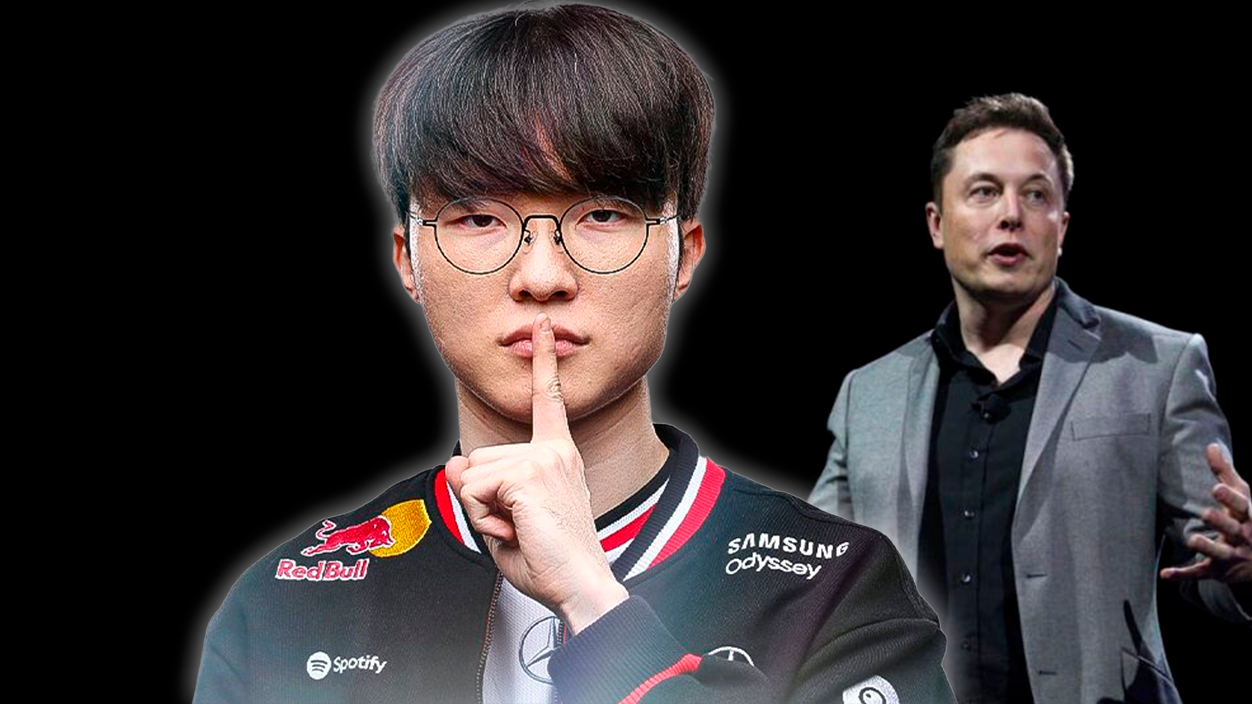
Musk's announcement has sparked a wave of commentary among professional gamers, AI experts, and esports fans worldwide, including in the European scene, where League of Legends It boasts a strong competitive presence and a very solid fan base. For many, the challenge is a unique opportunity to to measure the actual state of technology in an environment that millions of people understand well.
Some well-known figures in the competitive ecosystem, such as Yiliang “Doublelift” Peng or the former professional Joedat “VoyBoy” EsfahaniThey are convinced that, as of today, an AI with these limitations It is not prepared to beat a team of T1's caliberThey argue that reading the game, the intuition acquired after thousands of hours, and the ability to react in a coordinated manner among five human players remain very difficult to replicate.
From the Riot Games side, the co-founder and president Marc Merrill has shown interest in the project, even going so far as to ask a meeting with Musk to explore how such an event could be organized. Although nothing is confirmed, the studio's direct involvement would open the door to a duel with a enormous media impact, broadcast globally and with massive following also from Europe and Spain, where world gaming events usually attract large audiences.
Despite the expressed willingness of the parties involved, for the moment the confrontation It is not officially closedDetails are still lacking regarding the exact format, whether it will be a best-of-seven series, which version of the game will be used, or if the AI will play with a full team of agents controlled by Grok or in combination with humans. Until these points are clarified, the match remains in the realm of what is expected but not yet finalized.
Potential impact on Europe and the technology ecosystem
Although the challenge focuses on a Korean team and technology from American companies, its effects could be strongly felt in Europe and Spainwhere the esports scene and the technology sector are closely watching any advances in applied AI. A success for Grok 5 could accelerate the adoption of similar models in fields such as robotics, autonomous transport or industrial automationall of them strategic sectors for the European economy.
On a competitive level, an event of this caliber could to promote leagues, tournaments and training projects focused on the intersection between AI and video games. European universities and research centers, already working on computer vision systems and reinforcement learning, would have a highly visible practical case study to further advance their lines of work, better connecting with the entertainment industry and technology companies.
At the same time, the debate in the region would also be reopened on ethical and creative boundaries The use of AI in game development is a particularly sensitive issue in Europe, where technology regulations tend to be stricter. The skepticism of veterans like Schofield and Douse aligns with the concerns of many European studios, which fear that an uncritical adoption of these tools could negatively impact creative jobs and the diversity of game offerings.
If the confrontation between Grok 5 and T1 If it comes to fruition in 2026, it will serve as a a highly visible thermometer of the current state of AI Applied to complex environments, with implications that go far beyond League of Legends. The outcome, whether AI wins or loses, will provide clues about how far this technology can go today and to what extent it is realistic to think of robots and autonomous systems capable of perceiving, understanding, and acting in the physical world with an ease comparable to that of humans.


I am a technology enthusiast who has turned his "geek" interests into a profession. I have spent more than 10 years of my life using cutting-edge technology and tinkering with all kinds of programs out of pure curiosity. Now I have specialized in computer technology and video games. This is because for more than 5 years I have been writing for various websites on technology and video games, creating articles that seek to give you the information you need in a language that is understandable to everyone.
If you have any questions, my knowledge ranges from everything related to the Windows operating system as well as Android for mobile phones. And my commitment is to you, I am always willing to spend a few minutes and help you resolve any questions you may have in this internet world.