- Error 0x80073712 indicates corrupted or incomplete system files or Windows Update components.
- It is recommended to start with the troubleshooter, check services, and run SFC and DISM.
- Updating locally with the media creation tool usually fixes persistent update failures.
- As a last resort, you can use System Restore or a full Windows reset.
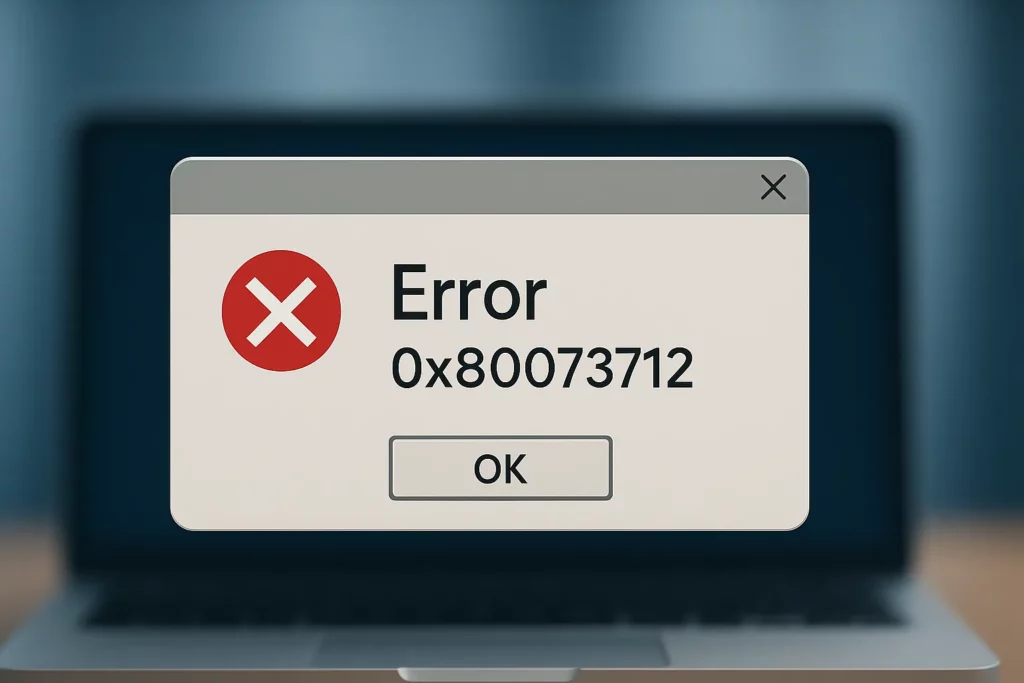
If you're dealing with the Error 0x80073712 when updating WindowsYou're probably getting a little desperate: updates keep failing, error messages are unclear, and no matter how many times you restart, the problem persists. This code usually indicates that A system file is missing or corruptedwhich prevents Windows from finishing the installation of the patches.
This is a problem that can almost always be fixed with the SFC command. However, What if SFC doesn't work? In this article we analyze the situation and the alternatives available to us.
What does error 0x80073712 mean in Windows?
The code 0x80073712 usually indicates that One or more files required for Windows Update are corrupt, incomplete, or missing.When the system attempts to install an update, it checks the integrity of certain internal components. If anything is missing or mismatched, the installation stops and this generic error is displayed.
In practice, the error can appear in Windows 10, Windows 11 and even earlier versionsAnd it always manifests itself in a similar way: updates are left unfinished, reverted, or fail right from the start, something that also happens when Windows Update downloads but does not installSometimes it only affects a specific patch, and other times it affects... a lot of accumulated updatesincluding the Windows feature update itself.
Many users explain that they have Several pending updates are failing with the same code 0x80073712This includes major issues (such as upgrading from one version of Windows 10 to another). In some cases, attempts have also been made to use an ISO file to repair the system or the "reset this PC" option from settings, but the operation still fails.
Behind this behavior there are usually corrupted files in the store component (WinSxS)Problems with Windows Update, necessary services that aren't running, or errors in the operating system image itself. Therefore, the solutions we'll see address these issues one by one.

Common causes of error 0x80073712
Before moving on to the solutions, it is helpful to have a clear general idea of What could be causing error 0x80073712?This will help you understand why we take each step and what problem it's trying to fix. These are the most common causes:
- Corrupted or incomplete system filesWhether due to power outages, previous failed installations, malware, or disk errors, when these files belong to the part of Windows responsible for installing updates, the process breaks as soon as it tries to use them.
- Damaged or misconfigured Windows Update componentsFor example, the folder where temporary update downloads are stored might contain corrupted files, or one of the key services might be disabled or stuck. In these situations, the system is unable to download or process the packages correctly.
- Conflicts with third-party security software, problematic drivers, or “optimization” utilities that interfere with things they shouldn't. Some antivirus suites block update processes or delete files they consider suspicious but that Windows needs; that's why it's a good idea to check. if an antivirus or firewall is causing the problem before proceeding with more complex steps.
Try simple solutions with Windows settings first
Before delving into more technical commands and tools, it's advisable to try a series of easy adjustments from within the Windows interfaceAlthough it may seem basic, many times the problem is solved by adjusting how updates are downloaded and installed.
A practical tip is to try to Windows does not download or install too many updates at once.Sometimes, when the system tries to update several components and other Microsoft products at the same time, the operation becomes complicated and ends up failing with errors such as 0x80073712.
To reduce this load, you can disable the option that causes Windows to also obtain patches for other Microsoft applications while updating the system itself. The idea is that by installing only Windows updates first, in a more sequential manner, minimize conflicts between packets and make it easier to detect if a specific patch fails.
The typical procedure in Windows 10 would be to go to system settings, open the "Update & Security" section, and at the bottom, go to "Advanced options." From there, you can turn off the slider for the option that says something like "Receive updates for other Microsoft products when you update Windows"After that, try running the update search and installation again.
Performing updates one at a time or in small groups, whenever the system allows it, is also helpful. This way, if a specific update triggers error 0x80073712, you will be able to identify it more easily and look for specific information about that package.
Use the Windows Update Troubleshooter
One of the first tools Microsoft recommends for any update problems is the Windows Update TroubleshooterIt's not miraculous, but it can automatically detect and correct misconfigurations, incorrect permissions, or services that aren't working.
To access this assistant in Windows 10, you can click the Start button and open the application. Configuration (the gear icon). Once inside, go to the "Update & Security" section and, in the side menu, select "Troubleshoot." From there, click on "Additional troubleshooters" to see the full list.
Within that list, you should find an option called “Windows Update” in the Startup sectionClick on it and choose the option to run the troubleshooter. The tool will analyze various components related to updates and inform you if it finds and fixes any problems.
The assistant may ask you to Restart your computer to apply some changesAfter restarting, reopen Windows Update and check if the updates that previously failed with error 0x80073712 install correctly. While this doesn't always resolve everything, this initial step is worthwhile because it automates many internal checks.
Reset Windows Update components
When the problem comes from Corrupted or broken Windows Update componentsA fairly effective solution is often to reset them manually or using scripts designed for this purpose. This operation deletes temporary downloads, renames key folders, and re-registers certain internal elements.
In practice, resetting Windows Update involves stopping several update-related services, and emptying or renaming directories such as SoftwareDistribution vs Catroot2 (where they are created) temporary files that are never deleted), and then restart the services. It may also include running additional commands to repair the system image or reconfigure BITS and other modules.
Some advanced tutorials offer lists of commands that are executed in the Command prompt with administrator privilegesSometimes, commands include lines like the deletion of qmgr*.dat files within a path similar to “%ALLUSERSPROFILE%\Application Data\Microsoft\Network\Downloader\”. If that path or the Network folder doesn't exist on your computer, it's normal for the command not to find anything to delete, but the result shouldn't be critical.
There are also guides that suggest re-registering a series of DLL files using regsvr32However, this type of step can generate error messages such as "Module loaded but DllRegisterServer entry point not found" or "Module could not be loaded" if the file is not registerable or is no longer used in the same way in modern versions of Windows.
If you decide to do it manually, always make sure Run the console as administratorReview each command carefully before pressing Enter and, if you see persistent errors in certain modules, consider using more global repair methods (such as a local Windows update) instead of forcing the registration of DLLs one by one.
When SFC and DISM solutions don't help us
In many cases, error 0x80073712 is caused by damage to system files or the Windows imagewhich is the set of components the system uses to maintain and repair its own installation. For this, Microsoft provides built-in tools such as CFS and DISM.
- The command SFC (System File Checker) It is used to scan for and repair corrupted system files. It is typically run from a Command Prompt window with administrator privileges using a command such as sfc /scannow. The process checks critical files and, if it finds problems, attempts to replace them with correct, cached versions.
- On the other hand, the tool DISM (Deployment Imaging Servicing and Management) It is used to check the health of the Windows image and repair it if it detects errors. Typical commands include options such as /CheckHealth, /ScanHealth, and /RestoreHealth, which allow for different levels of checking and repairing internal components.
But what if, after running SFC and DISM, the error persists exactly the same? In those cases, the next logical step is usually to resort to a In-place repair using a local Windows updateA process that replaces many internal components without deleting your personal data.
Perform a local upgrade (on-site repair)
One of the most effective solutions is to perform a local system update using the Microsoft media creation toolThis is often referred to as on-site repair.
The advantage of this method is that Repairs the Windows kernel, replacing damaged or incomplete filesBut it keeps your personal files, installed applications, and most of your settings. It's kind of like reinstalling Windows over itself without actually formatting.
Before starting, it is advisable to disconnect. all external peripherals that are not essentialThat is, leave only the mouse, keyboard, and, if you use it, the network cable. It's also advisable to disable or even temporarily uninstall any third-party antivirus software to prevent it from interfering with the process.
The usual procedure involves downloading the [document/program] from the official Microsoft website. Media creation tool (Media Creation Tooland save it to your computer. Once downloaded, run it and choose the "Update this PC now" option. During the wizard, be sure to select the option to keep your personal files and applicationsso that the process does not erase your information.
The installation may take a while, depending on your PC speed and internet connection. The system will restart several times, and you will see various progress screens. This is important. Do not turn off the equipment during the operation.even if it seems to take a long time in certain phases.
When it's finished, you'll return to your desktop with your usual environment, but with a repaired system. In many cases, this Eliminates persistent Windows Update errors, including 0x80073712, since the corrupted components have been replaced with complete versions from the official image.
Restore the system to a previous point
If you don't want to go as far as a complete reinstall or reset, another intermediate option is to use the System restoration to a previous restore pointprovided that your device has this function enabled and has points created before the problem appeared.
System Restore does not delete your personal documents, but it does It reverts system files, settings, and some software changes. to how they were on a previous date. It's a relatively safe way to undo problematic updates or installations that may have broken Windows Update.
To access this tool in Windows 10, you can go to the classic Control Panel and navigate to "System and Security," then "Security and Maintenance," and within that section, click on "Recovery." There you should find options for Open System Restore and choose a restore point available on the calendar.
When you select a point, Windows will show you which programs might be affected. If you accept, the computer will restart and begin the restoration process. This is important. Do not interrupt it and let it completeWhen it finishes, the system will restart in the state it was in on the chosen date.
This eliminates, among other things, faulty update files that were installed after that pointThis can resolve errors like 0x80073712. Once the restoration is complete, you can try updating again from Windows Update to see if the problem has disappeared.

Reset Windows as a last resort
In extreme situations, where you've tried virtually everything (SFC, DISM, resetting Windows Update components, local update, system restore, etc.) and error 0x80073712 continues to block updates, you should consider the option of completely reset Windows.
Resetting Windows 10 or Windows 11 returns the system to a near-factory state. Depending on the option you choose, you can try to keep your personal files, but you will have to reinstall programs and reconfigure many things manuallyAnd if you choose to erase everything, then you will lose apps, data, and settings.
Before following this path, it is essential that Make a full backup of your documents, photos, projects, and any important files.Whether on an external drive, in the cloud, or wherever you prefer. A lapse in this process can be costly.
From the Settings menu, in the update or recovery section, you will find options to “Reset this PC”The wizard will guide you, ask if you want to keep your personal files, and then proceed to reinstall Windows with the default settings.
This is quite a radical measure, but in return, it usually completely eliminate persistent update errors that resist any other solution. However, you will then have to dedicate some time to reinstalling your applications, restoring your backups, and readjusting your work environment.
Additional tips to try to avoid error 0x80073712
In addition to the specific solutions, there are a number of Good practices that can help reduce the likelihood of the 0x80073712 error recurring or at least facilitate its resolution if it arises again.
- Do not interrupt updates while they are in progressAvoid forcibly shutting down your PC, slamming the laptop lid shut, or unplugging it when Windows is installing patches. Interruptions during installation are a common source of corrupted files.
- Periodically check the status of your hard drive or SSD using the system's own tools or the manufacturer's utilities. Damaged sectors or faulty drives can cause Windows Update files to be written incorrectly, ultimately leading to failures when using the corrupted data; if you need to determine whether a fault is hardware or software-relatedDo this before proceeding with invasive repairs.
- Having a reliable antivirus that doesn't interfere excessively with system processes. Microsoft's integrated solutions generally work well with Windows Update, while some third-party suites, if not configured correctly, can block downloads or modify sensitive components.
- Avoid “extreme cleaning” or “miracle optimization” tools These programs are advertised as being able to speed up Windows by deleting system files or aggressively editing the registry. If these programs are not well-designed, they can remove entries or components that then prevent Windows Update from functioning correctly.
Given all of the above, it is clear that the Error 0x80073712 in Windows is a symptom of internal problems with system files and update componentsAnd there's no single magic bullet that works for every situation. The wisest approach is to tackle the problem systematically: start with the built-in tools (troubleshooter, services, SFC, and DISM), try adjusting Windows Update settings, and then move on to more powerful methods like local updates, system restore, or, only as a last resort, a complete PC reset. Even if you've tried countless solutions, following a coherent plan and using official Microsoft utilities often makes all the difference and, with some patience, can restore a system capable of updating without errors.


Editor specialized in technology and internet issues with more than ten years of experience in different digital media. I have worked as an editor and content creator for e-commerce, communication, online marketing and advertising companies. I have also written on economics, finance and other sectors websites. My work is also my passion. Now, through my articles in Tecnobits, I try to explore all the news and new opportunities that the world of technology offers us every day to improve our lives.