
SIM card technology has evolved enormously since its introduction in 1991. We have gone from those early credit card-sized cards to the tiny nanoSIMs we use in our smartphones today. But the mobile industry does not stop and the next big step is here: the eSIM or virtual SIM, which promises to revolutionize the way we connect.
What exactly is an eSIM?
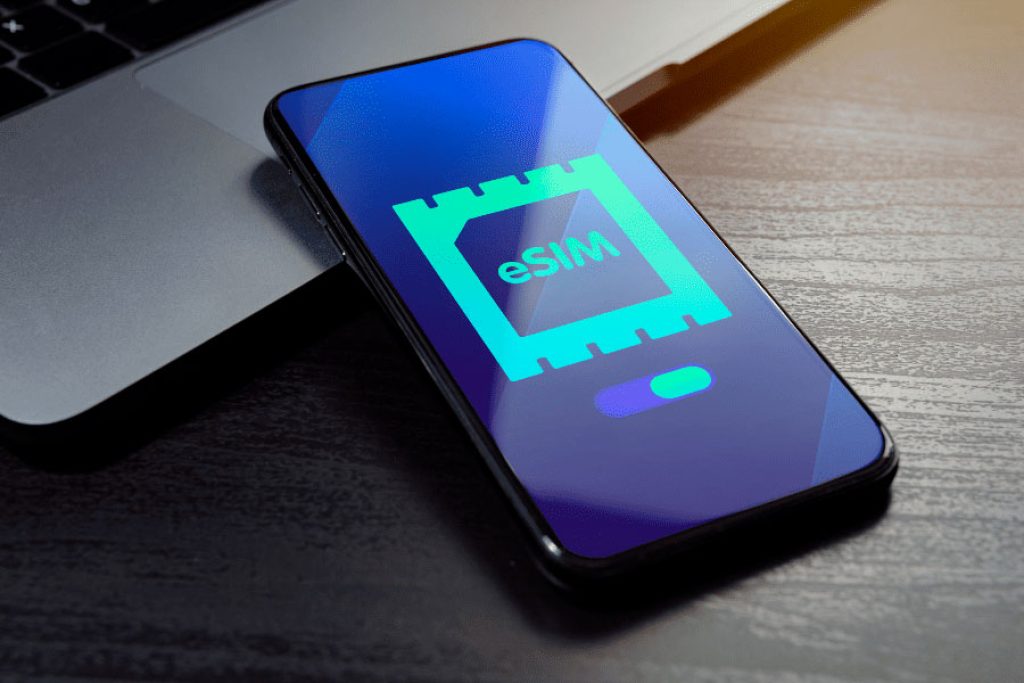
An eSIM or integrated SIM is basically a SIM chip integrated directly into a device's hardware, whether it is a smartphone, a tablet, a smartwatch or even a laptop. Unlike the physical SIM cards that we are used to inserting into our mobile phones, the eSIM is not removable or replaceable by the user.
This integrated chip performs exactly the same function as a traditional SIM card: identifies and authenticates the device on the operator's mobile network, allowing you to make calls, send SMS and connect to mobile internet. The difference is that since it is soldered to the motherboard, a slot or tray is not necessary to insert it.
Configuration and use of the eSIM
The eSIM is designed to offer a similar experience to traditional SIM cards, but with the convenience of not having to physically handle a card. Mobile operators are gradually adopting this technology, initially offering it as an alternative to MultiSIM cards for secondary devices.
To set up an eSIM, the process may vary slightly depending on the carrier and device, but overall it's pretty simple. From the customer area or the operator's mobile app, you can request the eSIM service for a second device, such as a tablet or smartwatch.
Activation of the eSIM is done using a QR code or an activation profile that the operator provides to the user. Simply scan this code with your device's camera or follow the instructions to download the profile, and the eSIM will automatically configure itself with the corresponding phone number and data plan.
As with a physical card, the eSIM has a PIN code and PUK to protect it from unauthorized use. In case the device is lost or stolen, The eSIM can be blocked by contacting the operator's customer service. An advantage of the eSIM is that since it is integrated into the device's hardware, it cannot be physically removed, making it difficult for a thief to hide the location of a stolen phone.
Another interesting feature of the eSIM is that allows storing multiple profiles from different operators, being able to change between them according to the user's needs. This is especially useful for frequent travelers who need to connect to local networks in different countries without having to physically change SIM cards.
Regarding the eSIM configuration, the steps may vary slightly between Android and iOS devices, but in general involves choosing whether it will be used only for data or also for calls, whether it will be the main or secondary line if you have several, and other basic settings. The operator will provide detailed instructions for each particular case.
The eSIM seeks to offer a smoother and more flexible user experience, maintaining the same functionalities and security as physical SIM cards. As more carriers and manufacturers adopt this technology, it is likely to become the new standard for mobile connectivity on all types of devices.
Advantages of betting on the eSIM
The adoption of eSIM technology brings numerous benefits for both users, manufacturers and operators. Some of the main advantages are:
- Thinner, stronger designs: By eliminating the need to include a SIM tray, manufacturers can create devices that are thinner, lighter, and more resistant to water and dust.
- Goodbye to cards and adapters: No more worrying about losing the tiny card or having to use adapters to change from nano to Micro SIM when renewing your phone. With eSIM, switching devices will be as easy as scanning a QR code.
- Multiple lines in a single device: The eSIM allows you to store and activate several operator profiles in the same terminal. You can have, for example, your personal number and your work number on the same smartphone without the need for a dual SIM model.
- Easier global connectivity: When traveling to another country, you can easily contract a local data plan by activating it in your eSIM, without having to look for a physical store or manipulate your mobile phone.
- Faster portability: Changing operators will be a matter of minutes. You will no longer have to wait to receive a new physical card, but can activate your number in the eSIM with a few clicks.
Current eSIM Availability
The eSIM is a relatively new technology, but It is now available on a good number of high-end devices. Apple incorporates it in all its iPhones since the 2018 XS and XR models, as well as in the iPad Pro and the Apple Watch Series 3 and later.
In the Android world, most flagships since 2020 already have eSIM. This is the case of the Samsung Galaxy S20, Note20, S21 and Z Flip, the Huawei P40 and Mate 40, the Google Pixel 4 and 5, the Motorola Razr or the Oppo Find X3.
Regarding operators, Movistar, Orange, Vodafone and Yoigo now allow the use of eSIM in Spain, although for the moment mainly in smart watches such as the Apple Watch or Samsung Galaxy Watch. Little by little they will extend compatibility to more devices and rates.
A future without physical SIM cards
Although the transition will take time and we will live with physical cards and eSIM for years, The sector is clearly committed to SIM virtualization in the medium term. In a future scenario, our smartphones, tablets, wearables and even cars will come standard with eSIM.
This will not only make life easier for users, but It will open the door to new possibilities such as smaller devices, private networks, connection of millions of IoT devices or even a la carte mobile rates that we can personalize and activate instantly from an app.
The eSIM is another example of how innovation is transforming mobile telecommunications to adapt them to an increasingly connected, flexible and intelligent world. A world in which a simple plastic card becomes a virtual element, opening a range of new opportunities. The future of mobile connectivity undoubtedly passes through the eSIM.

I am Sebastián Vidal, a computer engineer passionate about technology and DIY. Furthermore, I am the creator of tecnobits.com, where I share tutorials to make technology more accessible and understandable for everyone.