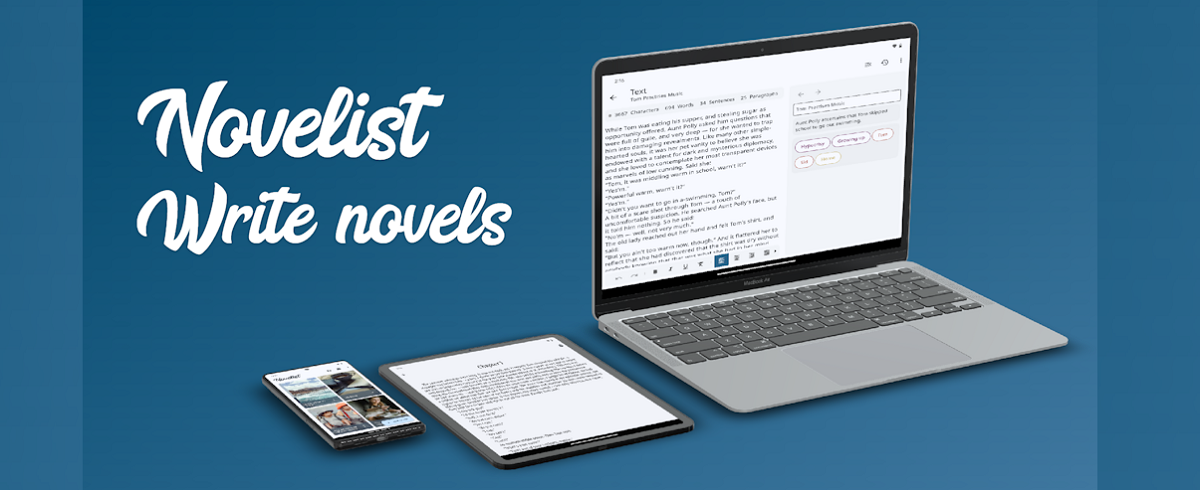
- Novelist centralizes planning, writing, and organizing with dashboards, goals, versions, and professional export.
- Proven methods (outline, three acts, Freytag, snowflake, hero's journey, zero draft, synopsis) for setting pace and climax.
- Clear path: theme, structure, profiles, narrator, plot, and scene list for a solid draft and faster rewrites.

Planning a novel with a modern tool like Novelist It can make the difference between a chaotic draft and a clear-flowing manuscript. In this practical guide, we've gathered, reorganized, and expanded on all the key information from the best planning sources so you have a reliable roadmap, from the initial idea to the final line.
If you're looking for a clear, flexible, and free way to go from creative spark to well-connected scenes, here you'll find proven approaches (outline, three acts, hero's journey, Freytag's pyramid, snowflake, zero draft, synopsis), tactics for designing chapters and climaxes, and Novelist features that streamline plotting, organization, scheduling, and exporting.
What is Novelist and why it boosts your planning
Novelist es A comprehensive app for writing novels without cost or advertising, used by a huge community of authors who want to plan, write, organize, and schedule their projects in one place. Its offering stands out for its creative freedom and powerful, frictionless tools. Here are some of its most interesting features:
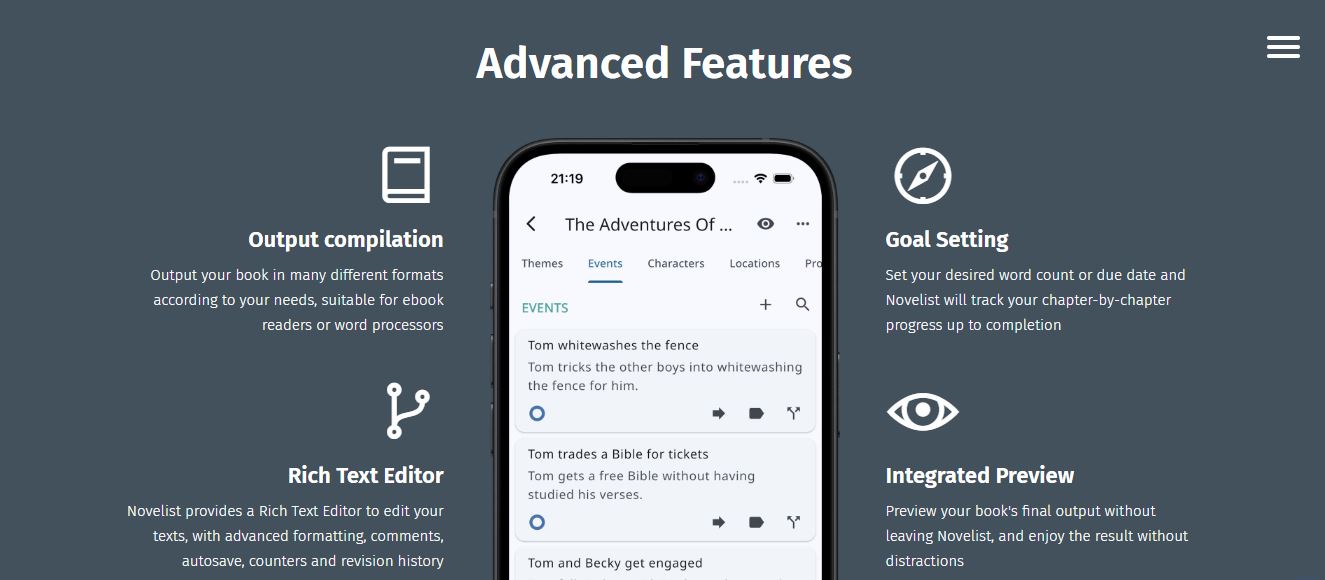
- Key features for planning and writing: You can organize your story as if you were working on a board, freely moving pieces around and customizing everything (scenes, notes, tags, metadata, and even reference images) without losing sight of the bigger picture.
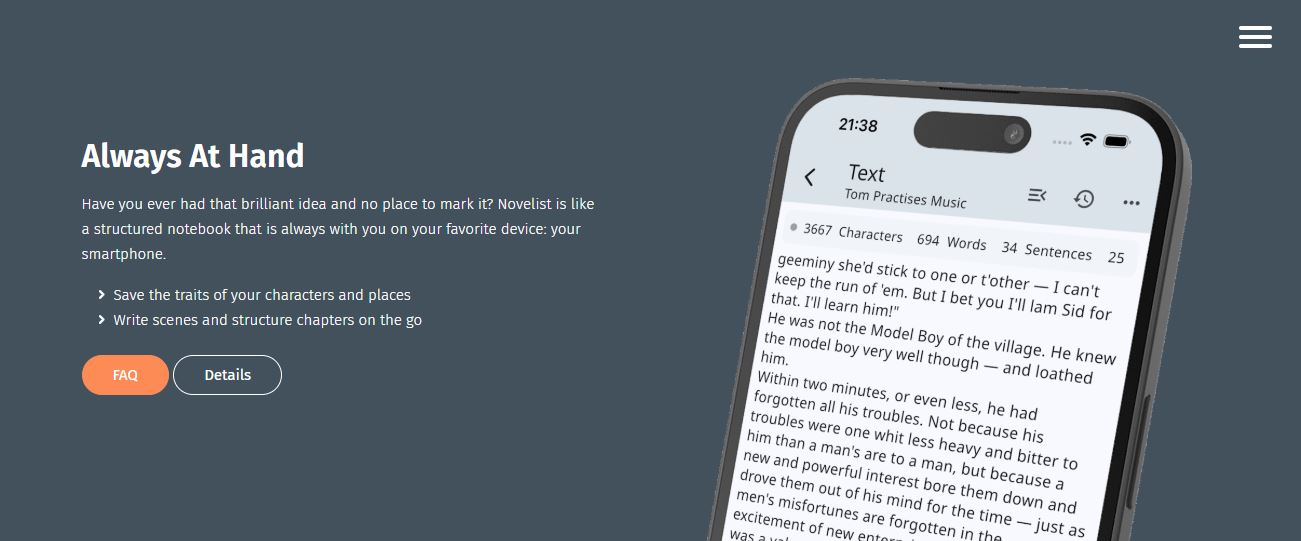
- Fluent writing and annotation- Write richly formatted scenes, add comments, use find/replace, and rely on a version history that lets you recover to previous states whenever you need.
- Structure as you prefer: Build acts, chapters, or whatever structure suits your method (three acts, hero’s journey, Freytag, etc.) and reorder them in seconds to try alternative pacing and focus.
- Program objectives and dates: Set word goals or deadlines to stay on track, with detailed daily stats and a real-time preview to always know where you stand.
- Advanced Productivity Tricks: Reference elements of your story within the text for on-the-fly reference, open split-screen reference panels while you write, and work comfortably on large screens or in any browser thanks to the web app.
- Export and share in professional formats- Generate EPUB, ODT, or HTML, create saga templates, and back up/restore your project locally or via Google Drive; it also features dark mode for long sessions.
The overall process: from idea to frame and construction
Planning can be divided into three major complementary stages: Conceive the idea, develop a solid outline, and build the novel scene by scene. Maintaining this mental map helps you move forward without losing sight of the bigger picture.
- First distill the idea: define the topic in one or two clear sentencesIf you can't summarize it, the idea probably still needs focus. This limit will prevent you from going off track and writing pages that don't add anything.
- Next, create the outline: Identify the plot threads, the climax, the climax, and a functional ending; decide where the subplots fit and what information should be revealed in each section.
- Finally, build the novel: Decide the order in which the events will appear, plan the scenes by chapter and define the purpose of each dramatic unit so that everything has meaning and rhythm.
This structured approach It will make it easier for you to maintain cohesion and rhythm throughout the writing process.
7 proven methods for planning your novel
To ensure that planning your novel with Novelist is as successful as you expect, you need to follow the methods that work:
1. The outline
Divide your story into scene or step cards and arrange them in a logical sequence. This is ideal for visualizing complex structures and making quick adjustments to rhythm and tension.
2. General outline or synopsis
Write a broad summary of the novel which you will then expand. It gives you a panoramic view and reduces the risk of argumentative contradictions.
3. Snowflake
Part of a nuclear phrase and branch the idea by levels until it culminates in scenes and chapters. It's an organic growth, from simple to complex.
4. The three acts
Introduction, knot and outcome as a basic structure. It clarifies the trigger, midpoint, climax, and ending, making it easier to control the dramatic progression.
5. The Hero's Journey
Focuses on the transformation of the protagonist in recognizable stages (call, tests, crisis, return), very useful for stories focused on personal evolution.
6. Freytag's Pyramid
Exposition, rising actions, climax, falling actions, and denouementExcellent for gauging how the tension rises and falls throughout the story.
7. Zero draft
Write a quick, unpolished version, to uncover the story as you go. Afterward, more intensive rewriting work will be required with the help of Novelist, but you can unlock plots and characters.


Practical tips: a live outline and useful templates
Whether you use Novelist or not, writing a novel always requires a clear outline and a lot of flexibility:
- Your scheme must be flexible: Adjust it as you discover better narrative paths. It'll happen more than once, and that's a good sign: the story is breathing.
- Rely on templates to speed up From the idea to the episode list; as you progress, refine them for series or sequels and capitalize on what you've learned.
Step-by-step plan: theme, structure, and tension
- Start with the topic: one or two sentences that encapsulate the idea. If it doesn't fit there, it needs focus.This initial filter prevents dispersion and unnecessary pages.
- Define three essential milestones: trigger (initial incident), climax, and ending. These ensure unity of action and avoid a chain of unrelated events.
- Go to Freytag's Pyramid: Design ascending actions that push toward the climax and descending actions that solve problems until the outcome.
- Calibrate the length and drama: More rising/falling action usually means more scenes; if the climax is near the end, reduce the falling action to maintain tension.
Plot and argument: actual order vs. narrative order
Novelist is a great help in putting together the skeleton of your novel:
- Plot is the causal and chronological sequence of events; plot is the order in which you will tell themYou can rearrange scenes without breaking cause and effect if you maintain clarity.
- It is common to handle multiple plots (main and secondary), but only one story that connects them. Plan the main story first and, if necessary, add subplots to enrich it.
- Write the complete main plot Don't obsess over style: just cause and effect and chronology. Then you'll decide how to present it to the reader.
Character profiles: biography, voice, and coherence
- Dedicate time to the relevant protagonists and supporting characters: describes physical and mental features, age and origin, and narrates his biography with emphasis on transformative episodes.
- Rewrite the plot from each character's perspective: how they experienced the events, what they thought, and how they reacted. You'll gain insight and detect inconsistencies.
- For secondary characters, shorter descriptions are sufficient., while for the main characters a complete profile is appropriate to guide decisions on stage and in dialogue.
Choosing a narrator and knowledge of the story
- Decide early whether you narrate in first, second, or third person., and how much the narrator knows about the characters' thoughts and future. Consistency is key.
- Use the chosen narrator when writing the plot: will help you set your voice, focus, and information boundaries from the start.
From plot to scene list
The next step to build your novel is to capture the general idea in a structure of scenes or chapters:
- First write the argument as a complete summary (without developed scenes) in the order in which they will appear in the novel, including backgrounds and parallel plots.
- Then transform that argument into a list of scenes: decides what is told on stage (specific time/place) and what is told in summary (long periods), prioritizing scenes to bring it to life.
- Keep the scene list in a separate document (text or spreadsheet) to refer to while you write; it's your plan and you'll adjust it with the draft.
AI, worksheets, and productivity: evidence and tools
- Educational research supports the use of timelines: Those who outline before writing produce clearer texts with better-woven arguments, which reduces blocks.
- Artificial Intelligence is an ally if used wisely: Like a camera for the painter, it streamlines documentation and plot variations, freeing up hours for depth and style.
- There are literary challenges and “Bookit-Smart” type assistants. aimed at speeding up planning (for example, preparing an effective outline in a couple of hours) and maintaining motivation.
- If you prefer a structured guideThere are practical training courses focused on essential planning, narrative success factors, or six-month itineraries that accompany you from start to finish.
Rewriting: Purpose, Actions, and Critical Tasks
- Review with a ruthless gaze helps to polish coherence, rhythm and depth of characters, ensuring that each word contributes to the whole.
- The actions These include examining the architecture, adjusting the tempo, and strengthening the credibility of the plot and story arcs; with a prior outline, this phase is faster and more effective.
- Priority tasks: Eliminate scenes that don't add value, enhance powerful descriptions and dialogue, and take care of each character's unique voice.
- good planning can reduce weeks of rewriting: going from months to 4–5 weeks is achievable when the structural foundation is well established.
With all the above mentioned, you already have A clear path to transforming your idea into a solid novel: Select methods, define theme and structure, outline characters, choose a narrator, develop a plot and scene list; and rely on Novelist to organize, schedule goals, and export, perfecting your work with every rewrite.

Editor specialized in technology and internet issues with more than ten years of experience in different digital media. I have worked as an editor and content creator for e-commerce, communication, online marketing and advertising companies. I have also written on economics, finance and other sectors websites. My work is also my passion. Now, through my articles in Tecnobits, I try to explore all the news and new opportunities that the world of technology offers us every day to improve our lives.