- The rising cost of GDDR6 memory and DRAM in general is putting upward pressure on the price of graphics cards.
- NVIDIA and AMD have increased the cost of the GPU + GDDR6/GDDR7 packages they sell to assemblers.
- The most economical models, with tighter margins, are the ones that suffer the most from the impact of the new GDDR6 price.
- Manufacturers prioritize GPUs with higher profit margins to absorb the extra cost of VRAM, which may reduce the supply of less profitable models.

The graphics card market is once again feeling the pressure from an old acquaintance: the price of GDDR6 memoryAfter months of rising DRAM prices and a clear escalation in the cost of consumer RAM and SSDs, the impact is starting to strongly affect the GPU segment, with direct effects on what end users pay in Europe and Spain.
This movement isn't sudden or spectacular, but it is happening steadily. The combination of stock shortages, rising DRAM prices, and increased GDDR6 costs has forced major graphics chip manufacturers to revise upwards what they charge assemblers for each GPU + VRAM package, with a a domino effect that ends up being noticeable in physical stores and online businesses.
From DRAM shortage to the rising cost of GDDR6
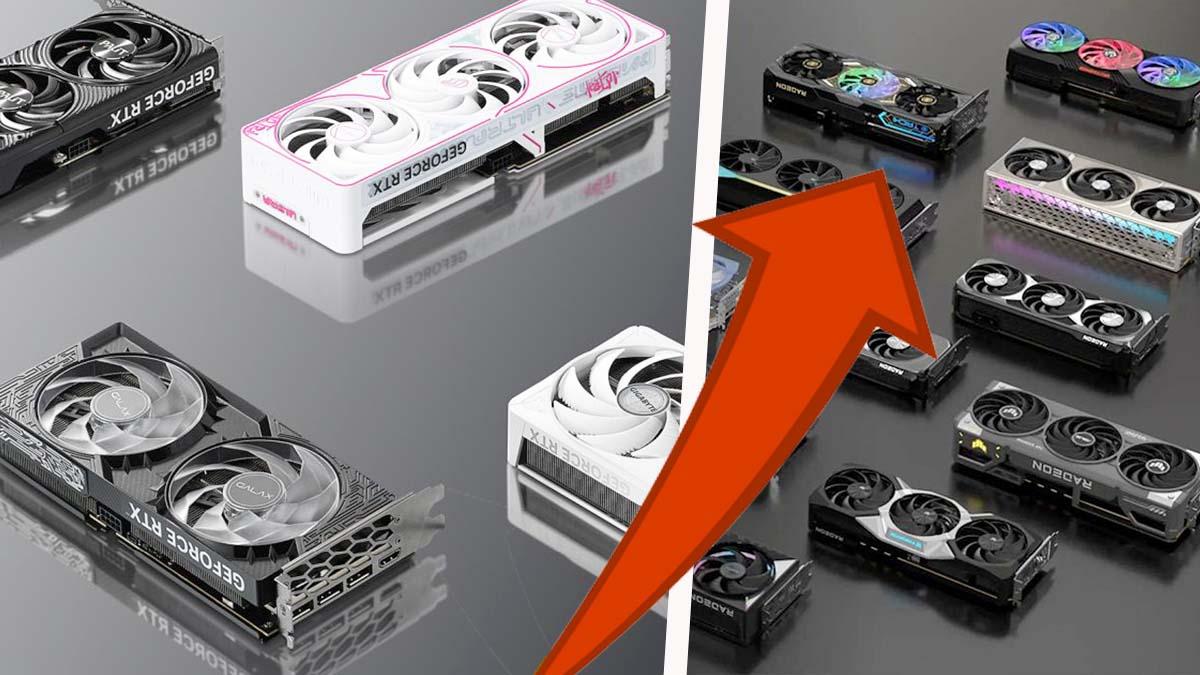
In recent months, the price of DRAM memory has experienced a notable increase, reaching in some cases multiply the cost of certain modules almost fivefoldespecially in new generation formats like DDR5. This same supply and demand problem is not limited to system memory, but also extends to dedicated graphics memory, where GDDR6 is the star in a large part of current cards.
Pressure on the supply chain has led to DRAM and GDDR6 chip manufacturers They raise their prices, which translates into a higher cost for those who buy in large volumes, such as NVIDIA and AMD. From there, any price increase affects the so-called "bundles" that combine GPUs and GDDR6 or GDDR7 memory, which are then purchased by the assemblers that market the final models.
Price increase for GPU + GDDR6 bundles
According to information shared with industry partners, NVIDIA officially announced this on January 16th. A price increase has been announced for all kits that include GDDR6 and GDDR7 memory. While exact percentages and figures have not been disclosed, it has been noted that, despite the increase, NVIDIA's new prices remain lower than those AMD is reportedly charging its own partners.
Meanwhile, various sources agree that AMD has also increased the cost of GPU + GDDR6 packages which it sells to card manufacturers. This double price increase puts assemblers in a precarious position: they need to keep producing and competing, but they have to deal with a key component—GDDR6 VRAM—that is becoming increasingly expensive.
Direct impact on graphics card assemblers

Manufacturers like ASUS, Gigabyte, and MSI buy GPU and GDDR6 memory packages from NVIDIA and AMD and design the final card, including their own cooling system, PCB, and power supply. When the price of VRAM rises, the cost of the whole thing skyrockets and the available margin per unit is reduced, especially in the more affordable models.
A logical reaction to this scenario is to adjust the catalog and prioritize those cards where the margin allows for better absorption of the price increase. GDDR6 memory priceThis is especially noticeable in the mid-range and upper mid-range, where certain models share the same amount of memory but are sold with very similar recommended prices, leaving little room for the assembler to make money if everything else becomes more expensive.
GDDR6 sets the strategy for the mid-range and upper mid-range segments
The cost of VRAM has become the variable that is subtly reshaping the product lines of many brands. There are graphics cards that, on paper, appear very different in performance, but They use the same GDDR6 memory configuration (for example, 16 GB spread across eight chips per card). If manufacturing two models costs almost the same in terms of components, but one of them must be sold at a lower official price, the result is a significantly lower margin.
Under these circumstances, several manufacturers' partners are opting to produce the more powerful and slightly more expensive variants more intensively, since They allow for a better cushioning of the GDDR6 price increase.The card with a slightly higher selling price offers, in business terms, a "cushion" that makes it easier to absorb cost increases without having to immediately raise consumer prices.
While the mid-to-high range still retains some room for maneuver, The cheapest GPUs are the ones that fare the worst. due to the rising cost of GDDR6 memory. These models, designed for tight budgets, are sold with a very narrow profit margin for assemblers, making it more difficult to absorb any increase in component costs.
When the price of GDDR6 rises and there isn't much room to increase the RRP, manufacturers basically have three options: pass the cost on to the end consumer, reduce quality in other elements of the card, or cut production.In practice, several of these strategies are combined, which can result in less availability of certain models, more basic designs, or a gradual increase in prices in European stores.
MSRP vs. actual store price

Both AMD and NVIDIA have repeatedly stated their intention to maintain the official launch prices (MSRP) of the graphics cards already on the market. On paper, this would mean that the increased cost of GDDR6 memory shouldn't be reflected in the recommended price of each model.
However, the MSRP is only a reference. Assemblers and retailers are not required to respect it And they can set their own prices based on actual costs and demand. In fact, in Europe and Spain, it's common to see significant differences between the theoretical price advertised during product presentation and the final price displayed by distributors and specialized online stores.
Silent adjustments in the model offering
The rise of GDDR6 memory price This isn't always immediately reflected in a visible increase in the retail price. Often, the first sign that something is changing is a variation in the availability of certain models. If a card generates very little profit per unit due to the cost of VRAM, its production is likely to be sidelined in favor of other, more profitable variants.
This causes that, as the weeks go by, certain GPUs may be harder to find in stockWhile some models, slightly higher-end or more expensive, appear more frequently in store listings. From the user's perspective, the feeling may be that the "ideal" model in terms of price-performance disappears, and the next step up becomes the only available option due to a lack of alternatives.
How might the price of GDDR6 evolve?
The behavior of GDDR6 memory price In the coming months, the market will largely depend on the relationship between supply and demand, as well as manufacturers' strategic decisions. If demand for products that require a lot of DRAM and VRAM (such as AI servers or high-performance systems) continues to grow at the current rate, price pressure could remain or even intensify.
Conversely, if production adjusts and manufacturers manage to stabilize inventories, It is possible that the cost of GDDR6 will moderate. and give graphics card manufacturers some breathing room. Even so, catalog adjustments and a shift towards higher-margin models are already underway, so the supply structure could take longer to return to a comfortable balance for the consumer.
The sustained increase in the cost of the DRAM and the rise in the GDDR6 memory price These issues have gone from being a fundamental problem to becoming a decisive factor in the strategy of AMD, NVIDIA, and their assembly partners. Users in Spain and the rest of Europe will notice this in slightly higher prices, the quiet disappearance of certain "balanced" models, and a product lineup that will increasingly favor GPUs capable of handling the added cost of VRAM without jeopardizing the profit margins of manufacturers and retailers.
Index
- 1 From DRAM shortage to the rising cost of GDDR6
- 2 Price increase for GPU + GDDR6 bundles
- 3 Direct impact on graphics card assemblers
- 4 GDDR6 sets the strategy for the mid-range and upper mid-range segments
- 5 MSRP vs. actual store price
- 6 Silent adjustments in the model offering
- 7 How might the price of GDDR6 evolve?

I am a technology enthusiast who has turned his "geek" interests into a profession. I have spent more than 10 years of my life using cutting-edge technology and tinkering with all kinds of programs out of pure curiosity. Now I have specialized in computer technology and video games. This is because for more than 5 years I have been writing for various websites on technology and video games, creating articles that seek to give you the information you need in a language that is understandable to everyone.
If you have any questions, my knowledge ranges from everything related to the Windows operating system as well as Android for mobile phones. And my commitment is to you, I am always willing to spend a few minutes and help you resolve any questions you may have in this internet world.