- Apple is working on a pin-like device with AI, about the size of an AirTag, with an aluminum and glass design.
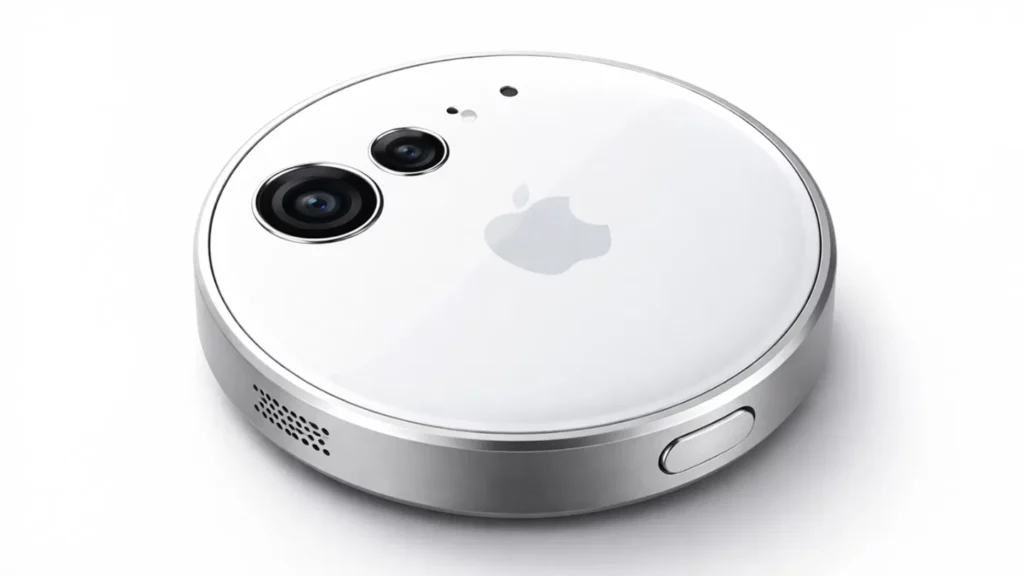
- The wearable would integrate two cameras, three microphones, a speaker, a physical button, and magnetic wireless charging.
- Its launch is planned for 2027, with internal forecasts of up to 20 million units.
- The pin would rely on the alliance with Google Gemini and the new generation of Siri as a chatbot.
Apple is making moves to position itself for the next wave of wearable artificial intelligence devicesSeveral leaked internal reports and analyses from specialized media outlets suggest that the Cupertino company He is preparing a new gadget in the form of a pin that would be worn attached to clothing and would function as a permanent assistant., without needing a screen.
This project fits with the company's new AI strategy, marked by its collaboration agreement with Google to integrate Gemini in the next generation of Apple Intelligence and Siri. While on mobile and desktop the focus is on a chatbot-type assistant, the called "Apple Pin" It would be the company's attempt to bring that same experience to the user's body, in a more discreet format than a smartphone or a watch.
What is the alleged AI Apple Pin and what would its design look like?
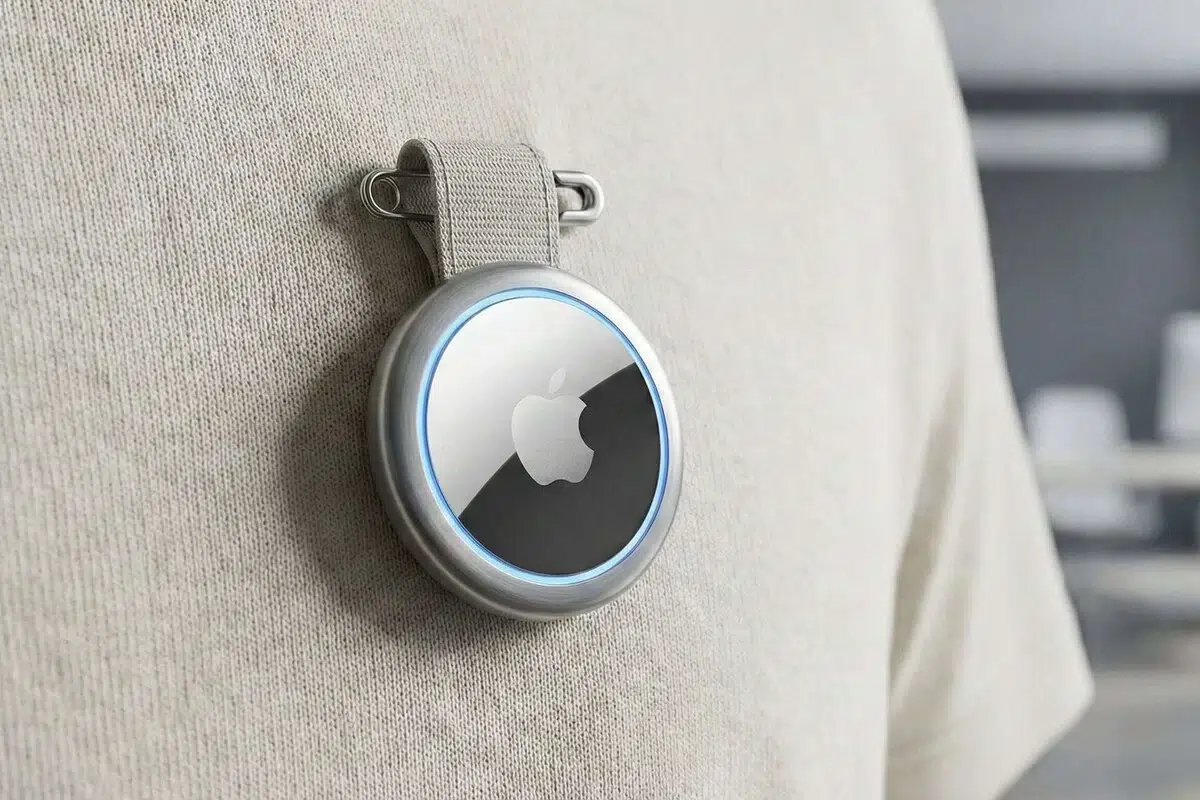
According to internal documents accessed by the US press, Apple is developing a portable device shaped like a flat, round discDesigned to be attached to clothing like a traditional pin. The format is quite similar to that of an AirTag, although it would be somewhat thicker to accommodate more components.
The body of the device would be made of aluminum and glassFollowing the brand's usual design aesthetic, it features a slim and lightweight structure designed to be almost imperceptible. The idea is that The user can clip it to a jacket lapel, a t-shirt, or a backpack and forget they're wearing it. until I need to interact with him.
Leaks describe the Apple Pin as a “thin, flat, circular disc”with a clean front panel that would integrate the cameras and microphones, and a back panel prepared for magnetic wireless charging. Although There are still no definitive details about the fastening systemsThe reference to magnetic interfaces is reminiscent of solutions that have already been tested in other devices from the brand.
In terms of size, it's estimated to be similar in dimensions to an AirTag, but slightly thicker to accommodate a speaker, the electronics required for AI functions, and the battery. The result would be a Very compact wearable, without a screen and designed to accompany the user in their daily life as a kind of "smart badge".
Cameras, microphones and speaker: the heart of the AI assistant
Beyond its external design, the key element of the project is its combination of sensors and audio. Available information indicates that the Apple Pin would integrate two front cameras: one standard and one wide-angle or ultra-wide-angle, designed to capture the user's surroundings in photos and videos.
These cameras would allow the device to recognize what is happening around it by computer vision and advanced AI modelsopening the door to functions such as describing scenes, reading signs, analyzing objects, or helping with everyday tasks without the user having to take their mobile phone out of their pocket.
Along with the cameras, the pin would feature three microphones The sensors are distributed throughout the device to capture the user's voice and ambient sound with the greatest possible clarity. This configuration aims to improve voice recognition in noisy environments and allow for natural interaction with the integrated assistant, without needing to bring the device close to the mouth.
The system would be completed with a built-in speakerThis would serve both to respond to the user in real time and to play notifications, contextual alerts or translations, something that fits with Apple's new approach towards a more conversational Siri capable of maintaining complex dialogues.
On one side of the gadget there would also be a physical buttonThis button is presumably intended to activate the assistant, mute the microphone, manage photo and video recording, or control quick functions. It's expected that Apple will introduce clear control options given the privacy implications of always carrying a device with active cameras and microphones.
Magnetic wireless charging and clamping system
The leaked documents suggest that the back of the Apple Pin would include a magnetic inductive charging interfacesimilar to the one used in the Apple Watch. This approach would allow the device to be recharged by placing it on a compatible base, without the need for physical connectors, and would facilitate the product's sealed design.
Some descriptions even compare the charging strip to those used by other wearables on the market, such as certain Fitbit models, suggesting that Apple is exploring solutions that have already proven practical for users. The magnetic option would also align with the company's previous experience with accessories like MagSafe.
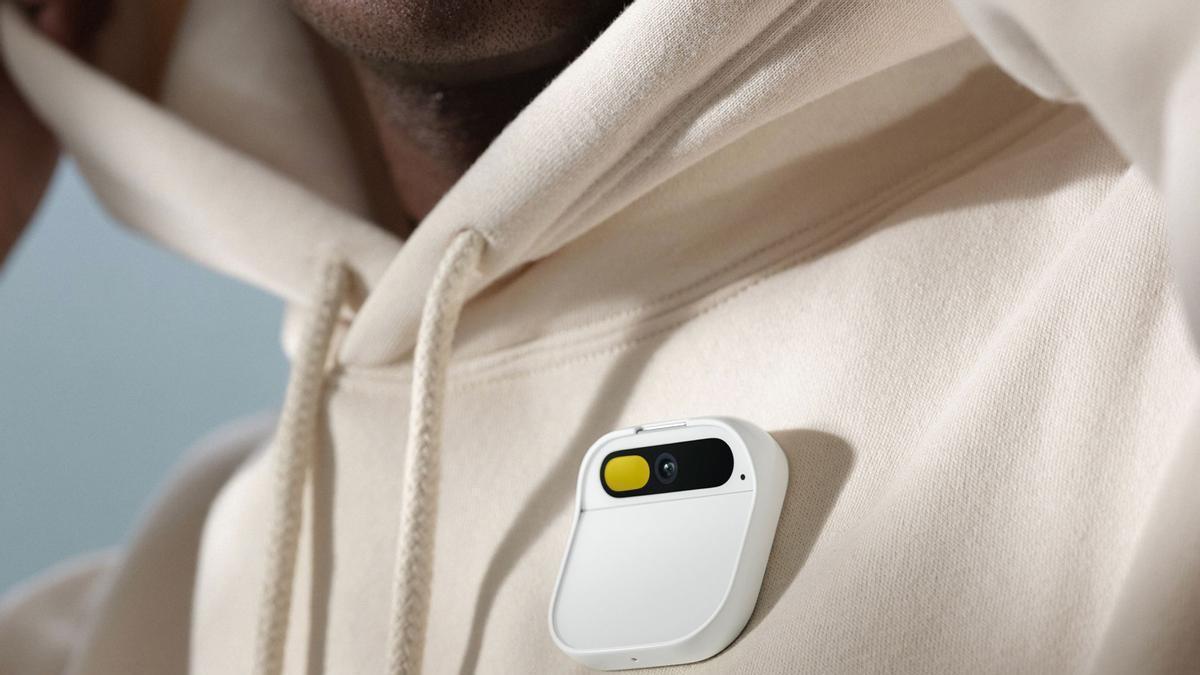
Where there are more questions is in the exact mechanism for attaching to clothingThe Humane AI Pin, which used magnets to attach itself, made it clear that keeping an expensive gadget attached to clothing isn't so simple. From a practical standpoint, any failure in the attachment can result in drops, bumps, or even loss of the device.
Some critics of the concept are wondering if Apple is about to repeat the same mistake or if it has designed a more reliable hybrid system, for example, combining a magnet and a physical clip. Until there are public prototypes or official announcements, the question of exactly how the pin will be worn will remain one of the most discussed points.
In any case, the philosophy behind the device seems clear: the aim is for the user to be able to carry a always-available, hands-free assistantwithout having to look at a screen and with a minimal level of friction in daily use.
Relationship with Siri, Apple Intelligence, and the agreement with Google Gemini
The development of the Apple Pin cannot be understood without the broader context of the company's AI strategy. Apple has signed a multi-year agreement with Google so that the next generations of its base artificial intelligence models can rely on the Gemini family and the search giant's cloud infrastructure.
This agreement aims to strengthen Apple Intelligence and, above all, transform Siri in an advanced chatbot Integrated into iPhone, iPad, and Mac. The new version of the assistant, planned for the next major iOS and macOS updates, would offer richer responses, greater contextual understanding, and superior creative and emotional capabilities compared to the current Siri.
In this scenario, an AI pin could function as physical extension of that new SiriThis involves continuously capturing the user's environment and voice to feed AI models, provided the user consents. The partnership with Google would give Apple the computing power and generative models needed to deliver a seamless experience even when much of the processing is done in the cloud.
Joint statements from both companies have already indicated that these models will power “future Apple Intelligence features, including a more personalized Siri coming this year.” The emergence of leaks about the Apple Pin aligns with the idea that, following the software leap, the company is also preparing new categories of AI-focused hardware.
For now, the public priority is to bring the updated version of the assistant to devices already in users' hands, while the PIN is shaping up as a longer-term project that could serve as a testing ground for other product formats.
Dates, planned units, and doubts about demand
The reports that have come to light place the possible Apple Pin launch in 2027provided the project doesn't change course or get canceled during development. It's a relatively long timeframe, giving the company room to adjust the design, features, and pricing as the market evolves.
Regarding production, there is talk of a internal forecast of up to 20 million units for the first batch. That figure indicates that, if the product ever sees the light of day, Apple doesn't see it as a simple niche experiment, but as a device with significant commercial aspirations.
The big question is whether there really is one Massive demand for a pin with permanent cameras and microphonesThe recent experience of the Humane AI Pin, launched by two former Apple employees and later sold to HP after a notable failure, has raised reasonable doubts about the fit of this type of gadget into everyday life.
That proposal promised to partially replace the smartphone with an assistant always available on the lapel, but it ended up running into problems with functionality, battery life, ergonomics, and, above all, with the perception of value from the end user's perspective. Humane's closure in just two years is a reminder of how risky it is to bet on this format.
In Europe and Spain, moreover, any product of this type will have to to overcome high regulatory scrutiny In terms of data protection and privacy, this is especially important if the device captures images and sound of third parties in public or private spaces. The challenge here is not only technical, but also legal and related to trust.
Competition with OpenAI and other players in AI hardware
Apple's move into wearable AI hardware comes as OpenAI is preparing its own leap into the physical deviceThe company behind ChatGPT is working on several products, including a gadget designed by Jony Ive, Apple's long-time design chief, which would fall somewhere between smart headphones and other alternative form factors.
OpenAI has announced that its first device could arrive in the second half of 2026, a year earlier than the projected date for the Apple Pin. This positions Sam Altman's company as one of the direct rivals in the race to define the “AI device” of the futurealthough their proposals won't necessarily be pins.
Some analyses suggest that Apple would be accelerating development their pin is precisely to avoid being left out if OpenAI manages to find a successful format. At the same time, some voices question whether it makes sense for a company with such a consolidated ecosystem to join such an untested category just to avoid appearing behind the times.
Meanwhile, other major players in the sector, such as Samsung and Amazon, are experimenting with Integrate advanced AI into existing productsFrom foldable phones to smart home hubs with screens, the Apple Pin represents a more radical commitment to a new form factor, moving away from the strategy of simply improving existing products.
The key difference is that while OpenAI needs to create hardware to implement its software, Apple already has the iPhone, Apple Watch, iPad, and Mac as deployment platforms. Whether or not it decides to add a pin to the equation will largely depend on whether it sees sufficient potential in a screenless device versus further evolving its existing offerings.
Does an AI pin make sense when the Apple Watch already exists?

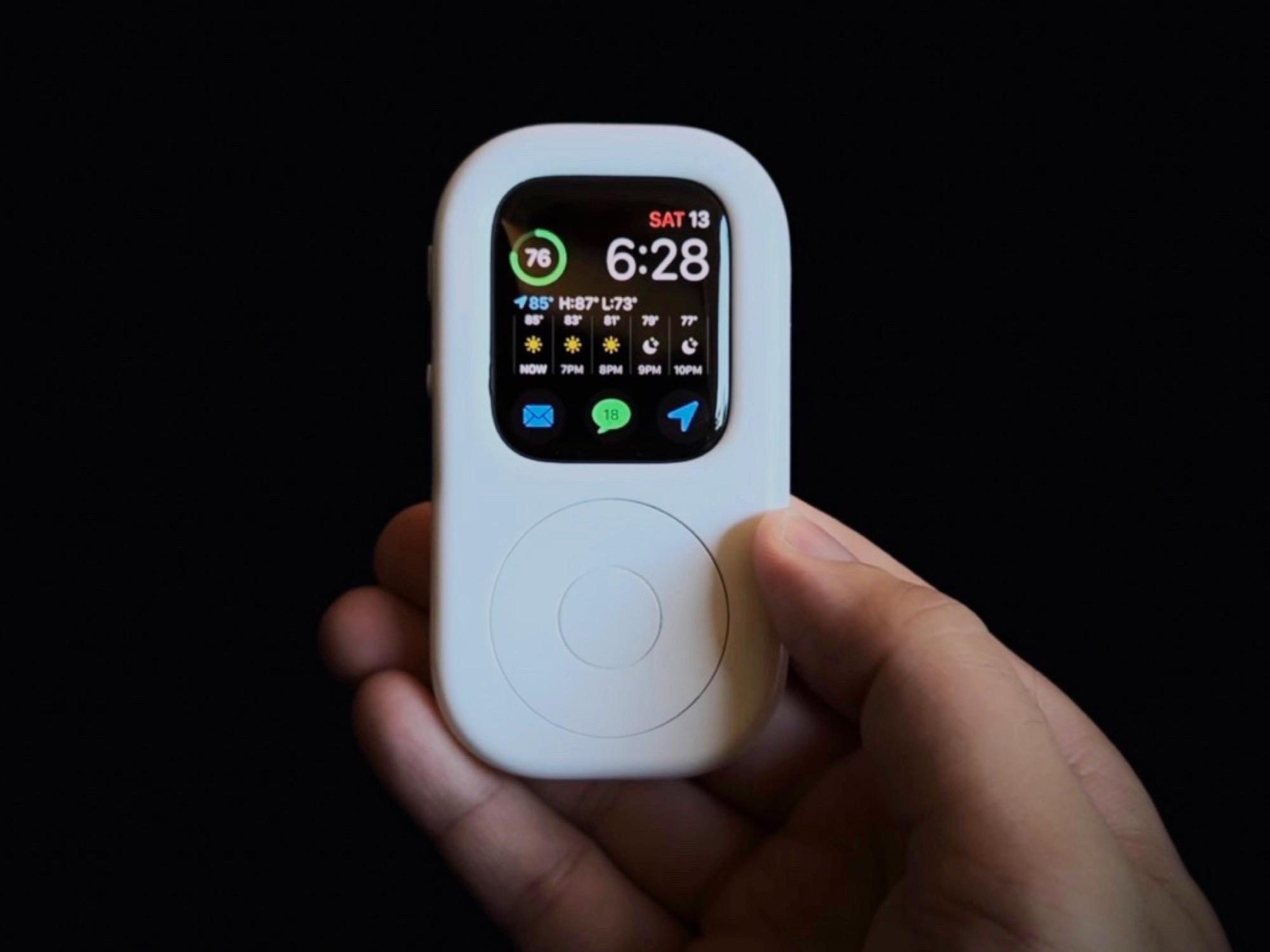
Among Apple ecosystem analysts themselves, some are openly skeptical. Some point out that the company already has a Mature wearable with microphones, speaker, physical button and wireless charging: the Apple Watch, which also incorporates a touch screen and health sensors.
From this perspective, the engineering effort involved in designing a new device just to add two cameras and change the shape might not be worthwhile compared to integrate those same AI functions in existing products. In fact, the possibility has been raised that the experiments with the pin could end up enriching future generations of watches or even AirPods.
Other analysts, however, point out that Apple usually internally test multiple hardware concepts These projects don't always reach the market, and the Apple Pin could be one of them. In other words, it's a project in development that serves as a learning experience, but it could be shelved if the company concludes that it's not a practical or commercial fit.
The discussion also has a social and real-world application aspect: Do European users want to wear a visible camera and microphone on their chest?Recording or listening continuously, no matter how much AI promise is behind it? The reaction to the Humane AI Pin and the usual concerns about surveillance suggest that acceptance is not guaranteed.
Meanwhile, Apple continues to work on other devices geared towards the connected home, such as a potential smart home hub with a screen and a much more capable version of Siri to control the home environment. In this context, the pin would be just one more piece of a larger puzzle, and not necessarily the highest priority.
Given all this, the supposed AI Apple Pin is shaping up to be more of a ambitious but still uncertain project as if it were an imminent launch. Leaks paint a picture of a small device, with cameras, microphones, a speaker, magnetic charging, and tight integration with the new Gemini-based Siri, slated for around 2027 with high production targets, but its success will depend on Apple managing to convince users—including in Spain and the rest of Europe—that it's worth incorporating a new device into their daily lives when the mobile phone and the watch remain, for now, the undisputed kings of the pocket and wrist.

I am a technology enthusiast who has turned his "geek" interests into a profession. I have spent more than 10 years of my life using cutting-edge technology and tinkering with all kinds of programs out of pure curiosity. Now I have specialized in computer technology and video games. This is because for more than 5 years I have been writing for various websites on technology and video games, creating articles that seek to give you the information you need in a language that is understandable to everyone.
If you have any questions, my knowledge ranges from everything related to the Windows operating system as well as Android for mobile phones. And my commitment is to you, I am always willing to spend a few minutes and help you resolve any questions you may have in this internet world.