- The Dreame Nebula 1 is the first car from the Chinese vacuum cleaner brand, an electric hypercar with almost 1.900 hp.
- It has four electric motors, all-wheel drive and promises to go from 0-100 km/h in about 1,8 seconds.
- Its design is clearly inspired by European hypercars like Bugatti or Koenigsegg, with a very low and aggressive body.
- Dreame plans to start production in 2027 and is considering manufacturing vehicles in Europe, near Berlin, with financial support from BNP Paribas.

That a manufacturer known for its vacuum cleaners and small appliances is showing up at CES in Las Vegas with an electric hypercar with almost 1.900 horsepower It sounds like science fiction, but it's exactly like that. what Dreame has doneThe Chinese company, popular in Spain for its robot vacuum cleaners and personal care tools, has decided to take a major leap into the automotive sector with a project as ambitious as it is striking.
That leap has a name: Kosmera Nebula 1, Dreame Auto's first car, a division created specifically to compete in the electric hypercar leagueThe model was shown in prototype form at CES 2026 and is presented as a very clear statement of intent: to fully enter the elite of extreme performance and, incidentally, position the brand in a field where until recently only historical manufacturers and some Chinese technology giants played.
From copying Bugatti to finding its own language
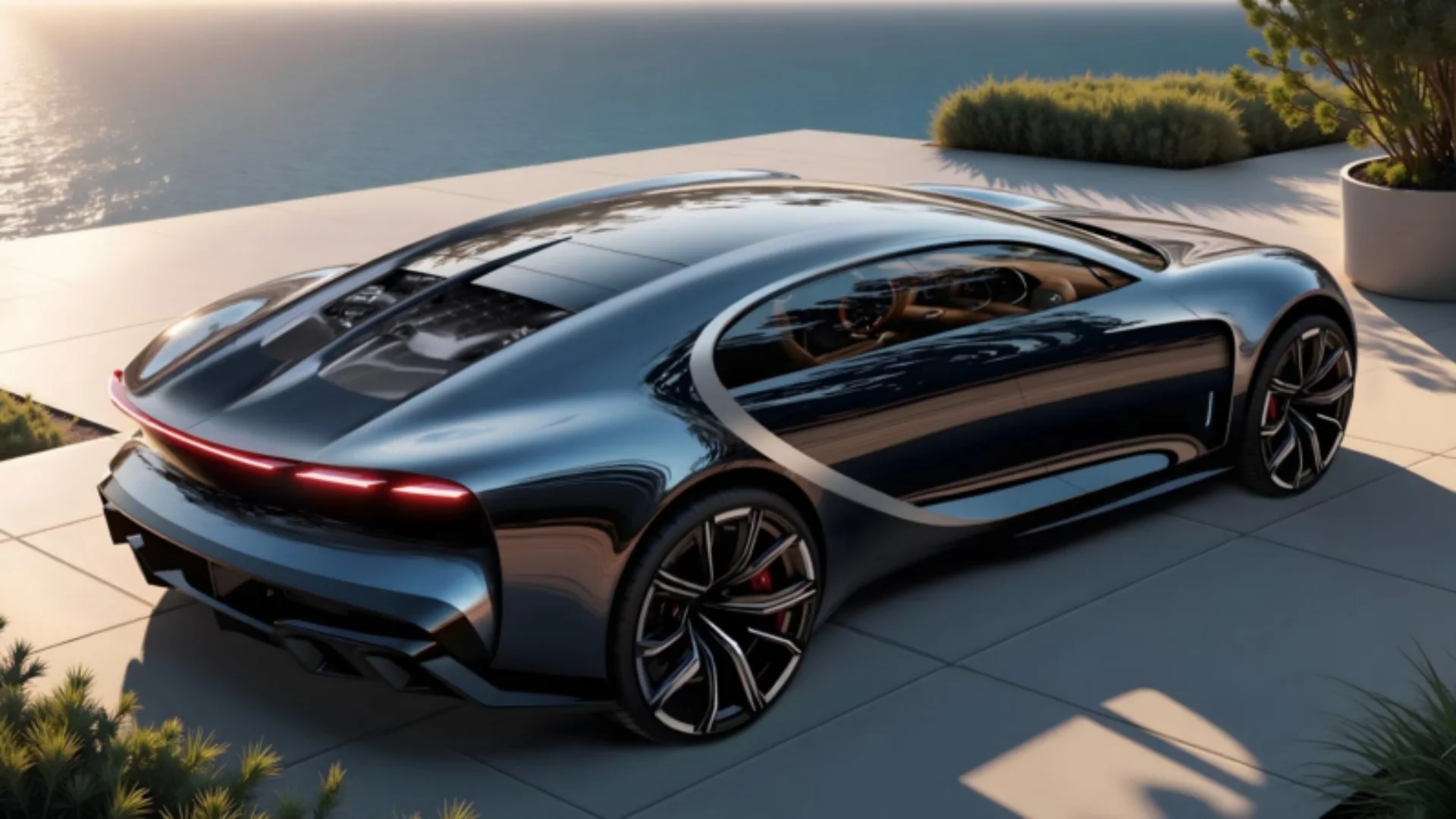
The recent history of Dreame's car has been turbulent. At the beginning of the year Some initial images were leaked showing a coupe of four doors with a very obvious resemblance to the Bugatti ChironThat first proposal quickly gained a reputation for being a mere clone, a stylistic exercise too heavily inspired by Molsheim, closer to "cosplay" than to an original design.
In response to the criticism, The company has been refining the conceptThe new images released ahead of its official launch at the CES 2026 in Las Vegas They show a clear evolution: where before there was an almost blatant copy of the Chiron, Now a design appears that is more reminiscent of the very rare Bugatti Brouillard, a unique model derived from the Mistral presented in 2022. The Brouillard, although it shares a chassis with the Chiron, is characterized by a more fluid and sculptural language, less iconic but also less recognizable at first glance, and that is the path that Dreame seems to want to follow.
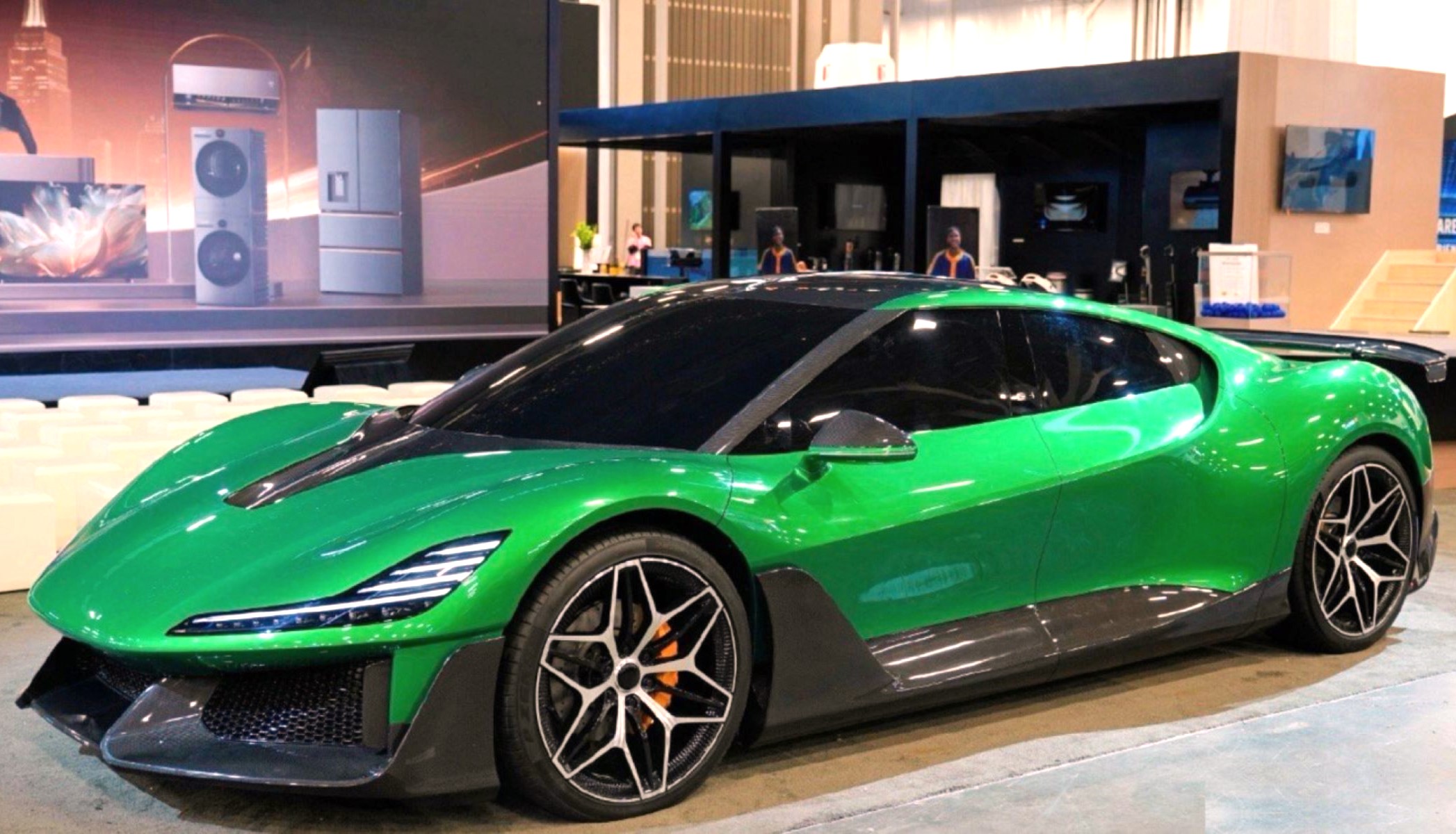
Even so, the The similarities remain obviousAlthough the brand is still avoiding showing the entire front end—and with it the possible horseshoe-shaped grille that caused so much discussion—, Details can be seen that directly link to the Bugatti tradition: the segmented daytime running lights, the combination of metallic green paint with lower areas in black, or certain general proportions of the car.
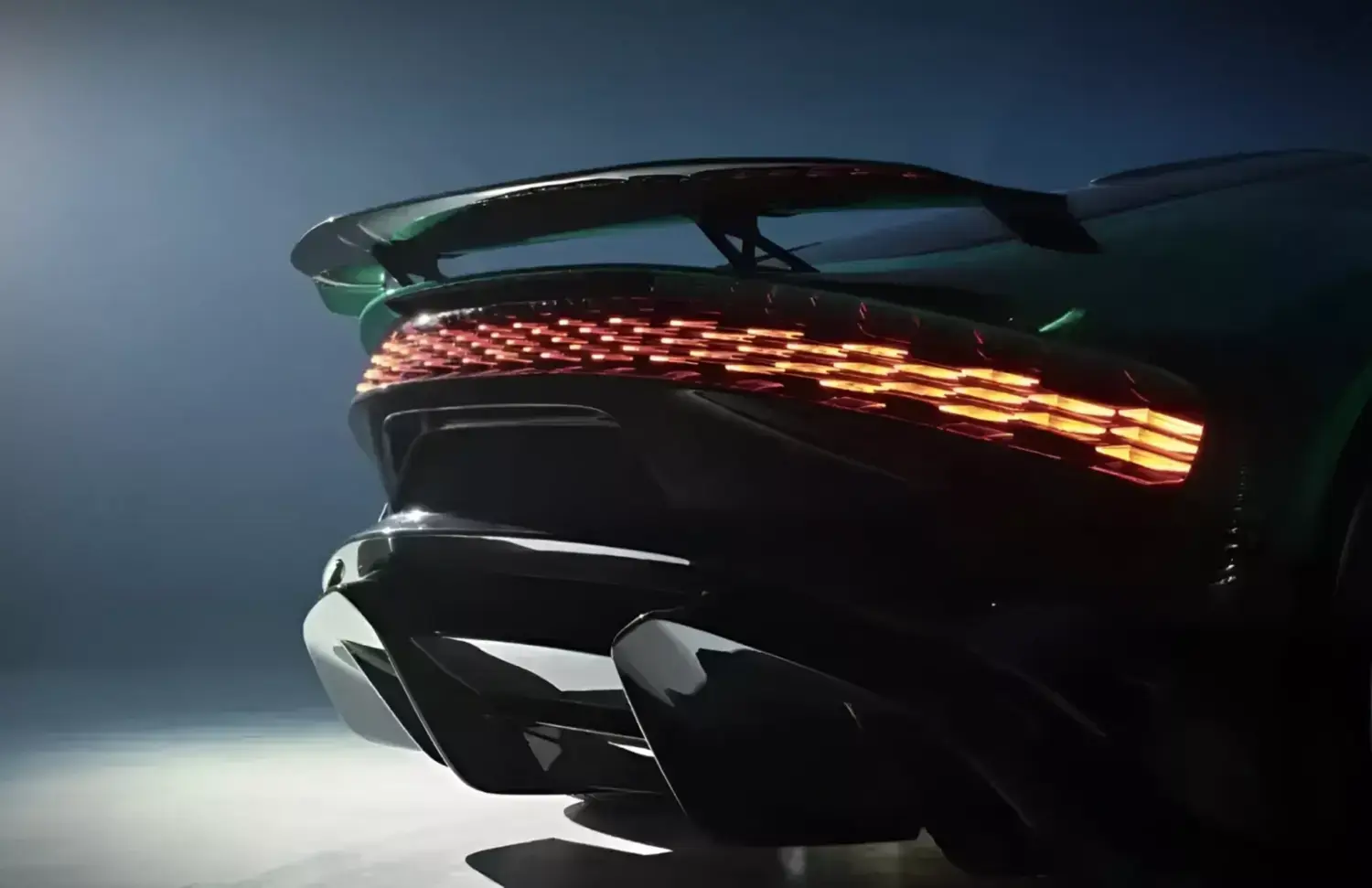
There are also important differences. The famous C-shaped side crease characteristic of the Chiron disappears in favor of a a more subtle curve that runs along the doorswith a somewhat more understated treatment. At the rear, the lighting signature departs from the Bugatti pattern, and the rear wing becomes a clearly bolted-on element instead of being organically integrated, opting for a aesthetics that are somewhat more functional and radical than for formal purity.
All of this is combined with a configuration of four doors and a very low silhouette which places it in a peculiar situation: It blends hypercar features with certain touches of practical grand touring.Similar to what the Koenigsegg Gemera proposes, but taken to the purely electric realm and with a markedly technological focus.
This is the Kosmera Nebula 1, the first Dream car
The project materializes under the name of Kosmera Nebula 1Dreame has named its first prototype. According to the company itself, the ambition is to compete head-to-head with brands like Bugatti, Ferrari, Lotus, Rimac, or even the new Chinese electric car giants. It's not just about entering the mobility sector; the message is that they want to do so directly in the peak of performance.
To achieve this, the Nebula 1 uses a 100% electric architecture with four motors, one per wheelThis ensures all-wheel drive and very precise torque control. Depending on the source, the advertised maximum power ranges between 1.876 hp and just over 1.900 hp (1.399 kW), figures that place it squarely in the league of supercars where models like the Rimac Refrigerator, the BYD Yangwang U9 Extreme or the Xiaomi SU7 Ultra.
The brand speaks of a acceleration from 0 to 100 km/h in around 1,8 secondsThis figure, if confirmed, would place it among the fastest production cars on the planet. Competing in that performance range involves not only raw power, but also highly sophisticated management of the electronics, traction, and aerodynamics.
From a technical standpoint, there are still many unknowns. Dreame has not yet provided any concrete details about it. battery capacity, autonomy or charging systemAdvanced liquid cooling for the entire electrical system and an ultra-high-performance platform are mentioned, but no official figures are available. At the moment, the Nebula 1 functions primarily as a technological positioning exerciseHowever, the company insists that the project is not just a show car.
Although the final interior is not yet complete, what has been shown so far makes it clear that the prototype is in active development phaseThere are provisional elements, pieces that are clearly not the final versions, and certain solutions still under study—something completely normal at this stage. Even so, Dreame assures us that he is already working with a concrete production schedule.
Extreme performance, aggressive design and refined aerodynamics
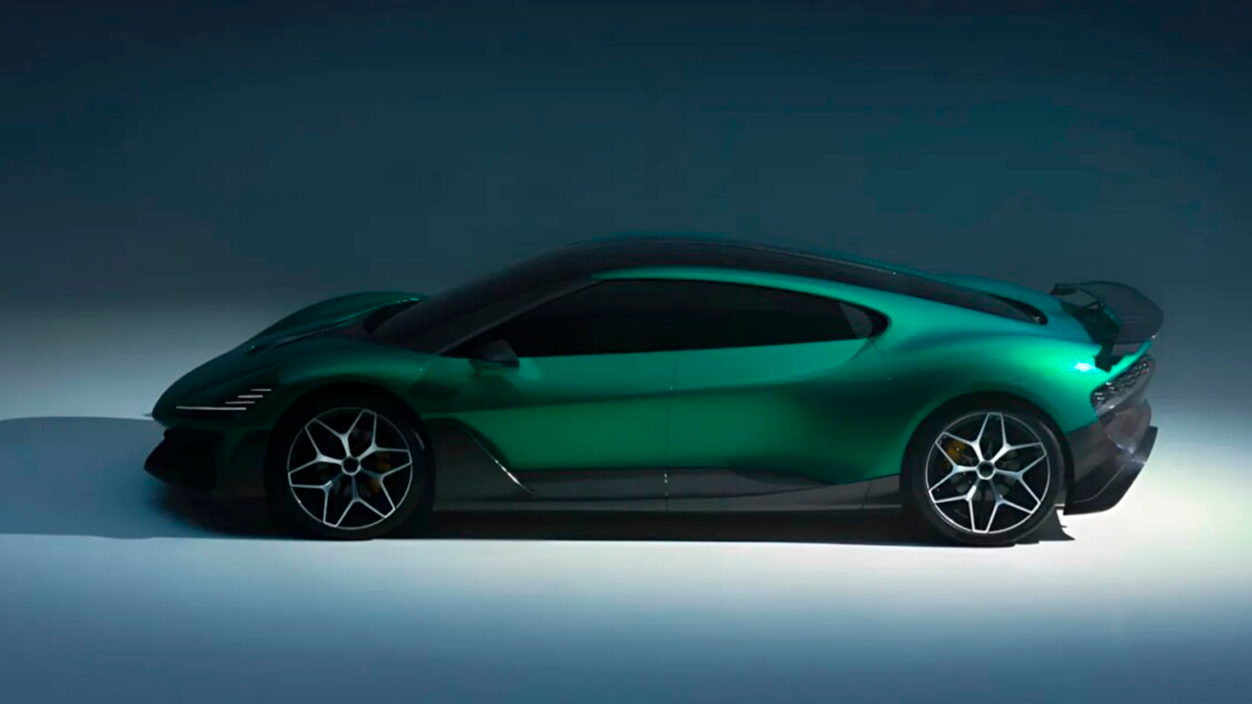
Beyond the numbers, the Dreame Nebula 1 seeks to attract attention for its visual presenceThe body is extremely low and elongated, with a very aggressive stance and proportions reminiscent of European hypercars from the last decade. The rear is dominated by a large diffuser and a spoiler of considerable dimensions that underlines the radical approach of the model.
The brand boasts a important aerodynamic workThis is necessary to manage the enormous power and keep the car glued to the asphalt at very high speeds. Although they haven't yet detailed drag coefficients or aerodynamic downforce figures, the design language points to a balance between stability and efficiency, with very pronounced air intakes, channels for airflow, and surfaces designed to generate downforce.
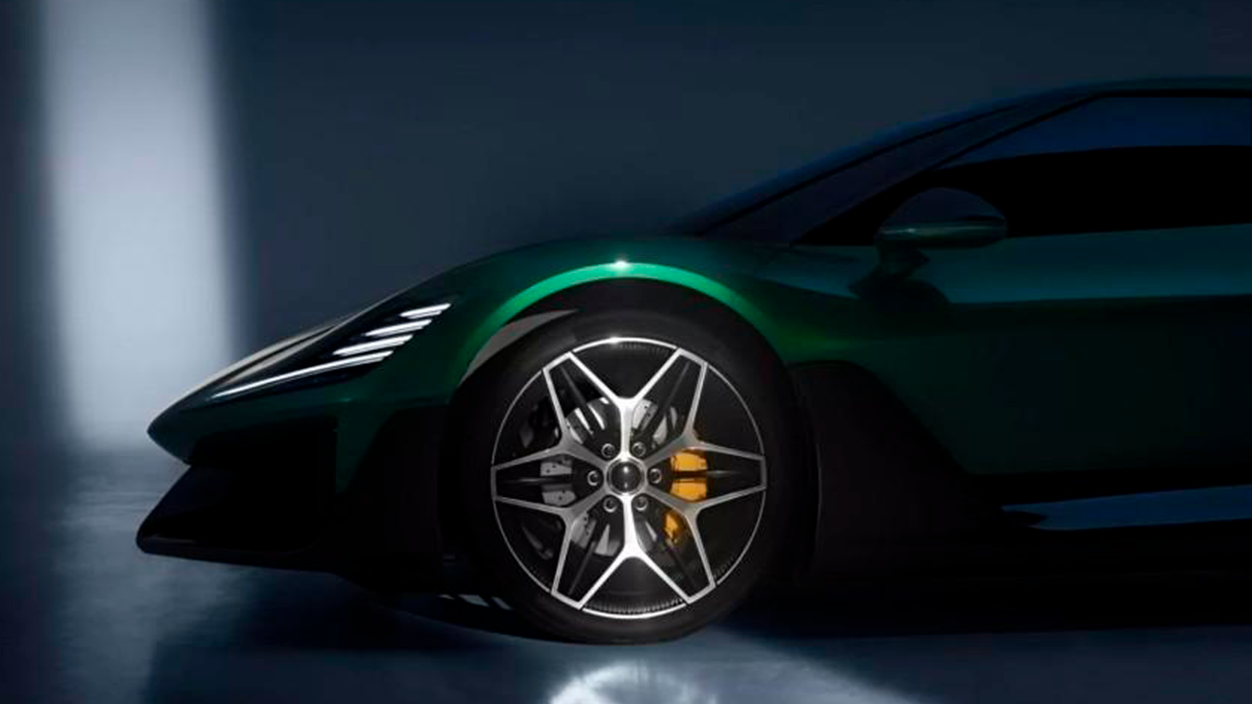
Another striking feature is the absence of conventional shooters on the doors, which reinforces the futuristic aesthetic. The green paint, combined with exposed carbon fiber areas on the lower part of the body and contrasting black elements, gives it an unmistakable look, easily identifiable both in studio photos and on the CES stand.
These aesthetic decisions, combined with the four-door configuration, position the Nebula 1 as a kind of bridge between the pure hypercars and high-performance grand tourersIt's not your typical extreme two-seater, but it's not a traditional sports sedan either; it's a hybrid concept, designed to combine media appeal with a degree of practicality.
For now, though, everything related to comfort, on-board technology or driving assistance It takes a back seat. Dreame preferred to focus the speech on performance, design, and the company's leap into the automotive industry, leaving details about screens, advanced assistance systems, and connectivity for later, as these will be especially relevant when the car approaches production.
From home to asphalt: Dreame Cars' strategy
To understand why a vacuum cleaner manufacturer ends up unveiling an electric hypercar, the project needs to be put into context. Dreame, known primarily for its Robot vacuum cleaners, hair stylers, hair dryers and air purifiers, announced at the end of 2025 its intention to enter the electric mobility sector with a specific subsidiary, Dreame Cars, which would become its "second strategic pillar".
This new division is part of an internal plan that has been dubbed Starry Sky Plan, a roadmap that includes two major product lines: on the one hand, vehicles of ultra-high performance such as the Nebula 1; on the other hand, large luxury cars, including large SUVs with a similar approach to models like the Rolls-Royce Cullinan.
Along those lines, a enormous SUV With a distinctly British-inspired design, it would form part of the future Kosmera family of vehicles. Although still in a very conceptual phase, the idea is to build around the Nebula 1 a whole range of products that share a brand image, design language, and next-generation electric technology.
Dreame is not the first technology company to make this leap. Cases like those of Huawei or XiaomiCompanies that already sell electric cars in China and have achieved very significant sales figures in a short time show that there is real room for this type of movement. At the same time, the memory of the failed project of DysonThe fact that he cancelled his electric car after investing huge sums serves as a warning about the risks in the sector.
The difference compared to a few years ago is that China now dominates a large part of the electric vehicle value chainFrom battery production to key components, this makes it easier for consumer electronics companies to move into the automotive industry with more tools and partners at their disposal.
An ambitious project with many unknowns to resolve
Despite all the media hype, Dreame's car remains, in essence, a prototype in evolutionThere are power and acceleration figures on the table, a fairly elaborate exterior design, and an industrial strategy that is beginning to take shape, but many aspects remain to be finalized before the Nebula 1 can be considered a real production model.
These aspects include key issues such as battery technology The vehicle will employ various technologies, including its real-world range upon market launch, fast-charging capabilities, thermal management under heavy use, and performance on the track and open road. Price positioning, a critical element if it truly aims to compete with major European brands and emerging Chinese players in the luxury electric vehicle market, is also yet to be determined.
Another unknown is the degree of differentiation that Dreame will achieve with respect to her European aesthetic referencesAlthough the design has gained its own personality with each iteration, the line between inspiration and copying remains thin in some aspects, and it will be the final model that clarifies the extent to which Dreame has built a recognizable and unique language.
From a Spanish and European perspective, the potential factory near Berlin and the intention to partially produce in Europe are aspects to watch closely. Their realization will determine the Dreame's real relevance on the European industrial map and could turn the Nebula 1 and its derivatives into products with a strong local connection, beyond the simple fact of being imported Chinese cars.
For now, the Nebula 1 functions as business card: an exercise in extreme design and performance with which a brand from the world of household appliances wants to demonstrate that it can play in the electric car first divisionIf the promises of power, acceleration, and industrial expansion materialize, the name of Dreame Cars could start to make waves in a European market increasingly accustomed to seeing new players emerge in the field of electric mobility.

I am a technology enthusiast who has turned his "geek" interests into a profession. I have spent more than 10 years of my life using cutting-edge technology and tinkering with all kinds of programs out of pure curiosity. Now I have specialized in computer technology and video games. This is because for more than 5 years I have been writing for various websites on technology and video games, creating articles that seek to give you the information you need in a language that is understandable to everyone.
If you have any questions, my knowledge ranges from everything related to the Windows operating system as well as Android for mobile phones. And my commitment is to you, I am always willing to spend a few minutes and help you resolve any questions you may have in this internet world.