
These last few days we have been talking about ERPs and above all trying to help you make the best decision about installing them in your company. But in this article we are going to bring the final battle, ERP vs CRM: Which one suits you best? What differences are there? And many other questions that you will be asking yourself after these days researching the topic. And it is not just any topic, since today, business competition is brutal, and taking advantage of your production by optimizing resources becomes something fundamental in daily business life.
That is why we advise you that, if you have not read them already, you go through this article on What is an ERP and what is it for: the 2 best sectors to install it, and we also leave you this other one in which we give you from a comparative table with the 12 best ERPs to a selection of the 4 best ERPs to optimize your company. To talk about the topic again, in addition to saving those two articles for you, we are going to introduce everything now.
ERP stands for “Enterprise Resource Planning” y CRM are the acronyms of «Customer Relationship Management», it seems like a great duel and it is, as well as a great decision. That is why we are going to help you from now on so that you know how to take it so that your company has the best possible manager and you know how to discern between the similarities that these two business management programs or software may have. To do this, we are going to start by first explaining what an ERP is and also what a CRM is, to finally show you the clear differences so that you are clear about who is your winner in the ERV vs CRM fight. Let's go there with it.
ERP vs CRM: What is a CRM? Differences with an ERP

As we told you before, CRM is the acronym for “Customer Relationship Management”. These acronyms are nothing more than software that focuses on managing the relationships you have with your clients. CRMs can help you in different ways, but above all managing those interactions with potential clients and with clients that you also already have in your portfolio or are loyal.
It will focus (very similar to ERP) on the optimization of processes, such as: sales, purchasing, marketing department, customer service and many others. What the CRM is going to do is facilitate this monitoring, that workflow that each client goes through. This way you will be able to greatly improve your relationships with them and, above all, what interests you, increase your sales.
Objective of a CRM
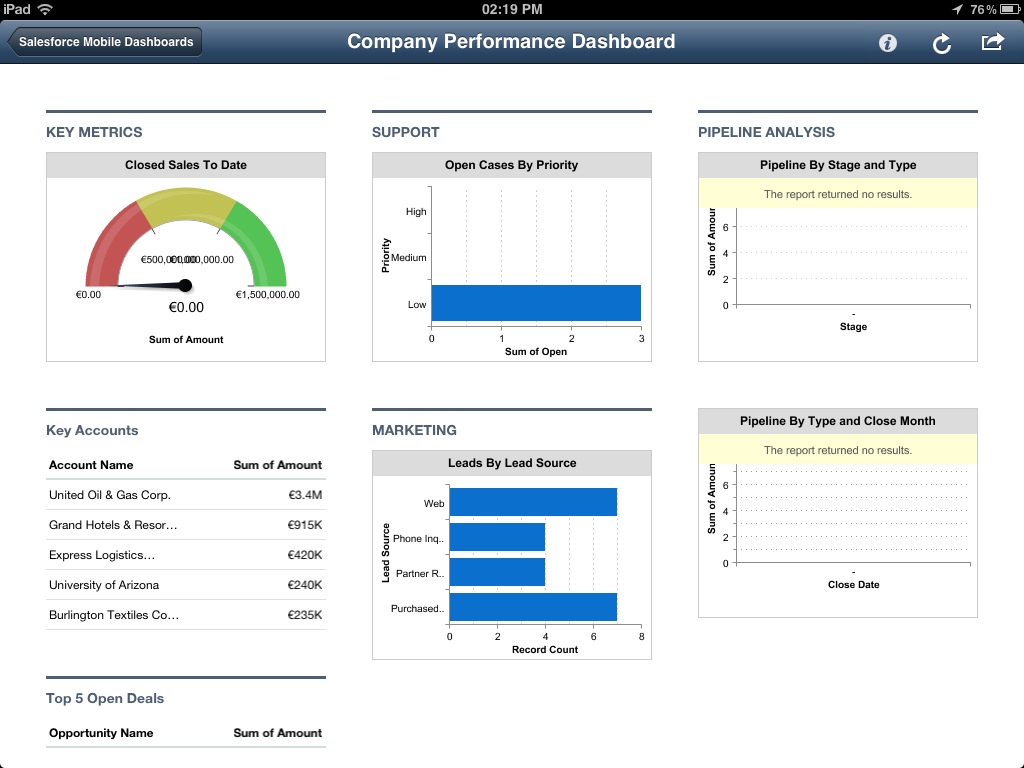
The objective of a CRM, mainly, is none other than to increase sales and for your relationship and customer service to improve exponentially. With CRM you will get a complete view of the entire flow of tasks, how clients go through them and in this way you will optimize the process. The key is to make it very visual and intuitive for all your employees. And this is where the final point that differentiates everything in the ERP vs CRM battle comes in, What departments do they use?
On the one hand, a CRM is usually used more by departments that interact more with customers, that is, sales departments, marketing departments, customer service departments and their derivatives... Since the CRM is designed to always keep in mind the customer relationship optimization It is logical that those are the ones who use it the most.
On the other hand, ERP is more used by a finance department, on the other hand, production, human resources, logistics… It is true that there may be some in which they complement each other or that both have the same modules or functions, but normally they are well differentiated by customer service, as you can read.
What is easier to implement in your company?
And we have reached what may be another of the most important points in the ERP vs CRM battle, What is easier and less expensive to implement in your company? Well, once again there are differences between the two.
- ERP: The implementation of an ERP as a general rule and as we told you in previous articles linked above can be quite difficult and expensive, although very scalable if your company grows. This implementation involves having to put a very large number of processes on a single platform. Maybe even if we talk about time it will take months or years of work and meetings with your teams and the consultancy.
- CRM: The implementation of a CRM is much lighter in general. Also faster and much less expensive if we compare it directly with ERP, of course. CRMs are generally made up of modules and you just have to acquire them and integrate them into your company according to your needs. The CRM, as a general rule, will be much more adaptable and 'touchable' by the company in a more direct way.
In the end, choosing between a CRM or an ERP It depends directly on your business and its needs. In this article we have given you the key by mentioning the main differences between them in their management. If your main objective is to manage operations in the most optimal way, you should use ERP. If, on the other hand, what you want is to improve the relationship with customers in the workflow, you should opt for a CRM.
In the ERP vs CRM debate we do not believe that there is a final winner, it is simply a decision to be made by the employer depending on your needs. And again, we recommend that you read the articles linked at the top of this article, since they complement the information mentioned here very well and you will be able to have a more general vision in addition to entering into ERP brands. Finally, we can recommend one of the most popular CRMs on the market in 2024: Salesforce.

Passionate about technology since he was little. I love being up to date in the sector and, above all, communicating it. That is why I have been dedicated to communication on technology and video game websites for many years. You can find me writing about Android, Windows, MacOS, iOS, Nintendo or any other related topic that comes to mind.