- Google introduces dynamic and variable limits in Gemini 3 Pro for free accounts
- Daily usage, image generation, and the non-subscription context window are reduced.
- Advanced features such as Deep Research Full, Veo 3.1 or Nano Banana Pro are restricted
- The business model is geared towards paid subscriptions, similar to that of platforms like Netflix.
The launch of Gemini 3 Pro has exceeded all of Google's expectationsThe new artificial intelligence model, integrated into its service platform, It has generated such a high volume of usage that the company has been forced to put on the brakes. in the free mode in order to maintain a stable service.
In just a few days, this new version of Gemini has gone from being an eye-catching novelty to becoming a mass use tool for users worldwide, including in Europe and SpainThe result: servers at their limit, overloaded functions, and an access policy revised on the fly, especially harsh for those using the free plan.
From fixed limits to dynamic restrictions in the free version
When Gemini 3 Pro was launched, on November 18, 2025The conditions for free accounts were clear and relatively generous for such an advanced model: up to five messages per day and the possibility of creating three images daily with the visual generator Nano Banana ProIt was basically the same limit that already existed with the Gemini 2.5 Pro.
That scheme, however, has lasted very little time. Faced with what Google describes as “high demand” and resource saturationThe company has introduced a dynamic limit system. In practice, this means that non-subscribers no longer have a guaranteed fixed number of queries: access is adjusted based on server load and the volume of simultaneous requests.
According to the updated documentation on the company's support page, Free users will now have "basic access" to Gemini. The number of prompts available per day may increase or decrease without prior notice. depending on how many people are using the service at any given timeIt is a flexible model aimed at distributing computing power, but it leaves those who do not pay with an unpredictable experience.
Furthermore, Google emphasizes that These limits are reset daily. That is to say, Usage possibilities are renewed every 24 hoursBut always under that new, variable criterion dictated by the pressure on the infrastructure. One day the user might get more out of the model, and the next they might find themselves with a much smaller margin.
This reorganization of resources represents a clear transition: Priority is given to paid accounts, while the free option is subject to the status of the data centers.In an environment where running such a complex model consumes a huge amount of hardware and electricity, the company sets the bar high for those who want predictable, uncompromised access.
Image cropping and creative features: Nano Banana Pro, NotebookLM, and more
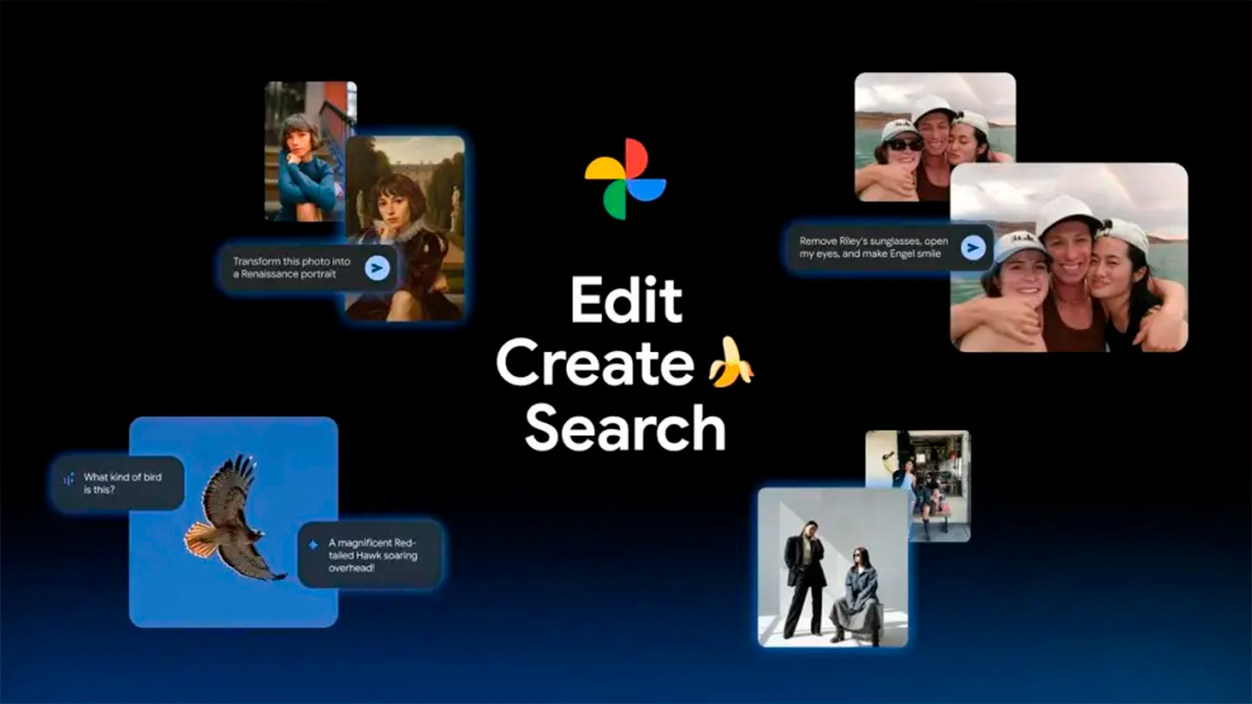
One of the areas where the change has been most noticeable is in the visual aspect. Image generation and editing With Nano Banana Pro, this feature is now considered "high demand," as Google itself acknowledges on its official website. The direct consequence is a reduction in the usage allowance for the free plan.
While initially it was possible to produce up to three images per day, the company has adjusted that threshold and It has limited it to a maximum of two images per day for those who do not pay a subscription.Again, with the warning that these limits may change frequently, depending on the pressure on the servers, and are reset every day.
The impact doesn't stop there. The load on the system has also affected related tools such as NotebookLM, Google's service designed to organize and present information visuallyIn recent days, there have been temporary blocks to the creation of new infographics and presentations based on Nano Banana Pro, precisely because of the intensive use of these features.
NotebookLM had become one of the most striking features for creating customizable visual schemes, presentations, and graphic materialswith multiple formats (horizontal, vertical, or square) and levels of detail (concise, standard, or detailed). Users could further refine the result by providing specific instructions on style, colors, focus, or content type.
With the latest restrictions, free users have lost full access to these advanced capabilitiesWhile those with a paid plan are also now facing certain usage limits, Google insists that this is a temporary situation caused by overwhelming demand and assures that it intends to return to normal as soon as capacity allows.
Additional technical limitations: context, research, and video
Beyond the number of messages or daily images, Google has introduced clear differences between free and paid users in key technical aspects that directly influence the quality and depth of the model's responses.
One of the most relevant changes is in the context windowThat is, the amount of information that AI can handle and consider simultaneously when provided with text, a document, or an image. For free accounts, The window is limited to 32.000 tokensThose with a subscription can reach up to one million tokens, a much higher figure that allows working with extensive documents, complex analyses, or longer projects without losing track.
There are also differences in access to In-depth Research, Gemini's advanced research functionNon-subscribed users can only use the "Fast" model, designed for quicker and less computationally expensive responses. The "Reasoning" model, geared towards more sophisticated tasks and deeper analysis, is restricted to paid plans.
In the multimedia field, the limitations are even more visible: Video creation with Veo 3.1 is reserved exclusively for paying usersThose who use the free version of Gemini cannot access this type of audiovisual generation, which marks a clear line between the profile of the occasional user and the professional or intensive user.
This whole set of constraints draws a tiered ecosystem within Gemini 3 itselfAt the base, a free level that serves as an entry point and trial; above it, (Google AI Plus, AI Pro, AI Ultra, Gemini Advanced…) which unlock more power, more context and more creative tools.
A business model reminiscent of streaming platforms
Ultimately, Google's strategy with Gemini 3 fits into a business pattern we've already seen in other digital sectors, especially in streamingKeeping millions of users connected to a state-of-the-art AI model is not exactly cheap: it requires specialized hardware, huge data centers, and continuous energy consumption.
For now, the big tech companies continue to offer a free trial that allows you to experiment with AIto become accustomed to its daily use and, little by little, integrate these tools into work, study, or leisure. The implicit goal is that a large portion of these users will eventually perceive the service as something difficult to replace.
Once that dependency is created, The next step is usually to tighten the conditions for free accountsMore limitations, fewer features, a greater presence of commercial elements, or, eventually, advertising integrated into the experience itself. Meanwhile, paid subscriptions become the way out of these inconveniences, although with prices that may increase over time.
It's a very similar approach to the one already used by platforms like Netflix and other video-on-demand services: First, attract the user with an accessible catalog and attractive rates, and then gradually adjust prices and conditions.In the case of AI, the added factor is that the technical cost of each interaction is still high, which reinforces the pressure to push the user base towards paid models.
In Europe and Spain, where there is greater awareness regarding technology regulation and consumer protection, These types of changes in AI services will predictably be scrutinized closely. as these tools become essential in companies, administrations and individuals.
Today, the situation of Gemini 3 clearly illustrates the current state of generative artificial intelligence: A technology with enormous potential and rapid adoption, but also with clear limits in terms of cost and capacityGoogle has chosen to preserve system stability by restricting the free tier and reinforcing the value of its paid plans. For users, the emerging scenario is one of increasingly prevalent AI, but not entirely "free," where they will have to decide to what extent it's worth upgrading to a subscription to avoid being left with limited functionality, context, or response quality.

I am a technology enthusiast who has turned his "geek" interests into a profession. I have spent more than 10 years of my life using cutting-edge technology and tinkering with all kinds of programs out of pure curiosity. Now I have specialized in computer technology and video games. This is because for more than 5 years I have been writing for various websites on technology and video games, creating articles that seek to give you the information you need in a language that is understandable to everyone.
If you have any questions, my knowledge ranges from everything related to the Windows operating system as well as Android for mobile phones. And my commitment is to you, I am always willing to spend a few minutes and help you resolve any questions you may have in this internet world.