- Reviewing who has Remote Desktop permissions and which users are part of the access group is key to preventing intrusions.
- The Event Viewer, CMD/PowerShell commands, and tools like Sysinternals allow you to view active and historical remote connections.
- Enabling login auditing, strong encryption, and multi-factor authentication significantly strengthens RDP security.
- Limiting remote access through VPN, minimum users, and updated software drastically reduces the risk of unauthorized access.

The mere thought that Someone could control your computer remotely without you noticing. It sounds like a hacker movie, but in everyday life it's much more common than it seems: technical supportServer administration, remote work… and also attacks. That's why, Find out if someone has enabled Remote Desktop on your computer. And how to monitor those access points is something Essential if you want to have your privacy under control.
In this article you will see, step by step, how to check who has access via Remote Desktop (RDP) to your PC or server, How to see who connects, how to review security logs And what to do if you suspect someone is entering without permission. We'll do this in clear language, using Windows tools (including Windows XP/7/10/11 and Windows Server) and, where appropriate, discussing third-party solutions that extend monitoring options.
What exactly is Remote Desktop (RDP) and why is it so important to control it?
Windows Remote Desktop is based on the Microsoft Remote Desktop Protocol (RDP)This system allows you to connect to another computer over the network and view its desktop as if you were sitting in front of it. This protocol sends a graphical interface to the client and receives keyboard and mouse input in return.
In practice, RDP is used to allow employees, support technicians, and administrators to access computers and servers without leaving their location.It is convenient, fast, and very efficient for managing complex infrastructures or providing remote assistance to less technical users.
Companies are getting a lot of benefit from this technology: remote work, server administration in data centers, incident resolution, team collaboration, and access to internal applications that are only available on the corporate network. Even many commercial tools are built on top of RDP or use it as a base.
The big advantage of RDP is that You don't need to be physically in front of the machine to control it.All you need is an internet connection (ideally secure) and valid credentials. That's a boon for productivity, but it also opens a very tempting door for anyone who wants to break into your system.
Fortunately, RDP isn't a sieve if you configure it properly: It includes encryption, strong authentication, and can be combined with MFA, VPN, and security policies.The problem arises when it is left open to the Internet, with weak passwords, too many users, or without monitoring of what is happening.
Why it's crucial to know who has remote access to your computer
When you enable Remote Desktop, you're essentially saying: “I allow this device to be operated remotely if you know the username and password.”If you don't control who can enter, you expose yourself to a number of unpleasant problems.
First, there's the matter of pure and simple security: An open and poorly secured RDP is a direct entry point into your system.Attackers often scan IP ranges looking for devices with active RDP to brute-force passwords (brute-force attacks) or exploit vulnerabilities if it is not up to date.
If someone manages to get in, the risks are significant: Theft of sensitive information, access to databases, copying of confidential documents, or manipulation of configurationsThey could even deploy ransomware, create new administrator accounts, or hide on your network to continue exploring other computers.
It's not just about "not letting it happen to you." An RDP intrusion can result in downtime, legal issues due to data leaks, regulatory penalties, and a significant blow to your company's reputation.And if it's your personal PC, the damage can range from loss of photos and documents to theft of banking credentials.
That's why it's so important to be clear Which users are part of the "Remote Desktop Users" group, who is actually connecting, and what sessions are currently active or have been active in the past?This visibility allows you to cut off unnecessary access, detect suspicious users, and act in time.
Signs that someone may be using your PC remotely without your knowledge
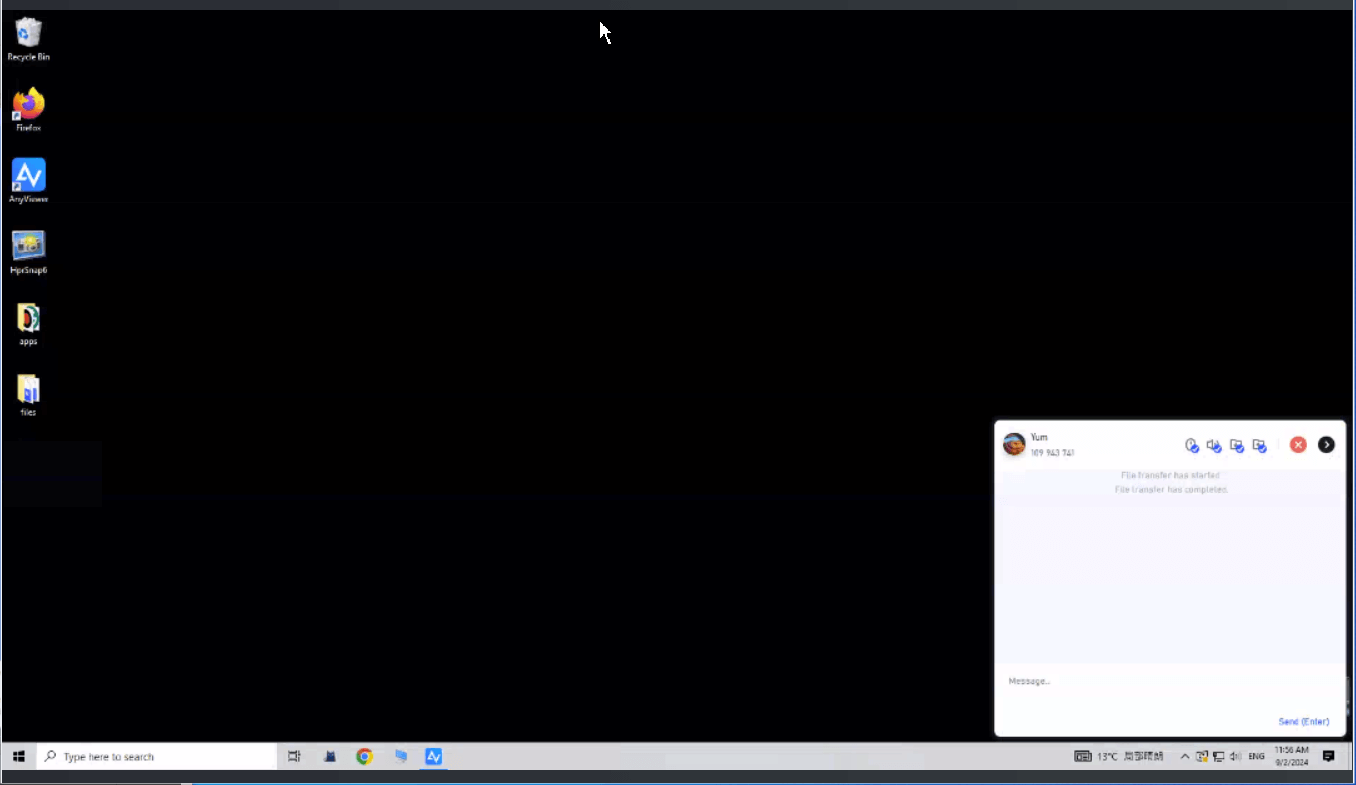
Although in many cases the remote control goes largely unnoticed, There are visual and behavioral signs that can reveal that someone is using your computer.either through Windows Remote Desktop or through other remote access programs or specialized malware.
One of the most obvious signs is seeing that The mouse cursor moves on its own, clicks, or types without you touching anything.If you know for a fact that no one from support is online at that moment, it's a very clear red flag.
Another typical symptom is that programs, file explorer windows, settings, or command consoles open or close without your interventionSometimes they are very quick actions that you barely have time to see, but if they are repeated, something is happening.
It's also worth paying attention to performance: if your computer is running much slower than usual even though you don't have any heavy applications openThere may be someone performing remote tasks in the background, transferring files, or running tools.
And finally, the network: If your internet connection is constantly sending and receiving data even when you're seemingly not using anything onlineIt's a good idea to review which processes are generating traffic and Check if your network is experiencing invisible micro-outagesA remote control or malware usually maintains active connections at all times.
How to tell if Remote Desktop is enabled in Windows
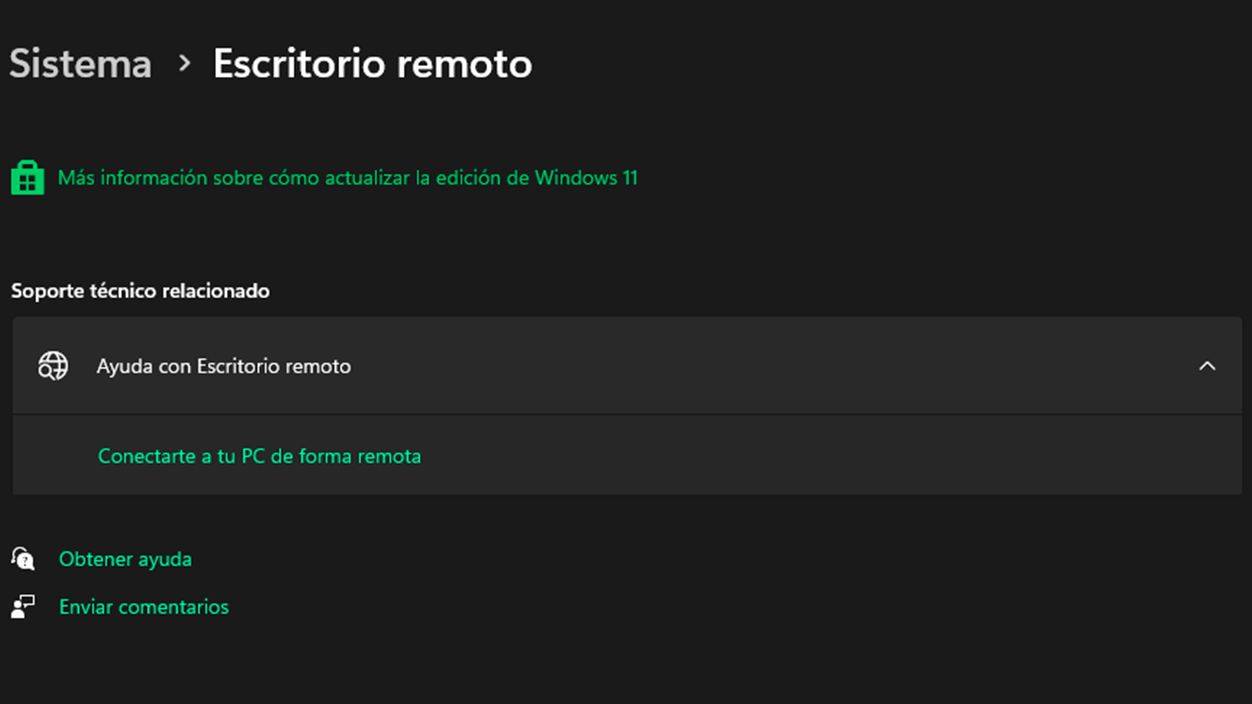
The first thing, before we get into records and events, is Check if Remote Desktop is enabled on your computer.If it's disabled, they won't be able to enter through that specific method (although they might use other remote programs or Trojans).
In modern versions of Windows (10 and 11), you can do this from the Settings app:
- Press Win + I to open Settings.
- Enter System > Remote Desktop.
- Look at the switch “Enable Remote Desktop”If it's active and you don't remember setting it that way, someone else may have configured it.
If you see that it's enabled and you don't want to allow any more connections, unplug it right then and there.Simply move the switch to "Off" and apply the changes.
On older systems like Windows XP Professional or Windows 7, things work through a different menu: System Properties > Remote tabThere, you can check or uncheck the box that allows Remote Desktop connections. XP doesn't have a built-in alert to notify you in real time when someone connects, but you can use logs and other tools.
How to see who has permission to connect via Remote Desktop

It's not enough to know if RDP is turned on, it's also essential Review which users have remote connection rightsThis is managed through local groups within the system.
In Windows Server and many desktop editions, the clearest way to view this is from the Computer Management console:
- Open the start menu and search “Equipment Management” (or “Computer Management”).
- On the left panel, enter System Tools > Local Users and Groups.
- Click on Groups and locate the group called “Remote desktop users”.
- Open it with a double click and check the member list.
In that window you will see all users and groups that have the right to log in via RDPIf you notice accounts that don't look familiar, groups that are too large, or old users who shouldn't be joining anymore, the sensible thing to do is remove them from the group.
Keep in mind that, in many environments, Administrators can also log in via RDP even if they are not listed in that groupBecause they have more privileges. That's why it's crucial to keep track of who is a local or domain administrator, not just who appears in "Remote Desktop Users".
View active RDP connections and remote sessions in real time
If what you want is to know who is currently connected via Remote DesktopYou have several ways to view it depending on the system and the tools installed. Some are more visual, and others involve the command line.
On servers configured as Remote Desktop Session Host (RDSH) In Windows Server, one of the classic options is the Remote Desktop Services Administratorwhich you can load as an add-on in the MMC:
- Press Win + R, type mmc and accept.
- Go to File > Add or Remove Snap-in.
- Select “Remote Desktop Services Manager” and add it.
- Choose whether you want to connect to the local machine or a remote one.
- Once it loads, check the tabs “Users” and “Sessions” to see who is inside, session ID, status, etc.
In more modern environments with Windows Server 2012 and later, you also have the Remote access management consoleintegrated with the Remote Access role (DirectAccess + VPN). From Server Manager you can open “Remote access management”Go to the reports section and, within it, to “Remote client status” to view connected users and detailed statistics.
If you prefer to use commands, PowerShell offers the Get-RemoteAccessConnectionStatistics cmdletThis tool returns statistics on remote connections. You can filter by username, computer, connection type (DirectAccess or VPN), IP addresses, tunneling protocol used, specific remote access server, etc., giving you a fairly clear picture of who is connected and how.
Using Task Manager and basic tools to view connected users
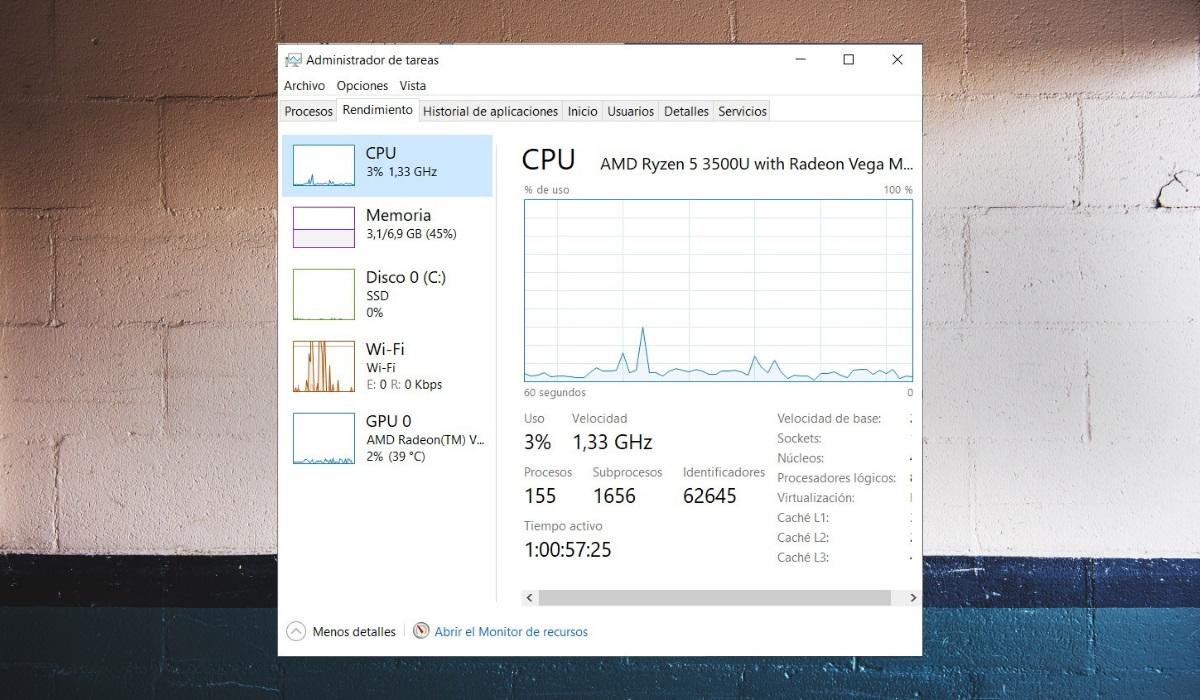
On desktop machines or servers where you don't have RDS roles configured, you can resort to Use Task Manager to see which users are connected. at that time, both locally and remotely.
To do this:
- Open the Task Manager with Ctrl + Shift + Esc or right-click on the taskbar.
- Go to the tab “Users” (if available in your version of Windows).
- Over there You will see the list of active accounts, the session status and, often, where they are connecting from.
It doesn't always make a crystal-clear distinction between local and remote sessions, but If you see multiple users connected simultaneously, one of them may be using RDP or some other type of remote session.It's a quick overview when you don't want to delve into event logs just yet.
In Windows XP Professional, the visual options were more limited, and There is no native feature that gives you a discreet notification when someone connectsThe most reliable approach is to rely on the Event Viewer and, if needed, on third-party tools that generate notifications when they detect Remote Desktop logins.
See who has logged in remotely using commands (CMD and PowerShell)
If you get along well with the console, CMD and PowerShell allow you to view connected users and RDP sessions quite directlyThis is great if you work with multiple teams or if you want administrative scripts.
In the Command Prompt, you can use commands like quuser o query user:
- Open CMD (Win + R, type cmd and press Enter).
- Execute quser /server:RemoteEquipmentName o query user /server:RemoteComputerName.
- You will see a table with the connected users, their sessions, status, and downtime.
If you want to check several computers at once, you can chain commands, for example: quser /server:equipo1 & quser /server:equipo2 & quser /server:equipo3This way you get an overview of different machines in a single shot.
PowerShell also offers some interesting options. For example, Get-CimInstance -ClassName Win32_ComputerSystem -ComputerName ComputerName | Select -ExpandProperty UserName It returns which user is logged into the console of a remote machine (modern equivalent of Get-WmiObject). Be careful with this: If the user is only connected via RDP and not in the local session, the result may be empty.So take it as supplementary information, not as definitive proof.
NBTSTAT commands and Sysinternals tools for remote users
Another somewhat more "classic" resource is Use the nbtstat command to query NetBIOS names on a remote computerThis can give you clues as to which users have accessed shared resources.
The procedure would be:
- Open CMD with sufficient permissions.
- Execute nbtstat -a TeamName if you know the name NetBIOS, or nbtstat -A IP Address if you only have the IP address (note the difference between lowercase -a and uppercase -A).
- Analyze the NetBIOS name table returned by the command.
This may show usernames associated with shared resources and network sessionsHowever, it has several significant limitations: it relies on legacy technology, doesn't always reflect the current user, and doesn't specifically differentiate RDP sessions, but rather access to shared resources. Therefore, use it as a supplementary tool, not your primary source.
Much more powerful is the Microsoft Sysinternals Suite, which includes a utility called PsLoggedOnWith it you can see who is connected to a local or remote system:
- Install Sysinternals Suite (for example, with winget install sysinternals –accept-package-agreements on Windows 10 and later, or by downloading it from the official website).
- Open CMD or PowerShell.
- Execute PsLoggedOn \\RemoteEquipmentName.
- The program will show you the users connected to the specified system.
This tool can be very useful for quickly audit which accounts are in use at any given time, both locally and on remote network equipment.
How to use the Event Viewer to monitor remote logins
If you want to go all the way and View access history (who has entered, when and from where)The Windows Event Viewer is your ally. It records, among other things, security events related to logins.
To review these records on a modern computer:
- Press the Windows key and type “Event Viewer”.
- In the tree on the left, enter Windows Logs > Security.
- Search for events with the ID 4624, which indicate successful logins; in them you will see details such as user, domain, login type and source computer.
By examining those events, you can detect schedules or source devices that don't match your normal usageThis helps to detect suspicious remote access. On RDP servers, these logs are essential for auditing and for reconstructing what happened in the event of an incident.
However, in order for all this information to be saved, in many cases You need to have login auditing enabled.Otherwise, Windows will not record these events in the Security Log and you will be left without a history.
Activation is done from the Local Group Policy Editor (gpedit.msc):
- Open gpedit.msc from the Start menu or the Run dialog box.
- Go to Computer configuration > Windows settings > Security settings > Local policies > Audit policy.
- Open “Audit login events” and check the Success and Error boxes.
- Apply the changes so that Windows starts recording both successful and failed logins.
In older versions like Windows XP, the process is conceptually similar (Event Viewer, Security Log), although the terminology and event IDs vary. In any case, Reviewing these logs allows you to see all logins, both local and remote desktop., with details of which user has authenticated.
Remote access monitoring on Windows Server and corporate networks
In server environments things get a little more complicated, but in return You have centralized administration tools to view the status and activity of remote clients.whether via DirectAccess, VPN or RDP.
In Windows Server 2012 and later versions, the Remote Access role unifies DirectAccess and RAS (VPN). server administrator you can go to Tools > Remote Access Management and open the corresponding console.
Inside this console there is a section of Remote access reportsFrom there you can access the interface of “Remote client status”, where a list is displayed with all users who are connected to the remote access server and detailed statistics of each connection.
When selecting a row (a specific user), In the preview panel you can see information about user activityIP addresses, tunnel type, server connected to (in the case of a cluster), accessed resources, etc. It is a very powerful tool for monitoring in real time who is inside your corporate network and how.
If you prefer automation, you can use PowerShell with the Get-RemoteAccessConnectionStatistics cmdletwhich offers the same statistics in object format. You can filter by username, computer, connection type (DirectAccess or VPN), ISP IP, internal tunnel IPs, transition technology (Teredo, 6to4, IP-HTTPS) or VPN protocol (PPTP, L2TP, SSTP, IKEv2) and even by specific resources they have accessed.
What to do if you suspect someone is remotely accessing your PC without permission
If, after reviewing all of this, you get the impression that Someone has connected (or is connecting) to your computer without your authorizationIt's time to act quickly and with a cool head. The sooner you cut off access, the better.
The first step is to isolate the equipment: Disconnect it from the internet immediately.This can be done by either removing the network cable or disabling Wi-Fi. This way, even if the intruder remains authenticated, they will no longer be able to send commands or receive data.
Next, it is essential Run a full scan with your antivirus software. And, if possible, use a specialized anti-malware tool like Malwarebytes. Also, check the status of Windows Defender SmartScreenOften, remote access is facilitated by a Trojan horse or a RAT tool disguised as a legitimate program.
Then review it calmly. recently installed programs and applications that start with WindowsFrom the Task Manager, under the "Startup" tab, you can see what loads when the system starts and disable anything you don't recognize, and from the Control Panel (or Settings > Apps) you can uninstall suspicious software.
If after all this you still see strange behavior or you still don't quite trust it, the most decisive option is reinstall Windows from scratchIt's a drastic step, yes, but it guarantees you'll eliminate any trace of persistent access, backdoors, or altered configurations. However, be sure to back up your important data first, and don't restore any suspicious settings or programs.
Improve the security of Remote Desktop and remote access in general.
Beyond detecting who enters, the ideal is Strengthen the RDP and remote access configuration as much as possible to reduce the chances of intrusion. This involves both the built-in Windows security measures and third-party tools.
On the one hand, it is essential that traffic travels encrypted in a robust manner. End-to-end encryption ensures that data going between client and server cannot be easily read if someone intercepts it.Some commercial remote access solutions add their own layers of encryption and secure tunnels to increase protection.
The other major piece is authentication: Enabling multi-factor authentication (MFA) whenever possible increases securityEven if someone obtains the password, they will still need a second factor (authentication app, SMS, physical key, etc.), which greatly complicates unauthorized access.
In addition, it is advisable to apply a few basic good practices: Always keep your operating system and software updated with the latest patchesUse strong and unique passwords for all remote access accounts, and restrict as much as possible which users can connect via RDP (principle of least privilege).
It is also highly recommended for corporate networks. limit RDP access only through a VPN or to specific IP rangesInstead of exposing port 3389 directly to the internet, monitoring login attempts, configuring alerts for suspicious activity, and using centralized monitoring solutions help to anticipate problems.
There are commercial remote management suites that They offer dashboards with active sessions, real-time alerts, detailed connection logs, access limits, and advanced user management.They are especially useful in companies that manage many remote computers or servers.
In short, if you combine Control of who has permission, monitoring of who connects, regular review of logs, and robust security measures (encryption, MFA, VPN, strong passwords, and updated software)It will be much harder for someone to activate Remote Desktop on your PC and access it without your knowledge. And, if something seems suspicious at any point, having these mechanisms will allow you to react in time and with enough information to understand what happened.


I am a technology enthusiast who has turned his "geek" interests into a profession. I have spent more than 10 years of my life using cutting-edge technology and tinkering with all kinds of programs out of pure curiosity. Now I have specialized in computer technology and video games. This is because for more than 5 years I have been writing for various websites on technology and video games, creating articles that seek to give you the information you need in a language that is understandable to everyone.
If you have any questions, my knowledge ranges from everything related to the Windows operating system as well as Android for mobile phones. And my commitment is to you, I am always willing to spend a few minutes and help you resolve any questions you may have in this internet world.