- Gemini can be disabled in layers: Android (assistant and activity), Chrome (policies), Workspace (service state), and Google Cloud (subscriptions and APIs).
- Privacy under control: disable and delete Gemini app activity; there is temporary retention of up to 72 hours for security.
- Enterprise environments: Chrome Enterprise policies, mobile MDM, and Gemini app settings; changes may take up to 24 hours.
- Compliance and limits: several certifications are not supported in Gemini for Chrome and limits may vary depending on capacity.

Is it possible to disable or Turn off Gemini in GoogleThe answer is yes. And not just in the search engine, but also in other services like Chrome, Google Workspace, and Google Cloud. And when we talk about Gemin, we're not just referring to the app, but also to the assistant that replaces Google Assistant, the Chrome integration, and various features in Google Cloud products.
Therefore, to truly "turn off" Gemini on Google, you need to understand where it lives and what switches exist in each environment. This guide brings together everything you need to regain control without getting lost in settings.
What exactly is Gemini and where does it appear?
Gemini It's the umbrella that Google uses for its generative AI: it can function as standalone app (a chatbot), like voice assistant by default in Android, integrate into Chrome and provide features in Google Cloud (for example, BigQuery or Colab Enterprise). Each of these features is deactivated differently, which is why it's advisable to separate scenarios before adjusting settings.
On mobile devices, it can function as a standalone app or become the assistant invoked with "OK Google". In enterprise environments, additional options appear in the Administration console from Google Workspace and in the Google Cloud Console to limit, pause, or override capabilities.
Turn off Gemini on Android: switch assistants, limit activity, and uninstall if you wish
On Android there are three main levers: back to Google Assistant as default assistant, disable the Gemini app activity And, as an advanced option, uninstall the app's package. The order matters: first change the assistant, then adjust the activity, and finally decide whether to delete the app.
To switch back from the Gemini assistant to the classic Google Assistant, open the Gemini app, tap your avatar, go to digital assistant settings, and select "Google Assistant." When prompted for confirmation, accept the change. From then on, voice commands and a long press of the power button will activate Google Assistant. Traditional Assistant instead of Gemini.
Removing the app without making that prior change doesn't prevent the system from continuing to invoke Gemini as the default assistant. Therefore, even if you don't want it on your phone later, it's safest to first "return" the assistant role to Gemini. Google Assistant and then decide whether or not to keep the app installed.
Additionally, from your profile in the Gemini app, you can go to "Applications" and disable Gemini's access to Google Workspace and each compatible app (Messages, Phone, WhatsApp), where they are used learning tools in appsThis completely prevents the assistant from interfering with your apps.
There's a key point you should know: with certain updates, Gemini may enable integrations with Phone, Messages, WhatsApp, and system utilities even if you have "Gemini app activity" turned off. This has generated debate due to its "default inclusion" nature; therefore, if you don't want them, make sure you... deactivate each integration on the “Applications” screen within the Gemini app.
On some models (Samsung, Pixel, OnePlus, Motorola), a long press of the power button launches the assistant. If you no longer want to invoke it accidentally, on Samsung devices go to Settings > Advanced features > Function button and change the action assigned to it. long press to remove the Google digital assistant.
What if you want to completely delete the app? Technically, you can uninstall it using ADB tools from a PC, using the package com.google.android.apps.bardIt's a process for experienced users, not always reversible, and can vary depending on the manufacturer and skin. In many cases, simply disabling it is enough, especially if you've already reinstated Google Assistant as your default assistant.
Gemini control in organizations: Google Workspace (Admin Console)
In corporate environments, the Google Admin Console offers controls to activate or disable the Gemini app By organizational unit or group. Go to Generative AI > Gemini Application and adjust the service status according to your internal policies.
In the "User Access" section, you can enable or disable access to the Gemini app for all users, regardless of their license. This toggle is useful when an organization is evaluating the service and wants to test it with different user profiles. various before purchasing licenses for everyone.
In “Conversation History with Gemini,” the administrator can enable or disable conversation logging and set automatic retention to 3, 18, or 36 months (18 is the default). If you change these settings, please note that the adjustments may take up to 24 hours to spread throughout the organization.
There's no specific admin control to block the Gemini mobile app, but you can prevent its use through the device management and the mobile application policy. This approach is effective if your company implements managed BYOD or corporate fleets with MDM policies.
Gemini in Chrome, when available as a core service with enterprise-level data protections, can be disabled using Chrome Enterprise policies. The “GeminiSettings” policy allows you to disable Gemini in Chrome while maintaining access to the Gemini website and mobile apps—useful if you want to restrict access. surface of use without a total shutdown.
To use Gemini in Chrome, there are requirements: you must be signed in to Chrome in the US, be over 18 years old, have your browser language set to English, and be using Windows, macOS, or iOS. Additionally, at this stage, Gemini in Chrome does not support several certifications. HIPAA BAA (it is automatically blocked if your organization signed it), SOC 1/2/3, ISO/IEC 27001, 27017, 27018, 27701, 9001, 42001, FedRAMP High and BSI C5:2020.
Privacy and behavioral changes: what you should watch out for
In recent months, reports have circulated about new integrations that allow Gemini to assist with Phone, Messages, WhatsApp, and system utilities even if Gemini app activity is disabled. The editorial team generated confusion in some users because it did not clearly explain which setting needed to be changed to prevent it.
The "auto-opt-in" pattern isn't unique to one service: it's something we see at several tech giants, such as ChatGPT AtlasTherefore, it is recommended to check the status of integrations in the Gemini app and in the dashboards. privacy of your account, especially after system updates.
If you prefer to keep Gemini as your assistant but with minimal traces, combine switching back to Google Assistant (or limiting its use) with disabling activity saving and clearing your history. While Gemini understands natural language very well, for basic tasks (alarms, lights, reminders), the classic Assistant remains the best option. fast and reliablewhich explains why many users opt for that balance.
Disabling Gemini in Google Cloud: Code Assist, BigQuery, and Colab Enterprise
Google Cloud offers product-specific controls and a global "switch": the Gemini API for Google Cloud. If your goal is to pause a specific product, adjust its subscription; if you want to turn off the Gemini platform for a project, disable the API.
To deactivate Gemini Code Assist, log in to the Google Cloud Console and open the “Gemini Admin” page. Then go to “Purchased Products,” select your billing account, and locate your Gemini Code Assist subscription (the name depends on how you set it up). Check if automatic renewal is enabled; if it is, click “Manage subscription” and choose “No, it does not renew automatically.Accept the terms and save the changes.
If you're going to disable all Gemini products in that project, then disable the Gemini API for Google Cloud (service) cloudaicompanion.googleapis.com) from the console's service management. This disables all Gemini for Google Cloud functionality in the affected project.
In BigQuery
You can choose between two approaches: globally disable the API (turning off all Gemini for Google Cloud) or limit access per user by removing the IAM roles that enable Gemini functions in BigQuery. Additionally, at the interface level, each user can open BigQuery in the console, click the Gemini icon in the toolbar, and uncheck the functions that you do not wish to use.
At Colab Enterprise
Open a notebook ( NotebookLM ) and, in the toolbar, go to “Help me write code” to disable Gemini features within the environment. To stop the subscription, return to “Gemini Manager” > “Purchased Products”, locate the subscription named “vertex" and press "Deactivate", confirming the operation to make it unavailable.
Remember that to update subscriptions you need the appropriate IAM permission, such as billing.subscriptions.update (included in roles such as roles/billing.admin or in a custom role). In organizations with multiple administrators, it is good practice to document changes and notify affected teams.
Manage your data: activity, deletion, and audio
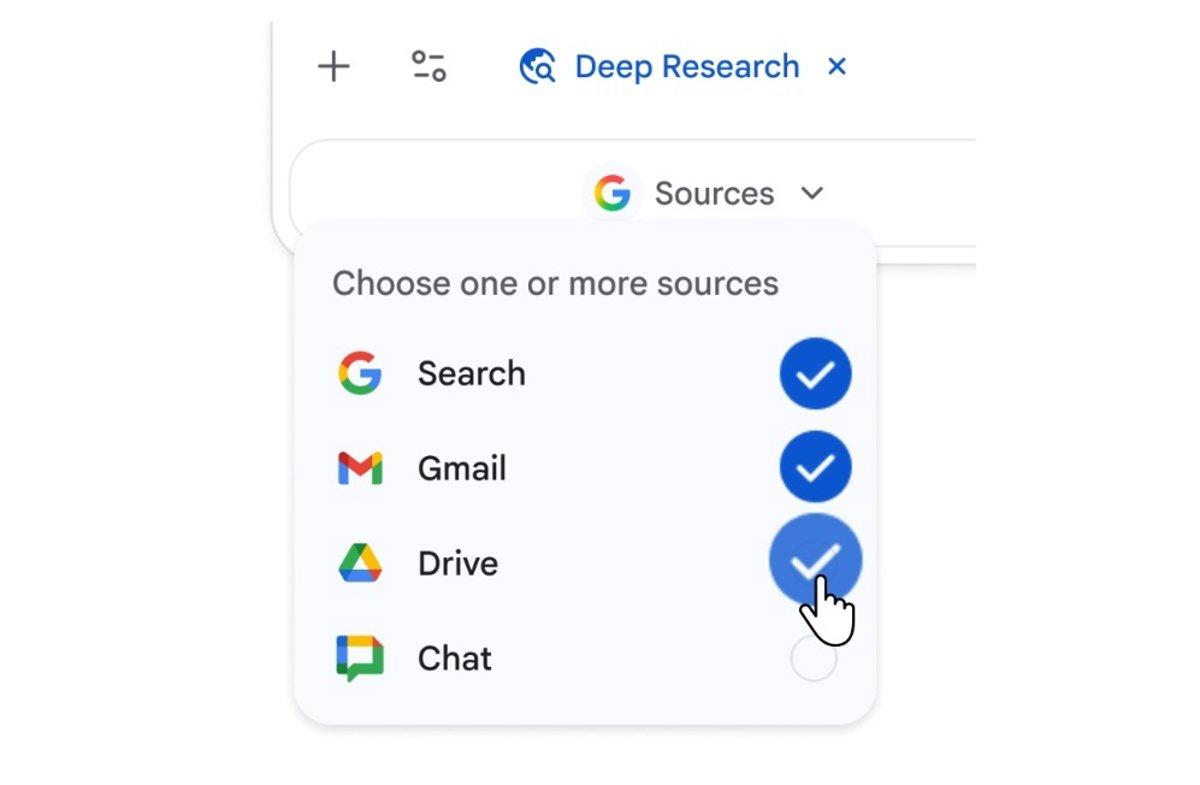
When you're signed in and the "Save activity" setting is enabled, Google stores your activity in the Gemini apps in your Google account. You can review, delete, and deactivate Save at any time from My Gemini Activity.
To find specific activities, use filters by date, product, or keyword. If you decide to delete your activity, the interactions associated with your account will be deleted; if you turn off "Keep Activity," future activities will no longer be saved, with the exception of temporary retention mentioned for reasons of security.
In the privacy settings, you can also manage whether your audio recordings and those from Gemini Live are used to improve Google services. This setting is optional and can be disabled at any time, impacting how your audio is used. use your voice samples for training and improvement.
If you prefer regular cleaning without manual intervention, adjust the automatic deletion (for example, every 3, 18, or 36 months). This option helps you balance usability and privacy without having to manually delete files. hand the history.
Limits, compliance, and important notes
Gemini's usage limits may be modified based on capacity. Regarding compliance, Gemini in Chrome does not declare support for several certifications (HIPAA BAA, SOC, ISO Key, FedRAMP High, BSI C5); if your organization has signed a BAA, the product is automatically blocked. This is important if you work with sensitive data.
In the US public sector portion, data placement is not yet part of an active FedRAMP request, with the intention of aligning it with the high level later. Legal and security teams are advised to periodically review the status pages of certifications and Google's trusted portal to confirm changes.
The reality is that Gemini will continue to gain traction, but today you can control it: on Android you can revert to the classic Assistant, in Chrome you can disable policy integration, in Workspace you can set retention and service states, and in Google Cloud you can turn off subscriptions and the API Complete. Activate only what's essential and periodically review the settings after updates to avoid surprises.

Editor specialized in technology and internet issues with more than ten years of experience in different digital media. I have worked as an editor and content creator for e-commerce, communication, online marketing and advertising companies. I have also written on economics, finance and other sectors websites. My work is also my passion. Now, through my articles in Tecnobits, I try to explore all the news and new opportunities that the world of technology offers us every day to improve our lives.