- The Italian Antitrust Authority imposes a fine of 98,6 million euros on Apple for abuse of dominant position.
- The case focuses on the App Tracking Transparency (ATT) policy implemented in iOS since April 2021.
- The regulator criticizes the double consent required of developers and considers it disproportionate and restrictive to competition.
- Apple rejects the decision, defends AT&T as a key privacy tool, and announces it will appeal the sanction.

La Italian Antitrust Authority has dealt another blow to Apple's privacy strategy by imposing a multimillion dollar fine for abuse of dominant positionThe focus is not so much on the goal of protecting user data, but on how the company has decided to apply those rules within its mobile ecosystem.
The regulator has concluded that the policy of App Tracking Transparency (ATT)The feature, incorporated into the iOS operating system, gives Apple an undue competitive advantage over other developers and hinders the activity of those who depend on personalized advertising to sustain their businesses.
The penalty amounts to 98,6 million eurosThis figure reflects the seriousness that the Competition and Market Guarantee Authority (AGCM) attributes to the case and is framed within a European context of greater scrutiny of large digital platformsespecially in everything related to the App Store and access to user data.
The file, processed in close collaboration with the European Commission and other international competition regulatorsIt raises a conflict that goes far beyond Italy: to what extent can the privacy measures of a technology giant become, in practice, a barrier to competition within the European single market?
A fine of 98,6 million for abuse of dominant position
According to the AGCM, Apple has incurred a abuse of its dominant position in the mobile application marketwhere the App Store acts as a mandatory step for developers who want to reach iPhone and iPad users. For the regulator, this situation of near-absolute control allows it to set unilateral rules that directly impact competition.
The Italian authority details that the sanction already affects Apple two of its operating divisions, which it holds responsible for having applied a privacy policy that, under the guise of data protection, would have ended penalizing third-party developers since April 2021.
According to the resolution, the US group allegedly violated the European competition law by exploiting the control it exerts over the App Store to impose conditions that developers cannot negotiate or circumvent if they want to maintain their presence in the iOS ecosystem.
The investigation was opened in May 2023, following complaints from various players in the advertising sector and developers who indicated that AT&T's new rules were substantially altering their ability to monetize apps through personalized ads.
In its conclusion, the Italian regulator emphasizes that the set of these practices constitutes a restrictive behavior of competitionTherefore, it considers it proportionate to impose an economic sanction of 98,6 million euros to deter similar episodes in the future within the European market.
What is App Tracking Transparency and why is it under scrutiny?
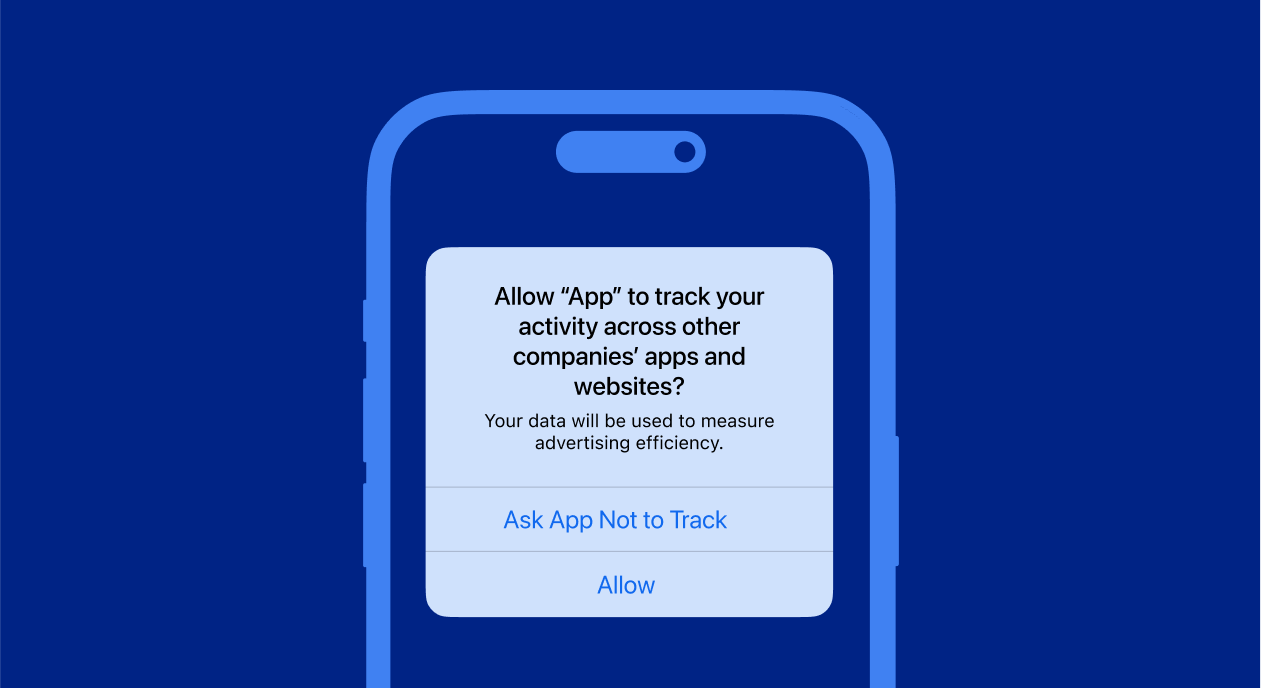
The controversy revolves around the function App Tracking Transparency, introduced by Apple with iOS 14.5 and fully implemented from April 2021This tool forces applications to explicitly request user permission before collecting data or to link information for advertising purposes between different apps and websites.
If the user decides not to accept tracking, the applications They lose access to the device's advertising identifier.This makes it difficult to track users across services and create detailed profiles to display personalized ads. On paper, this represents a significant boost to privacy.
However, the AGCM maintains that the problem lies not in that purpose, but in how Apple has designed and implemented the systemThe regulator believes that the company has configured AT&T in such a way that third-party developers bear a much heavier burden than Apple's own services when it comes to obtaining consent for data use.
The result, according to the Italian authority, is that ATT becomes a mechanism that, beyond reinforcing privacy, distorts competition in the digital advertising market within the iOS ecosystem, creating unequal treatment between the company and the rest of the players.
The role had already been the subject of debate in Europe, with pressures from regulators in Germany and Italyto the point that Apple itself warned that, if the regulatory environment became too hostile, it could consider modifying or deactivating some of these tracking capabilities in the European Union.
The "double consent": the most controversial point for the regulator
One of the aspects that has weighed most heavily in the decision is the so-called “double consent”In the European Union, companies are obliged to respect the General Data Protection Regulation (GDPR), which already requires a clear legal basis for the processing of personal data for advertising purposes.
The AGCM explains that third-party developers, in order to display personalized ads, must first request user permission through the standard AT&T screen. imposed by AppleHowever, this request is not considered sufficient to comply with all the requirements of European privacy regulations.
This causes companies to have to request consent again through a second notice or its own screen, which creates a more complex and repetitive experience for the user. The Italian authority understands that this duplication of steps friction increases and discourages the acceptance of tracking in third-party applications.
In its public statement, the agency describes these additional requirements as “excessively heavy” and “disproportionate” for developers, emphasizing that they unfairly limit their ability to compete in the digital advertising market against Apple's own services.
The regulator argues that the company should have put in place a mechanism that guaranteed the same level of privacy protection, but allowed developers gather consent in one stepwithout forcing them to show the user two almost identical requests for the same purpose.
Impact on developers, advertisers, and the advertising market

For the Italian authority, ATT not only complicates regulatory compliance, but also It directly impacts the business model of many applications based on the sale of advertising space. In an environment where user data is essential for segmenting audiences, any obstacle to accessing that information has a direct effect on revenue.
The duplication of consent requests resulting from the current policy restricts the collection, linking and use of data by third parties, while Apple, according to the AGCM, maintains a greater capacity to exploit its own services within the same iOS ecosystem.
In this regard, the regulator warns of harm that not only affects independent developers, but also advertisers and advertising intermediation platforms that rely on segmentation to optimize their campaigns. Less data means less ability to personalize ads and, therefore, a significant economic impact.
The AGCM highlights that Apple's dominant position over the App Store creates a structural imbalanceDevelopers have no real alternatives to reach the iPhone and iPad audience, forcing them to accept rules they consider unfavorable, with no room for negotiation.
In practice, this fuels a broader European debate about whether the one-stop-shop model and total ecosystem control by a single manufacturer is compatible with the objectives of fair competition and the digital single market that the European Union is pursuing.
Apple's response and its defense of privacy

The company has expressed its I completely disagree with the resolution. and has confirmed that it will appeal the fine to the appropriate authorities, convinced that its privacy policy complies with European regulations.
In statements sent to various international media outlets, the company maintains that Privacy is a fundamental human right And that is precisely why he designed App Tracking Transparency, to offer users a clear and simple way to control whether companies can track their activity on other apps and websites.
Apple argues that the The same AT&T rules apply to all developers, including the company itself., and that the feature has been well received by users, as well as praised by privacy advocacy organizations and data protection authorities in various countries.
Those in Cupertino believe that the decision of the Italian regulator ignores the important data protection guarantees offered by ATT and prioritizes the interests of advertising and data intermediation companies that wish to maintain broad access to users' personal information.
The company insists it will continue defending its privacy protection measures during the appeals process, and makes it clear that it has no intention of backing down on its strategy of strengthening user control over cross-application tracking.
The case of the Apple fined in Italy This has become an example of the growing tension between privacy protection and competition demands within the European digital environment: while the regulator argues that ATT's implementation unfairly limits developers and distorts the advertising market, Apple maintains that its approach prioritizes user rights. The court's final decision will not only be crucial for the company in Italy, but will also shape the debate on how data protection and competition should be balanced in Europe's ecosystem of large technology platforms.


I am a technology enthusiast who has turned his "geek" interests into a profession. I have spent more than 10 years of my life using cutting-edge technology and tinkering with all kinds of programs out of pure curiosity. Now I have specialized in computer technology and video games. This is because for more than 5 years I have been writing for various websites on technology and video games, creating articles that seek to give you the information you need in a language that is understandable to everyone.
If you have any questions, my knowledge ranges from everything related to the Windows operating system as well as Android for mobile phones. And my commitment is to you, I am always willing to spend a few minutes and help you resolve any questions you may have in this internet world.