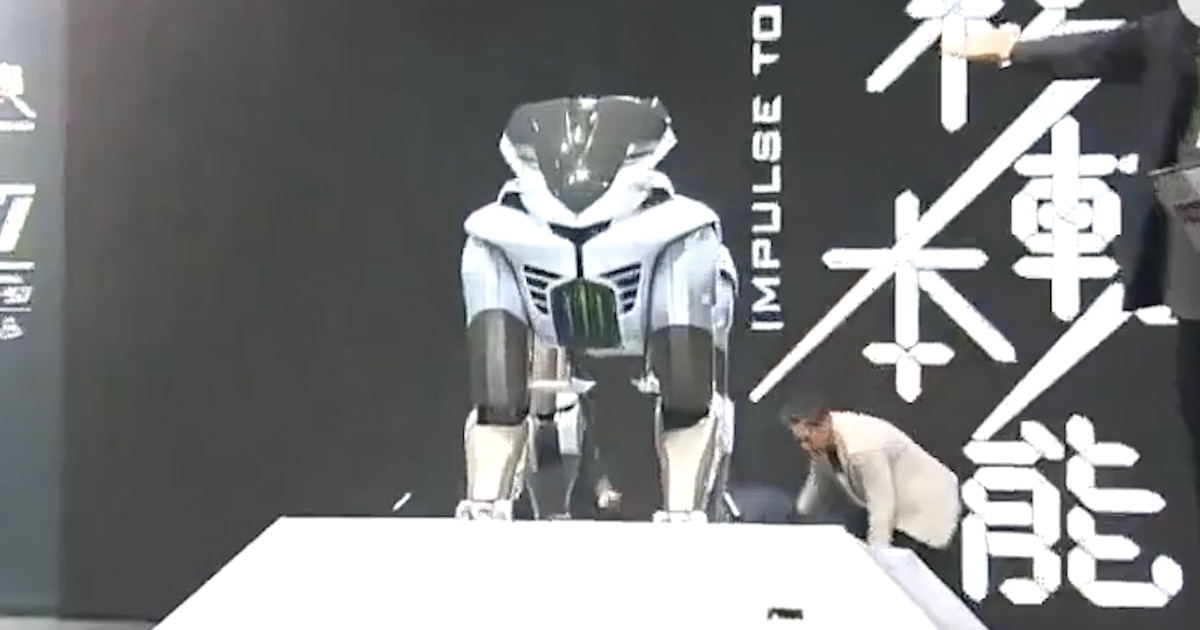
- Corleo is a quadruped robot prototype unveiled by Kawasaki at the Osaka-Kansai Expo 2025.
- This robotic horse is designed to move through complex terrain thanks to its articulated leg system and hydrogen engine.
- Driving is based on body movements, without conventional brakes or accelerators.
- It features a navigation screen and projected technology to facilitate orientation and safety.
Traveling over rough terrain, overcoming difficult obstacles, or exploring mountainous areas no longer seems exclusive to traditional off-road vehicles. At least that's the premise that Kawasaki has brought to the table with a concept that has revolutionized the world of personal mobility: Corleo, a quadruped robot that simulates the experience of horse riding, but with a completely futuristic touch.
Corleo was presented as a prototype at the 2025 Osaka-Kansai World Expo, and it has left no one indifferent. Inspired by nature—albeit with a clear robotic focus—this mechanical horse introduces a new paradigm in how to navigate open spaces or those difficult to access with conventional vehicles.
A robot with the soul of a horse that wants to conquer the mountain
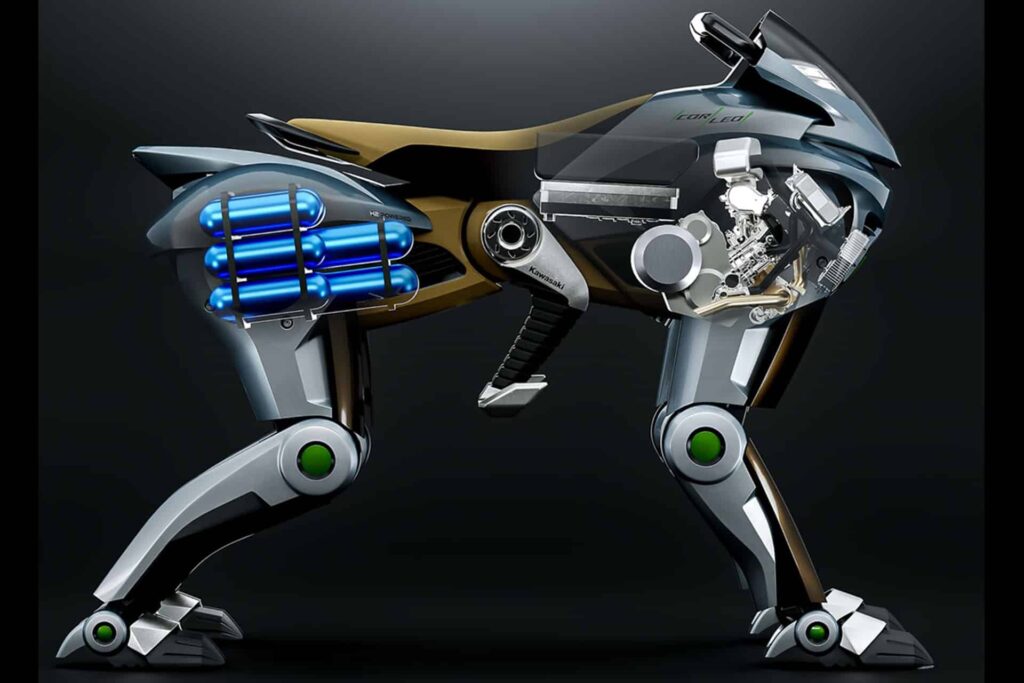
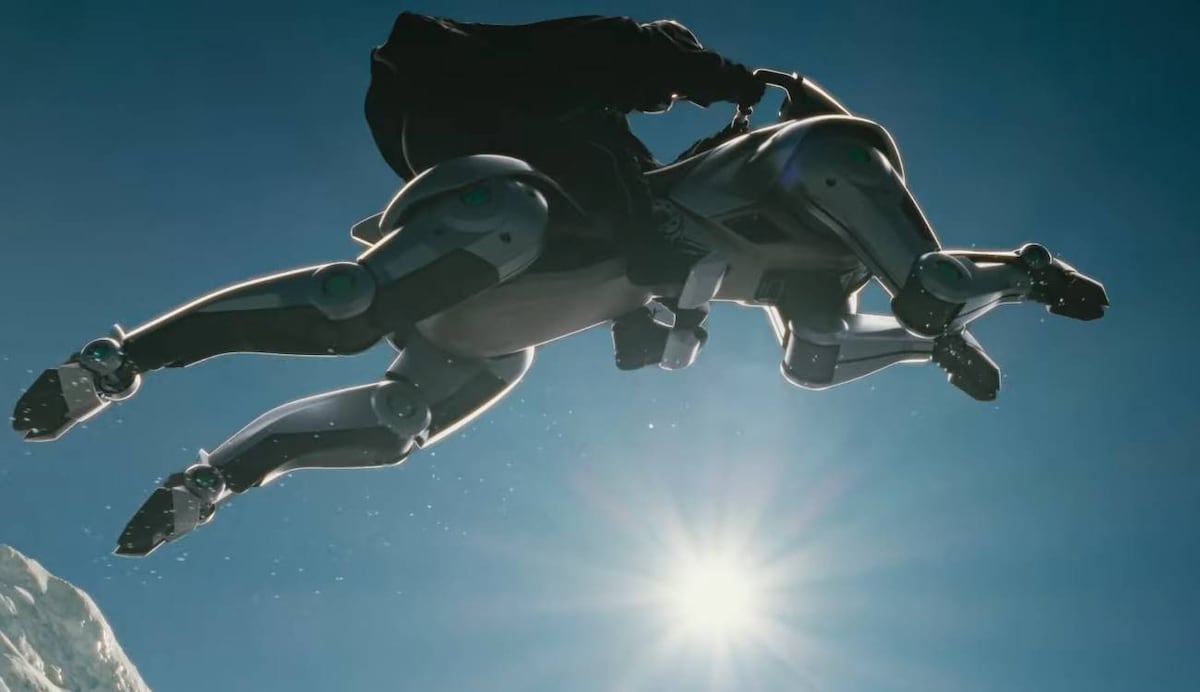
Kawasaki has opted for a design that combines robotic engineering, artificial intelligence and environmental sustainability.Corleo doesn't have wheels. Instead, he walks and runs on four articulated legs. Each of these ends in a sort of split rubber hooves, meant to improve traction and adapt to challenging surfaces like rocks, sand, or snow.
The structure allows for independent suspension between the front and rear legs, which helps absorb impacts while both walking and trotting. This results in a more fluid, natural and safe movement, even in complicated scenarios such as steep slopes or inclines.
As for its handling, Corleo does not have traditional handlebars or pedalsInstead, the rider becomes an active part of the control system. Using sensors in the footpegs and steering system, the robot detects where the rider's weight is shifting and reacts accordingly. Essentially, the vehicle responds instantly to body movements, just like a real horse.
Comfort has also been taken into account, as the footrests are height-adjustable, and the seat, according to some concept versions, could even accommodate a second passenger. The design aims to maintain an ergonomic posture without having to lean when climbing a slope, ensuring visibility and constant balance.
Clean energy and intelligent autonomy: the heart of Corleo
One of the pillars of this quadruped robot is its sustainable propulsion system. Corleo is equipped with a small 150 cc internal combustion engine, whose sole function is to generate electricity from hydrogen stored in a cartridge located at the rear of the vehicle. This electricity powers the independent electric motors on each leg.
Thanks to this energy solution, the vehicle does not emit polluting gases, making it a potentially viable option from an ecological perspective. Furthermore, this configuration allows it to operate discreetly, reducing the noise pollution common with other motorized vehicles. This evolution in mobility is also linked to innovative technologies that have been developed over the years.
No official range or speed figures have been confirmed, but some reports indicate it could reach 240 kilometers per charge and travel at speeds close to 80 km/h under favorable conditions. However, since it is a conceptual prototype, These data are not yet verified.
The navigation system also plays an important role in the user experience. Corleo features a digital display located in front of the seat, which Provides essential information such as hydrogen level, planned route, center of gravity and other relevant dataAt night, the system itself projects signals onto the ground to facilitate orientation in dark or poorly visible areas.
A future under construction: what to expect from Corleo
Despite the anticipation generated, Corleo is not for sale and will not be in the near future.The robot Kawasaki presented at the Expo is a concept, and even some of its more advanced features are still in the development phase. According to the company itself, They have indicated that they do not expect to have a fully functional model before 2050..
However, that doesn't mean that Corleo is solely a visual demonstration. Its introduction is part of Kawasaki's broader strategy to explore new forms of personal mobility., including solutions for those who need to navigate environments where traditional vehicles are not viable or practical.
Some see this robotic horse as a potential tool in areas such as recreation, nature tourism, or even assisted use for people with reduced mobility seeking controlled outdoor experiences. The design conceived to maintain safety and comfort at all times also reinforces its potential application in rural and mountain environments..
Corleo has also been designed to offer a different sensory and emotional experience. It's not just about moving around, but about connecting with the environment, feeling the ground beneath your feet—or beneath your mechanical legs—and rediscovering nature from a different perspective. The brand sums it up as an attempt to liberate the human being's “instinct of movement”.
This unique Kawasaki prototype proposes a radical change in the way we understand personal transportation: beyond speed, power or design, Corleo invites you to imagine a world where mobility is smart, ecological and emotional at the same time.Although there is still a long way to go, the seed of a new way of getting around has already been planted.

I am a technology enthusiast who has turned his "geek" interests into a profession. I have spent more than 10 years of my life using cutting-edge technology and tinkering with all kinds of programs out of pure curiosity. Now I have specialized in computer technology and video games. This is because for more than 5 years I have been writing for various websites on technology and video games, creating articles that seek to give you the information you need in a language that is understandable to everyone.
If you have any questions, my knowledge ranges from everything related to the Windows operating system as well as Android for mobile phones. And my commitment is to you, I am always willing to spend a few minutes and help you resolve any questions you may have in this internet world.