- New Kioxia Exceria G3 SSD with PCIe 5.0 x4 interface and M.2 2280 form factor
- Sequential speeds of up to 10.000 MB/s read and 9.600 MB/s write
- 8th generation BiCS QLC FLASH memory, 1 and 2 TB capacities and 5 year warranty
- A series aimed at home users looking to upgrade from basic SATA or PCIe 3.0/4.0
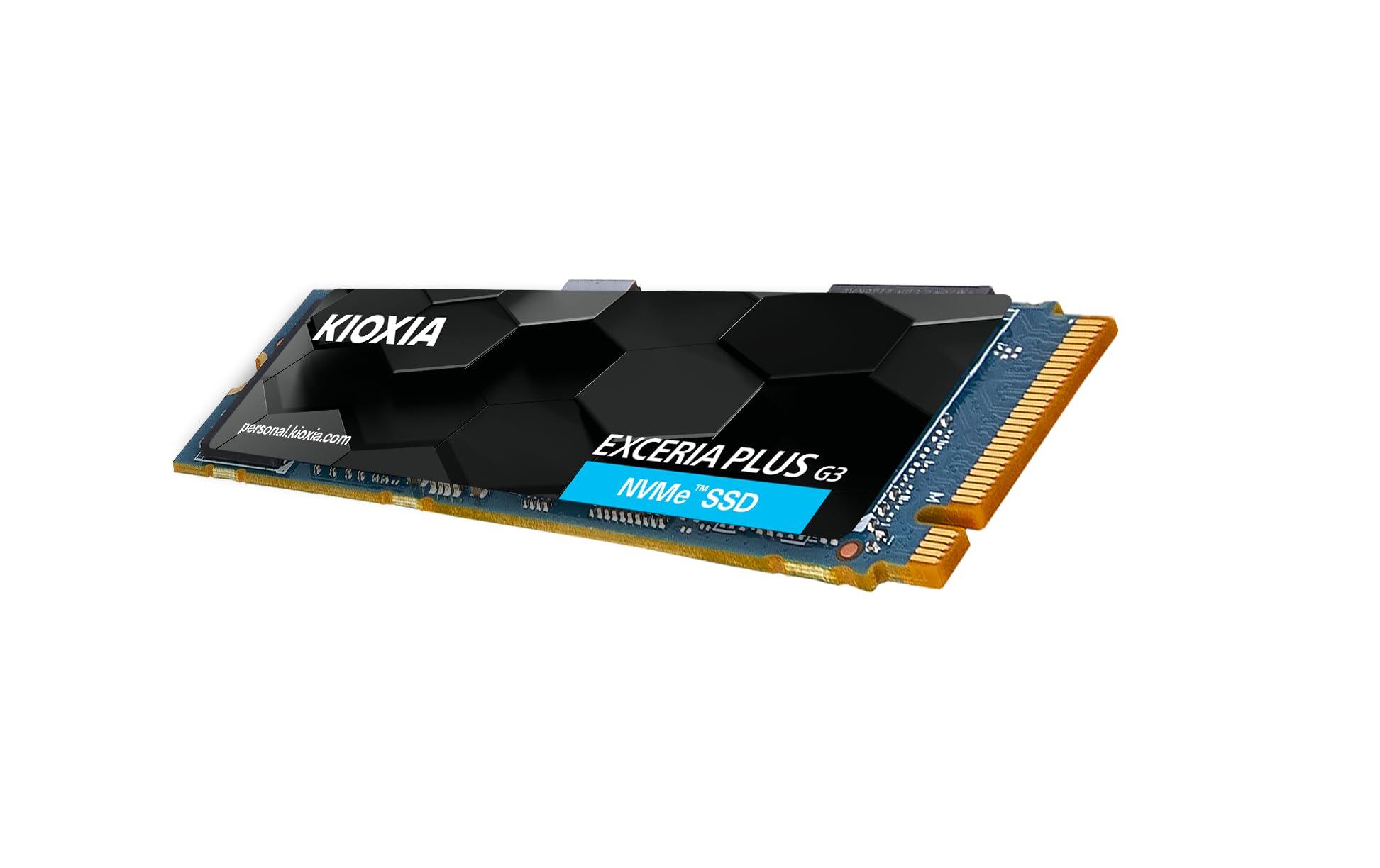
The arrival of Kioxia Exceria G3 This represents an important step towards bringing PCIe 5.0 SSDs closer to the average user....that person who wants a fast device but isn't willing to pay the price of the most cutting-edge models. Until now, the brand's focus has been primarily on high-end models like the EXCERIA PRO G2, but The new series is clearly aimed at a broader segment..
In a context where the storage and memory prices they have become more expensive because the demand for data centers and AIKioxia is trying to offer an option that maintains next-generation speeds without skyrocketing costs. To achieve this, It combines a PCIe 5.0 x4 interface with high-density QLC memory, looking for that balance between performance and price that many users in Spain and Europe are looking for to upgrade their equipment.
A PCIe 5.0 SSD designed for the home market
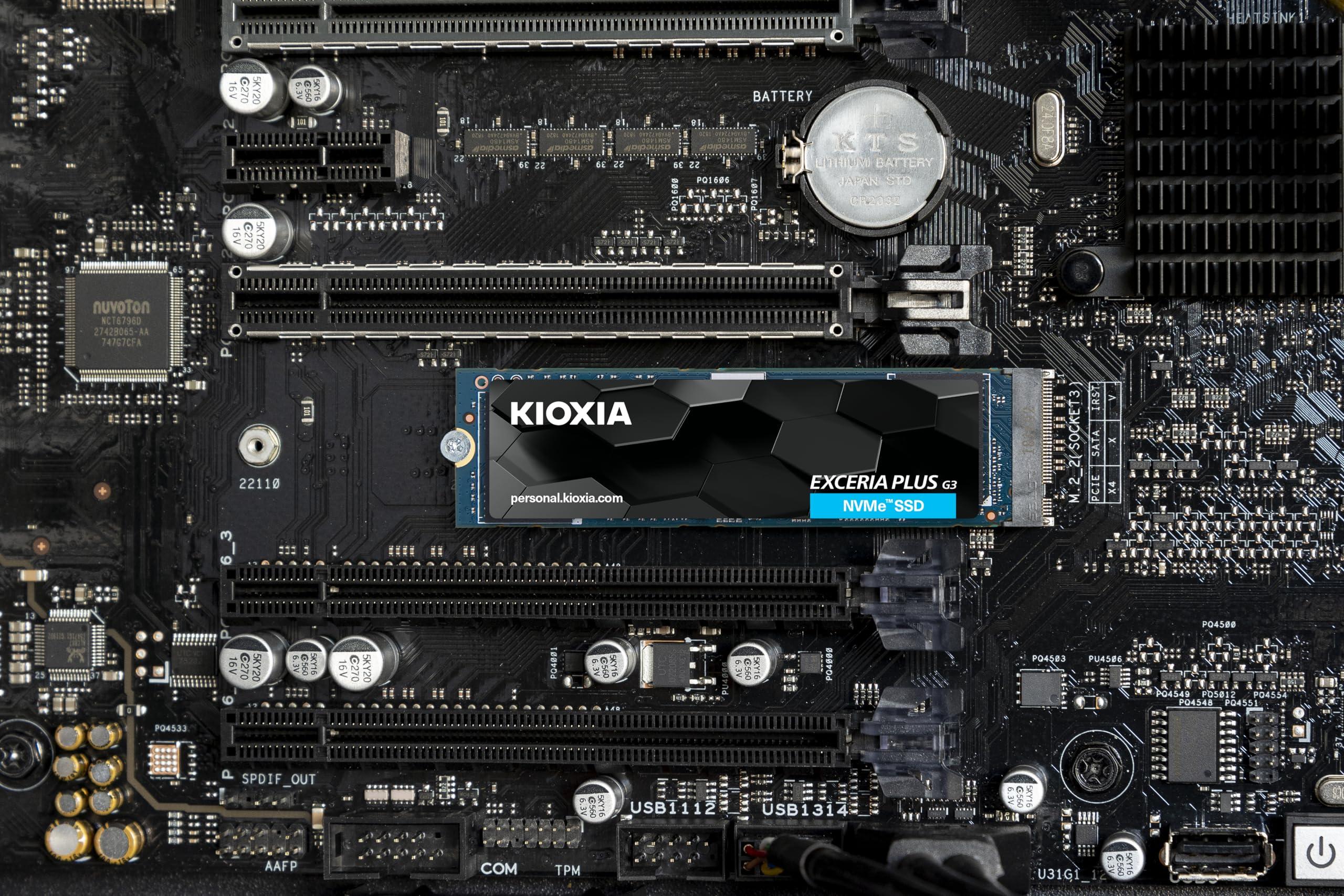
The series Exceria G3 It has been specifically designed for the demanding home user It aims to make the leap to PCIe 5.0 without entering the enthusiast market. We're not talking about a product geared towards servers or niche workstations, but rather conventional desktop and laptop computers, as well as mid-range and high-end gaming PCs.
It is worth remembering that Kioxia is the successor to the division of ToshibaSo, there's no amateur manufacturer behind these SSDs. The company has spent years establishing its consumer catalog in Europe with the EXCERIA BASIC, EXCERIA PLUS, and EXCERIA PRO families, and now it's expanding that offering with a series that aims to Democratize PCIe 5.0.
Within Kioxia's consumer range, the Exceria G3 occupies a carefully calculated middle ground: above the EXCERIA BASIC (PCIe 4.0) models in performance, but below the EXCERIA PLUS G4 and EXCERIA PRO G2 in performance and, presumably, in price. The idea is to offer a clear option to those building a new PC or upgrading a basic PCIe 3.0 or 4.0 SSD.
According to Kioxia Europe itself, the objective of this family is Breaking the PCIe 5.0 cost barrier so that it is not limited to a highly specialized audience. To achieve this, the brand relies on internally developed technologies and a focus on the mainstream segment, where most sales are concentrated.
Performance: Up to 10.000 MB/s read and 9.600 MB/s write
One of the key points of the Kioxia Exceria G3 are its performance figures, which They clearly outperform most consumer PCIe 4.0 SSDsThe manufacturer announces sequential read speeds of up to 10.000 MB/s and sequential writing of up to 9.600 MB / s In the top model, figures that place it in the league of the new generation of PCIe 5.0, although without seeking to break absolute records.
In the section on random operations, which are fundamental to the system's agility, the unit reaches up to 1.600.000 IOPS in 4K reading and to 1.450.000 IOPS in 4K writingDepending on the capacity, these values allow for a significant acceleration in system startup, the opening of demanding applications, and the loading of modern games compared to previous generation SATA or PCIe drives.
For many desktop and laptop PC users, the jump from a SATA SSD or a PCIe 3.0 SSD to a model like the Exceria G3 will be noticeable in the form of reduced loading timesFaster file copying and a team that feels more "unburdened" when working on large projects, especially in video editing, photography or content creation.
The chosen interface is PCI Express 5.0 x4, with a theoretical maximum speed of 128 GT/s, managed by the protocol NVMe 2.0cOn motherboards with Gen5 support, the unit can be pushed to its limits; on older systems with PCIe 4.0 or 3.0 it will work without problems, but limited by the available bandwidth, something to keep in mind if you are thinking about a progressive system upgrade.
8th generation BiCS QLC FLASH memory
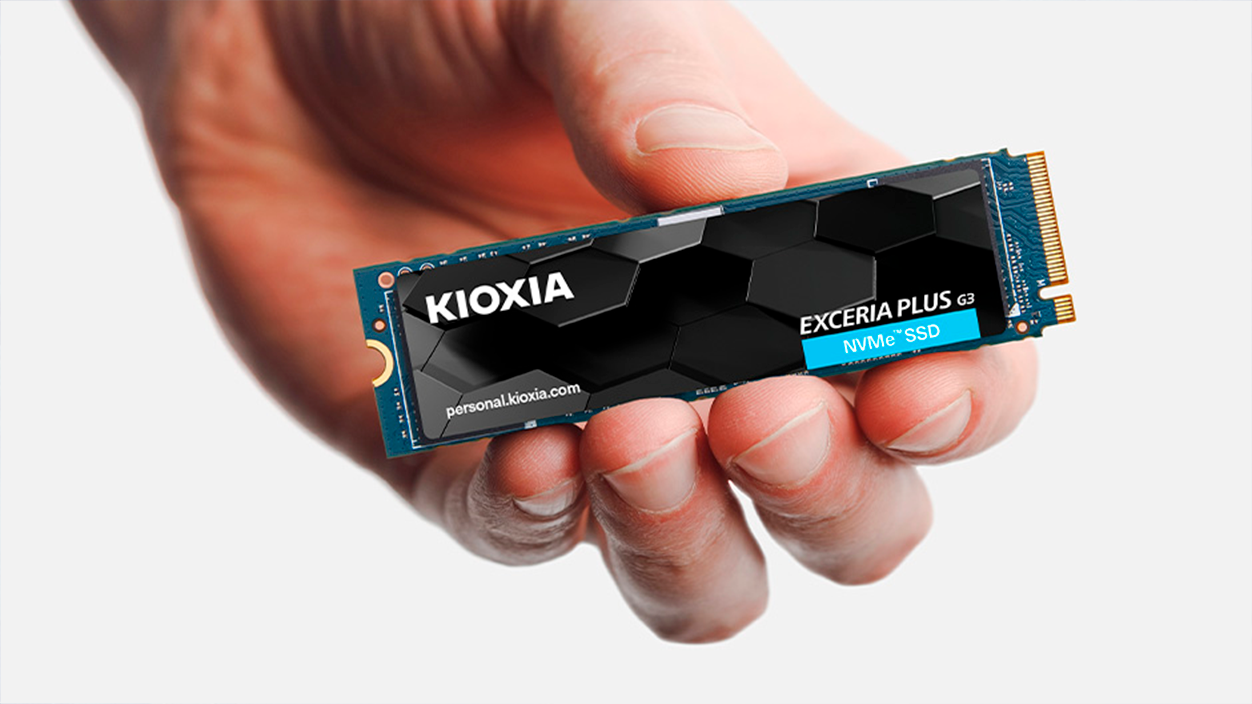
To achieve this balance between high performance and a more affordable cost, Kioxia uses its Eighth generation BiCS FLASH QLC memoryQLC (quad-level cell) technology stores four bits per cell, offering higher data density per chip compared to TLC or MLC solutions, which reduces the cost per gigabyte and allows for capacities of 1 and 2 TB at more competitive prices.
This combination of next-generation memory and PCIe 5.0 controller allows the Exceria G3 series Outperforms many PCIe 4.0 SSDswithout needing to step up to the price point of enthusiast-level products. This approach suits users who prioritize a good balance between speed and cost, especially in Europe, where the average budget for PC upgrades tends to be more limited.
Evidently Choosing QLC involves accepting certain characteristics compared to traditional TLC memories, especially with regard to sustained write resistanceTo compensate, Kioxia sets durability specifications that, on paper, should more than cover the typical use of a household or a non-extreme content creator.
The manufacturer positions the new Exceria G3 range as a solution for advanced users who don't want to pay the maximum Thanks to its SSD, it does require a clear generational leap compared to what they already have installed. In practice, it can be a reasonable option to take advantage of a recent motherboard with PCIe 5.0 support or as a purchase with a view to a future platform upgrade.
Technical specifications and design
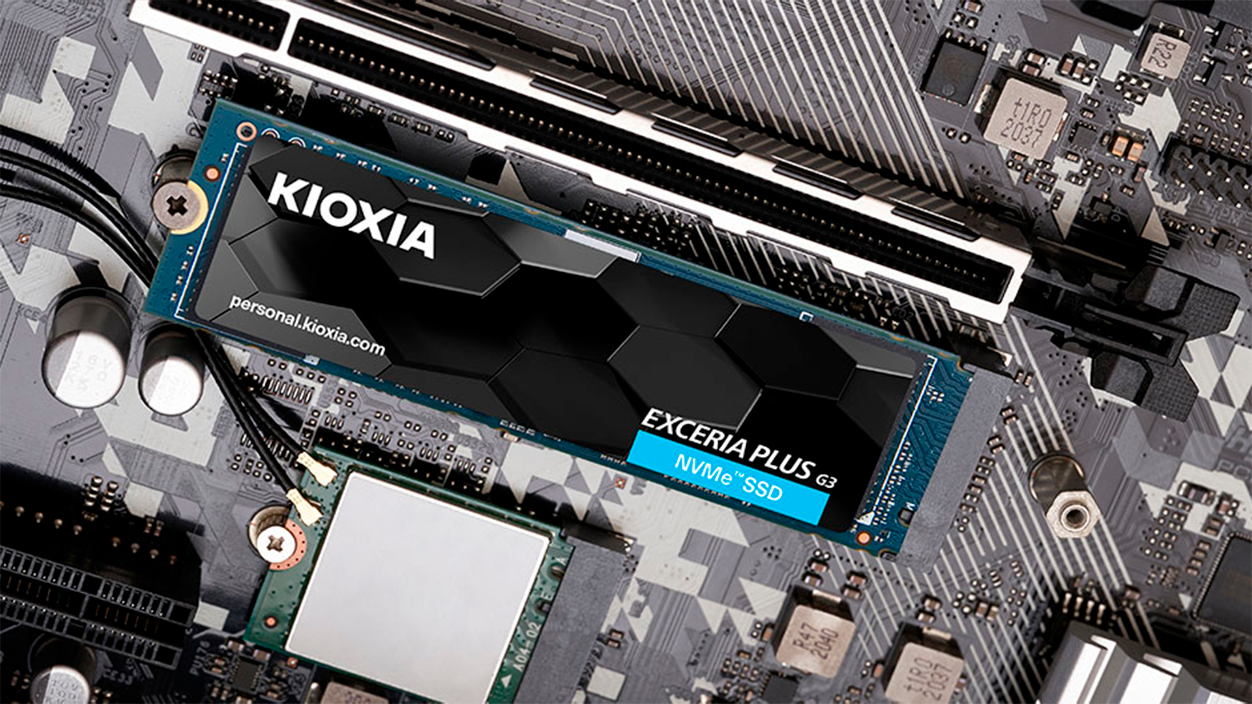
Regarding the physical format, the Kioxia Exceria G3 arrives in the usual M.2 2280Compatible with most modern motherboards and many laptops. The design adheres to a standard form factor. M.2 2280-S4-M with connector M.2 Key MThis facilitates installation on desktop computers, laptops, and some portable consoles that support this type of drive.
The maximum declared dimensions are 80,15 × 22,15 × 2,38 mm, with a typical weight of barely 5,7 g for the 1 TB model y 5,8 g for the 2 TB oneThis standard size avoids complications when mounting it under heatsinks integrated into the motherboard or in compact chassis, something especially relevant in Mini-ITX configurations or thin laptops.
In terms of compatibility, the brand indicates that these units are designed for Desktop and laptop PCs Consumer-oriented, with primary applications focused on end users, gaming, advanced office applications, and content creation. They can also be an interesting option for M.2 2280 compatible handheld consoles, provided the device's interface and firmware allow it.
Inside, they work on the aforementioned memoirs. BiCS FLASH QLC eighth-generation, accompanied by a controller ready for NVMe 2.0 and PCIe Gen5x4. Although Kioxia has not detailed the exact controller model in all the announcements, it does emphasize that it relies on management techniques such as Host Memory Buffer (HMB) and background garbage collection to maintain day-to-day performance.
Capabilities, strength and reliability
The Exceria G3 It launches with two capabilities: 1 TB and 2 TBNo smaller variants have been announced, at least for now, which reinforces the idea that the product is geared towards main systems and not so much towards small secondary drives.
In terms of durability, the model of 1 TB reaches 600 TBW (terabytes written), while the version of 2 TB reaches 1.200 TBWThese endurance figures are in line with other next-generation QLC SSDs for the consumer segment and should be sufficient even for users who frequently install and uninstall games or handle large video files.
Both capabilities share a MTTF (mean time between failures) of 1,5 million hours, a typical value for this type of unit. Furthermore, Kioxia supports the series with 5 year manufacturer's warrantyThis provides extra peace of mind when considering intensive use in the medium and long term.
Regarding the specific speeds according to capacity, Kioxia details that the sequential reading In both cases, it reaches the aforementioned 10.000 MB/s, while the sequential writing It stands at up to 8,900 MB/s for the 1 TB model y up to 9,600 MB/s in the 2 TB variantIn random read operations, the 1 TB model achieves up to 1.300.000 IOPS, and the 2 TB model goes up to 1.600.000 IOPS.
Consumption, temperatures and conditions of use
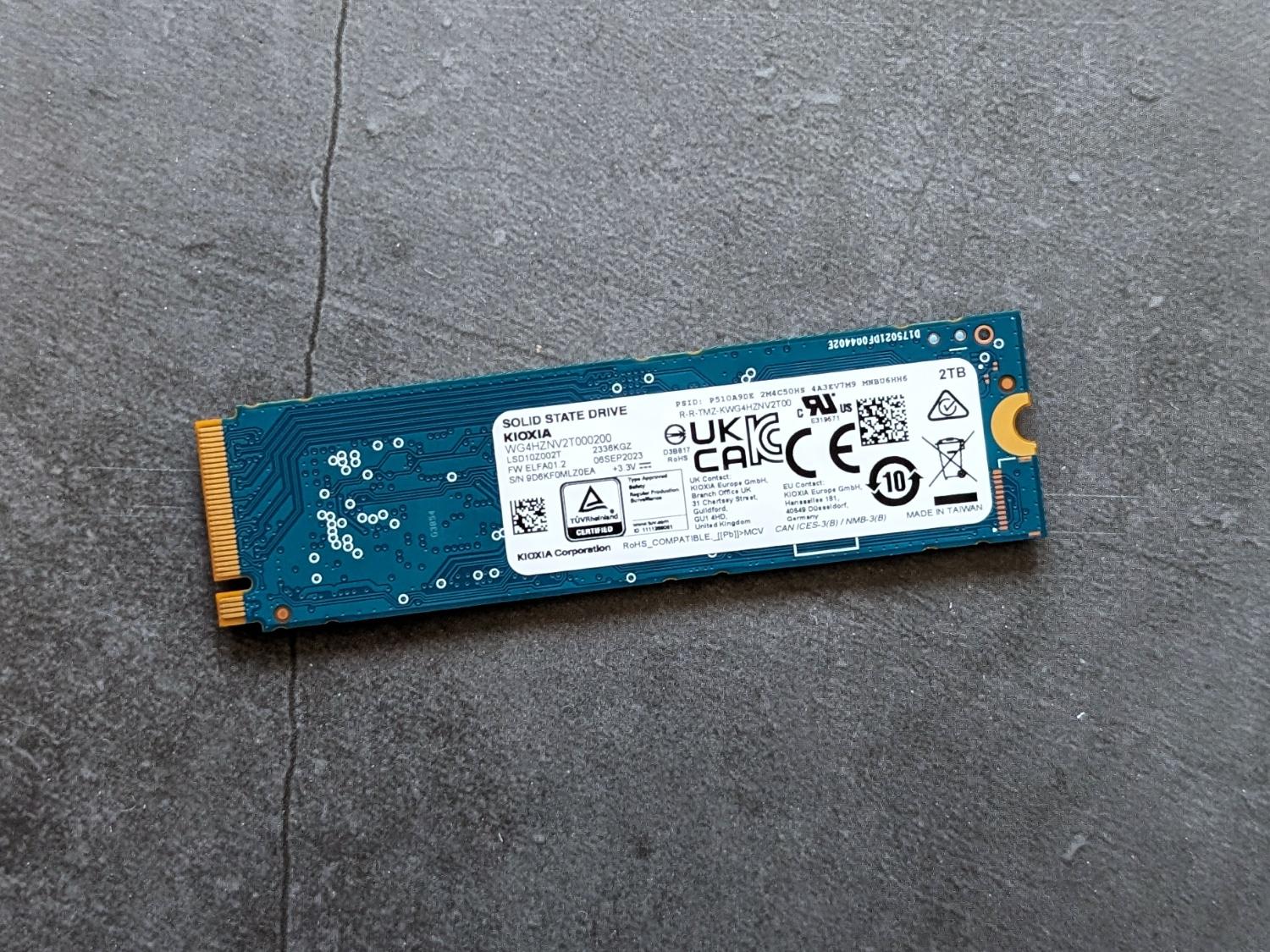
Since it is a PCIe 5.0 unit, the question of energy consumption and temperature This is especially relevant, particularly in compact or portable devices. Kioxia indicates a supply voltage of 3,3 V ±5%a Typical active power consumption of 5,5W on the 1TB model and 6,4 W in the 2 TB versionThese are reasonable figures within what is expected for a Gen5 SSD aimed at the consumer market.
In standby mode, the unit offers low-power states with 50 mW typical on PS3 y 5 mW typical on PS4This helps reduce the impact on laptops when the disk is not under heavy load. These modes are especially useful for devices that prioritize battery life, such as ultrabooks or mobile workstations.
The operating temperatures admitted range from 0 °C (Ta) to 85 °C (Tc), while for storage at rest, ranges of between -40°C and 85°CThese are wide margins that cover everything from home environments to offices with high workloads, although for sustained use at high speeds it will still be advisable to have good airflow or a specific heatsink for the M.2 slot.
Resistance to shocks and vibrations is also specified: it withstands 1.000 G shocks for 0,5 ms (average sinusoidal wave) and vibrations in the range 10-20 Hz with 25,4 mm peak to peak y 20-2.000 Hz with 20 G peakDuring 20 minutes per axle on all three main axes. Although this data may seem very technical, in practice it means that the unit is prepared for the usual conditions of transport and use in portable equipment.
Advanced features, certifications and compatibility
Beyond the speed figures, the Exceria G3 from Kioxia It incorporates a set of features designed to extend the SSD's lifespan and maintain stable performance over time. These include compatibility with TRIMwhich helps the operating system manage free space, and Idle Time Garbage Collection, which reorganizes the data when the unit is at rest to avoid prolonged speed drops.
The support of Host Memory Buffer (HMB) It allows the SSD to use part of the system memory as a cache for certain operations, which is useful for optimizing performance without needing to incorporate large amounts of DRAM into the unit itself, which also helps to keep the final price down.
In terms of regulations, the Exceria G3 complies with the directive RoHSThis means it complies with European restrictions on the use of certain hazardous substances in electrical and electronic equipment. This is an important requirement for marketing in the European Union and an indicator that the product is ready for the local market.
In terms of compatibility, Kioxia is targeting this series to Desktop and laptop PCs for consumers, but it's also presented as an alternative for those who want to upgrade next-generation consoles or gaming laptops that support M.2 2280 SSDs. However, to reach maximum speeds, a motherboard with PCIe 5.0 support; in systems with PCIe 4.0 or 3.0 it can be used without problems, although limited by the bus.
Price and availability in the fourth quarter
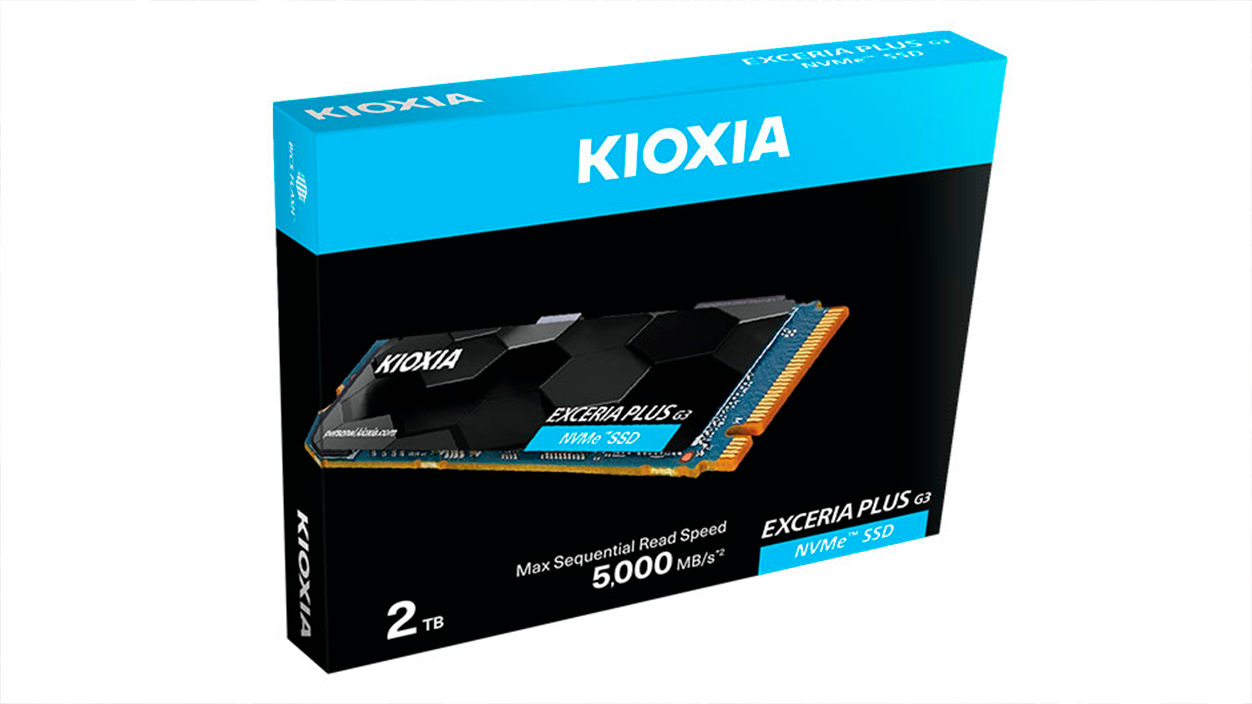
The company has announced that the commercial launch of the Kioxia Exceria G3 is planned for fourth quarter of 2025With such a tight schedule, the actual arrival in European stores could be concentrated in the last weeks of the year, always subject to the logistics and distribution of each country.
For now, Kioxia has not made public the recommended prices For the 1 and 2 TB versions, although the product positioning and the use of QLC memory point to more modest figures than those of the PRO or PLUS ranges. The brand insists that the objective is to offer a competitive price-performance ratio within the PCIe 5.0 segmentThis is especially relevant if tensions persist in the components market due to demand from data centers.
In any case, The final cost will also depend on how global flash memory prices evolve. And whether or not the situation seen in the RAM market will be repeated, where a massive shift in production towards servers caused a general price increase. If that scenario doesn't repeat itself, the Exceria G3 could establish itself as one of the most sensible alternatives for those who want to upgrade to a Gen5 SSD without breaking the bank.
The Kioxia Exceria G3 is shaping up to be a PCIe 5.0 SSD that aims to bring the next-generation high speeds a a broad audience, supported by the latest generation of QLC memory, good endurance figures for home use, a 5-year warranty and an M.2 2280 form factor Compatible with most current equipment, pending price confirmation of whether it truly achieves the promised democratization of the standard.


I am a technology enthusiast who has turned his "geek" interests into a profession. I have spent more than 10 years of my life using cutting-edge technology and tinkering with all kinds of programs out of pure curiosity. Now I have specialized in computer technology and video games. This is because for more than 5 years I have been writing for various websites on technology and video games, creating articles that seek to give you the information you need in a language that is understandable to everyone.
If you have any questions, my knowledge ranges from everything related to the Windows operating system as well as Android for mobile phones. And my commitment is to you, I am always willing to spend a few minutes and help you resolve any questions you may have in this internet world.