- The rise in RAM prices makes manufacturing more expensive and puts pressure on mobile phone sales in 2026.
- Counterpoint and IDC predict a drop in smartphone shipments and an increase in the average selling price.
- Cheap and mid-range Android phones will be the hardest hit by the component crisis.
- Apple and Samsung are holding up better, while several Chinese brands face greater margin and market share risks.

The smartphone industry is preparing for a challenging year in which Mobile phone sales in 2026 could decline globally due to one very specific factor: the rising cost of RAMWhat initially seemed like a one-off price adjustment is becoming a structural problem that affects both the cost of manufacturing and the design of new models.
Several reports from specialized firms such as Counterpoint Research and IDC They agree that the increase in the price of memory chips This is changing the sector's forecasts. Where slight growth was previously expected, a scenario is now emerging of Drop in shipments, rise in average prices, and possible specification cuts, especially in the low and mid-range, which is very relevant in European markets and in Spain.
Mobile phone sales forecasts for 2026: fewer units and more expensive
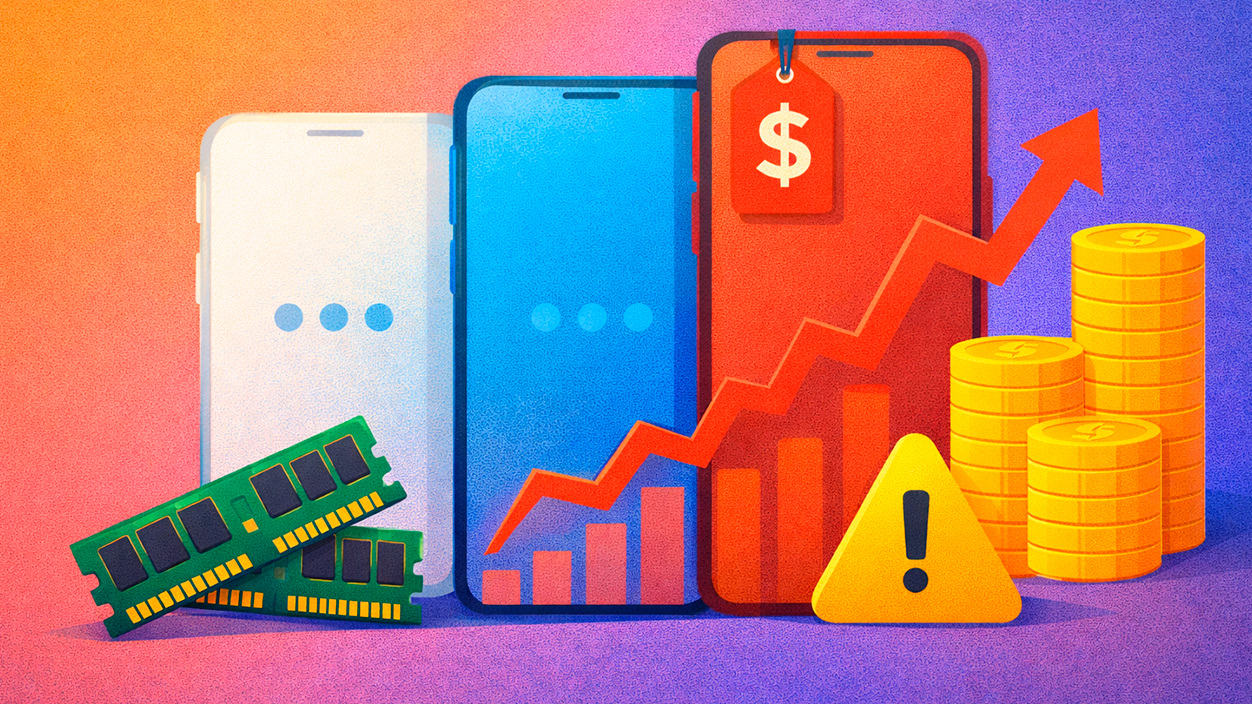
According to Counterpoint's latest calculations, Global smartphone shipments are expected to fall by around 2,1% in 2026This reverses the more optimistic outlook that pointed to slight year-on-year growth. This downward revision represents a significant shift from the projected rebound for 2025, which was around 3,3%.
The main reason for this change in trend is the increase in the costs of key componentsespecially the DRAM memory used in mobile phones. The analysis firm estimates that, as a consequence of this price increase, the The average selling price of smartphones will rise by about 6,9%. next year, almost double what had been discussed in previous reports.
IDC, for its part, has also tempered expectations and anticipates a further market contraction of approximately 0,9% by 2026This is also linked to the lack of memory and the impact of chip costs. Although the percentages may seem modest, we are talking about hundreds of millions of units globally, something that is noticeable at every link in the chain.
In terms of value, the market is not collapsing, but rather transforming: analysts predict that, despite selling off With fewer mobile phones, total revenue reaches record figures., exceeding $578.000 billion thanks to that increase in the average price and a greater concentration in higher ranges.
RAM memory, at the center of the storm

The origin of this scenario lies in the price spike in consumer memory, which has been swept away by the enormous demand for chips for artificial intelligence and data centers. Semiconductor manufacturers are prioritizing higher-margin products, such as advanced memory for AI servers, and that is straining the supply available for mobile devices.
Counterpoint suggests that the smartphone bill of materials (BoM) Prices have already increased between 10% and 25% throughout 2025 solely due to the effect of RAM. In the cheapest models, below $200, the impact is especially pronounced, with price increases of 20% to 30% in component costs compared to the beginning of the year.
By 2026, analysts do not rule out that DRAM modules will undergo a new price increase of up to 40% around the second quarter. If that forecast holds true, the production cost of many phones could rise by an additional 8% to 15%, depending on the model range. Part of that cost will inevitably be passed on to the consumer.
This price increase not only complicates future releases, but also forces a review of the catalog strategies and price positioningIn Europe and Spain, where the mid-range has traditionally been the main protagonist, this pressure will be noticeable in devices that until now stood out for offering a lot for relatively little money.
Low and mid-range segments, the most affected
The segment that is suffering the most from the memory crisis is that of the budget smartphones, especially those priced below $200/€200In this price range, margins are very tight and any cost increase puts the business model at risk.
According to Counterpoint's estimates, entry-level mobile phones have seen their bill of materials costs skyrocket. up to 25% or even 30% In some cases, when the manufacturing budget is so limited, absorbing that increase without affecting the final price is almost impossible.
In it middle market, the impact is somewhat smaller, but equally noticeable: the increase in costs is around 15%, while in the high-end The increases are around 10%. Although premium devices have a larger profit margin, they also face a public that expects constant improvements in performance, something that becomes more complicated when memory becomes more expensive and decisions have to be made about where to cut costs.
Consulting firms agree that this situation will affect the most severely budget and mid-range Android devicesThese devices are generally more price-sensitive. In markets like Spain, where these types of devices account for a significant portion of sales, we are likely to see adjustments in both prices and memory and storage configurations.
Brands that hold up better and manufacturers on the ropes
In this complex context, not all brands start from the same position. Reports highlight that Apple and Samsung are the best prepared manufacturers to withstand rising costs without a sharp drop in their mobile phone sales in 2026. Their global scale, strong presence in the high-end market, and greater vertical integration give them a bit more room to maneuver.
Companies with catalogs very focused on price And with tighter margins, they face an even greater challenge. Analysts point in particular to several Chinese manufacturers such as HONOR, OPPO, and Vivo, which could see significant deviations from their shipment forecasts due to the difficulty of balancing market share and profitability.
This group also includes Xiaomi, which has become strong in Europe with a very aggressive price-quality ratio and with generous memory configurations in the mid-range. Maintaining that strategy when RAM prices skyrocket makes balancing the books difficult, which opens the door to rethinking product lines and cutting specifications.
Counterpoint experts point out that brands with greater scale, broad product lines, and a considerable weight in the high-end range They are better positioned to weather the shortageConversely, manufacturers focused on cheap models run the risk of having to raise prices to a point where they lose their main appeal compared to the competition.
Specification cuts: back to more modest RAM configurations
One of the most visible consequences for the user will be the possible step backwards in the amount of RAM that many new mobile phones offer. What until recently was interpreted as a natural evolution—going from 4 to 6, then to 8, 12 or even 16 GB—could come to a screeching halt or even be reversed.
Reports indicate that in the Some 12GB configurations could disappear from the mid-range and premium segments.This amount is being reserved for flagship models, while options in mid-range models are being reduced. At the high end of the market, devices with 16 GB of RAM, which were beginning to gain popularity, risk becoming much more of a niche product.
In the input rangeThe adjustment could be even more striking: it is anticipated that certain manufacturers will relaunch models with 4 GB of RAM as standard configurationA figure that many users considered almost surpassed just a few years ago. The idea is to maintain competitive prices by sacrificing memory, rather than making the final product too expensive.
All of this means that, when it comes to upgrading your mobile phone in 2026, It will not be unusual to find devices that, at the same price, offer less memory than previous years' modelsFor the average European consumer, accustomed to seeing specifications improve generation after generation, It can be shocking to realize that hardware is no longer advancing at the same pace., at least in terms of RAM capacity.
Impact in Europe and on the Spanish user

Although the forecasts refer to global figures, the effect will be felt in mature markets like the European oneIn this market, smartphone upgrades had already slowed in recent years and the average selling price was rising. With the new context of expensive memory, this trend is intensifying.
In Spain, where the The mid-range market and models priced between 200 and 400 euros account for a significant portion of sales.Manufacturers will have to refine their offerings more than ever. We can expect to see fewer very affordable devices with "more than enough" specifications and more balanced configurations with somewhat less RAM.
For those thinking about changing their mobile phone, analysts suggest two scenarios: advance the purchase to avoid some of the price increases expected in 2026 or, if there is no rush, extend the renewal cycle a little longer and wait for the market to stabilize, possibly from 2027 onwards, when the supply of memory can normalize.
In any case, it's best to assume that next year will be a transition period in which Mobile phone sales in 2026 will be determined by a single componentRAM, but its effects will be noticeable in practically everything: prices, ranges, configurations and the pace of catalog updates.
Everything suggests that mobile telephony faces a year in which, despite the strength of the market, Fewer units will be sold, they will be more expensive, and they will offer more limited specifications.especially in terms of memory. Brands with more resources, like Apple and Samsung, will be able to adapt better, while many manufacturers focused on the low and mid-range will have to cut, reorganize, or raise prices, which paints a picture of a highly competitive 2026 and users who will have to look more closely at the fine print before changing their mobile phone.

I am a technology enthusiast who has turned his "geek" interests into a profession. I have spent more than 10 years of my life using cutting-edge technology and tinkering with all kinds of programs out of pure curiosity. Now I have specialized in computer technology and video games. This is because for more than 5 years I have been writing for various websites on technology and video games, creating articles that seek to give you the information you need in a language that is understandable to everyone.
If you have any questions, my knowledge ranges from everything related to the Windows operating system as well as Android for mobile phones. And my commitment is to you, I am always willing to spend a few minutes and help you resolve any questions you may have in this internet world.