- Microsoft creates the MAI Superintelligence Team, led by Mustafa Suleyman, with a humanistic approach and human control.
- First goals: affordable assistant, expert-level medical diagnosis, and support for clean energy.
- Relationship with OpenAI reconfigured: more independence to develop advanced technology without a race towards AGI.
- Focus on specialized models that outperform humans in specific tasks, with clear limits to reduce risks.
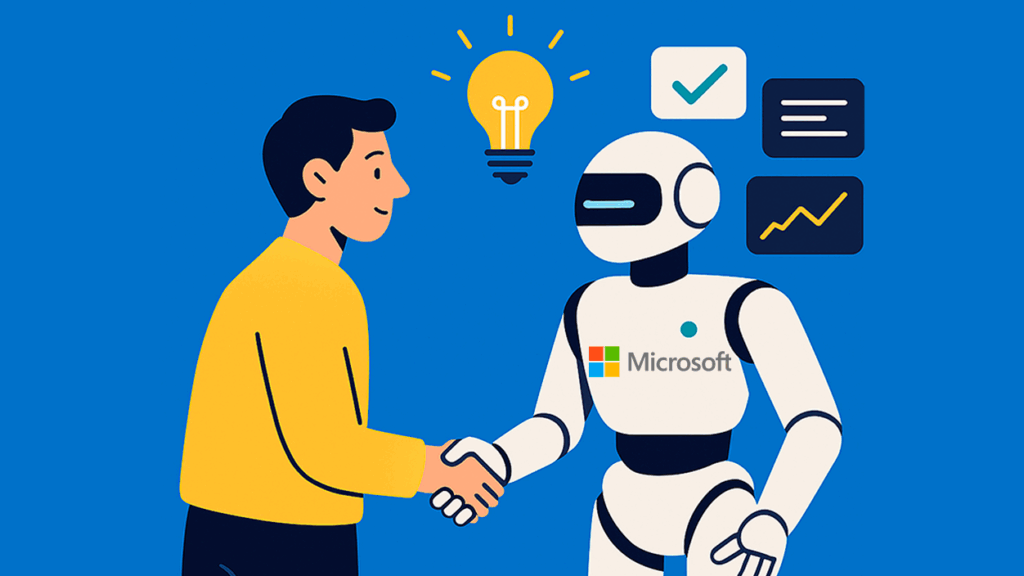
Microsoft has taken another step in its artificial intelligence strategy with the creation of the MAI Superintelligence Team, a group tasked with developing a “humanist superintelligence"Aimed at serving people, not replacing them. The proposal, presented by Mustafa Suleyman, head of Microsoft AI, seeks to accelerate technological progress without losing sight of human control at all times."
The company is proposing a superintelligence calibrated, contextualized and with limitsThis approach moves away from narratives of unchecked autonomous systems. It aims to reduce extreme risks while guiding AI towards solving problems. global challenges such as health, productivity, and the energy transition.
What does Microsoft mean by “humanistic superintelligence”?

According to Suleyman, humanistic superintelligence It is not an unlimited entity nor an attempt to emulate consciousness; it is about practical, contained and controllable systems that seek to surpass human performance in specific domains. The key difference from classic AGI is the focus: less generalism and more specialization to provide tangible benefits.
The head of Microsoft AI has emphasized that mimicking behaviors that suggest consciousness would be “dangerous and wrong”The priority is a subordinate AI, with real restrictions on autonomy, that keeps humanity in control and avoids opening the dreaded "Pandora's box".
As a starting point, Microsoft has identified three applications: one affordable digital companion to learn and work better; expert-level medical diagnosis with planning and prediction capabilities in clinical settings; and a tool to drive discoveries in clean energy and emissions reduction.
This vision, shared in an open letter and interviews with international media, incorporates a central idea: it is not about accelerating at any cost, but about establish social limits, norms and laws that guide development, with collaboration between companies, governments and the scientific community.
Microsoft's discourse, also reported by media in Spain, aligns with a European sensibility that prioritizes the security, transparency and oversight In AI, this approach is especially relevant for its adoption in critical sectors such as healthcare.
Team, leadership and roadmap

The newly created The MAI Superintelligence Team is led by Mustafa Suleyman and will include Karen Simonyan as a scientist. boss. Microsoft plans to invest “a lot of money” in this area, reinforcing it with internal talent and new hires. leading laboratories to build new families of models.
The company has already taken preliminary steps with the integration of equipment and Intellectual of Inflection AIand informed its staff that it would be making significant investments to scale its capacity. The immediate goal is to advance models that reason better and solve problems. complex problems reliably.
Suleyman is skeptical about the viability of fully autonomous and self-improving machines under complete human control. That's why he advocates for specialized models capable of delivering “superhuman performance” in limited tasks, reducing the existential risk profile.
Among the examples cited are areas such as battery storage or the discovery of new molecules, in line with AI advances that have already accelerated scientific knowledge in biomedicine.
Health, science and productivity: first applications
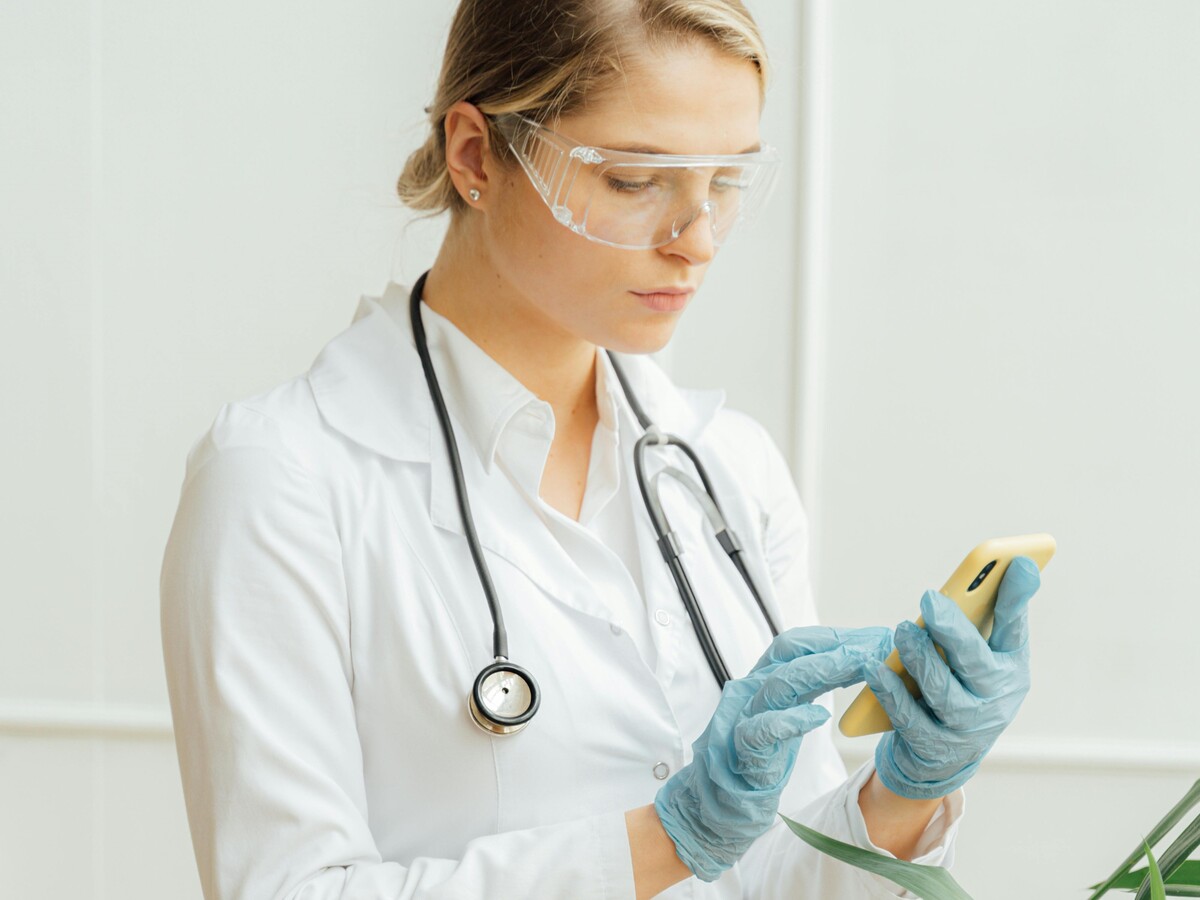
In the short term, Microsoft envisions a horizon of two to three years to achieve significant progress in medical diagnosisThe idea is to use models with greater capacity. reasoning to detect preventable diseases earlier, in order to increase life expectancy and quality of life.
The emphasis on healthcare coexists with the ambition to promote clean energy and reduce emissionsas well as with the development of an "affordable" AI personal assistant that helps people to learn, act and be more productive, always with clear limits of autonomy.
The approach is pragmatic: to build technology that serves humanity and avoids designs that foster misleading empathy with systems that don't think or feel like humans. For Microsoft, over-humanizing the interface can confuse the user and erode trust.
Although the industry views such ambitious goals without disruptive discoveries with skepticism, Microsoft maintains that the phased approach, with well-defined domainsIt is the most responsible way to materialize real and measurable benefits.
Relationship with OpenAI and new collaboration framework
The announcement comes after the readjustment of the strategic agreement with OpenAIThe investment of More than $10.000 billion in 2023 gave Microsoft exclusive rights to integrate models into Azure and applications like Word or Excel, in exchange for access to R&D resources. With the recent modification, OpenAI can work with more providers and Microsoft gains leeway to develop advanced technology independently or with third parties.
Despite this new arrangement, Suleyman insists that The company is not competing in a “race for AGI”, but rather promoting a humanistic and contained superintelligenceThe relationship between the two firms remains cooperative, although increasingly competitive in product and talent fronts.
Competition and sectoral approach

Large tech companies and new players are also exploring superintelligence, with different strategies and paces. Microsoft advocates for a a path based on security, transparency and collaboration, and emphasizes that It will not build limitless systems or models that emulate human behavior.
In public statements, Suleyman has been emphatic: “We cannot accelerate at any priceAccording to the executive, oversight and collaboration between companies and regulators are essential if control is to be maintained and benefits for society maximized.
Implications for Spain and Europe
The possible arrival of systems with superhuman performance AI in diagnosis and clinical planning presents both opportunities and challenges for European healthcare systems. In Spain, where interest in AI in healthcare is growing, the debate on validation, traceability and monitoring will be key to its responsible adoption.
Meanwhile, the orientation towards clean energy and productivity can contribute to regional objectives of energy transition and competitivenessalways conditioned by compliance frameworks that reinforce security, explainability, and human control.
With a promising approach limit risks and prioritize social benefitsMicrosoft is positioning itself to compete at the forefront of advanced AI. Success will depend on turning this humanistic vision into reliable, auditable, and useful products.Starting with healthcare and science, and without losing sight of collaboration with the ecosystem and regulators.

I am a technology enthusiast who has turned his "geek" interests into a profession. I have spent more than 10 years of my life using cutting-edge technology and tinkering with all kinds of programs out of pure curiosity. Now I have specialized in computer technology and video games. This is because for more than 5 years I have been writing for various websites on technology and video games, creating articles that seek to give you the information you need in a language that is understandable to everyone.
If you have any questions, my knowledge ranges from everything related to the Windows operating system as well as Android for mobile phones. And my commitment is to you, I am always willing to spend a few minutes and help you resolve any questions you may have in this internet world.