- Nvidia's N1X chip shows off its performance in a leaked Geekbench test.
- It integrates a GPU with 6.144 CUDA cores, just like the RTX 5070
- The frequency and power consumed explain why it performs much less than a dedicated card.
- It is positioned as the benchmark ARM SoC for laptops and ultralights starting in 2026.
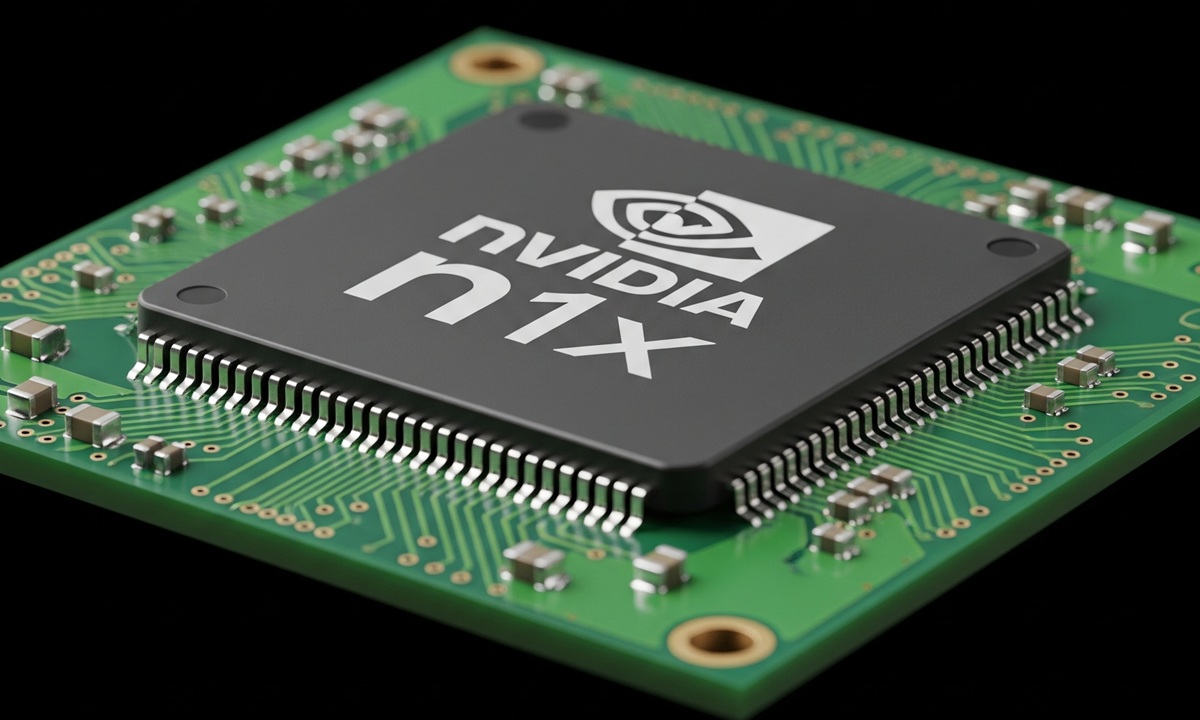
El Nvidia's upcoming N1X processor is once again the subject of leaks, This time thanks to a Geekbench database entry that reveals specific details about its integrated GPU. After months of rumorsNvidia's ARM chip aimed at laptops and desktops shows off its real graphics muscle for the first time..
In several Geekbench listings and publications, the N1X SoC appears accompanied by revealing data: It uses a structure of 20 CPU cores in two clusters of 10 and, above all, integrates a Blackwell GPU with 48 streaming multiprocessors, that is to say, 6.144 CUDA coresThis figure exactly matches that of the RTX 5070 tabletop, although there are substantial differences between the two chips.
Initial results: raw power, but still below a dedicated
In the first tests of Geekbench OpenCL, the N1X reaches the 46.361 points. Although it shares the Blackwell architecture and core count with the RTX 5070, Its performance is equivalent to that of an RTX 2050, and the main cause is the clock speed and consumption: In tests, the N1X's GPU is limited to 1,05 GHz and shares a TDP of about 120 W with the CPU and the rest of the SoC, compared to the exclusive 250 W of a dedicated 5070.
Another key difference is the memory: the N1X uses Shared LPDDR5X up to 128GB, compared to the 12's 7GB of dedicated GDDR5070. While this does penalize bandwidth and real-world speeds when gaming or running intensive loads, Initial results already place the N1X as the most powerful ARM SoC with iGPU seen to date., surpassing solutions such as the Apple M3 Max, the Radeon 890M and even Intel's Arc 140V.

A leap in integrated graphics for ARM laptops
This leak makes it clear that Nvidia prepares for an aggressive entry into the ARM laptop segment, combining in a single silicon a 20-core CPU (10 Cortex-X925 and 10 Cortex-A725) with the new Blackwell GPU.
The goal is to offer graphics performance close to that of a mid-range dedicated GPU. on computers without a separate card, opening the door to ultraportables, professional workstations, and possibly light gaming devices with Windows ARM. The dual-CPU cluster configuration and integration with up to 128 GB of RAM ensure that This platform is aimed at professional workloads, artificial intelligence and intensive multimedia tasks..
State of development and market expectations
This project is still in the engineering phase, Therefore, improvements to drivers, frequencies, and optimization are expected before commercial launch. According to sources cited in the leaks, the achieved frequency and power management are conservative, and there may still be changes to the final configuration.
It is expected that the N1X is expected to hit the market in 2026., coinciding with a new wave of ARM-powered Windows laptops and the expected advance in integrated artificial intelligence. Some reports suggest that brands like Dell Alienware could debut these new CPUs, targeting gaming and professional rigs without dedicated graphics.
It remains to be seen whether Nvidia manages to overcome the bottlenecks of the bandwidth and adjust the efficiency, but the potential of this chip, with 6.144 CUDA cores and Blackwell architecture, suggests it could be the first ARM SoC truly capable of competing with high-performance x86 chips and also Apple Silicon in high-end laptops.
For now, The Nvidia N1X stands out as the most ambitious ARM SoC in integrated graphics, marking a potential breakthrough in performance for non-dedicated GPUs and opening up new options for both professionals and users looking for solid graphics performance without sacrificing portability or efficiency.

I am a technology enthusiast who has turned his "geek" interests into a profession. I have spent more than 10 years of my life using cutting-edge technology and tinkering with all kinds of programs out of pure curiosity. Now I have specialized in computer technology and video games. This is because for more than 5 years I have been writing for various websites on technology and video games, creating articles that seek to give you the information you need in a language that is understandable to everyone.
If you have any questions, my knowledge ranges from everything related to the Windows operating system as well as Android for mobile phones. And my commitment is to you, I am always willing to spend a few minutes and help you resolve any questions you may have in this internet world.