- OpenAI will begin displaying ads on ChatGPT for the Free and Go plans, while keeping the Plus, Pro, Business, and Enterprise levels ad-free.
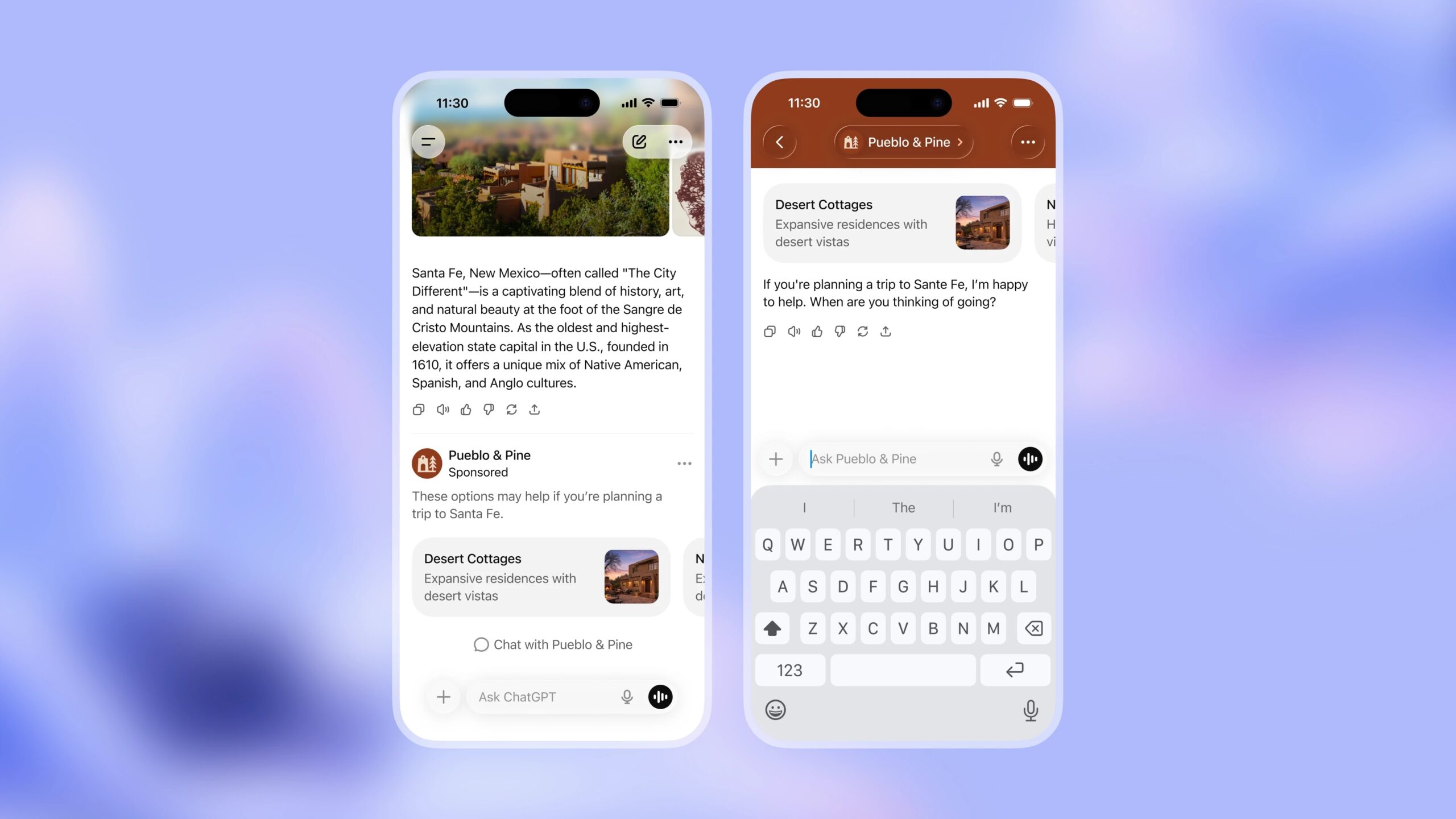
- The advertising will be integrated at the end of the responses, labeled and separate from the content, with a ban on sensitive topics for those under 18 years of age.
- The move seeks to diversify revenue streams and alleviate computing and data center costs that are driving up projected losses for the coming years.
- The new advertising model raises concerns for users and content creators about privacy, profiling, and competition from alternatives like Gemini or Claude.

ChatGPT, the artificial intelligence assistant that has become the gateway to AI for millions of people, is preparing for a major transformation: OpenAI will introduce ads in the chatbotAfter years of relying almost exclusively on subscriptions and business ventures, The company begins testing an advertising model that significantly changes the user experience.especially for those who rely on the free version.
The movement comes in a context of financial and competitive pressureMaintaining state-of-the-art language models is extremely expensive, while rivals such as Google (with Gemini)Anthropic (Claude) and even Microsoft are stepping on the gas. Given this scenario, Advertising on ChatGPT is no longer a distant hypothesis but has become a central part of the strategy business.
Which users will see ads and on which plans
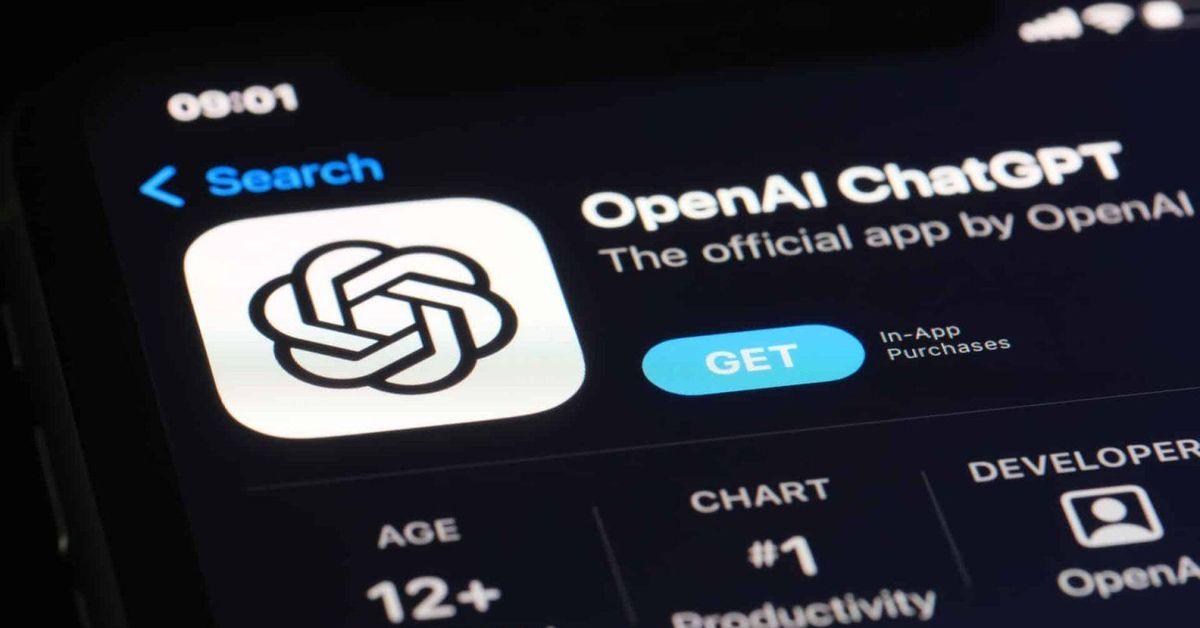
OpenAI has drawn a clear line between users who will see advertising and those who will not. Free plans and ChatGPT GoThe new, more affordable subscription level, while the Plus, Pro, Business, and Enterprise plans will continue to offer an ad-free experience.
In practice, this creates a two-speed ecosystemOn one hand, there's the general public who access AI for free (or by paying a reduced fee with Go) in exchange for accepting advertising; on the other, there are advanced individual users and companies who pay higher subscription fees to maintain an ad-free environment. The company itself acknowledges that the The free version and the most affordable plans account for the majority of the trafficThat's where the monetization game will be played out.
According to internal estimates and those of various analysts, ChatGPT is around hundreds of millions of active users per week, but only a small fraction pay for a subscription. Figures like the 25-35 million subscribers compared to a massive base of free users explain why OpenAI is now looking to channel some of that usage into advertising revenue.
In Europe and Spain, although the initial trial starts in the United States, the company's plan is to go extending it gradually to other markets. The global rollout, including the EU, is planned for the coming months, presumably with adjustments to align with current data protection and digital advertising regulations.
Where and how will ads appear on ChatGPT?
OpenAI insists that its goal is to make advertising integration as unobtrusive as possible. In this first phase, at the end of the answersOnly when there is a sponsored product or service related to the ongoing conversation. They will not be placed mixed in with the model-generated text, but in separate blocks and clearly labeled as sponsored content.
The company speaks of a strategy of "intention-based monetization"If a user asks, for example, about accommodations in a city or tools to manage their business, ChatGPT might display ads related to hotels, software, or other services connected to that specific query. The user will also be able to access additional information about why they are seeing that particular ad or dismiss it if it's not of interest.
In this initial stage, the formats focus on under the organic responsewith links and calls to action. However, OpenAI is already aiming for more interactive scenarios: ads with which the user can engage in dialogue within the ChatGPT itself, asking questions directly to the brand before making a purchase or booking decision, going beyond the classic static banner or sponsored link model.
The company also promises to respect a series of thematic limits. Advertising will not appear associated with sensitive or heavily regulated content, as healthmental health or politics, something especially relevant in a European environment subject to rules such as the General Data Protection Regulation (GDPR) and the Digital Services Act.
Privacy, data, and OpenAI promises
One of the main concerns of users, regulators, and experts is the extent to which advertising can influence chatbot responses or the handling of personal data. OpenAI, aware of the distrust these models generate, has sought to establish in writing a series of advertising principles.
The company claims that will not influence in the ChatGPT responsesIn other words, the generated content will continue to be optimized, in theory, to be useful to the user, and not to favor a particular advertiser. Recommendations for paid products or services will be presented as separate blocks with clear labeling, so they are not confused with the "neutral" part of the response.
Regarding data, OpenAI reiterates that It will not sell conversations or personal data to advertisers, and that interactions with the chatbot will remain private. It will be able to use usage and preference information to partially personalize advertising, but users will have the option to disable personalization and delete data used for commercial purposes.
ChatGPT's memory system, which allows the model to remember certain user details to provide more tailored responses over time, is at the center of the debate. On the one hand, it makes the experience more comfortable; on the other, It generates a very detailed profile of habits, tastes, and needs., extremely valuable for marketing. OpenAI argues that this memory can be deleted or disabled and that ads will be based primarily on the intent of the current query.not in a deep history.
In addition, the company establishes filters to protect particularly vulnerable groups: under 18 years old, and Age verification mechanisms and the exclusion of sensitive topics will be strengthened.In the European context, this entire approach will have to be carefully scrutinized in light of the regulations on explicit consent, transparency, and purpose limitation imposed by data protection authorities.
A business model that is becoming increasingly expensive to sustain
The decision to incorporate ads cannot be understood without considering the economic context. Keeping ChatGPT operational implies a daily bill of between hundreds of thousands and more than a million dollars in computing, according to various estimates. This is in addition to billions of dollars in commitments to data center infrastructure and AI-specific chips over the next decade.
OpenAI has gone from being a non-profit organization to operating as a company with aspirations to go public and valuations that have been placed in the hundreds of billions of dollars. Meanwhile, leaked financial documents show gigantic losses and forecasts of losses for several years, with the hope of achieving significant profits towards the end of the decade.
Until now, the main source of revenue was subscriptions (at various levels, from individual plans to enterprise solutions) and the API business for developers and businesses. There are tens of millions of paying users compared to a massive base of free users, which This creates an imbalance that is difficult to sustain when the cost per user is so high..
Hence, advertising is presented as a "last resort"In the words that Sam Altman, CEO of OpenAI, himself used years ago when referring to this scenario, what then sounded like a red line. Today it becomes a key tool to try to balance the books without turning off the tap of free access to AI.
Fierce competition and battle for AI advertising
OpenAI's shift fits into a broader trend: Big tech companies are putting advertising at the heart of their AI productsGoogle has already begun integrating ads into experiences like Gemini and its generative search results, while Meta is exploring advertising formats supported by generative models within its social platforms.
In fact, the arrival of ads on ChatGPT opens a new battlefield OpenAI faces stiff competition from giants like Google and Meta, which dominate the traditional online advertising market. The challenge for Sam Altman's firm is to convince advertisers that a conversational environment, where users ask complex and contextualized questions, can be even more valuable than a classic search engine results list.
With ChatGPT accumulating hundreds or thousands of millions of monthly interactionsThe potential for advertising revenue is very high. Some analysts are already talking about the the possibility that advertising will generate billions of dollars annually within a few yearsprovided that user trust is not eroded too much.
At the same time, competition among model quality platforms is intensifying. ChatGPT's leadership, which it achieved in late 2022 and throughout 2023, is no longer so indisputable, with alternatives like Gemini or Claude gaining ground. Staying ahead requires constant investment in research, infrastructure and operational capacitywhich in turn increases the pressure to find new ways of monetizing.
The position of content creators: data, traffic, and business
OpenAI's announcement has reignited a fundamental debate: who really benefits from the data and content that feeds generative AIWhile many companies and professionals have worked to make their websites easily indexable by the models (even adapting specific formats and files for these systems), the risk is that the value will increasingly shift towards the intermediary.
Scenarios in which ChatGPT composes a response based on information published by a company and then, outstanding in its competitionThese examples illustrate this tension. The creator provides the data, the model keeps the user on its interface, and the final click goes to a third party who has paid to position themselves at that point in the conversation.
Some industry experts describe it as a kind of "three-step play"First, the data is captured, then the traffic is concentrated, and finally, an advertising model is placed on top to monetize all that attention. For companies that base a large part of their business on attracting visits to their website, the risk of seeing their organic traffic reduced in favor of the AI-powered proprietary channel is clear.
This debate is not unique to Europe. EU regulators and legislators are already analyzing how to ensure that AI development respects copyright, fair competition and information pluralityThe way in which ads are integrated into ChatGPT, and the impact they have on European media, businesses, and creators, will be another element in that discussion.
What can users do to control their experience?
For individual users, the introduction of ads doesn't mean losing all control over their experience. Within the settings options, it's possible to... disable the use of data to improve the model and limit advertising personalization. This reduces the platform's ability to profile each person, although in return some history and memory features are lost.
OpenAI also offers a temporary chat modeSimilar to incognito browsing, this prevents conversations from being stored or used for model training. It's a particularly recommended option when discussing sensitive topics—personal finances, health, legal issues—that one would prefer to keep separate from any commercial segmentation strategy.
Another precautionary measure is to periodically review the connected third-party applications and services to the ChatGPT account, as well as custom GPTs created by other developers. Each additional integration opens up a potential data flow path, both to OpenAI and to external companies.
Finally, it is useful to learn to visually identify Be wary of advertisements—labels like "Sponsored" or similar, featured boxes, URLs with tracking parameters—and maintain a critical attitude. Directly asking the model if a link is an advertisement, requesting non-commercial alternatives, or verifying information with independent sources are reasonable practices if you want to avoid turning every inquiry into a simple sales opportunity.
With the arrival of ads on ChatGPT, the everyday use of AI enters a new stage in which mass access, economic sustainability, privacy and competition They intersect. For users, companies, and European regulators, the challenge will be to take advantage of this new environment without losing sight of the power accumulated by the platforms that control both data and traffic and, from now on, also the advertising model built upon them.

I am a technology enthusiast who has turned his "geek" interests into a profession. I have spent more than 10 years of my life using cutting-edge technology and tinkering with all kinds of programs out of pure curiosity. Now I have specialized in computer technology and video games. This is because for more than 5 years I have been writing for various websites on technology and video games, creating articles that seek to give you the information you need in a language that is understandable to everyone.
If you have any questions, my knowledge ranges from everything related to the Windows operating system as well as Android for mobile phones. And my commitment is to you, I am always willing to spend a few minutes and help you resolve any questions you may have in this internet world.