- Satya Nadella links the future of AI to it generating clear benefits in health, education, the public sector and private enterprise.
- It warns that AI may lose its “social permission” due to the enormous energy and water consumption of data centers.
- He rejects the notion that AI is a bubble, provided that productivity is widely distributed and not concentrated in the hands of a few technology companies.
- It calls on Europe to combine regulation and privacy with productive investment and global competitiveness in artificial intelligence.

The irruption of the artificial intelligence In all areas of the economy, it has ceased to be a futuristic scenario and has become an urgent issue on the political and business agenda. In this context, Satya NadellaMicrosoft's CEO has put words to a concern that was already in the air: AI will only be defensible if it delivers concrete and visible results for society.especially at a time when its deployment is increasingly consuming energy resources.
From the World Economic Forum in DavosNadella emphasized that the technology sector has more at stake than just profits and market share. In his view, what's at stake is... “social permission” to continue allocating electricity and water to gigantic data centers that train and run generative modelsIf this commitment does not translate into tangible improvements in the lives of individuals, communities, and businesses—including in Europe—this informal license could quickly evaporate.
The energy cost of AI and a legitimacy in question
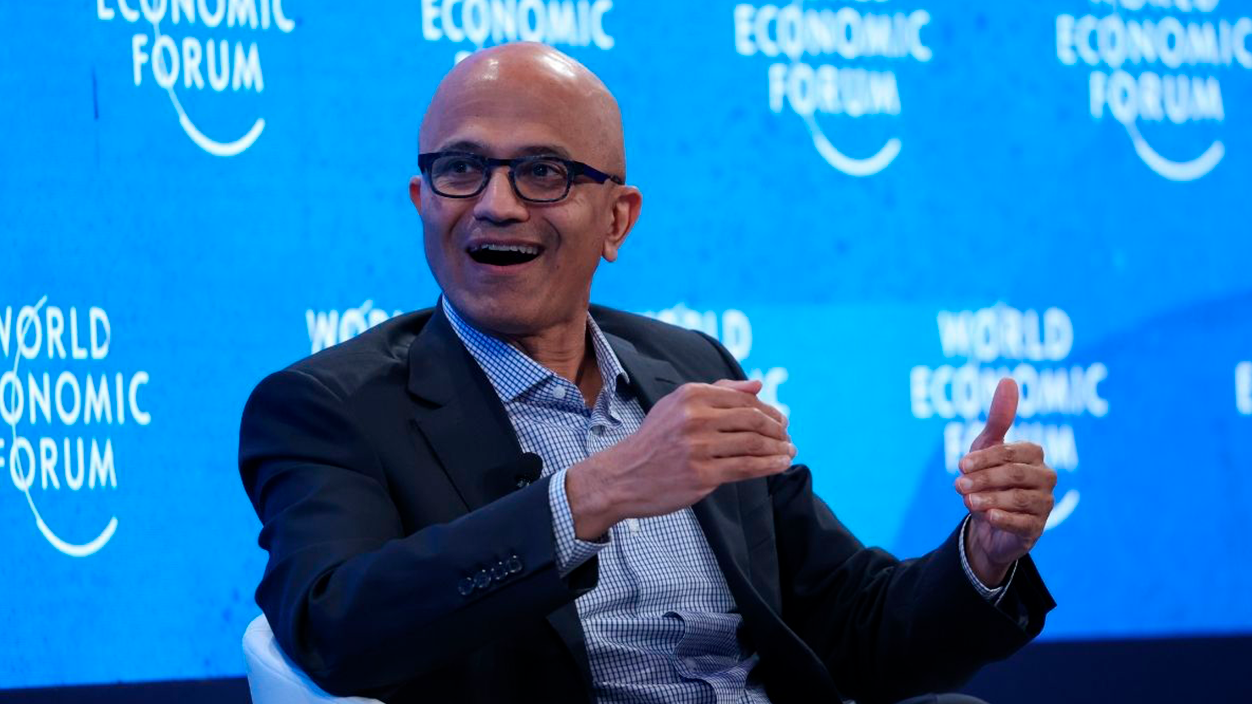
Nadella's message comes at a time when the growth of AI data centers This has triggered public and regulatory concerns. The expansion of these infrastructures implies massive use of electricity and waterwith electricity grids under more pressure and fears that this expenditure will end up impacting bills and the environmental quality of the territories that host them.
In various forums, the head of Microsoft has issued a clear warning: AI will quickly lose its social legitimacy if it is perceived that it is hoarding a scarce resource like energy without offering a proportional return. Its formulation is blunt: it makes no sense to dedicate so much computing power to generating “tokens”—the basic processing units consumed when using models—if those tokens do not translate into better outcomes in health, education, administrative efficiency, or business competitiveness.
Consumption data helps to understand the reason for alarm. According to recent analyses, the Microsoft and Google's combined electricity usage It would have already surpassed the annual consumption of more than a hundred countries. This surge is explained by the race to train increasingly powerful language models and by the proliferation of services based on generative AI, which drive up the demand for computing power and cooling.
From emerging technology to basic economic infrastructure
In Davos, Nadella insisted that artificial intelligence has ceased to be a laboratory curiosity and has become first-rate economic infrastructureThe discussion is no longer just about what the models are capable of doing, but about who has access to that capacity, under what conditions, and with what effects on the productive fabric and public services.
The executive compared this leap to previous episodes such as the arrival of internet, PC or mobilewith one important nuance: AI tends to become a kind of commodityIn their analysis, the key economic asset is not just the models, but the computing tokenswhose unit cost falls as efficiency per dollar and per watt improves. This price drop, however, It only materializes where the necessary energy and network infrastructure exists to deploy it.
This dynamic opens a new competitive gap between countries. In Nadella's words, GDP growth will be increasingly linked to the cost of energy used in AIThus, territories capable of producing and consuming tokens more cheaply and sustainably will have a clear advantage over those with expensive or unstable electrical systems.
Bubble risk: when AI remains in few hands
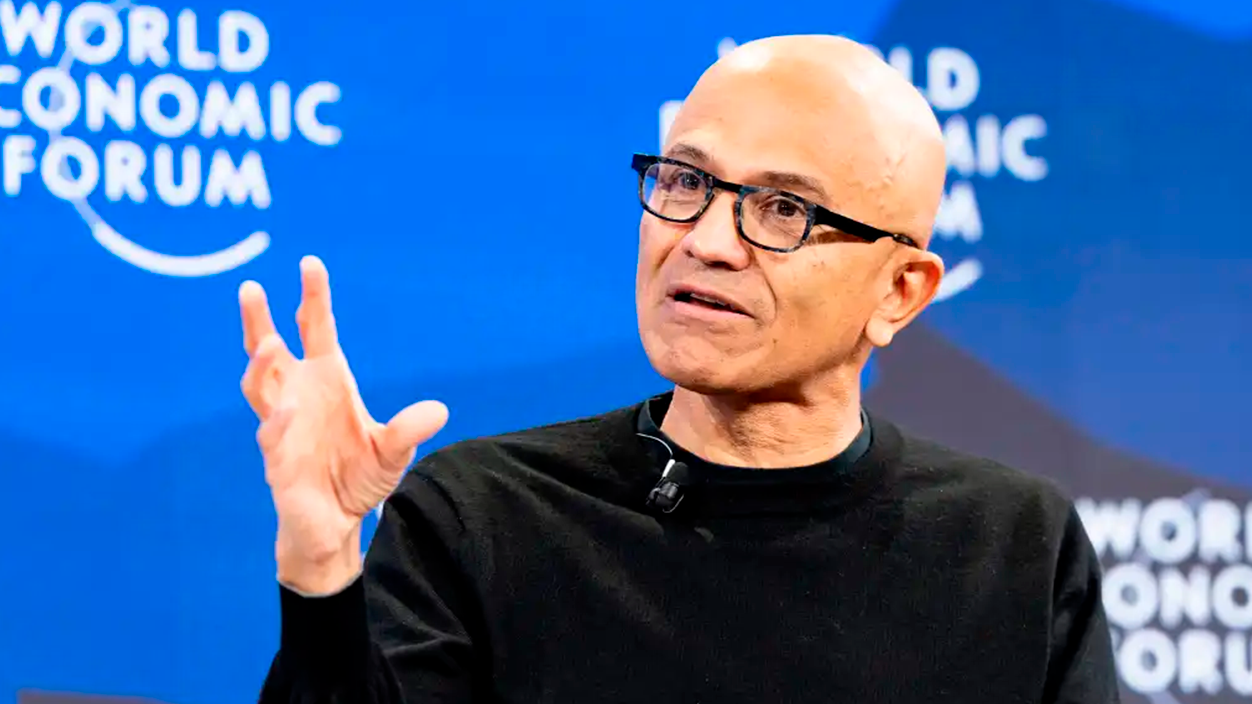
Alongside the energy debate, the Microsoft CEO addressed the recurring fear of a bubble surrounding artificial intelligenceIn several public appearances, including his dialogue with Larry Fink, CEO of BlackRock, Nadella has acknowledged that he shares some of the concerns expressed today by economists and analysts: [The following appears to be unrelated and possibly a separate text fragment:] a flood of money for AI and expectations risk inflating faster than results.
For the executive, the clearest sign of a bubble would be if the conversation about AI became restricted to agreements between major technology companies, infrastructure spending and stock market valuewithout any real deployment in sectors such as industry, healthcare, education, or public administration. In other words, massive investment will only be sustainable over time if it is accompanied by measurable and distributed productivity, not if the value is concentrated in a handful of companies and geographies.
This ties in with another warning: if the benefits of AI remain in the hands of a few actors, Social and economic inequalities could skyrocketNadella has even admitted that, in that scenario, there is a risk of moving towards environments with disproportionately powerful technology companies, capable of influencing the economy and politics, while a majority of the population barely captures a minimal part of that surplus.
Tangible productivity: health, education and the public sector

To avoid this drift, Nadella argues that AI development should be measured by its practical usefulness in everyday life rather than the fascination produced by technical advances. Hence his insistence on citing concrete examples in which technology is already modifying processes with a direct impact on people.
One of the cases he often mentions is that of the healthIn various hospitals, AI-based systems allow for the automatic transcription of medical consultations, completion of medical records, classification of documents, and coding of invoices. According to Nadella, It frees up professionals' time to dedicate to things that cannot be automated.Clinical care, patient relations, and complex decision-making. These are the kinds of improvements, he emphasizes, that justify the energy cost of technology.
The same reasoning applies to the educationwhere AI can be used to personalize materials, assisting in the correction of exercises or assisting the teaching staff with administrative tasksand to public sector, in which Its use is being explored to streamline proceduresto reduce errors and improve resource management. If these applications are not scaled up and their impact is not felt in neighborhoods, cities, and towns—also in the European Union—, the narrative of AI as a tool for well-being risks remaining just a piece of paper.
Europe's role: between regulation and competitiveness
In Davos, Nadella took the opportunity to send a very specific message to EuropeIn his opinion, the continent has been a leader in areas such as data privacy and AI regulationThis is an area where the European Union aims to set the standard with its regulatory framework. However, it warned that this regulatory strength must be accompanied by... Productive investment and industrial ambition so that Europe remains relevant in the global economy.
The executive recalled that European prosperity in recent centuries has been linked to its capacity to to manufacture goods and services that the rest of the world neededIn their opinion, simply reinforcing regulatory boundaries without boosting production capacity and deployment of AI solutions could worsen the continent's technological dependence on American and Asian companies.
Rather than obsessing over “protecting” the internal market from external suppliers, Nadella urged European officials to focus on to ensure that their industrial and financial companies have access to global data and AI capabilitieswhile developing their own technologies and models. Only in this way, he argued, can one speak of a true European technological sovereignty that combines security, competitiveness and contribution to the rest of the world.
Adoption as an advantage: it is not enough to invent the models

Another key point in the Microsoft CEO's speech revolves around who will lead the next phase of the digital economy. In his view, the real winners will not necessarily be those who design the most sophisticated language models, but rather those who integrate and spread AI most quickly in the real economy.
In this sense, Nadella insists that the key lies in how the tools are implemented in large and small companies, in hospitals, schools, banks, or industrial SMEs. The history of other technological revolutions supports this idea: The advantage lies not only with the creator of the technology, but with whoever is able to deploy it on a massive scale.adapt it to your context and extract from it a sustained increase in productivity.
This forces many companies to reorganize internal processes and completely overhaul their structures. Nadella argues that AI It crushes hierarchies based on information control., since tools like Copilot in Windows 11 They allow any employee to immediately access data and analytics that were previously distributed piecemeal. The potential impact is enormous, but It also requires a profound cultural change in the way teams are managed and decisions are made..
An open future: multiple models and data sovereignty
Looking to the medium term, Nadella doesn't believe the ecosystem will consolidate around a single dominant model. His forecast is for a diverse landscape of general and specialized models, combined and orchestrated according to the needs of each organization or country. In this scenario, the strategic value will not reside only in having a base model, but in knowing how different technologies are integrated and how proprietary knowledge is distilled into adapted systems.
For Europe and for the companies operating within its territory, this means that true sovereignty will not come exclusively from having infrastructure within its borders, but from maintain control over your data, processes, and capabilitiesIn Nadella's view, AI does not eliminate the role of states or companies, but it does force them to redefine how they produce value and to consciously decide what part of that value they cede to external providers and what part they keep under their control.
Ultimately, the message that Satya Nadella is conveying from forums like Davos is that artificial intelligence is facing a kind of implicit social contract: If it wants to continue consuming so many resources and attracting so much investment, it will have to quickly demonstrate that it generates clear and distributed benefits.It's not just about brilliant results for a few tech companies. How that equation is resolved—in Europe and the rest of the world—will determine whether AI consolidates itself as a driver of shared prosperity or is remembered as the great bubble of this decade.


I am a technology enthusiast who has turned his "geek" interests into a profession. I have spent more than 10 years of my life using cutting-edge technology and tinkering with all kinds of programs out of pure curiosity. Now I have specialized in computer technology and video games. This is because for more than 5 years I have been writing for various websites on technology and video games, creating articles that seek to give you the information you need in a language that is understandable to everyone.
If you have any questions, my knowledge ranges from everything related to the Windows operating system as well as Android for mobile phones. And my commitment is to you, I am always willing to spend a few minutes and help you resolve any questions you may have in this internet world.