- Spotify is beta testing playlists generated by artificial intelligence based on written instructions.
- The feature is launching for Premium users in New Zealand and is based on the user's entire listening history.
- The lists can be refined with filters, rules, and update frequency, giving more control over the algorithm.
- Spotify frames these AI-powered playlists within a broader strategy to give users control over music recommendations.
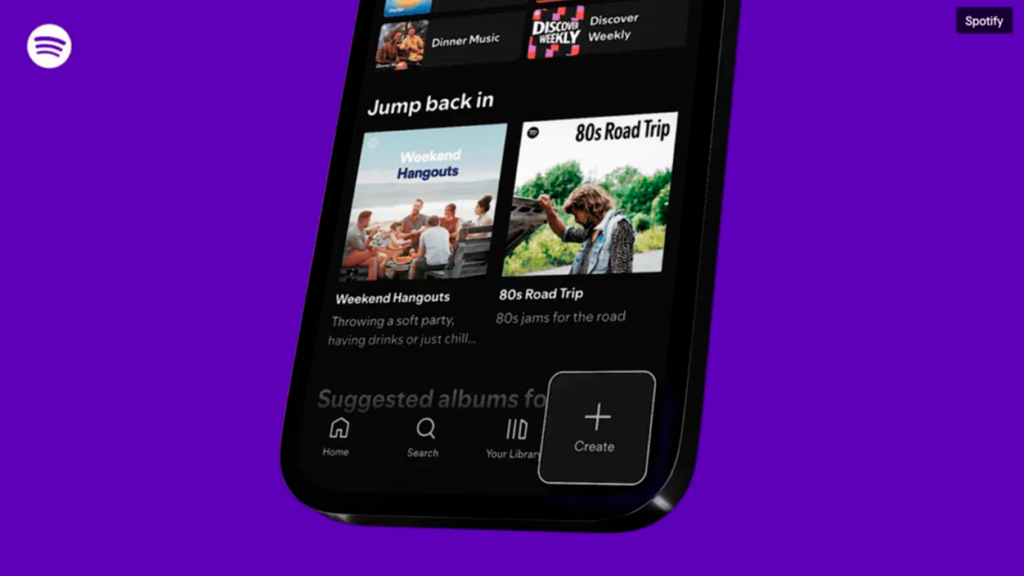
Spotify has been one of the world's most popular music streaming platforms for years, and consequently, one of those under the most pressure to constantly update its features. Lately, many of these updates inevitably involve... Artificial intelligence applied to the way we discover and organize music.
Among all the tools the service offers, playlists hold a key place for millions of users. Now, the company is taking it a step further with the arrival of some AI-generated playlists based on written instructions, a system that promises to change the way custom lists are created and which, for the moment, is being tested in beta phase.
AI-powered playlists: what Spotify is testing
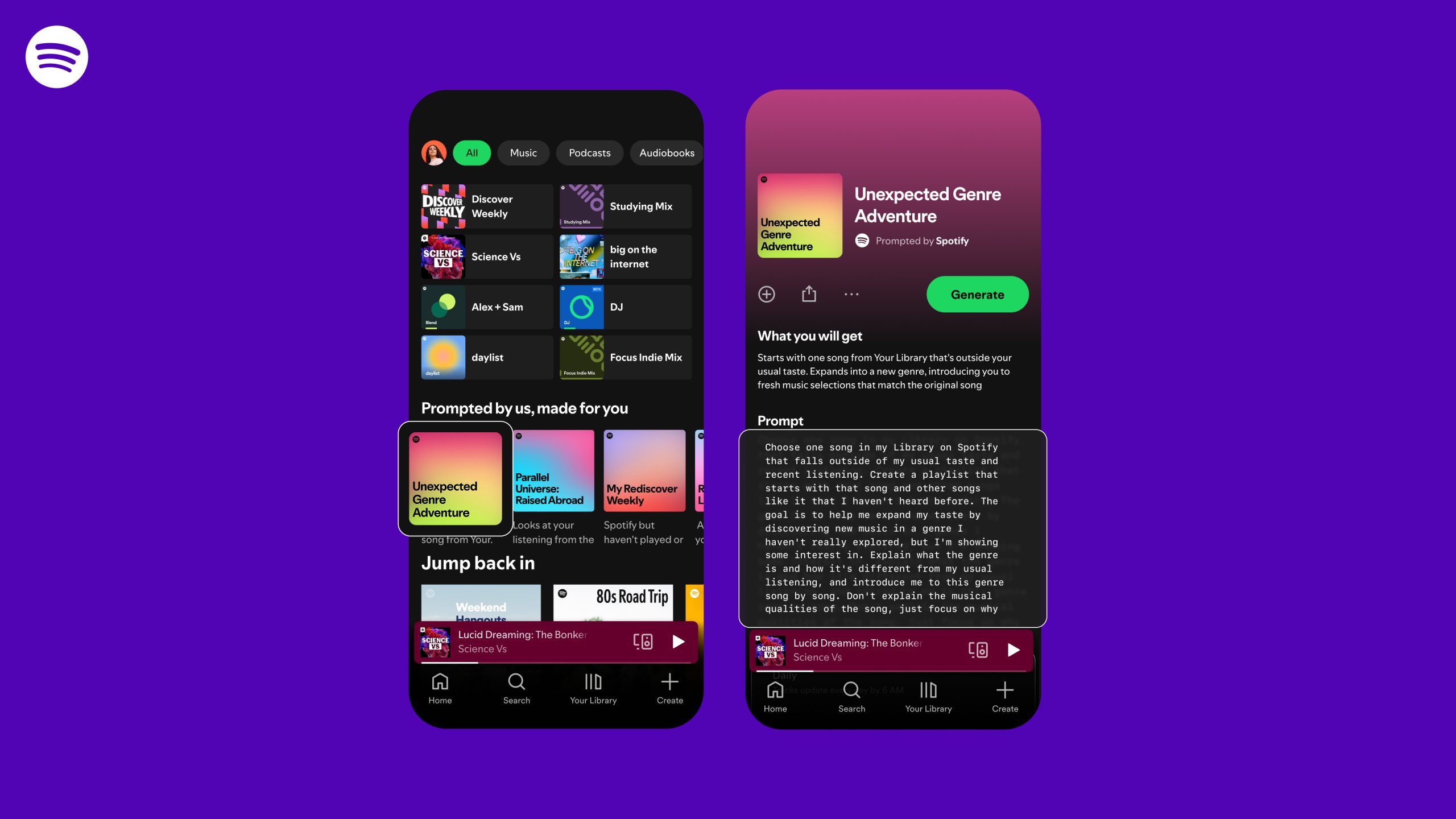
The new feature builds on the classic concept of Discovery Weekly and other automatic selections, but puts more control in the listener's hands. Under names like “Playlists with Directions” or “Promoted Playlists”Spotify is testing a tool that It allows you to write exactly what type of music you want to group into a list, letting an AI model do the rest.
In this first stage, the feature is located in beta phase and only accessible to Premium subscribers in New ZealandThe company has stated that the experience is still under development and that it will adjust the AI's behavior before expanding its availability to other countries, including, presumably, Spain and the rest of Europe.
The essence of the system is simple: the user writes a sentenceas brief or as detailed as you like, and Spotify's algorithm interprets those indications and combines them with your listening history From day one, you can create a custom playlist. The difference with traditional automated playlists is that now you can describe quite precisely what you want to listen to.
Spotify has explained on its blog that AI doesn't just look at the most recent songs, but at the "full arc" of the user's tastesThis allows, for example, generating a playlist of music from favorite artists of the last five years or revisiting specific stages of our musical life without having to reconstruct them manually.
In addition to this layer of customization, the company emphasizes that the current functionality is only offered in English language during the trial periodThis is common in these types of initial releases before incorporating more languages and markets.
How AI-powered playlists work in practice
Until now, anyone wanting a similar result had to resort to an external chatbot, ask it for a topic list, and then Manually transfer songs to Spotify or other platformsWith this new approach, the entire process is integrated within the application itself, reducing steps and allowing the system to learn directly from our way of listening to music.
The system works by entering instructions in a box. From there, the AI analyzes the request and cross-references it with the user's listening history: played artists, saved songs, styles they usually listen to, and periods when they were more active with certain genres. With all this information, It generates an initial list that already closely matches the user's profile..
An important aspect is that these lists are not frozen. The user can decide if they want to are automatically updated periodically with new themes based on the same original message. Among the options considered are daily or weekly updates, similar to what happens with Weekly Discovery or News Radar, but with rules defined by the user.
Spotify has also indicated that the feature is capable of taking into account what it calls “knowledge of the world”This means that, beyond your habits, the AI understands cultural references, genres, styles, or contexts (such as music from popular movies or recent series) and is able to integrate them into the list if they are mentioned in the prompt.
According to the company, each playlist created will include not only songs, but also descriptions and some context to explain why those topics have been selectedIn this way, the aim is for the user to better understand how the algorithm works and why they are receiving a specific recommendation.
What kind of prompts can be used to create lists?
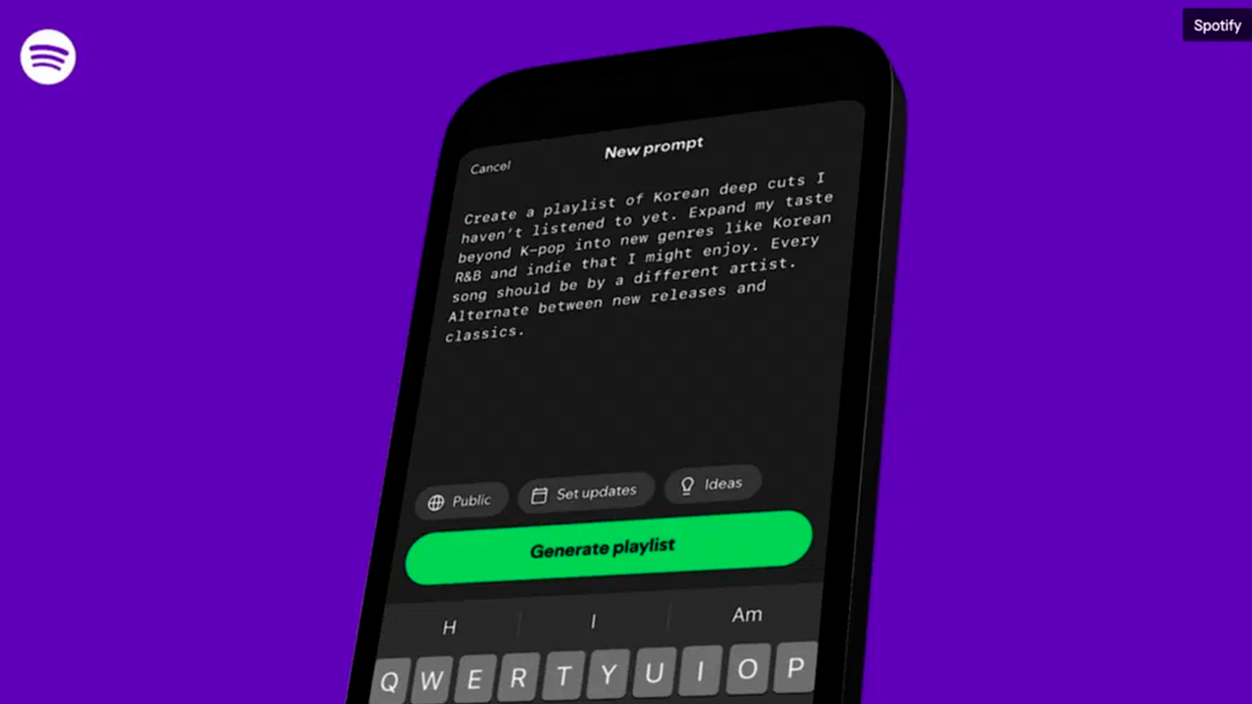
One of the new features of this functionality is that the suggestions can be quite long and specific. Compared to the playlist AI that Spotify previously tested, the current version allows draft more complex instructions, with various nuances and conditions, tailored to very specific usage situations.
The company itself has provided some examples of what could be requested. For example, you could write something like: “Music from my favorite artists of the last five years” and, from there, request that the AI include less obvious cuts, with phrases like "little-known tracks that I haven't heard yet".
Another illustrative case is that of an exercise session. The user might request: “High-energy pop and hip-hop for a 30-minute 5K run that maintains a steady pace, then transitions to relaxing songs to cool down.”The tool would try to organize the list to accompany the physical effort and subsequent recovery.
It's also possible to play with more open contexts, such as requesting “Music from this year’s biggest box office hits and most talked-about TV series that match my taste”The AI would then combine references to recent audiovisual culture with the preference pattern recorded in the listener's account.
These messages can be refined at any time, new conditions added, or unwanted parts removed. Spotify has indicated that will offer a set of suggested guidelines for those who don't know where to start, so that it's easy to try the tool without having to think too much about the first instruction.
Filters, rules, and update frequency of AI lists
In addition to describing what you want to hear, the feature allows you to apply filters for better control over the result. Among the options Spotify is previewing is the possibility of excluding songs from certain artists, limiting specific eras, or restricting certain styles that don't fit with the moment.
Similarly, the user can choose whether the generated list remains static or becomes a kind of continuous stream of recommendations. In the latter case, it is possible Specify how often the content is updated, whether daily, once a week, or at other intervals that will be introduced as the beta evolves.
With these controls, many listeners will be able to configure their own version of the classic Weekly Discovery, but focused on a genre, era, or mood Specifically, instead of receiving a more general selection. It's also feasible to create something similar to Daily Mix, but with rules much more clearly defined by the user.
This ability to set rules and update schedules aims to ensure that AI lists do not become rigid or alienating, but rather... living tools that evolve as tastes changeIf at any point the selection no longer fits, simply adjust the setting or review the applied filters.
Spotify has emphasized, however, that the feature is in a testing phase and that The experience will change as I receive more data and feedback. of the users who are using it in this initial stage.
More control over the algorithm: a growing trend

AI-powered playlists fit into a broader Spotify strategy to give the user the feeling that they have more decision-making power over the algorithm that suggests songsIt's not just about listening to music, but about actively participating in how recommendations are created.
Along this same path lies the DJ with artificial intelligence of the platform, a feature that has also been receiving improvements to allow users to send voice commands and specify the type of content they want at any given time. Both tools point to a scenario where the listener dialogues with the system, a trend reminiscent of the agentic navigation in other applications.
This move isn't isolated either, if we look at other apps. Services like Instagram have started to incorporate Options to tell the algorithm what type of content is of interest more or less, while networks like Bluesky are experimenting with systems that allow users to choose or even completely replace the algorithm that orders their feed.
In this context, Spotify seeks to position itself as a platform where playlists cease to be static and become spaces that can be shaped by instructions, filters, and continuous adjustmentsArtificial intelligence acts as a bridge between what the user imagines and a specific selection of songs.
For Europe, and in particular for markets like Spain, the arrival of these features will depend on the evolution of the beta and possible regulatory and linguistic adaptationsBut everything suggests that the major streaming platforms will continue to delve deeper into this type of guided personalization.
With its AI-powered playlist tests, Spotify is experimenting with a formula in which Creating playlists is based on writing down what we feel like listening to. and let an intelligent model do the heavy lifting of crawling the catalog and combining it with years of historical data. If the feature is rolled out globally, European users will find a tool designed to save time when creating lists, better control the type of recommendations they receive, and keep their selections up-to-date thanks to automatic updates and rules they can define on the fly.


I am a technology enthusiast who has turned his "geek" interests into a profession. I have spent more than 10 years of my life using cutting-edge technology and tinkering with all kinds of programs out of pure curiosity. Now I have specialized in computer technology and video games. This is because for more than 5 years I have been writing for various websites on technology and video games, creating articles that seek to give you the information you need in a language that is understandable to everyone.
If you have any questions, my knowledge ranges from everything related to the Windows operating system as well as Android for mobile phones. And my commitment is to you, I am always willing to spend a few minutes and help you resolve any questions you may have in this internet world.