- Starship suffers another failure on its ninth launch: it failed to complete its mission profile.
- The Super Heavy booster was reused for the first time, but ended up exploding when attempting to land on water.
- The craft failed to deploy its payload and lost control before reentry, breaking up over the Indian Ocean.
- SpaceX and the FAA have authorized future improvements and testing after gathering data from this new failed attempt.
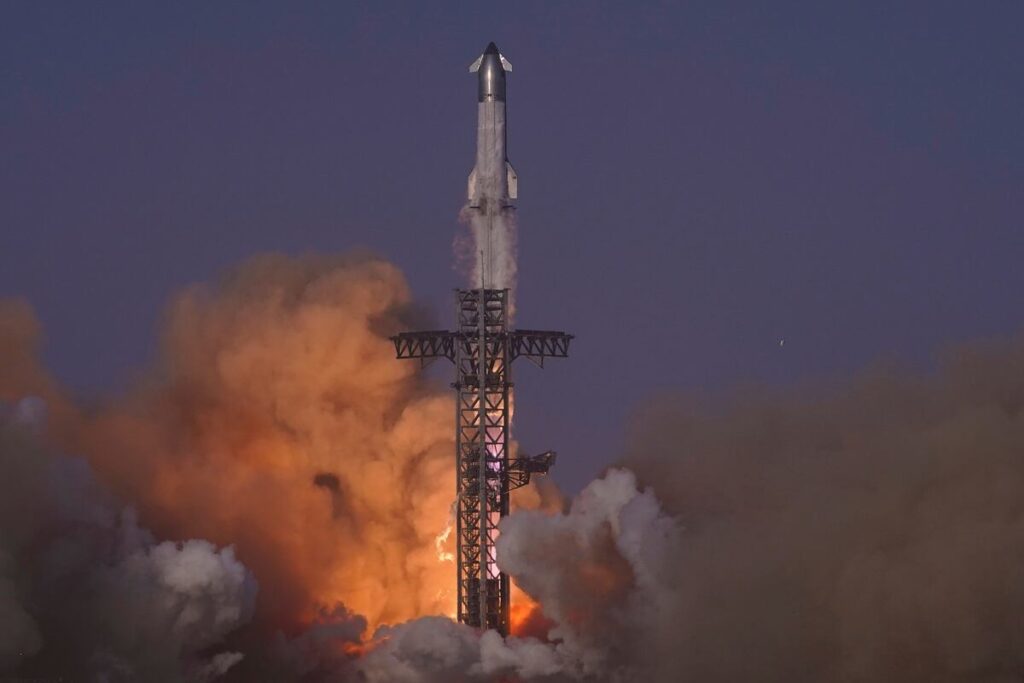
El SpaceX's ninth Starship launch attempt It has been carried out with a eventful outcome on May 27, 2025, despite the improvements and expectations generated by the previous failures. This test has been key in the company's roadmap for manned missions to the Moon and Mars, serving to implement new technical solutions and highlight the challenges that still exist in one of the most ambitious launch systems.
The takeoff was made from Starbase, in Texas, SpaceX's main base. At 19:37 p.m. local time, The rocket launched powered by the Super Heavy B14 booster, which was reused after its flight in January. The official broadcast expressed caution, as the last two launches ended in explosions.
The mission: innovations and expectations
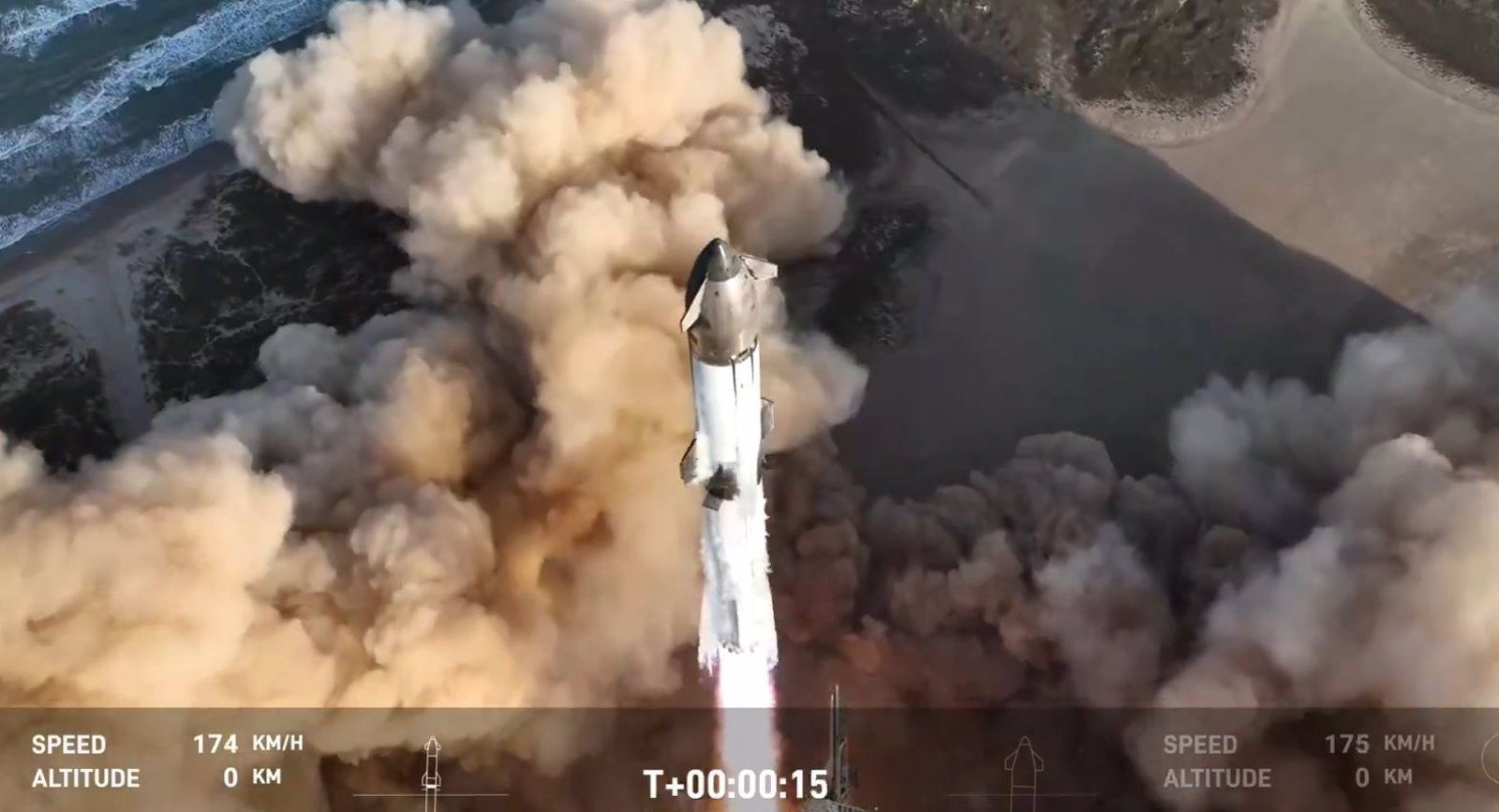
The profile of this mission (mission that you can see in the video above) was very similar to previous tests, although it included News about the Starship S35 and its propulsion system. The Super Heavy used 29 of its 33 reusable engines and had improvements in its heat shield.
Unlike previous launches, the first stage would not be recovered by the Mechazilla arms, but would instead be directed to a controlled landing in the Gulf of Mexico to evaluate its behavior in a more aggressive descent and with an experimental turn after separation.
La The Starship S35 upper ship had as its main objective to achieve a quasi-orbital trajectory, deploy eight Starlink v3 satellite simulators and test the in-orbit re-ignition of a Raptor engineIn addition, portions of the heat shield were modified or removed to evaluate its structural strength during reentry, using experimental tiles and new cooling solutions.
Development of the test and time of failure
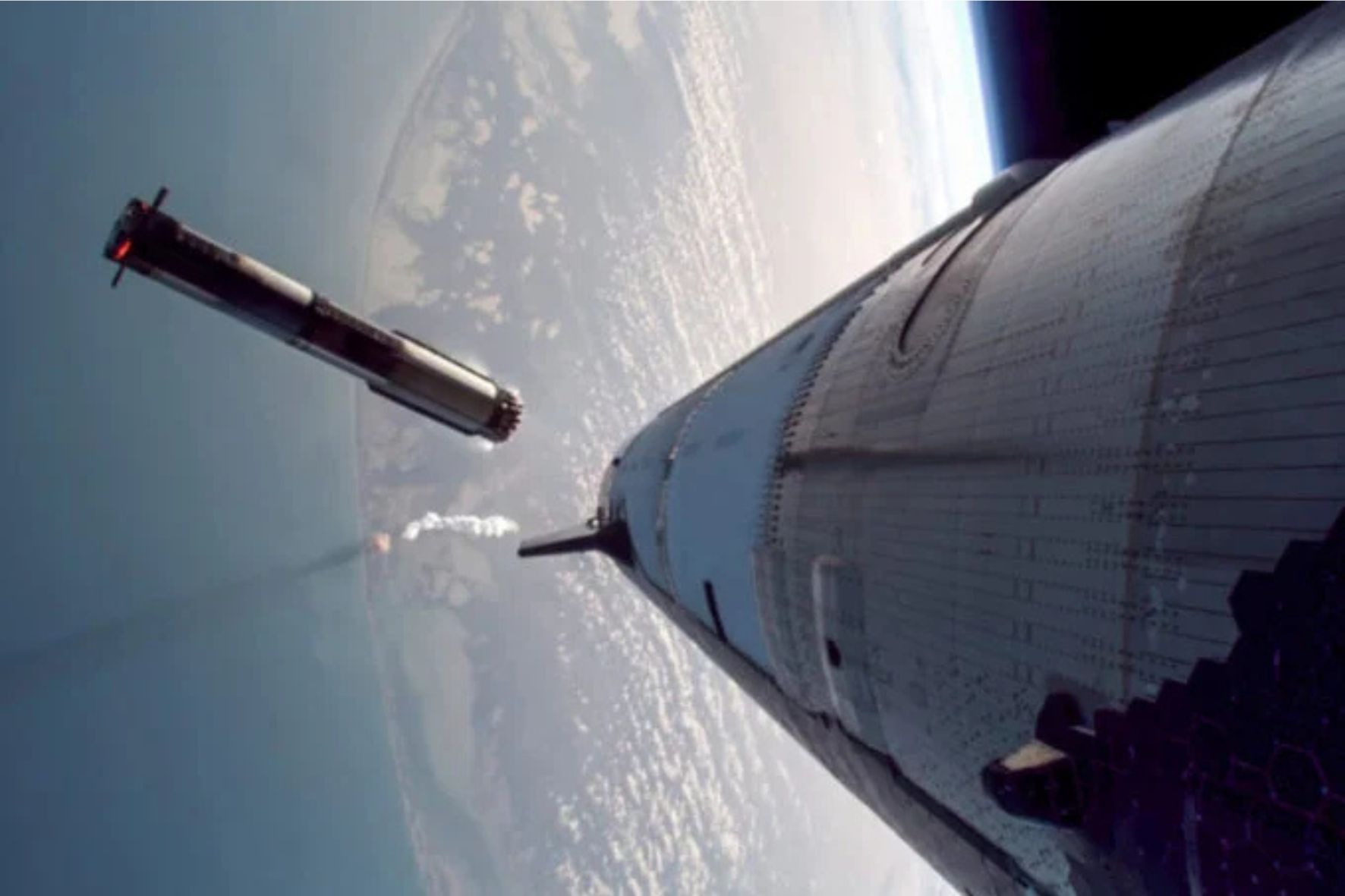
El The takeoff of the Starship-Super Heavy combination was flawless, achieving hot separation of the stages, a critical aspect after the previous incidents. Attention was focused on the ascent phase and the deployment of the spacecraft's payload. However, complications arose: Starship cargo door failed to open, preventing the deployment of the simulated satellites.
Shortly after, a was detected failure in the ship's attitude control, which forced the skipping of the engine re-ignition, crucial for a controlled re-entry. The craft began to spin out of control and, after losing pressure in the main tank during the re-entry phase, The broadcast was interrupted approximately 46 minutes after launch. Shortly after, The vehicle disintegrated over the Indian Ocean, with no impact outside the planned safe area.
For his part, the Super Heavy B14 propellant attempted its comeback in experimental mode, maneuvering at a high angle of attack to reduce its speed before landing. Although it completed its scheduled engine firing, communication was lost a few seconds later, resulting in an explosion at sea after the automatic safety systems were activated.

Lessons learned and measures taken
SpaceX has implemented improvements to Raptor engines, including preloads at key joints, new nitrogen purge lines, and optimizations to the propellant drainage system. The company believes that the failure of one of the central engines, which caused the explosion in March, has a different origin than the January incident, where excessive vibrations caused a fire. Investigations have led to a review and modification of critical procedures and components.
Likewise, the Federal Aviation Administration (FAA) authorized the flight after overseeing improvements and expanded the no-fly and no-sea zones to reduce risks. During this attempt, these areas affected several trade routes, requiring stricter coordination with international authorities, which had already caused diversions of civilian flights in the past.
Another important lesson is that the partial reuse strategy remains key. Although it wasn't recovered with Mechazilla on this flight, the reused booster provided valuable information on component survivability after multiple uses and the behavior of the heat shield under reentry conditions.
Impact on SpaceX plans and future missions
Starship is central to SpaceX's plans for private and commercial missions, as well as NASA's expectations for a return to the Moon (Artemis 3) and the exploration of Mars. The agency requires at least one unmanned moon landing before sending astronauts, so each failure increases the pressure on development deadlines.
Despite the results of the ninth flight, SpaceX continues with its policy of continuous learning and improvement: Every mistake represents an opportunity to improve safety systems and procedures. Elon Musk has confirmed that The data collected will accelerate future releases, with an expected frequency of one every three or four weeks, and that the third-generation Raptor engines (Raptor 3) will be key to enhancing the reliability of the system.
El The main challenge in the short term is to demonstrate that Starship can successfully complete its mission profile.: reaching orbit, deploying the payload, surviving reentry, and ensuring safe reuse. Validation of the heat shield, separation systems, and in-orbit re-ignition will remain the primary objectives of upcoming tests.
This launch has highlighted Starship's revolutionary potential, as well as the complexity of achieving the reliability required for space travel. As SpaceX refines its systems, Each essay brings closer the possibility of making interplanetary flights a future reality., although there is still a long way to go to achieve ultimate success.


I am a technology enthusiast who has turned his "geek" interests into a profession. I have spent more than 10 years of my life using cutting-edge technology and tinkering with all kinds of programs out of pure curiosity. Now I have specialized in computer technology and video games. This is because for more than 5 years I have been writing for various websites on technology and video games, creating articles that seek to give you the information you need in a language that is understandable to everyone.
If you have any questions, my knowledge ranges from everything related to the Windows operating system as well as Android for mobile phones. And my commitment is to you, I am always willing to spend a few minutes and help you resolve any questions you may have in this internet world.