- The European Commission imposes a fine of 120 million euros on X for violating the Digital Services Act.
- Elon Musk responds by attacking the European Union, calling for its "abolition" and for sovereignty to return to the states.
- Brussels accuses X of deceptive design, lack of advertising transparency, and denying data to researchers.
- The case opens a political and regulatory clash between the EU, Musk, and leaders from the United States and Europe.
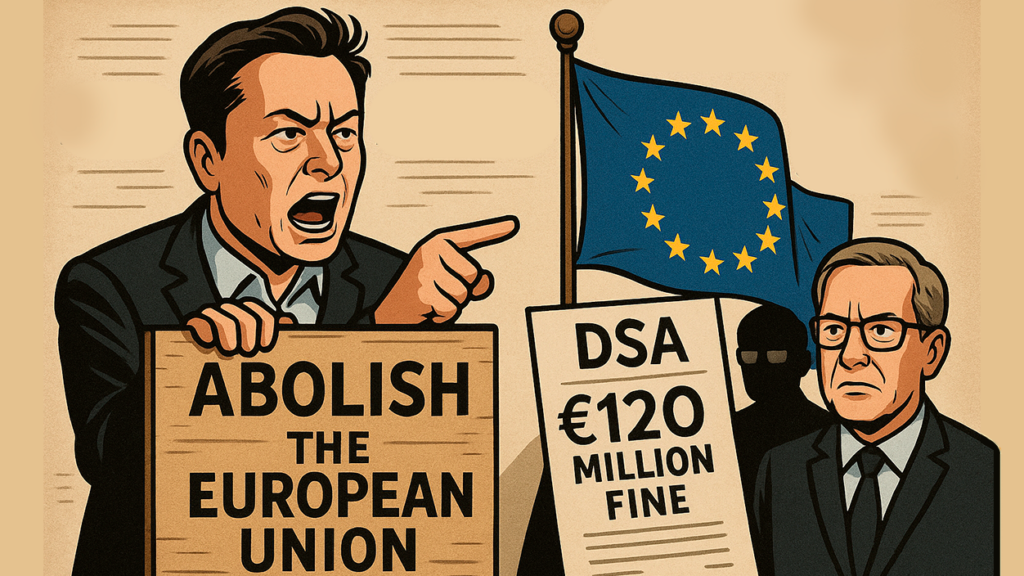
The clash between Elon Musk and the European Union has taken a new leap forward with Brussels' first major sanction against the social network and the tycoon's incendiary reaction. The European Commission has announced a fine of 120 million euros to the social network for violating several key points of the Digital Services Act (DSA), a regulation that sets the pace for digital regulation in Europe.
Within hours, the owner of X went on the offensive and launched a barrage of messages on his own platform in which calls for the "abolition" of the European Unionaccuses the Commission of worshipping the "god of bureaucracy" and He argues that the EU is "slowly suffocating Europe to death"His words have ignited a political debate that now extends beyond the strictly technological realm.
A record fine: 120 million euros against X
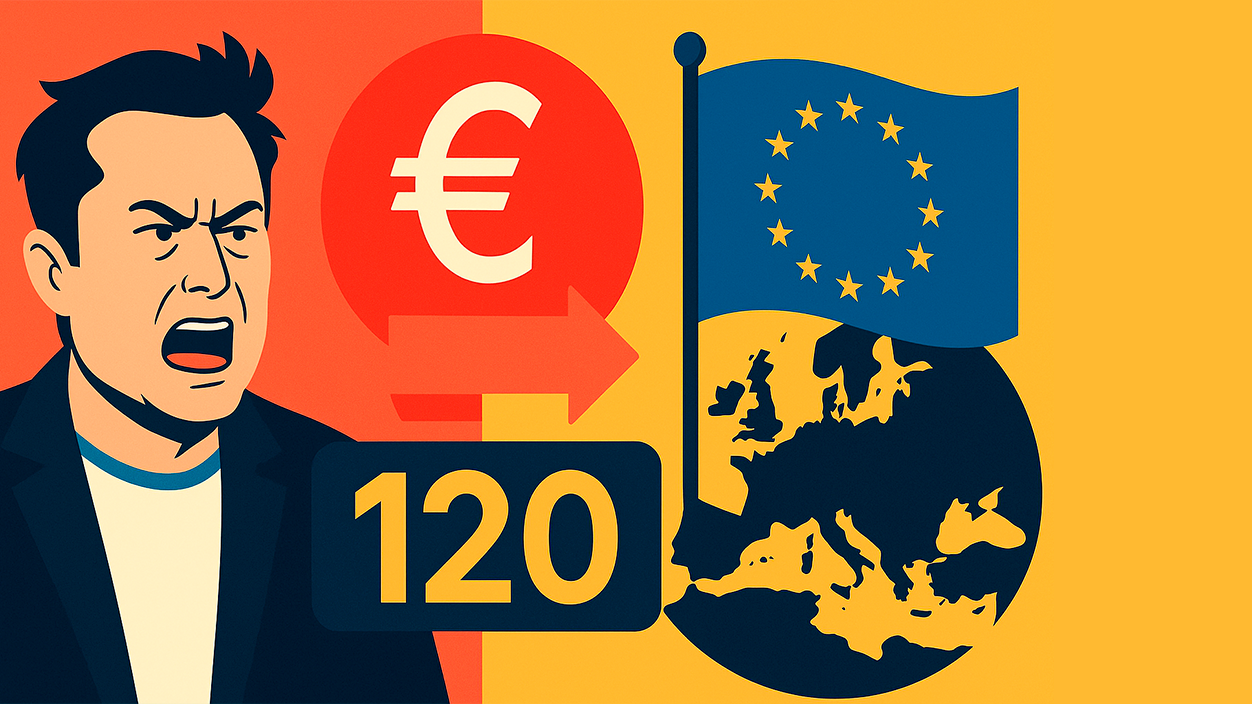
The sanction announced from Brussels is based on the Digital Services Act, the major European regulatory framework for online platforms. This is the first time the European Commission has imposed a fine of this magnitude against X for accumulated infringements following an investigation that, according to EU authorities, lasted two years.
The core of the decision focuses on the "Deceptive design" of the blue check markThat badge, which was previously associated with an identity verification process carried out by the platform itself, has become, after Musk's changes, a benefit tied to a paid subscription. However, Users continue to interpret it as a seal of authenticity, something that the Commission believes violates the requirements of clarity and non-confusion imposed by the DSA.
In addition to the blue icon, the Commission is targeting other relevant infringementsAmong them is the lack of transparency in X's ad repository, a tool that should allow citizens, regulators, and researchers to know who pays for advertising and what criteria are used to distribute it. Brussels also criticizes the company for... refusal to provide access to certain public data to the research community, another of the specific obligations of European regulations.
The commissioner responsible for the digital agenda has argued that the amount of the fine is proportional the type of infringements detected, the number of users affected within the European Union, and the length of time these breaches allegedly persisted. The Commission emphasizes that the aim is not to impose the highest possible penalties, but to ensure that The major platforms adhere to democratic and transparency standards that the EU wants to export to the rest of the world.
Within the framework of the DSA, The penalties can reach up to 6% of annual global revenues of companies that seriously and repeatedly fail to comply. In this case, X has between 60 and 90 working days, depending on the specific obligation, to implement changes that correct the practices identified or, failing that, to prepare an appeal before the European courts.
Musk's complaints: bureaucracy, freedom of expression, and sovereignty
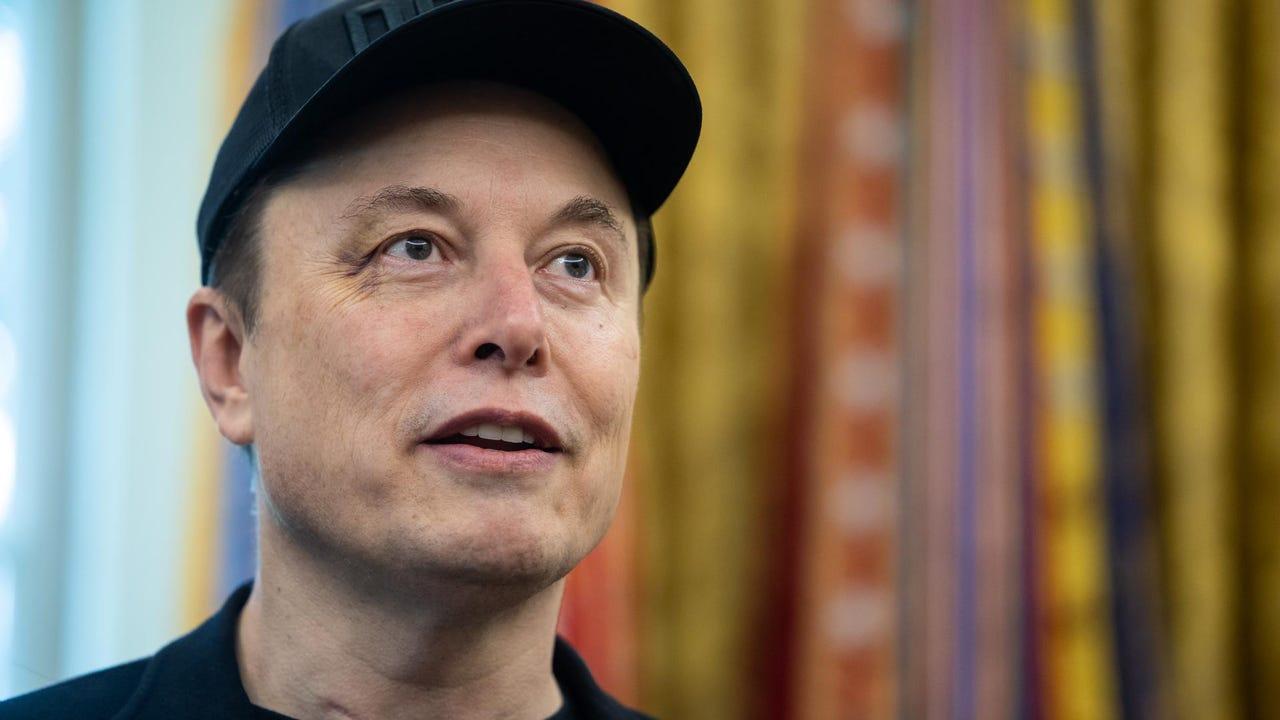
The entrepreneur's reaction was swift. Through a series of linked messages, Musk described the The European Commission as an apparatus that "worships the god of bureaucracy" and that, in his opinion, it would be "suffocating the people of Europe" with regulations that stifle innovation and freedom on the internet.
In one of the texts he has pinned to the top of his profile, the owner of X maintains that "The EU must be abolished" and that sovereignty should return to individual countries to allow governments to represent their citizens more directly. This message, visible to their close 230 million followers, has become the center of the debate on the extent to which a technology entrepreneur can influence European political discussion.
Musk insists the fine has less to do with technical issues than with a attempt to restrict freedom of expression in Europe. He has gone so far as to say that "the best way to find out who the bad guys are is to see who wants to limit what can be said" and has presented the sanction as a measure that punishes X for not complying with what he considers "censorship" of content that is inconvenient for Brussels.
In several of his messages, the tycoon emphasizes that "He loves Europe" but rejects the current EU structurewhich he refers to as a "bureaucratic monster" disconnected from citizens. These statements add to previous clashes with EU institutions since he acquired the former Twitter, including investigations into disinformation, content moderation, and compliance with European rules and the activities of xAI.
Eurosceptic support and criticism from Europe
Musk's words have been enthusiastically received by leaders openly EuroscepticAmong them is the Prime Minister of Hungary, Viktor Orbán, who has used the fine against X to once again attack the common institutions and denounce what he considers an attack on freedom of expression by Brussels.
Orbán has indicated that when the "supreme lords" of the community capital They can't win the public debate, so they resort to fines.He argued that Europe needs more space for free expression and less power for bureaucrats who, according to him, have not been directly elected by the citizens. In that context, the Hungarian leader praised the entrepreneur and said he "takes his hat off" to Musk for "standing up for the people."
From the other end of the European political spectrum have come the replies. The French Foreign Minister, Jean-Noel Barrot has come out in defense of the European Commission and has strongly supported the decision to sanction X under the DSA. In a message also posted on the platform itself, it stressed that transparency for major social media networks is "mandatory" and not a voluntary option.
Barrot has stated that the The international "reactionary community" can complain all it wantsHowever, France and the EU will not be intimidated in demanding clarity on how these platforms operate. She reiterated that "the rule is the same for everyone," citing the case of TikTok, which agreed to changes to comply with the required transparency, while X reportedly rejected the same conditions.
In Poland, the tone has been particularly harsh. The Foreign Minister, Radoslaw sikorskiShe responded to the businessman by ironically inviting him to "go to Mars," assuring him that there would be no "censorship" or controversies related to extremist greetings there. With this comment, she sought to distance herself from Musk's rhetoric and emphasize Warsaw's commitment to European regulations on digital content.
Reactions from the United States and the focus on the DSA
The power struggle between Musk and Brussels has quickly crossed the Atlantic. In the United States, Some leaders have interpreted the fine against X as a hostile gesture towards Big US Tech.Secretary of State Marco Rubio has described the European Commission's sanction not just as an action against X, but as a broader attack against his country's platforms and against American citizens.
Rubio maintains that The days when Americans could be "censored" on the internet are over. indirectly through foreign regulations. His statements fit into a domestic climate in which part of the American political spectrum is wary of the EU's attempts to set global digital standards.
For its part, the European Commission insists that Its rules do not target any specific nationality.but rather apply to any platform with a significant presence in the European market, regardless of its origin. The DSA, Brussels officials remind us, has as its main objective reduce illegal and harmful content, increase the transparency of algorithmic systems and ensure that users have more control over what they see online.
Other major technology platforms have already undergone DSA scrutiny. TikTok avoided an immediate fine After committing to make changes to its ad library and improve access to information, Meta, TikTok, and the online marketplace Temu, among others, face investigations and charges related to advertising transparency, child protection, and preventing the sale of illegal products, underscoring that the EU's focus is not limited to X.
European officials recommend reading Musk's fine in the context of a broader strategy to limit the power of tech giants and to give smaller competitors room to maneuver, as well as to strengthen consumer protection. In this context, the decision on X is seen as a further step in consolidating the European regulatory model.
What's next for X and for European digital regulation
Following notification of the sanction, X has a a period of between 60 and 90 working days to explain to the Commission what specific measures it will take to correct the identified shortcomings regarding the design of the blue mark, advertising transparency, and access to data for researchers. It may also choose to appeal the decision to the Court of Justice of the European Union.
Sources close to the company indicate that Musk is preparing a "forceful" reaction, which could translate into protracted legal battles and even in technical changes that affect the social network's operation within the European Union. On previous occasions, the company has threatened to restrict certain features of X in Europe or to reconsider its presence in the region if it deemed the regulatory framework too demanding.
Meanwhile, the Commission keeps open other investigations on XThese include issues related to the dissemination of illegal content, disinformation, and tools to prevent information manipulation. Simultaneously, the review of TikTok's design and compliance with its child protection obligations continues, demonstrating that The European debate on social media goes beyond the Musk case.
In this context, the feeling is reinforced that The EU wants to consolidate its position as a global benchmark. In the area of digital rights and platform regulation, there are opposing views, while figures like Elon Musk advocate for a much more deregulated model based on minimal government intervention. The struggle between these two perspectives is playing out in the courts, within institutions, and increasingly, in the symbolic arena of public opinion.
The episode of the fine imposed on X and the tycoon's explosive response paints a picture in which Technological, economic, and political interests intersect: a European Union determined to enforce its digital rules, a businessman who presents this intervention as a threat to freedom of expression, and an international community divided between those who see Brussels as a check on the excesses of large platforms and those who believe it is using its regulatory power to impose its own model on the rest of the world.

I am a technology enthusiast who has turned his "geek" interests into a profession. I have spent more than 10 years of my life using cutting-edge technology and tinkering with all kinds of programs out of pure curiosity. Now I have specialized in computer technology and video games. This is because for more than 5 years I have been writing for various websites on technology and video games, creating articles that seek to give you the information you need in a language that is understandable to everyone.
If you have any questions, my knowledge ranges from everything related to the Windows operating system as well as Android for mobile phones. And my commitment is to you, I am always willing to spend a few minutes and help you resolve any questions you may have in this internet world.