- Universes Beyond has gone from occasional drops to complete collections with great success, most notably The Lord of the Rings and Final Fantasy.
- The products focus on Commander, combining reprints and new cards; some collaborations are integrated into existing sets such as Ixalan with Jurassic World.
- The Final Fantasy collaboration includes iconic cards (Sephiroth, Bahamut, Clive/Ifrit), a serialized Chocobo card, and 4 Commander decks.
If there's one topic that stirs passions among Magic: The Gathering players and collectors, it's its crossovers with other brands. In recent years, alliances under the umbrella of Universes Beyond They've gone from being one-off experiments to becoming flagship releases, opening the doors of the Magic Multiverse to video game, film, television, and literature franchises. It's no exaggeration to say that, since celebrations like the 30th anniversary, these collaborations have shaped Wizards of the Coast's agenda and put the collection in the spotlight for new audiences.
The phenomenon has evolved at breakneck speed: from very specific drops like Secret Lair (with such well-known examples as The Walking Dead) to complete collections in the traditional style, as happened with The Lord of the Rings. In between, we've had products from Commander Designed from the ground up, promotional cards inserted into Standard sets, and reprints with alternate art that perfectly suit iconic franchises. All of this has generated excitement, intense debates, and, of course, a healthy dose of collecting. Let's take a look at a roundup of... Magic: The Gathering's most epic collaborations with other franchises.
Universes Beyond: what it is and what it brings to Magic
Universes Beyond is the label that brings together Magic's official collaborations with other intellectual properties. Its objective is clear: introduce new cards, artwork and products that connect the card game with stories beloved by the public. This includes everything from television series and films to video games and literary sagas; the range is enormous and, for the community, it represents the possibility of mixing their hobby with universes they already love.
The format of these collaborations has been flexible. At one end are the Secret LairLimited edition packs with beautifully crafted cards (and sometimes mechanically unique). The other contains the complete collectionswith hundreds of new cards, boosters, and all the usual Magic features. Between these two extremes, Wizards has launched Commander preconstructed decks and themed cards inserted into existing sets, such as the Jurassic World cards that snuck into Lost Caverns of Ixalan.
A perfect example of how formats are mixed is Ikoria, the set that introduced creature cards inspired by kaiju through alternate art treatments of GodzillaThis type of elegant integration allowed for reprinted cards and versions with alternative names/artwork, maximizing the thematic connection without breaking the game structures we are already accustomed to.
However, 2023 marked a turning point: The Lord of the Rings: Tales of Middle-earth It made the leap to a complete collection with more than 300 cards, and the collaboration with Doctor Who Wizards followed suit with several Commander decks bolstered by collector's boxes. Since then, Wizards has approached these synergies as central part of their calendarnot as an extra.
Secret Lair, complete sets and the Commander role
Most alliances have looked particularly good in Commander. This is no coincidence: the 100-card format with a legendary creature at the front allows for... tell relatable stories With eye-catching designs and easy-to-understand synergies for newcomers, many releases include four to five themed decks, each focused on a faction, group, or key moment from the featured franchise.
However, not everything is new: a good portion of these products combine reprints It features staples of the format alongside a handful of brand-new designs. This balance helps ensure the decks are playable from day one, while also offering collector's items with artwork and frames specifically designed for the collaboration.
Limits have also been explored. With Secret Lair: The Walking Dead The conversation turned to exclusive cards and their possible reprinting under alternate names or in standard Magic settings. The question of if, when, and how are those letters reprinted It has been a hot topic in the community, especially when there are licensing agreements involved.
Although there is curiosity about the details, License terms are not usually made publicEach agreement (for example, with Toho for Godzilla) may include specific conditions regarding names, artwork, frames, or reprints, hence we see different solutions depending on the collaboration.
Meanwhile, some rumors have been circulating but haven't materialized (yet). At one point, some linked the arrival of strixhaven with a possible nod to a certain magical world of wands and flying broomsticks. And, of course, looking at Hasbro's brand catalog, Marvel o Star Wars They always loom on the horizon of the community's desires, however crazy those combinations may seem at first glance.
Fallout, Assassin's Creed and the leap to the front line
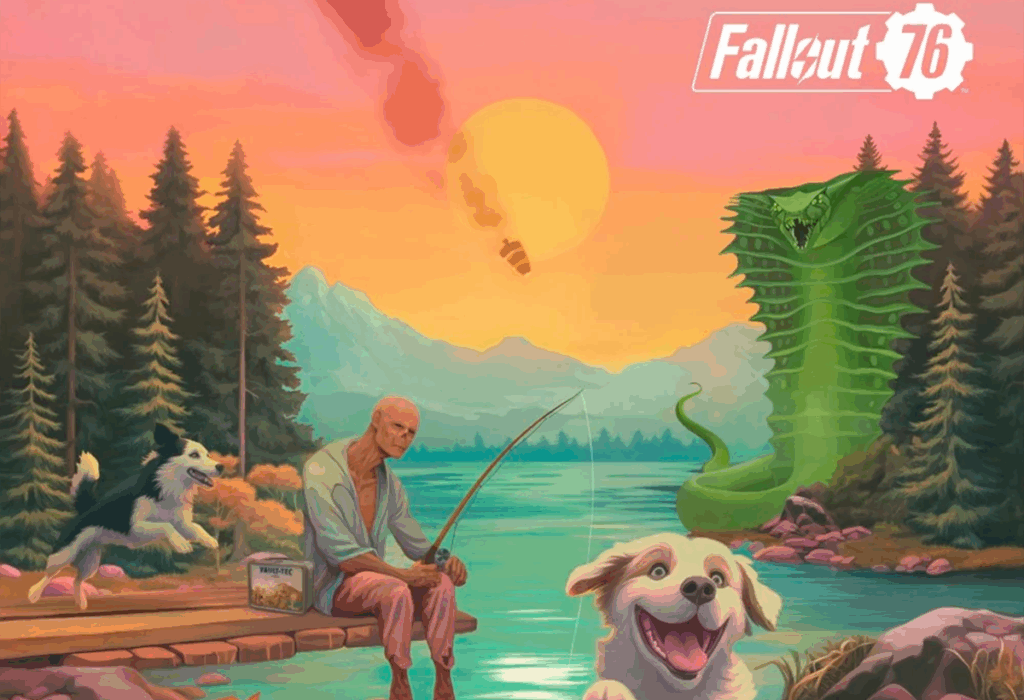
The consolidation of Universes Beyond became evident with the announcements at Magic's Gen Con celebration. There it was confirmed that Fallout would have its own Commander decks, with a planned release in March 2024. Each deck represents a Wasteland factionSo, iconic names like the Brotherhood of Steel and the Enclave are present. The exact inspiration for each game in the series wasn't detailed from the outset, but the post-apocalyptic setting fits perfectly with the resource, equipment, and survival mechanics.
The other major video game franchise that jumped on the bandwagon was Assassin's CreedIts launch was scheduled for the third quarter of the year, and the promise was clear: assassins, parkour and historical artifacts These elements were brought to the battlefield with frames and artwork reminiscent of the most beloved installments. In practical terms, the expectation was for a product that would explore the saga's legacy through legendary cards and iconic artifacts.
Beyond these two names, Wizards hinted at the presence of Jurassic World cards such as inserts in Lost Caverns of Ixalan, celebrating 30 years of movies with tabletop dinosaurs. And, lest there be any doubt about the ambition of the plan, there was mention of a new Modern Horizons, a remaster of Ravnica and other scheduled products, making it clear that the calendar was quite full.
The Lord of the Rings and Doctor Who: the change of scale
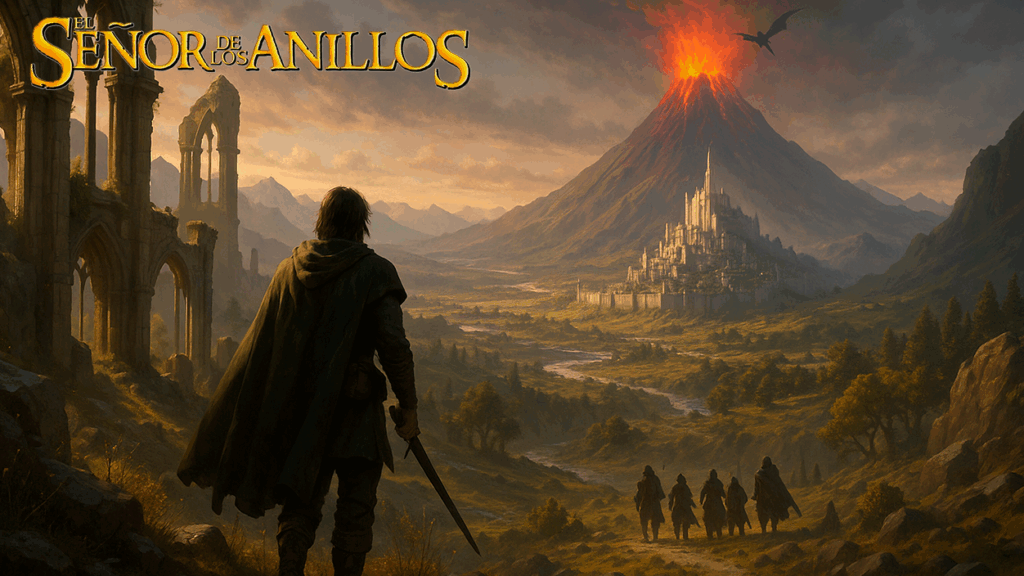
Until the arrival of The Lord of the Rings, it was common to see batches of 4 or 5 Commander decks Through collaboration, with a core of reprints supported by previously unreleased cards. This model worked: it allowed players to start playing right out of the box and offered easily recognizable nods to fans of the featured IP.
But with Middle-earth the bar was raised: the collection was treated as a complete set Magic: The Gathering expansion, with over 300 new cards, boosters for every taste, and parallel versions for the most powerful cards, was literally a Multiverse expansion that sold out on tables and shelves, proving that the formula could also work on a large scale.
Next on the list, Doctor Who, kept the focus on Commander, but added collector's boxes to the equation. In practice, this meant even more special treatments and alternative artwork, as well as very enticing reprints for those looking to improve their decks without losing the thematic touch.
A recurring curiosity in these collaborations is the presence (or absence) of planeswalkersWhen working with stories outside of Magic's original mythology, Wizards usually avoids forcing that type of card unless it fits perfectly; thus, some collaborations prioritize legendary creatures, sagas, and spells over designs that belong exclusively to Magic's lore.
Final Fantasy: From hype to reality with cards that tell stories
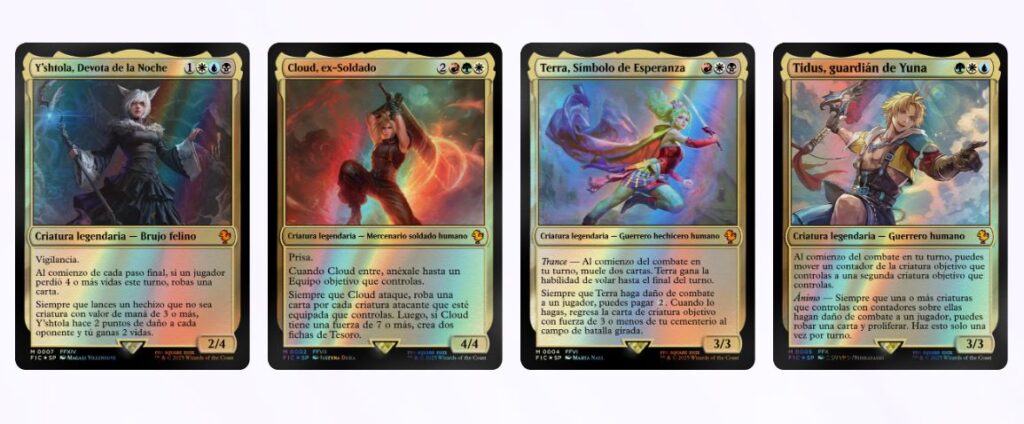
The collab with Final Fantasy It had been brewing for some time, and when it finally took shape, it did so in a big way. The collection was set to be available starting on June 13covering all 16 main games in the series, from the 1987 classic to the most recent installment. The underlying idea was clear: transfer moments, powers and identities from the franchise to the language of Magic.
One of the main protagonists is SephirothIts design revolves around the death of other creatures and the transition to its most iconic form, known as Safer Sephiroth. Upon reaching that stage, the villain can cast a Supernova It's represented as a devastating emblem, weakening rivals with each new death on the board. Needless to say, in Commander, that snowball effect can decide games.
The selection of characters from Final Fantasy VII She is generous: Tifa It can double the combat phase to take full advantage of aggressive strategies, while Cloud It enhances its synergy with teams and finishes with the mythical Buster Sword, included in the set with a mechanical boost that, although initially not detailed, is understood to be designed to optimize its attacks.
If what we seek is immense power, Bahamut He keeps his promise. Here we see him in the form of Saga that culminates in a type of skill Mega FlareDamage to all other players equal to the total mana value of our permanents. In practical terms, this is a burst that puts long boards in a difficult position and rewards those who have built a field with high-cost permanents.
The connection between characters and summons shines especially brightly with Final Fantasy XVI. Clive It has a human side that refreshes the hand based on the devotion to red and, as it transforms into Ifrit Through mechanics reminiscent of Saga, it unleashes obscene amounts of red mana and the ability to return to the field in its original form upon reaching the third chapter. The result is a thematic and mechanical back-and-forth that perfectly captures the spirit of the game.
Other names, such as Jill and its link with ShivaThey reinforce that idea of dual identity, taking advantage of the Saga card format to tell transformation arcs with a distinctly Final Fantasy feel. The design pays meticulous attention to every visual detail, and that's noticeable even if you've never held a controller before.
For collectors, there are two treats: a serialized card of Chocobo limited to 500 copies which only appears in Collector Boosters, and non-serialized versions are available in different colors to complete a sort of stable of mounts to the player's liking. It's the kind of wink that ignites auctions and fuels scrapbooks.
As expected, the launch is accompanied by four Commander decks Based on key games in the series, with designs meant for instant sit-down play. The combination of new cards and valuable reprints makes for a well-rounded experience for both Final Fantasy fans and Magic players eager to try different archetypes.
The reception couldn't have been better: the collaboration with Final Fantasy has become the most successful in 32 years Magic, placing Universes Beyond a step above even many Standard sets in terms of media impact and sales. An unmistakable sign that these alliances have gone from being a rarity to being mainstream.
Jurassic World on Ixalan and other integration pathways

Not all collaborations require a completely original product. One approach that has worked very well is to insert themed cards in sets that already explore similar ideas. This is what happened with Lost Caverns of Ixalan, which included cards from Jurassic World, taking advantage of the presence of dinosaurs and exploration as the axis of the world.
This model offers three advantages: it keeps the core collection as the main focus, it adds aesthetic variety and effects, and allows collectors to hunt for specific pieces without having to buy a separate product. It's an elegant way to cross universes without breaking the main set's narrative thread.
Licenses, reprints, and alternative names
Behind every collaboration is a licensing agreement. That translates to particular conditions Regarding the use of names, logos, artwork, frames, and, very importantly, possible reprints. That's why we see diverse strategies: sometimes cards are born as unique designs with a name from the guest franchise and, later, they might reappear with proper names and arts of the Magic Multiverse if the contract allows it.
The case of Godzilla In Ikoria, this is illustrative: the alternative art treatments and superimposed names on base cards allow the kaiju flavor to coexist with the set's identity. Generally speaking, the clearer this separation, easier It turns out to reissue the letter without the guest franchise layer, avoiding legal frictions.
In any case, The fine print is rarely made publicHence the debate within the community about whether such a card could return in the future, under what framework, and under what name. The golden rule: it depends on each license.
Why these collaborations work (and what their limitations are)
For Wizards, Universes Beyond serves a dual purpose. On the one hand, attracts new audiences who might never have approached Magic without a familiar entry point. On the other hand, it enriches the game with artistic styles, mechanics, and flavors that push the design to explore less-traveled corners.
Are there limits? Yes. When the material comes from another franchise, we try not to force elements of it. its own mythology of Magic (like planeswalkers) if they don't fit organically. Instead, card types ideal for storytelling are used, such as Saga, or legendary creatures that personify well-known heroes and villains.
Furthermore, the Commander format has established itself as a perfect laboratory For these crossovers: it allows for long games, epic moments, and designs that shine with four players—just the kind of table where a recognizable character can become the life of the party.
What's coming: more Final Fantasy, The Lord of the Rings, and PlayStation
Given the success, Wizards has quickly confirmed that there will be new products Final Fantasy and The Lord of the Rings were mentioned later, with an eye toward 2026. In parallel, they mentioned cards inspired by PlayStation sagasThis naturally expands the spectrum of collaborations with video games, which were already pioneered by Fallout or Assassin's Creed.
The anticipation is further fueled by media timing: if a franchise returns with a new season (as has happened with Fallout), the conversation surrounding the Magic crossover It heats up again.It's the perfect storm of marketing, nostalgia, and a desire for a table.
Future wishes: Marvel, Star Wars, and a surprise candidate
There's no shortage of speculation whenever Wizards opens the door to new announcements. The community is full of fantasies about Marvel o Star Wars (the synergy with Hasbro is an obvious draw), and many remember how, back in the day, they even joked about a Secret Lair in the style of Force of Will Taking advantage of the coincidence of dates on May 4th and 5th. These are ideas that are generating buzz, although, for now, they haven't gone beyond wishful thinking.
Among the more realistic proposals, the one that has emerged strongly is Clair Obscur: Expedition 33Lead designer Gavin Verhey himself has commented that he would love to see this collaboration become a reality. To put it simply: He believes there is potential And that, after having worked with Fallout or Warhammer, there is room to continue exploring games with a strong identity and systems that fit with Magic.
For this to happen, the approval of all parties would be needed: Magic: The Gathering, Kepler Interactive (editor) and Sandfall Interactive (development team). It certainly won't be for lack of desire.
And if the collaboration with Final Fantasy has demonstrated anything, it's that the spirit of 16 deliveries in a single, cohesive product. The monumental task of selection, design, and adaptation has set the bar incredibly high, showcasing what can be achieved when there's an obsession with capturing every nuance of a beloved franchise.
Collectibles, languages and rarities: between foil and serial numbers
These alliances have also reshaped the collector ecosystem. There were those who, with the Godzilla seriesIt was proposed to complete versions foil in Japanese And, over time, it has preferred to reserve its budget for more popular franchises or sets with greater appeal. The reality is that not all collaborations carry the same weight, and that affects purchasing decisions and the perception of exclusivity.
The letters serial They've added fuel to the fire. The Chocobo, limited to 500 copies in the Final Fantasy collaboration, is the perfect example: It only appears in Collector Boosters And, as expected, its price skyrockets. At the same time, the existence of a standard version in different colors allows more players to enjoy the nod to the game without breaking the bank.
There are also those who seek alternative artSpecial frames or specific languages to complete your ideal collection. Universes Beyond, by relying on cultural icons with their own fandoms, multiplies the customization possibilities while still offering playable and useful content.
Busy calendar and buzzing community
Among main products (such as a new Modern Horizons) and nostalgic rereadings (like Ravnica RemasteredMagic's schedule is already tight. Adding Universes Beyond results in a double hype trackOn one hand, the advancement of Magic's own lore; on the other, the arrival of cultural icons that attract attention from outside.
That balance isn't always easy. There are debates about the presence of exclusive cards, the release schedule, and compatibility with competitive formats. At the same time, it's undeniable that these collaborations have revitalized The conversation about the game has filled tables and attracted people who otherwise would never have tried a game.
If you like Magic for its world, these alliances are a fun experiment which adds new textures. If you fall in love with their design, they're mechanical laboratories that test fresh ideas. And if you're won over by their illustrations, there's not a week that goes by without some alternative art begging for a place in your filing cabinet.
With all of the above in mind, it's clear that Magic has found a creative and commercial goldmine in Universes Beyond. From Fallout to Assassin's Creed, from Middle-earth to the Doctors, and with Final Fantasy as a flagshipThe formula proves that you can pay tribute to your favorite stories without losing the essence of the game. What comes next—new installments of Final Fantasy and Lord of the Rings cards, cards from PlayStation sagas, and even the dream of seeing Clair Obscur—only confirms that the Magic Multiverse has More doors open than ever beforeFor more information, we leave you the Magic official website.

Passionate about technology since he was little. I love being up to date in the sector and, above all, communicating it. That is why I have been dedicated to communication on technology and video game websites for many years. You can find me writing about Android, Windows, MacOS, iOS, Nintendo or any other related topic that comes to mind.