- OpenAI introduces controls to adjust ChatGPT's personality, such as warmth, enthusiasm, and emoji usage.
- The settings are combined with base styles such as professional, friendly, sincere, or cynical to tailor the tone to each user.
- Personalization does not change what the model knows, but how it communicates it, with an impact on personal and professional contexts.
- The new controls are now available in the ChatGPT customization menu for users in Europe and the rest of the world.

ChatGPT has become more than just a tool for many users: it is an assistant with whom you can talk dailyQuestions are answered, and even leisure time is shared. That feeling of interacting with "someone" is largely due to their way of expressing themselves, and not so much to what they know. OpenAI is aware of this and It has taken a further step so that each person can adjust that character to their liking.
The company has rolled out an update that introduces specific controls over the chatbot's personality and toneNow it's possible to regulate aspects such as warmth, enthusiasm, and the use of emojis, as well as choose from several predefined communication styles. The goal is clear: that the assistant sounds more professional, more approachable, or more ironic depending on your needs each user at any given time.
What changes with ChatGPT's new personality?

With this update, OpenAI allows users to go beyond classic custom instructions and provides access to a settings panel focused on the way ChatGPT speaksIt is not about modifying the model's knowledge or reasoning abilities, but about to clarify how the answers are presented: the tone, the level of closeness, and the overall style of the conversation.
The new feature comes amid a wave of pre-Christmas improvements, in a context where The company has also updated its reference model, GPT-5.2Focused on greater accuracy, fewer hallucinations, and better mental health protection for intensive and professional use, the company is now adding a configurable "character" layer on top of this more solid technical foundation, directly impacting the daily experience with the assistant.
This personalization relies on a concept known in the field of AI: the so-called “temperature” of the modelThis determines whether the responses are more creative and varied or more restrained and predictable. Alongside this regulation of creativity, parameters designed for the general public are incorporated, allowing users to adjust their expression without needing to understand technical details.
It is worth emphasizing that, despite all these controls, This is not a new, "smarter" ChatGPT., like the ChatGPT adult modeThe underlying engine remains the same; what changes is the linguistic packaging. chatbot does not humanize, although it may seem so, but it does adapt better to the contextIt can sound colder and more direct in a work report or warmer and more relaxed in an informal conversation.
Where the tone and warmth of the assistant are changed
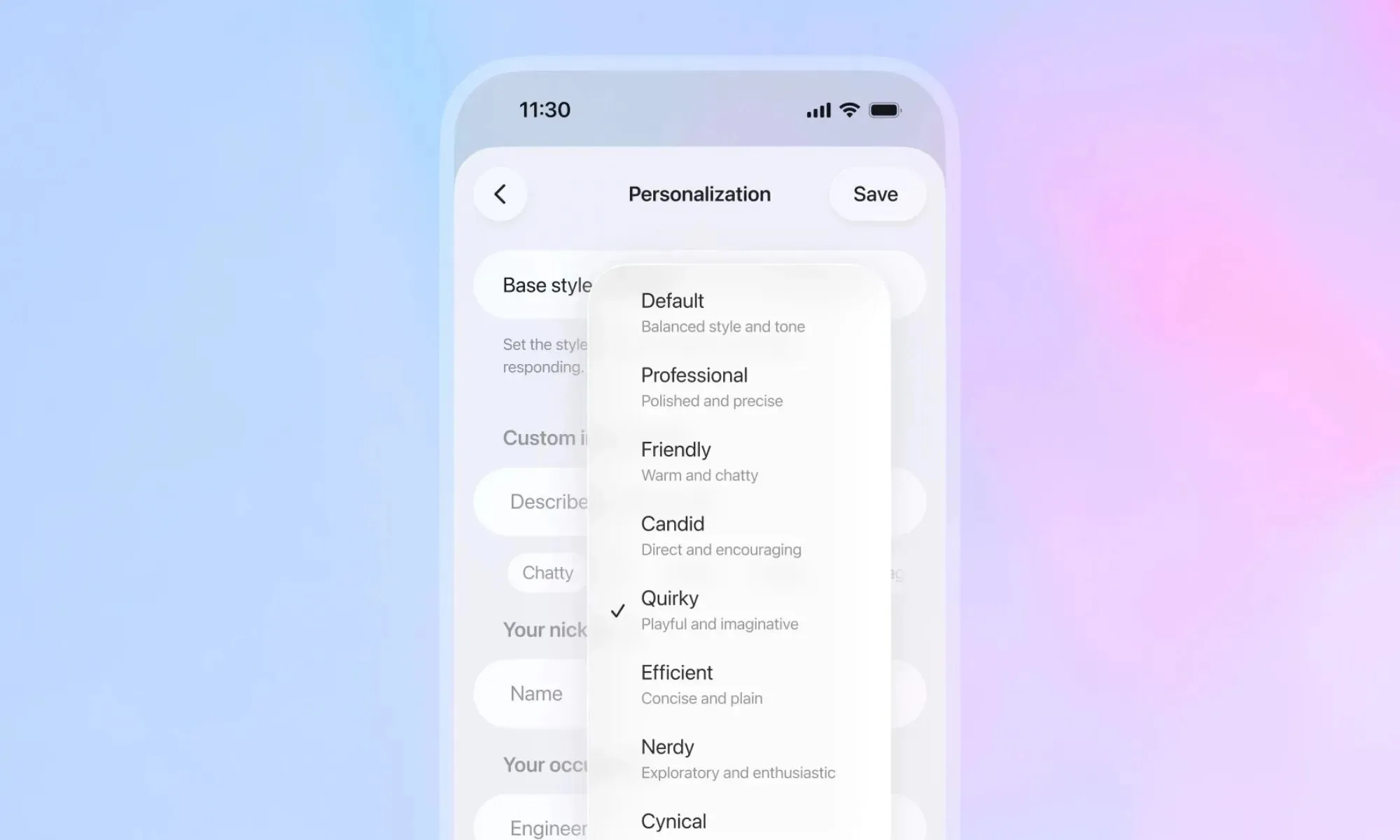
To access these options, OpenAI has enabled a “Personalization” menu accessible from the user profileSimply click on the account name or icon in the ChatGPT interface and enter the section dedicated to configuring the assistant's behavior.
At the top of that menu is the setting for “Style and base tone”This profile comes pre-set as "Default," but can be changed to several specific profiles. These include options such as professional, friendly, sincere, quirky, efficient, geeky (or "nerdy"), and cynical, each with a different nuance in writing style.
Just below appears the new block of "Characteristics"where it's possible to modify traits like warmth and enthusiasm. Instead of complex sliders, OpenAI has opted for three simple levels for each trait: “more”, “default” or “less”In other words, you can request a more enthusiastic ChatGPT, a more neutral one, or an assistant that simply responds without much embellishment.
The same scheme applies to other formal elements of the responses, such as the use of headings and lists or the presence of emojis. Those who prefer a highly structured output, with titles and bullet points, may favor that format; those who cannot stand seeing an emoticon outside of a mobile device can reduce them to a minimum or eliminate them completely from their conversations with the chatbot.
Basic profiles: from professional to cynic
Personality tests do not work in isolation: They are designed to be combined with the selected base style.That's where most of the game comes in: the mix between the type of profile chosen and the degree of warmth or enthusiasm applied on top.
If a professional approach is chosen and warmth and enthusiasm are minimized, the result resembles a very restrained corporate assistantPerfect for reports, formal emails, or data analysis tasks where an overly informal tone is undesirable. Responses remain detailed, but without any winks or overly familiar expressions.
At the opposite extreme, by combining a friendly style with high levels of warmth and enthusiasm, the chatbot begins to behave like a much closer and more expressive interlocutorIn tests with everyday scenarios, such as talking about the Christmas holidays, he comes across as almost like an effusive friend, with casual comments and a greater tendency to incorporate small emotional reflections.
The real curiosity arises when traits that, on paper, seem to clash intersect. A recurring example is that of a warm, enthusiastic, and at the same time, cynical ChatGPTIn that case, the responses maintain an affectionate and expressive tone, but introduce ironic comments or a somewhat more skeptical view of the situation, which generates a very particular voice of their own.
This system of combinations opens the door to profiles very tailored to the user's taste: from the "human resources manager" who gives advice tactfully, to a more dramatic virtual companion, ideal for those who enjoy conversations with a theatrical touch without losing clarity in the information.
Fine controls: warmth, enthusiasm, lists, and emojis
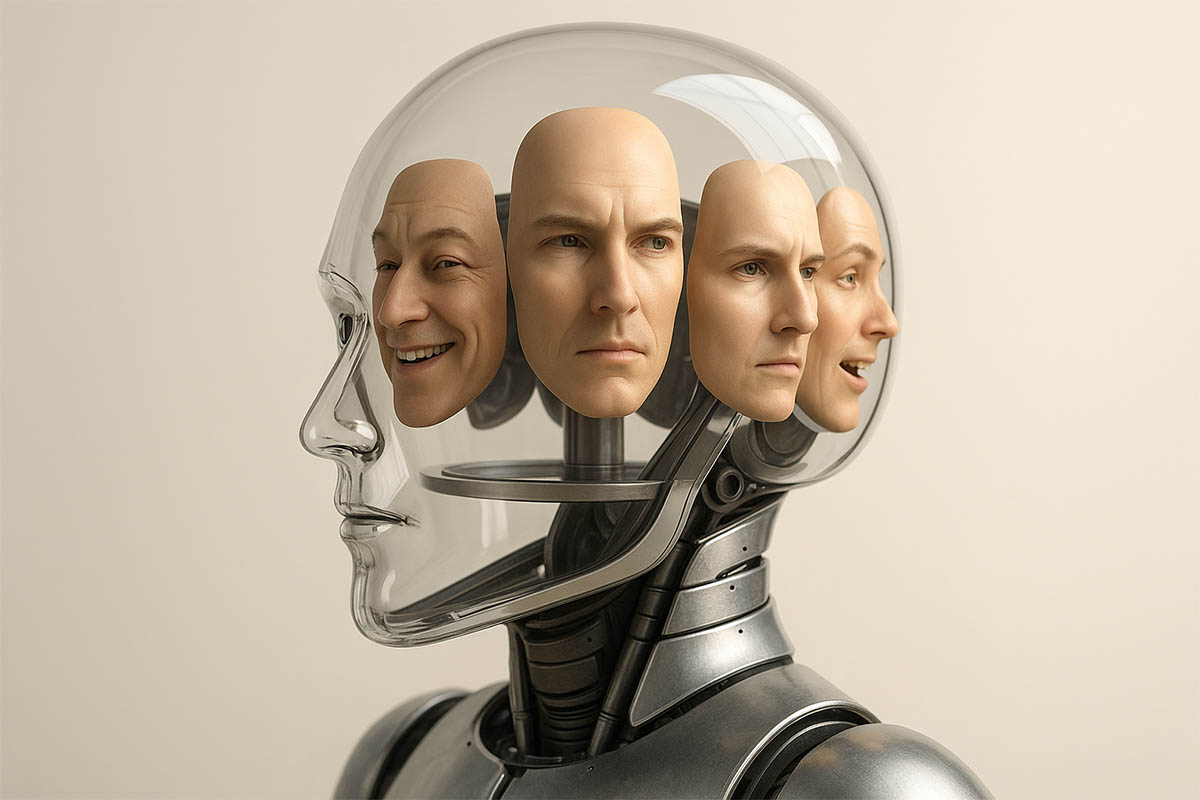
Within the features section, the options that have the greatest impact on daily use are warmth and enthusiasmBy adjusting these parameters to "more" or "less," the responses change immediately: they go from being purely functional to showing more empathetic language, with expressions of support or complicity, or on the contrary, they cut back on that emotional component to focus on the facts.
In parallel, the possibility of regulating the frequency of headings and lists It helps adapt the format to the type of task. For writing a report or working document, it can be useful to increase the use of lists and subheadings; for a quick exchange of messages, it might be more convenient to reduce them and maintain a continuous text, without too much visual structure.
The section on emojis is a very personal matter of style. There are users who They don't want to see a single icon in an email or an analysis.While some users appreciate that the chatbot uses these resources to modulate its tone, others appreciate that it does so. With the new control, simply setting the level to "less" makes them virtually disappear from the responses, or leaving it at "more" for a more informal and expressive style.
According to OpenAI's announcement on social media, these adjustments are now widely deployed, so Users in Spain and the rest of Europe should see the new options when opening ChatGPT. and access the customization menu. No installation is required: the update is applied server-side.
The company presents these changes as a way of adapt the assistant's behavior to individual preferenceswith the idea that the experience will be less robotic and more aligned with each person's way of communicating, without losing sight of professional environments where a particularly careful tone is required.
Impact on professional and personal use
In the workplace, this new layer of personality adjustments can be especially useful for those who use ChatGPT as support in administrative tasks, data analysis, or document writingAn overly creative or colloquial tone can be a problem in a report aimed at management, while an excessively cold response may not fit in closer internal communications.
By being able to select a professional base style combined with low warmth and moderate enthusiasm, Businesses and professionals can align the assistant's tone with their communication standardsThis is relevant both for large organizations and for Spanish or European SMEs that are incorporating AI into their workflows and need consistency in their corporate voice.
In personal use, the settings allow you to shape the chatbot's "character" to better suit your preferences. Some users claim dry, direct, and unadorned answers, almost as if they were consulting a database, and those who enjoy a more relaxed interlocutor, capable of introducing irony, light comments or a point of cynicism that makes the conversation more entertaining.
This flexibility may also be relevant for users who use ChatGPT as light emotional support or daily companionship...always within the logical limitations of AI. A warmer tone can make certain recommendations or reminders seem less aggressive, while a more distant style may be preferable when dealing with sensitive or delicate topics, reducing the feeling of emotional invasion.
The move fits into a clear trend: OpenAI aims for the assistant to adapt to the person.and not the other way around. After the introduction of personalized instructions and memory—which allows certain data about the user to be remembered—the ability to explicitly adjust the tone consolidates the idea of a ChatGPT that is increasingly configurable and, in a way, “domesticated”.
A first step towards more flexible personalities
Despite the progress, the new controls come with certain limitations. Some expert users point out that They would prefer continuous sliders instead of fixed options for parameters such as warmth or enthusiasm, which would allow for even finer adjustment of the assistant's behavior.
Another pending issue is the automatic context handlingCurrently, users have to manually decide which combination of style and features they want at any given time. However, in practice, many users alternate between routine tasks—like doing calculations or checking data—and more casual conversations, and they would like the service itself to dynamically adapt to these changes.
The possibility of configure different personalities for different chats This is another of the most discussed demands. A shared workspace with a European team is not the same as a personal chat for creative ideas or a channel where a more informal tone is desired. For now, the settings are applied globally, but logic suggests that, in the future, there could be separate profiles depending on their use.
In any case, this set of new developments is interpreted as a clear sign of OpenAI's strategyIn a market where they compete with alternatives like Google's Gemini and the Google AssistantThe way in which the assistant expresses themselves is becoming as important as the objective quality of their answers.
The company emphasizes that, by giving users greater control over tone, ChatGPT is perceived less as a monolithic block and more as a configurable companion. with which one can live on a daily basis, both at work and during leisure time, respecting the preferences and limits of each person.
With these new personality settings, the ChatGPT user experience changes noticeably: The background is not modified, but the way the assistant interacts with the person on the other side of the screen is.Being able to decide whether we want a serious chatbot, a more approachable one, or even one with a slightly cynical touch makes the tool better suited to each context, from writing a professional email in Spain to a relaxed conversation anywhere in Europe.


I am a technology enthusiast who has turned his "geek" interests into a profession. I have spent more than 10 years of my life using cutting-edge technology and tinkering with all kinds of programs out of pure curiosity. Now I have specialized in computer technology and video games. This is because for more than 5 years I have been writing for various websites on technology and video games, creating articles that seek to give you the information you need in a language that is understandable to everyone.
If you have any questions, my knowledge ranges from everything related to the Windows operating system as well as Android for mobile phones. And my commitment is to you, I am always willing to spend a few minutes and help you resolve any questions you may have in this internet world.