- The Xiaomi SU7 outsells the Tesla Model 3 in the Chinese electric vehicle market.
- Lower price and greater theoretical range are two of the keys to the SU7's success compared to Tesla's sedan.
- Integration with HyperOS and the Xiaomi ecosystem reinforces the appeal of the SU7 among users of the brand.
- Xiaomi's overtaking confirms the maturity of Chinese manufacturers and puts pressure on Tesla to react in Europe as well.

El Xiaomi SU7 has achieved a milestone that seemed difficult just a few years ago: outsell the Tesla Model 3 in what is now the world's largest electric vehicle market, China. This shift in trend not only affects Tesla's plans, but also sends a clear message to the rest of the world, including Europe, about the growing influence of Chinese manufacturers in the new electric mobility.
Although for now The phenomenon is concentrated in the Chinese marketThe success of the SU7 anticipates the type of rivalry we are likely to see when these types of electric sedans arrive more forcefully in Europe and, in particular, in countries like Spain, where the Tesla Model 3 has become a benchmark among the most technologically advanced electric vehicles.
The SU7 snatches the lead from the Tesla Model 3
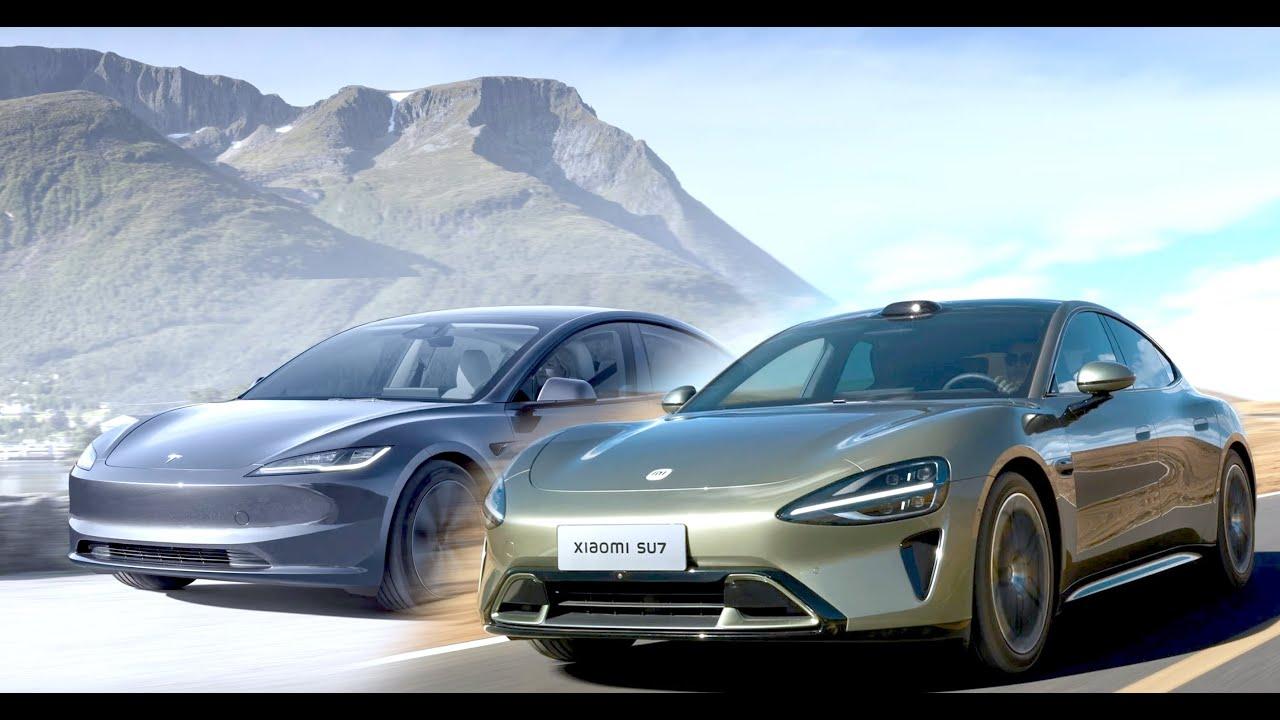
According to data from China Passenger Car AssociationXiaomi's first electric car has managed to outperform Tesla's veteran sedan in annual registration figures. In the last fiscal year, Xiaomi delivered 258.164 units of the SU7, while Tesla remained at 200.361 units of the Model 3.
It is the first time since Tesla arrived in China That another brand surpasses the Model 3 in the electric sedan segment is especially significant because Elon Musk's car had been the clear leader for years and the model that set the standard against which its rivals were measured.
In the Chinese market, the The Model 3 had remained the benchmark premium electric sedan Since 2019. Not even the attempts of new local manufacturers with well-equipped models, aggressive prices and frequent updates had managed to dethrone it in a sustained way until the emergence of the SU7.
The plot twist that Xiaomi is making with its electric sedan represents a Symbolic change for the automotive industry in Chinawhich goes from trying to catch up with Tesla to competing head-to-head in volume, performance and perceived quality.
For Tesla, this new scenario is a wake-up call in its main market globallywhere it will have to adjust prices, renew its product and improve its technological offering if it wants to recover the ground lost against a rival that starts with a large base of consumer electronics users.
Affordable price and long battery life, two key advantages of the Xiaomi SU7
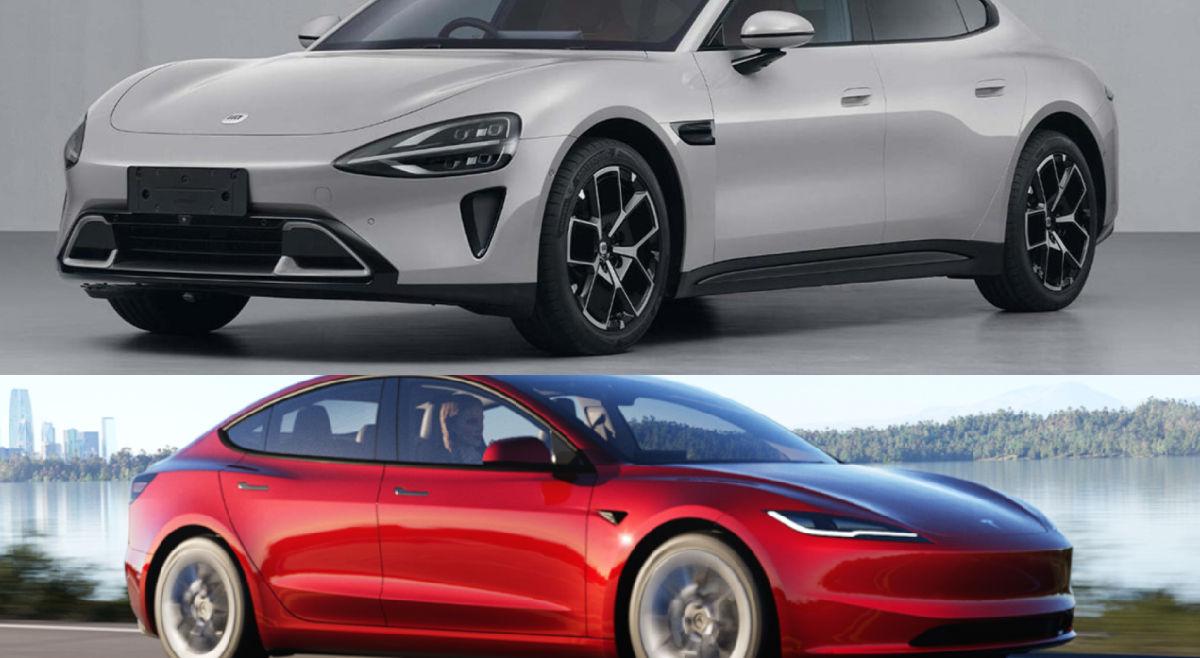
One of the most obvious factors in the SU7's success is the price positioning compared to the Tesla Model 3In the Chinese market, Xiaomi's sedan is offered with an approximate 9% discount compared to Tesla's sedan in its entry-level versions.
The basic variant of The Xiaomi SU7 starts at around 215.900 yuanMeanwhile, the Tesla Model 3 is priced at around 235.500 yuan. This price difference, in a segment sensitive to total cost of ownership, tips the scales in favor of Xiaomi for many buyers who value every euro (or yuan) invested.
Beyond the price, Xiaomi has made a strong commitment to the approved autonomy in CLTC cycleThe SU7, in its entry-level configuration, It advertises up to 700 km under that standard.a figure superior to the approximately 606 km offered by the Model 3 equivalent in the same Chinese homologation cycle.
It is worth remembering that the The CLTC cycle usually yields more optimistic ranges European standards like WLTP mean that the values are not directly comparable to those we would see in Spain or the rest of Europe. Even so, from a marketing and perception standpoint, The numbers clearly favor the Xiaomi model..
For a possible European launch, this data suggests that The SU7 could position itself as an alternative with a high degree of theoretical autonomy and a competitive cost compared to the Tesla Model 3, something especially relevant in markets where energy prices and charging infrastructure still influence the purchase decision.
Software, HyperOS and the Xiaomi ecosystem as differentiators
Another pillar of Xiaomi's strategy with the SU7 involves the technological integration and softwareThe electric sedan relies on HyperOS, the brand's own operating system that is already present in its mobile phones, tablets and other connected devices.
This integration allows the The car communicates seamlessly with the Xiaomi product ecosystem.This may be especially appealing to users who already own several devices from the company and are looking for a seamless experience between their smartphone and vehicle.
In addition, Xiaomi has decided to include driving assistance features for free In the SU7, at least in the context of the Chinese market, Tesla usually segments some of these capabilities into paid packages, such as advanced Autopilot options or full self-driving.
This approach fits with Xiaomi's track record in consumer electronics, where the quality-price ratio and the sum of features without skyrocketing the cost They have been their hallmark compared to other more established brands.
With an interface inspired by the mobile world and a clear commitment to the connected vehicle, the SU7 reinforces the idea that the An electric car is also a technological productThis is a vision that could take root in the European market, especially among younger audiences accustomed to living surrounded by screens and digital services.
Impact on Tesla and what it could mean for Europe
The displacement of the Tesla Model 3 by the Xiaomi SU7 in China doesn't just affect the balance of power in that countryThis also sends a powerful signal to European manufacturers and regulators. The message is clear: Chinese manufacturers are no longer competing solely on price, but also on product, scale, and technology.
For years, the Tesla Model 3 has been considered one of the most influential electric carsBoth in China and in Europe, it has significantly contributed to popularizing electric vehicles, setting a standard of efficiency, performance, and connectivity that many aspired to.
Now, with the SU7, a manufacturer that until recently was mainly associated with smartphones and consumer electronics products It stands up to Tesla and demonstrates that the transition to the automotive industry is possible if you combine a loyal user base, mature technology, and an optimized supply chain.
For the European market, where competition in electric vehicles is intensifying with models from German, French, Korean, and American brands, the emergence of proposals like Xiaomi's could to add more pressure in segments such as electric sedans and compact carsThe focus will likely be on the relationship between price, range, technological features, and perceived quality.
In countries like Spain, where the Purchase price remains a significant barrier For the leap to electric cars, the arrival of manufacturers replicating Xiaomi's strategy in China could force price adjustments and boost new offers from existing players, including Tesla.
The consolidation of Chinese electric car manufacturers
What the Xiaomi SU7 has achieved goes beyond a simple commercial duel between two models. It's a This demonstrates the maturity that Chinese manufacturers are reaching. in the field of electric vehicles, both in terms of product and industrial capacity.
China has established itself as the world's largest electric car market, and at the same time as a key production hub for batteries and componentsIn that context, a local brand surpassing Tesla on its own turf isn't so surprising, but it is It marks a turning point in international perception.
The success of the SU7 sends the message that the Chinese brands can compete in quality, performance, and volumenot only through lower prices. This reinforces the idea that the balance of power in the automotive industry is progressively shifting towards Asia.
For Tesla, and for the rest of the Western manufacturers, Xiaomi's overtaking of the Model 3 acts as a A reminder that competition in the electric car market will become increasingly intense., with players who come from the technology world and who can move quickly in product and software.
From the perspective of the European consumer, including the Spanish buyer, these movements in China are a preview of an increasingly wide and varied range of electric vehicleswhere the battle will no longer be fought solely on who arrived first, but on who offers the best overall balance between cost, autonomy, technology and user experience.
The emergence of the Xiaomi SU7 as a direct rival to the Tesla Model 3 in China reflects a profound change in the electric car landscape: New technology brands have gone from being aspirants to becoming protagonists.And its next big test will be to consolidate that position in demanding markets like Europe, where users are increasingly comparing prices, features and services associated with the vehicle in greater detail.

I am a technology enthusiast who has turned his "geek" interests into a profession. I have spent more than 10 years of my life using cutting-edge technology and tinkering with all kinds of programs out of pure curiosity. Now I have specialized in computer technology and video games. This is because for more than 5 years I have been writing for various websites on technology and video games, creating articles that seek to give you the information you need in a language that is understandable to everyone.
If you have any questions, my knowledge ranges from everything related to the Windows operating system as well as Android for mobile phones. And my commitment is to you, I am always willing to spend a few minutes and help you resolve any questions you may have in this internet world.