- The new AI-powered lists from YouTube Music and YouTube Premium generate playlists based on text or voice descriptions.
- The feature is available only to Premium subscribers on the iOS and Android mobile app and is integrated into the Library tab.
- Google uses generative artificial intelligence models, such as Gemini, to tailor music selection to tastes, moods, and contexts.
- The tool reinforces YouTube's commitment to personalization and the added value of its paid subscriptions.
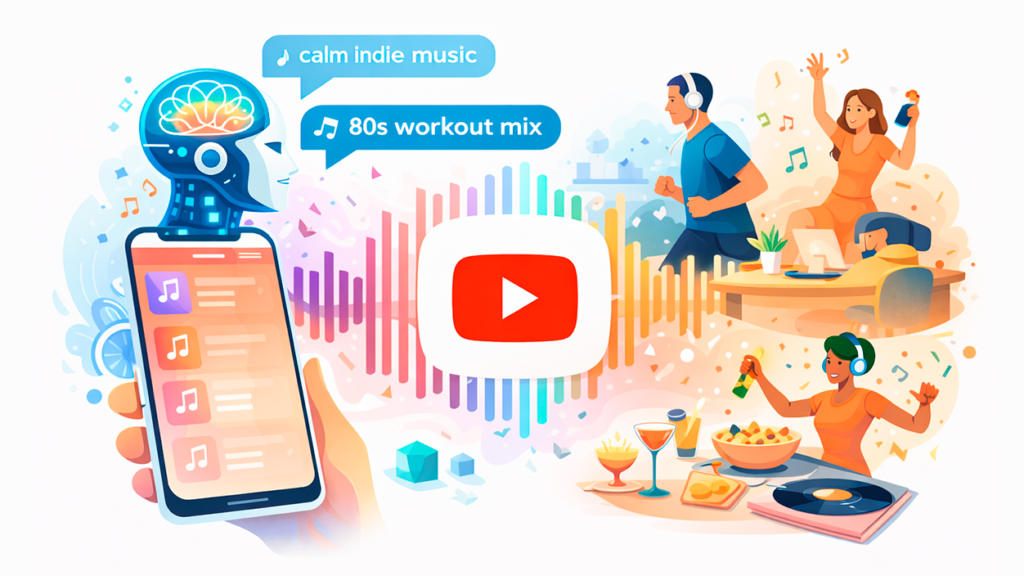
The arrival of the AI-powered playlists on YouTube Premium and YouTube Music This marks a new step in how we choose what to listen to. Instead of searching song by song or browsing through dozens of playlists, now Simply describe what you feel like., how you feel or what you are doing so that the app can generate a music selection tailored to your request.
Google has begun rolling out This AI-generated playlist feature is for Premium userswhich for now focuses on the mobile application and relies on language models capable of understanding natural instructions, both written and dictated. The idea is that create the soundtrack from a workday, an afternoon of studying, or an impromptu party it's a matter of a few seconds.
How the new AI-powered playlist works on YouTube Premium
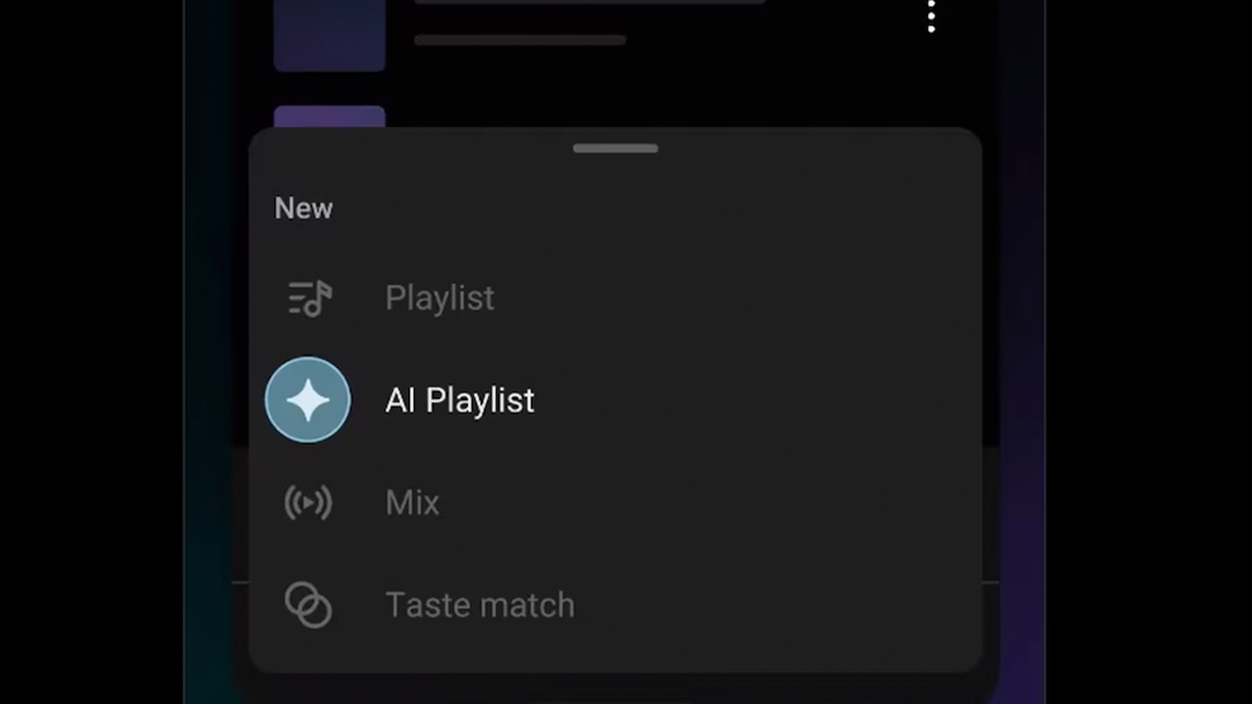
The tool of AI-powered playlists are integrated directly into the YouTube Music app.Within the Library section, the process for creating an AI-generated playlist is quite simple and designed so that any user can use it without technical complications.
To begin, you need to go to the tab "Library" and tap the "New" buttonAmong the usual options (standard list, mix, etc.), the alternative of creating a "AI-powered playlist"When you select it, a field opens where you can type or dictate what type of music you want to listen to at that moment.
The description can be as specific or as open as desired: from a simple "calm music for studying" up to something much more specific, like "cheerful indie pop to listen to on your way to work" o "2000s alternative rock for a nostalgic night"You can also mention genres, artists, or even everyday situations, such as playing sports, cooking, or relaxing at home.
Once the request has been submitted, the AI analyzes the text or voice command and creates a customized playlist in just a few seconds.The system cross-references the description with the available catalog and, in many cases, with the user's previous listening habits, to generate a selection that is consistent with what has been requested.
What exactly does YouTube's AI offer in playlists?

Google relies on generative artificial intelligence models, like Geminito bring this function to life. This allows for quite flexible interpretation of natural language, without the need for rigid commands or highly technical keywords. The AI not only recognizes genres and artists, but also attempts to capture moods, environments, and contexts of use.
For example, it is possible to ask "Soft electronic music to help me concentrate at the office", "sad post-rock for a quiet night" o "A progressive house mix for a relaxed party"From there, the tool generates a playlist with songs that fit that description, combining familiar songs with others that may be new to the user.
The function also allows include more precise referencessuch as band names, decades, or specific subgenres (for example, "90s classic hits," "raging death metal," or "current Spanish pop"). The more detailed the indication, the greater the chance that the selection will match the listener's taste, although the system also responds to fairly generic requests.
Creating the list is practically instantaneous: in a matter of seconds, The app displays a selection of songs related to the request.with the option to save it to the library and play it like any other playlist. From there, the user can rearrange tracks, delete those they don't like, or manually add new titles if desired.
In some test deployments, Google has even experimented with buttons of the type "Request your music"which opens a kind of chat where you can converse with the AI to further refine the selection. In these cases, the system can adjust the list in real time based on requested changes, such as lowering the intensity, adding more female voices, or focusing on a specific country.
Requirements, availability, and relationship with YouTube Premium
La AI-powered playlists are, for now, an exclusive benefit for those who pay for YouTube Music Premium or YouTube Premium.This means that users with a free account do not have access to this tool, at least in the current rollout phase.
The feature is being rolled out gradually in the mobile app for Android and iOSThis applies both to YouTube Music and, in certain markets, within the YouTube app itself. In Spain and the rest of Europe, the rollout follows Google's usual pattern: an initial launch in selected countries and progressive expansion to more regions in the following weeks or months.
For now, No clear date has been given for its arrival on the web version YouTube Music is currently testing on desktop, and much of the testing is focused on the mobile environment. The company is thus prioritizing smartphone usage, which is where most music streaming consumption takes place.
This exclusivity is part of a broader Google strategy to strengthen the appeal of paid subscriptionsIn addition to AI-powered playlists, changes such as limiting access to song lyrics for free users on the mobile app have been tested in recent months, indirectly pushing towards the Premium model.
According to recent data from the company itself, Google now has hundreds of millions of paid subscribers across services like Google One and YouTube PremiumAnd features like these AI-generated playlists aim to consolidate that growth by offering tools that are not available in the free version.
A move amidst the fierce competition of music streaming

The incorporation of AI-powered playlists on YouTube Music This comes amid fierce competition between platforms. Services like Spotify, Amazon Music, and Deezer have been exploring similar features for some time, where users can type a phrase and let the system generate the appropriate soundtrack.
In this area, YouTube offers a differentiating factor: Its enormous catalog, which combines official audio, music videos, concerts, and community-generated contentAI can leverage this range to suggest playlists that include not only studio versions of songs, but also live performances, covers, and remixes that other users have uploaded to the platform.
This approach, if refined, could lead to playlists that are somewhat more varied than those offered by services focused exclusively on audio. At the same time, the company avoids presenting this tool as revolutionary and describes it more as a a natural step in the evolution of personalization, supported by recent advances in models like Gemini.
In Europe and Spain, where the penetration of streaming platforms is high And since many users already pay for a subscription to at least one service, these kinds of features become an additional argument for choosing one option over another. Ultimately, it's not just about having a catalog, but about making it easy for users to quickly find the music they want without wasting time browsing.
The bet on AI also raises questions about How to balance automated recommendations with more spontaneous discovery, as well as doubts about How to disable AI features in your browserPlaylists generated from moods or contexts can open doors to new songs and artists, but always under the mediation of an algorithm that decides what is shown and what is left out.
What changes for the Premium user on a daily basis
For those who already have one YouTube Premium or YouTube Music Premium subscriptionThe main novelty is a change in how listening begins. Instead of going directly to a fixed playlist or a specific album, the flow is more through Tell the app what kind of moment it wants to accompany. and let AI do the heavy lifting.
The tool is designed for both those who want to keep things simple and those who enjoy experimenting with new combinations. You can try different descriptions, play with nuances ("more upbeat," "more calm," "with 80s classics"), and see how the selection changes until you find the perfect balance.
In addition, the function It reduces the need to create manual playlists from scratch.Something many users find tedious. Creating a well-thought-out list for going for a run, studying, or taking a long trip used to require time and patience; now, a couple of well-chosen phrases are all it takes.
Even so, AI does not completely replace traditional playlists: Hand-created lists, history-based recommendations, and editorial selections continue to coexist. With this new option, the difference is that an additional layer is now added, which uses natural language to speed up the process.
Looking ahead, it wouldn't be surprising if Google Expand the level of interaction with AIThis allows, for example, modifying an existing list with quick instructions ("remove the slowest tracks", "add more Spanish music"), or even combining music with other content on the platform, such as podcasts or music videos, depending on what is requested.
With this feature, YouTube reinforces the impression that Artificial intelligence is going to be an increasingly common component in how we discover and organize our musicFor users in Spain and Europe who already use the platform daily, it represents a more flexible option to adapt what is playing at any given moment, without needing to become experts in playlists or waste too much time configuring anything.

Index
