- Instagram launches "Your Algorithm" to adjust which topics appear in Reels.
- Meta's AI generates a list of interests that the user can edit in detail.
- The show starts in the United States and is expected to expand to Europe.
- The change responds to regulatory pressure and the demand for algorithmic transparency.

Instagram has begun to significantly change how it decides what content to show to each person. Through a new feature called «Your algorithmThe social network wants users to finally be able to get their hands on the recommendation system, which until now has functioned almost like a black box.
This new feature focuses first on the Reels tab And it promises something that many have been asking for for years: directly adjust the topics that appear in the feedwithout having to rely solely on what artificial intelligence interprets from likes, comments, or the time spent watching a video.
What exactly is "Your Algorithm" and where is it located?
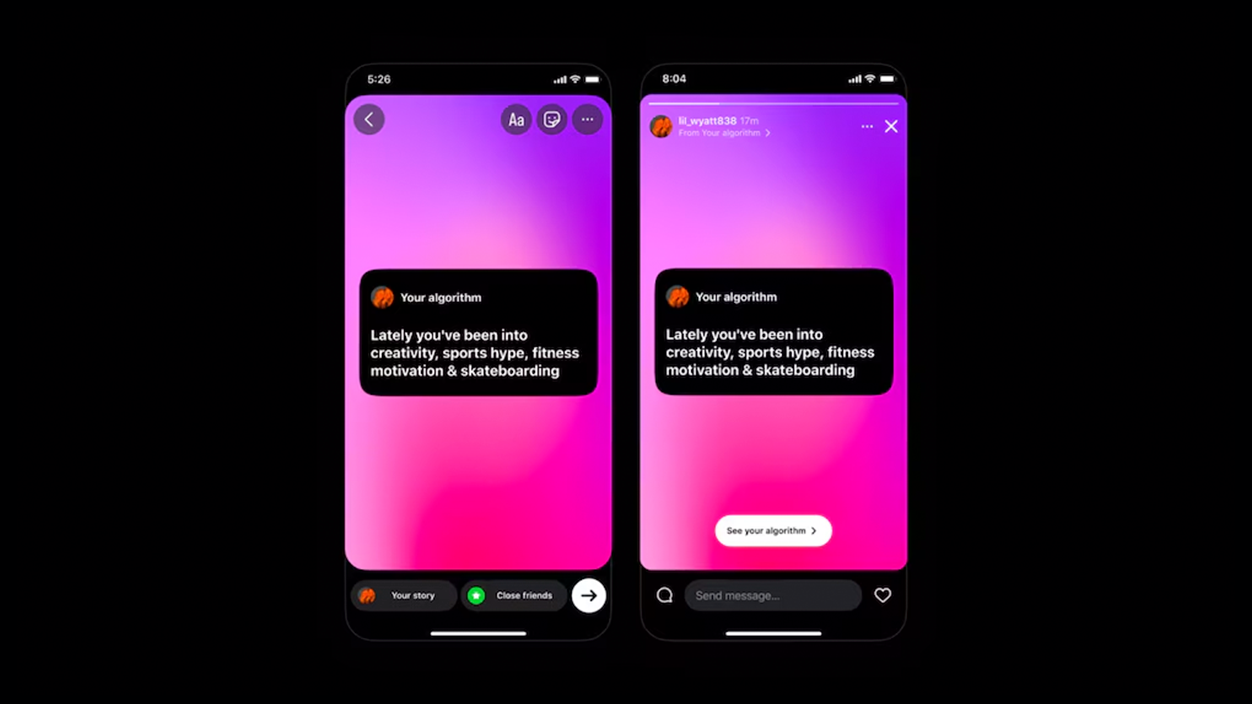
The new tool is integrated into the Reels interface itself and is presented as a control panel for the recommendation algorithmInstead of simply clicking "not interested" or liking posts and waiting for the system to learn, the user will have a visible option to review and modify their interests.
Upon entering Reels, a icon with two lines and hearts at the top. Tapping it opens the section called "Your algorithm"where Instagram displays a kind of personalized summary with the themes it believes define each account: from sports or horror movies to painting, fashion or pop music.
That summary is generated by the Meta's AI based on recent activityThe application condenses behaviors, interactions, and viewing time into a list understandable to the average user, who for the first time can see what the system really thinks about their tastes.
Below that general block appears a more extensive list of suggested categories, ordered according to the estimated relevance for each person, a list that is updated as you interact with the content.
How to customize the Instagram algorithm
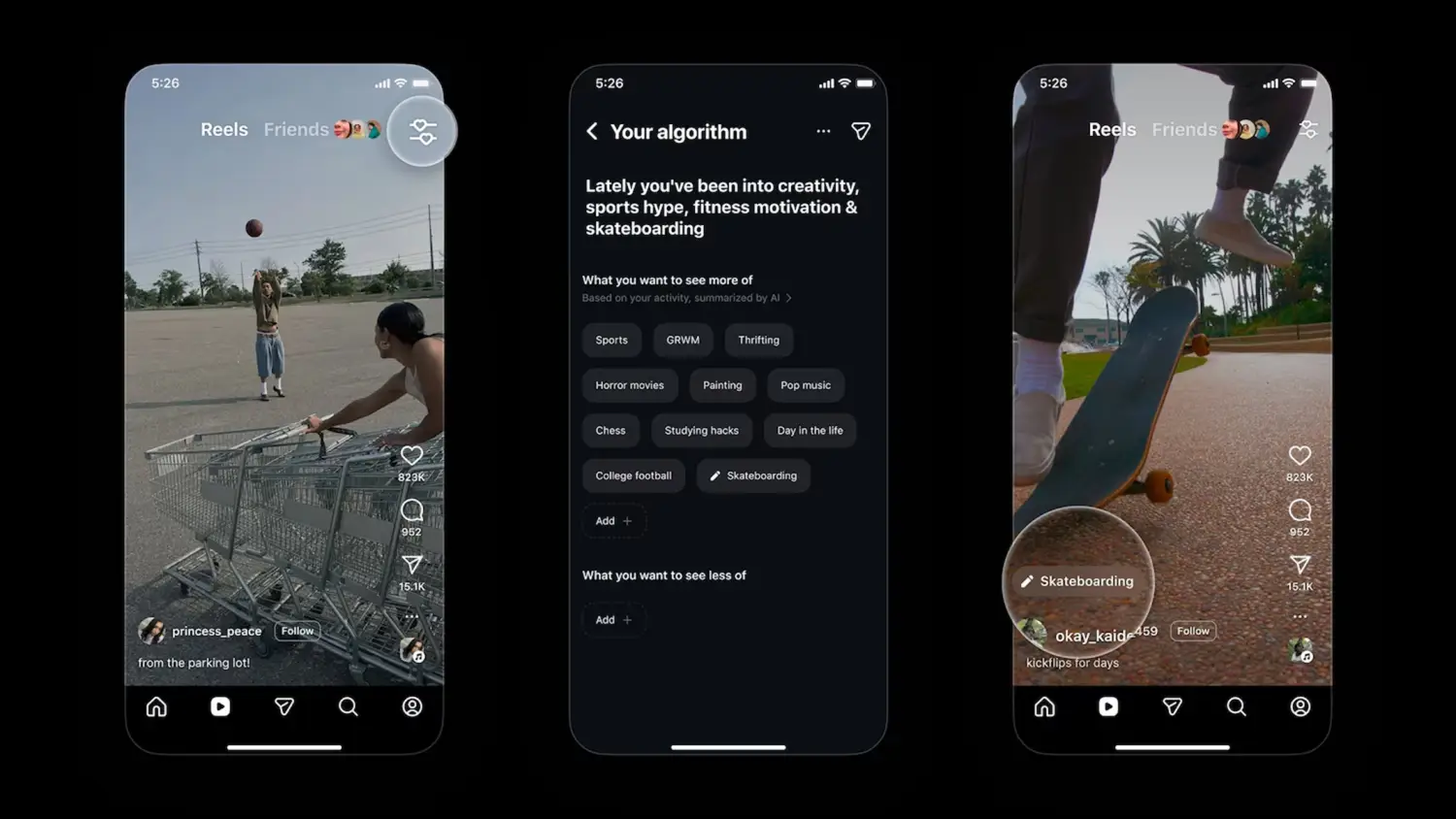
The big news is that this list is not only informative, but also editable. From "Your algorithm" allows the user to explicitly indicate what they want to see more of and what they want to see less of., without needing to go video by video selecting individual options.
In practice, you simply select the topics you want to prioritize and the system will start displaying them. More related Reels almost immediatelyIf, for example, someone discovers specialty coffee late and wants to delve into that niche, they can add it as an interest and start watching videos about coffees, baristas, and preparation methods in a matter of minutes.
Similarly, it is also possible Remove categories that are no longer of interestIf your feed becomes filled with a sport or series you no longer follow, you can remove that topic from the list so the algorithm clearly reduces its presence in Reels recommendations.
Instagram even allows Manually add interests that have not yet appeared within the automatically generated suggestions, which expands the scope of personalization beyond what AI has detected so far.
Another striking feature is the possibility of Share that summary of interests in your StoriesThis is similar to the annual summaries of music platforms, so that followers can see at a glance which songs predominate in each person's algorithm.
Meta's AI at the service of personalization
This entire system relies on the intensive use of Artificial intelligence in Instagram algorithmsThe company uses models that analyze user activity to identify patterns and group interests into understandable categories.
Product managers at the social network explain that AI summarizes the tastes of each account based on its behaviorThe videos that are watched to the end, the saved posts, the likes, the comments, and even the speed of scrolling through the feed all set the pattern.
If the system fails and attributes to someone an interest they don't actually have, The new tool allows you to delete that label directly from the algorithm.This manual correction becomes a simple way to give feedback to the model and adjust its future predictions.
Instagram insists that this approach seeks Improve the relevance of recommendations and avoid saturation with irrelevant contentBy allowing explicit adjustments, the aim is for the user to feel that they have real control over what appears on the screen.
The company has also indicated that the information collected in "Your Algorithm" will first be applied to Reels, but Their intention is to extend this logic to other sections such as Explorethus reinforcing a more consistent experience across the entire app ecosystem.
More control over the feed and the weight of the AI

In addition to adjusting specific themes, Meta is internally testing an even more ambitious approach: allow the user to decide how much weight they want AI to have in the recommendationsThis idea, known in testing as "Your Algorithm", is presented as an additional level of control.
According to leaks and information released by specialized media, this system would allow adjust the influence of different types of signals, such as thematic interests, content popularity, posts from similar accounts, or trends detected by AI models.
The goal is for each person to be able to get closer to a feed dominated by friends and followed accountsor open the door to a greater amount of recommended content, depending on your preference. The option to allow users to significantly reduce the number of automatically selected posts is also being considered.
Although it is not yet clear whether full control will be offered for almost completely disable algorithmic interventionIt is suggested that there will be different levels of adjustment, so that the feed can be more chronological, more relationship-based, or more discovery-oriented.
Meanwhile, Instagram is experimenting with variations of this control panel and warns that some options They could change before a mass deploymentFor now, many of these features are in a limited testing phase.
Comparison with TikTok, Pinterest and Threads
Instagram's move didn't happen in a vacuum. Other social media platforms have been introducing similar options for some time. tweak the algorithm and adjust the recommendationsalthough with different approaches and, in general, less detailed ones.
In the case of TikTok, the parent company ByteDance has filed a control within the management of issues It allows you to use a slider to see more or less AI-generated or powered content. While it offers some regulation, it relies on more generic categories and doesn't reach the level of granularity offered by Instagram.
Pinterest, for its part, has incorporated options for deactivate thematic categories that the user does not want to see, such as beauty, fashion, or art, especially in content derived from artificial intelligence. The priority there is to reduce noise in specific areas, rather than completely rewrite the map of interests.
Within the Meta ecosystem itself, there is another relevant experiment underway: Customizing the Threads feed using the "Dear Something" commandIn this case, the user can address the algorithm and request more or fewer posts on a specific topic, such as basketball, technology, or fashion.
Meta's global strategy all points in the same direction: provide visible tools to modulate the algorithmic experience and respond to both the competition and the demands of the users most critical of the functioning of these platforms.
Faced with these alternatives, Instagram seeks to differentiate itself by offering a broader, personalized list of interests, and a more free editing capability, including the incorporation of user-defined themes.
Deployment, languages, and doubts about its arrival in Europe
The function of The algorithm adjustment in Reels is being rolled out first in the United StatesInitially available only in English, Meta plans to expand to other markets and add more languages, though without a firm timeline for all countries.
The company has announced its intention to bring "Your Algorithm" globallyHowever, recent experience shows that not all new products arrive at the same time or with the same characteristics in all territories.
In Europe, and especially in Spain, the implementation of these types of functions intersects with a key factor: the European Union's regulatory framework on data, privacy and transparencyCommunity authorities are increasingly demanding clarity on how algorithmic decisions are made.
This tool relies heavily on Meta's AI to pre-configure the algorithm, something that could clash with certain obligations of the European regulation if it is not accompanied by sufficient explanations and guarantees of proper use of personal data.
This is not the first time that a function linked to artificial intelligence has been used. It arrives earlier in the United States and is delayed in the EUor it may even be launched with specific limitations to comply with EU regulations. Therefore, it's possible that the experience will take longer to become available in Spain or will arrive with its own adjustments.
Algorithmic transparency and regulatory pressure

This change takes place within a context in which Regulators and users are calling for more transparency on how algorithms work who decide what is seen and what is hidden on social media. The debate is not only technical, but also social and political.
Critics and experts in digital media have pointed out for years that these systems can reinforce echo chambers, feeding only opinions similar to those of the user, or giving more visibility to problematic content if it generates a lot of interaction.
For big tech companies, the algorithm is part of their competitive advantage and has historically been treated as a secret ingredientThis opacity, however, clashes with the new demands of regulatory bodies, which are calling for greater clarity and more intervention capacity on the part of those who use these platforms.
In the European Union, recent regulations targeting large online platforms They insist that the user should be able to influence how their content is personalized. and to have less intrusive options if desired. Mechanisms like "Your Algorithm" can help Meta better align with these obligations.
At the same time, Instagram is also trying to respond to growing fatigue among some of its user base, who They perceive the feed as increasingly random and dominated by content they haven't asked to see.especially in the short video format.
Impact for creators, brands and users in Spain
If the feature ends up arriving in Europe under similar conditions, the implications for Content creators, companies and users in Spain These changes could be significant. The algorithm would cease to be a completely unpredictable actor and would become, at least in part, configurable.
For creators, having an audience that can Refining your interests will make segmentation clearer.Reels on a specific topic might travel better among those who declare an affinity for that area, while reducing the reach among those who have ruled it out.
Local brands and businesses would also see changes: the relevance of appearing in well-defined categories It could be even greater, and more specific content strategies would gain weight compared to overly general approaches that rely exclusively on virality.
For the average user, the main effect would be a greater sense of control over the time spent on the appBeing able to tell Instagram to stop insisting on certain trends or themes and to reinforce other more useful or interesting ones can improve the relationship with the platform.
At the same time, these types of controls can open up other debates: to what extent adjust the algorithm to only show related content It reinforces information bubbles, or whether it's advisable to maintain a certain degree of random discovery so as not to close oneself off too much to new perspectives.
Instagram's move to allow each person to configure their own algorithm marks a turning point in the relationship between users and automated recommendations. The combination of editable interest panels, AI weight adjustment, and greater transparency It points towards a model in which personalization ceases to be an opaque process and becomes something that can be touched, reviewed and corrected, with direct effects on what we see daily in our feed.


I am a technology enthusiast who has turned his "geek" interests into a profession. I have spent more than 10 years of my life using cutting-edge technology and tinkering with all kinds of programs out of pure curiosity. Now I have specialized in computer technology and video games. This is because for more than 5 years I have been writing for various websites on technology and video games, creating articles that seek to give you the information you need in a language that is understandable to everyone.
If you have any questions, my knowledge ranges from everything related to the Windows operating system as well as Android for mobile phones. And my commitment is to you, I am always willing to spend a few minutes and help you resolve any questions you may have in this internet world.