- SEPA transfers in euros with ING are usually free or very cheap, fast and with few restrictions.
- Outside of SEPA and with currency exchange, ING applies an issuance fee, SWIFT charges and a margin on the exchange rate of close to 3%.
- There are online limits of €15.000 and legal obligations (Model S1) for large movements that affect certain operations.
- For international transfers in other currencies, services like Wise are usually more transparent, faster, and cheaper than ING.

If you have an ING account and want to send money abroad, it's normal to have some questions: How much does an international transfer really cost, how long does it take to arrive, and what limits exist?Although ING is known for its commission-free accounts for everyday transactions, international transfers don't always work the same as domestic transfers.
The key is in distinguish well between transfers Within the SEPA zone, transfers outside SEPA via the SWIFT network, and currency exchange transactions. Depending on the destination, amount, and currency, a transfer may be free, incur a fixed fee, or include a less visible surcharge in the exchange rate.
In this guide we review How do international transfers work at ING?What fees may apply, what timeframes you should expect, what limits exist, and when it might be in your interest to compare with alternatives such as Wise, Revolut, or other specialized providers.
What is an international transfer at ING?
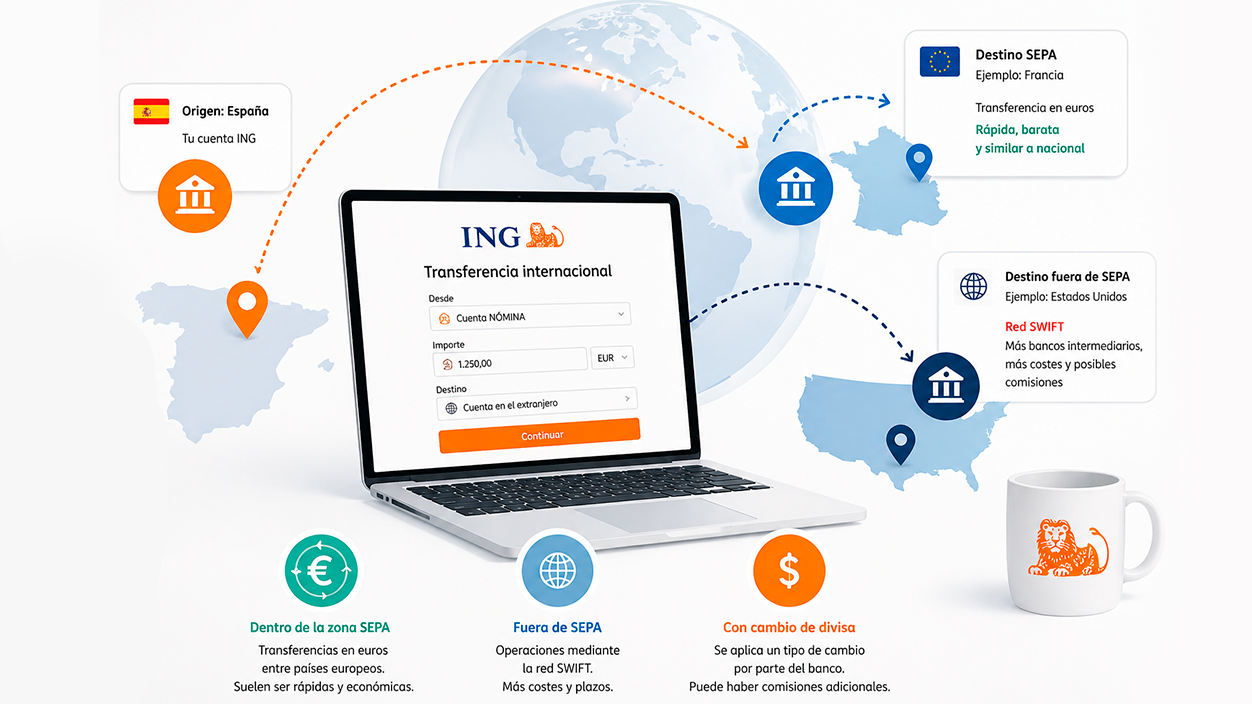
An international transfer is any money transfer from your ING account to an account located outside of Spain. However, not all are treated the sameFor the bank, sending euros to France is not the same as sending dollars to the United States or pounds to the United Kingdom.
La The first major difference lies in whether or not the destination country belongs to the SEPA zoneThe SEPA zone, or Single Euro Payments Area, includes the countries of the European Union and other associated states that share common rules for euro payments. Within this area, transfers are usually fast, inexpensive, and very similar to a domestic transfer.
Outside of SEPA, the transaction is usually carried out via the SWIFT network. This involves intermediary banks, network charges, potential fees from the receiving bank, and, if there is a currency exchange, an exchange rate applied by the receiving institution. Therefore, Transfers outside SEPA are usually more expensive and less predictable..
Transfers within the SEPA zone
SEPA transfers are the most favorable scenario for ING customers. If you send euros to another account located within the SEPA zone, it's common that The transaction is free of charge from accounts such as the Payroll Account or the Non-Account..
In practice, this means that You can send money to countries like France, Germany, Italy, Portugal, the Netherlands, or Belgium in a very similar way. It's just like making a domestic transfer. The recipient receives euros, there's no currency conversion, and the process is highly standardized.
In general, ING allows standard SEPA transfers free of charge for typical amounts. Specific conditions may apply to larger amounts, so always check the confirmation screen before signing the transaction. You'll see them there. whether any fees are charged and when the payment will be processed.
Also SEPA instant transfers existThese services allow money to arrive in a matter of seconds if the receiving bank supports this system. They are very useful when you need the recipient to receive the money instantly, although they may be subject to amount limits.
International transfers outside SEPA
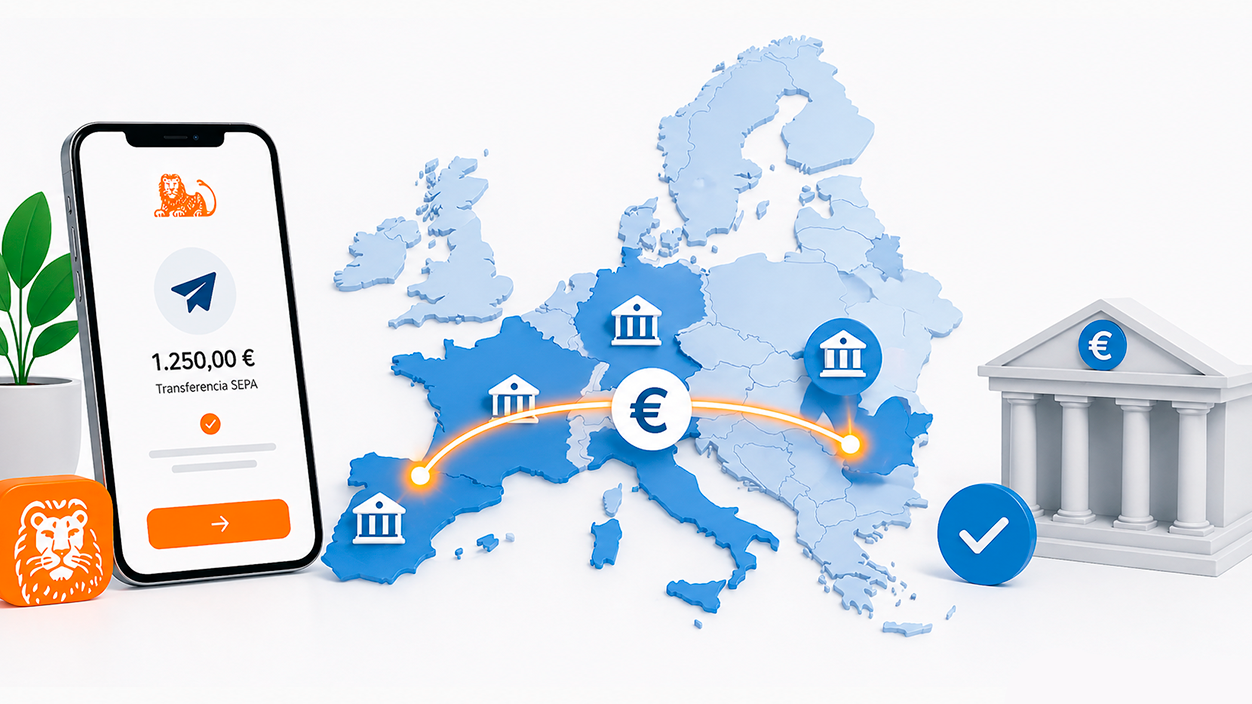
When the destination is outside the SEPA zone, things change. In these cases, ING can use the SWIFT network, an international system that connects banks in different countries to process cross-border payments.
This type of transfer can involve several costs. Firstly, there's the issuance fee charged by ING for processing the transaction. Secondly, there may be fees from intermediary banks, especially if the money passes through several institutions before reaching the final bank. Furthermore, The receiving bank could also apply its own fee. to the beneficiary.
In a SWIFT transfer, there are usually different ways to split the costs. The most common is SHA, where the sender pays their bank's fees and the recipient covers the fees charged by intermediaries or the receiving bank. There may be an OUR option, where you pay all the expenses to try to ensure that the beneficiary receives the full amount.
The problem is that, even when choosing a specific method, the final cost may not be as transparent as with a SEPA transfer. Therefore, before sending money outside of Europe, it's advisable to check carefully. the visible commission, potential network charges, and the estimated amount the recipient will receive.
The hidden cost of the exchange rate
One of the most important aspects of international transfers is the exchange rate. If you send money in euros but the recipient receives another currency, such as dollars, pounds, or Swiss francs, the bank must convert the money.
The problem is that the exchange rate a bank applies doesn't always match the average market rate you see on Google or financial websites. Typically, the entity adds a marginThis margin does not always appear as a separate commission, but it directly affects the amount the other person receives.
For example, if you send €1.000 to a dollar account, a seemingly small difference in the exchange rate can mean the recipient receives significantly less money. With small amounts, this might not be too noticeable, but In large or recurring transfers, this can become a significant cost..
That's why people often talk about hidden fees. It's not that the bank doesn't disclose the exchange rate applied, but rather that the cost is integrated into the exchange rate. To make a fair comparison, it's not enough to just look at the fixed fee: you have to look at... How much exact amount of money will the recipient receive after the currency conversion?.
How long does an international transfer take with ING?
The processing times depend heavily on the type of transfer. Within SEPA, a standard euro transfer... It usually arrives on the same business day or the next.Depending on the time you place the order and the bank's processing time. If it's immediate, it can arrive in seconds.
Outside of SEPA, the deadlines are longer. SWIFT transfers can take between two and five business days.However, in some cases it may take longer. The final time depends on the destination country, the currency, intermediary banks, security checks, and bank holidays in each country.
Also There may be delays if the operation triggers additional controlsThis can happen when the amount is high, when the destination is unusual, when there are inconsistencies in the beneficiary's data, or when the bank needs to verify the origin of the funds.
Therefore, if you need the money by a specific date, it's best not to rush. For important payments, such as reservations, tuition fees, international purchases, or urgent family assistance, It is advisable to make the transfer with sufficient margin..
How to make an international transfer from ING
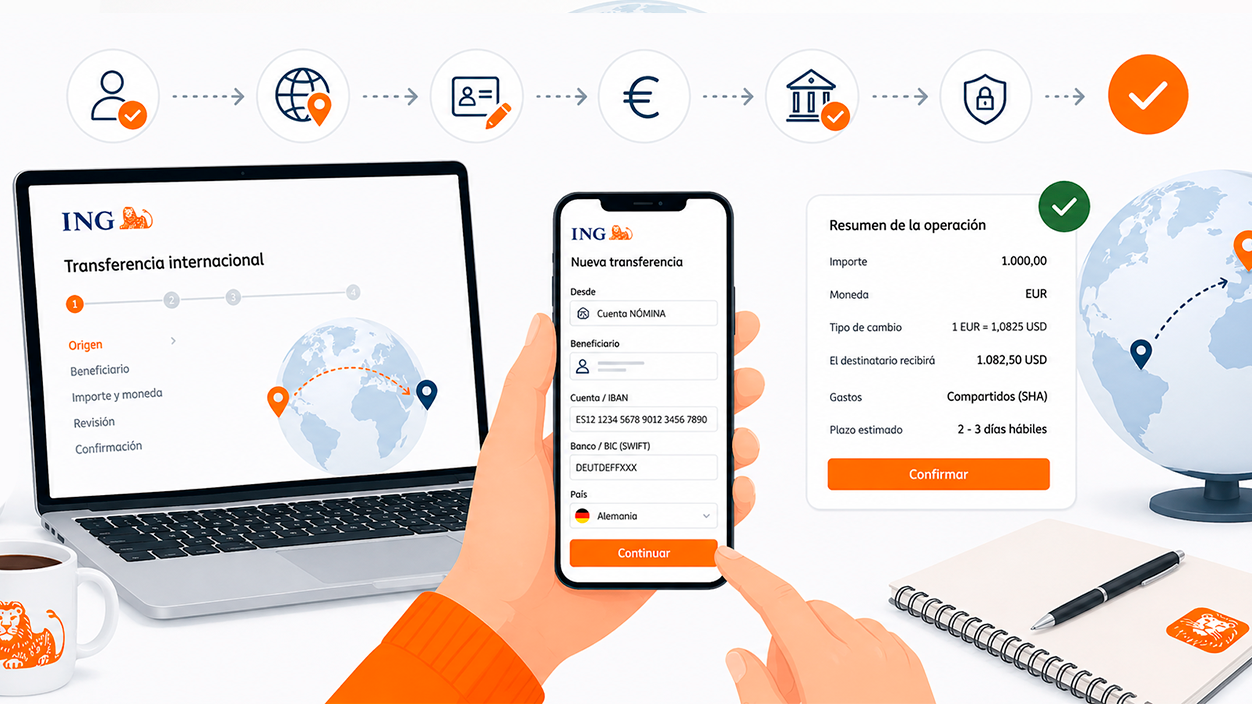
The process for making a transfer from ING is usually quite simple. You can start the operation from the app or from the web, by entering your customer area and accessing the transfers section.
First, you'll need to select the source account. Then you'll need to Enter the beneficiary's details: full name, country, account number or IBAN if applicable, and the receiving bank's SWIFT/BIC code when necessaryIt is essential to review this data carefully, because an error can cause delays, returns, or even additional costs.
Next, you will need to specify the amount, currency, and purpose of the transfer. If the transaction involves currency exchange, Check the exchange rate applied and the estimated amount the recipient will receive.You will also need to select who will cover the costs if it is a SWIFT transfer.
Before confirming, ING will show you a summary of the transaction. This summary is key: that's where you need to check everything. amount, currency, fees, beneficiary details and estimated termIf everything is correct, you will be able to sign the transfer using your configured security method, such as Mobile Validation, SMS, or biometrics.
Security limits and controls
ING may apply limits to transfers for security reasons. These limits may vary depending on the account type, the channel used, the amount, and the customer profile. For online transactions, it is It is common for there to be daily limits or additional controls if the amount exceeds certain quantities.
Furthermore, banks are required to comply with regulations against money laundering and the financing of terrorism. This means that They may request additional documentation to justify the origin of the money. or the reason for a transfer.
For example, if you receive or send a large amount, if the transaction doesn't fit with your usual activity, or if it's an infrequent international transaction, The bank may request payslips, contracts, invoices, deeds, tax receipts, or statements from other accounts..
This doesn't necessarily mean you've done anything wrong. It's part of the controls that banks are required to implement. Even so, It can be inconvenient if the money is temporarily held While the documentation is being reviewed. That's why, for large transfers, it's advisable to have the supporting documents ready.
ING versus Wise, Revolut and other specialist services

ING can be a very convenient option if you already have an account and the transfer is in euros within SEPA. In that case, the cost is usually low or even zeroThe transaction is done through your usual bank and you don't need to open an account on another platform.
However, for transfers outside SEPA or involving currency exchange, services like Wise, Revolut, or other specialized providers are usually more competitive. Their main advantage lies in... exchange rate transparency and in that they often use local networks to move money, avoiding some of the costs of SWIFT.
Wise, For example, It usually shows the exact commission from the beginning., the exchange rate applied and the amount the recipient will receive. Revolut may also be of interest to certain profilesespecially if you already use the app and frequently exchange currencies.
The comparison must be made on a case-by-case basis. What matters is not just the starting fee, but the final result. how much you pay and how much the other person actually receivesIf ING charges a low commission but applies a worse exchange rate, it may end up being more expensive than a seemingly more expensive alternative with a better exchange rate.
Tips before sending money abroad with ING
Before confirming an international transfer, review all beneficiary detailsAn incorrect IBAN, a misspelled SWIFT code, or a name that does not match the account holder can cause delays and complications.
Also check if the shipment is SEPA or SWIFT. This difference completely changes the cost, delivery time, and the level of tracking information available. If you're sending euros within Europe, you probably won't have any major problems. If you're sending money to another continent or in another currency, analyze the transaction more carefully..
Always check the final amount the recipient will receive. Don't just look at the visible commission. In foreign currency transactions, The exchange rate may outweigh the fixed commission.
Keep the transfer receiptIt can be useful if the recipient does not receive the money on time, if the bank requests explanations, or if you need to prove the payment to a company, university, administration, or family member.
And finally, compare. For small, one-off payments, ING's convenience might be worth it. But if you're going to send large amounts or make recurring international transfers, Spending five minutes comparing Wise, Revolut, or other services can save you a lot of money..
ING It is a Good option for euro transfers within the SEPA zoneIn this scenario, it typically offers simple, fast operation with no significant fees. For sending money to another European account, especially if there's no currency exchange, it can be more than sufficient.
The situation changes when we talk about transfers outside SEPA or in a currency other than the euro. In these cases, issuance fees, network charges, intermediary bank fees, and exchange rate margins may apply. The total cost can be much higher than it first appears..
Therefore, the best strategy is simple: use ING for SEPA transfers in euros and straightforward transfers; compare alternatives for transfers involving foreign currency, international destinations outside Europe, or large amounts. You will be able to choose the cheapest, fastest and safest option in each case..
Index
- 1 What is an international transfer at ING?
- 2 Transfers within the SEPA zone
- 3 International transfers outside SEPA
- 4 The hidden cost of the exchange rate
- 5 How long does an international transfer take with ING?
- 6 How to make an international transfer from ING
- 7 Security limits and controls
- 8 ING versus Wise, Revolut and other specialist services
- 9 Tips before sending money abroad with ING
