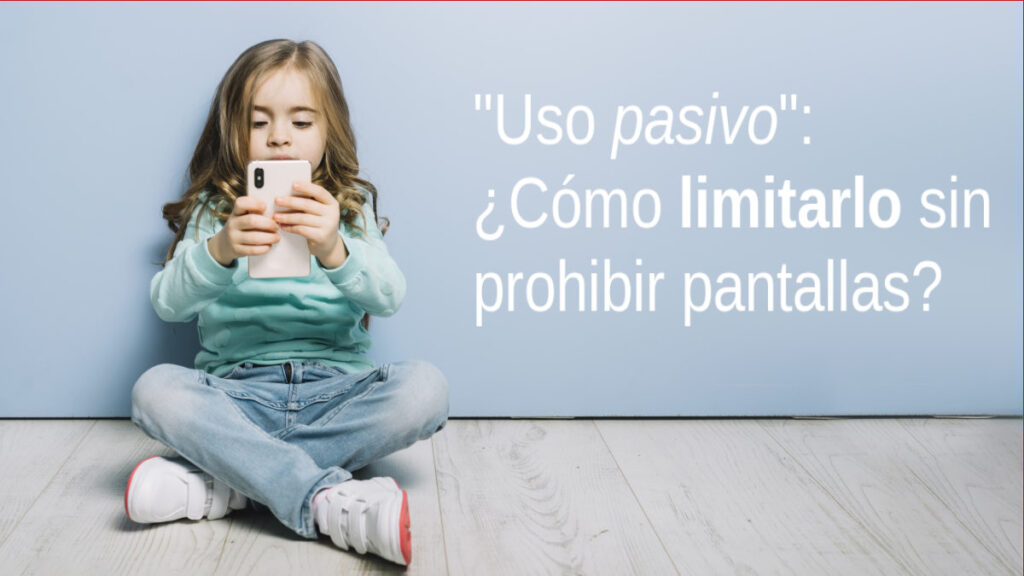
How much screen time is recommended for a child under 5? Experts set clear limits, but it's not always easy to respect them. If you are a mother, father, or caregiver, how can you find the balance point? One key is limiting passive use of electronic devices. But what exactly is passive use, and how can we limit it without banning screens altogether? This guide offers practical ideas for how to do just that.
Electronic devices: What is passive use and how to limit it without banning screens
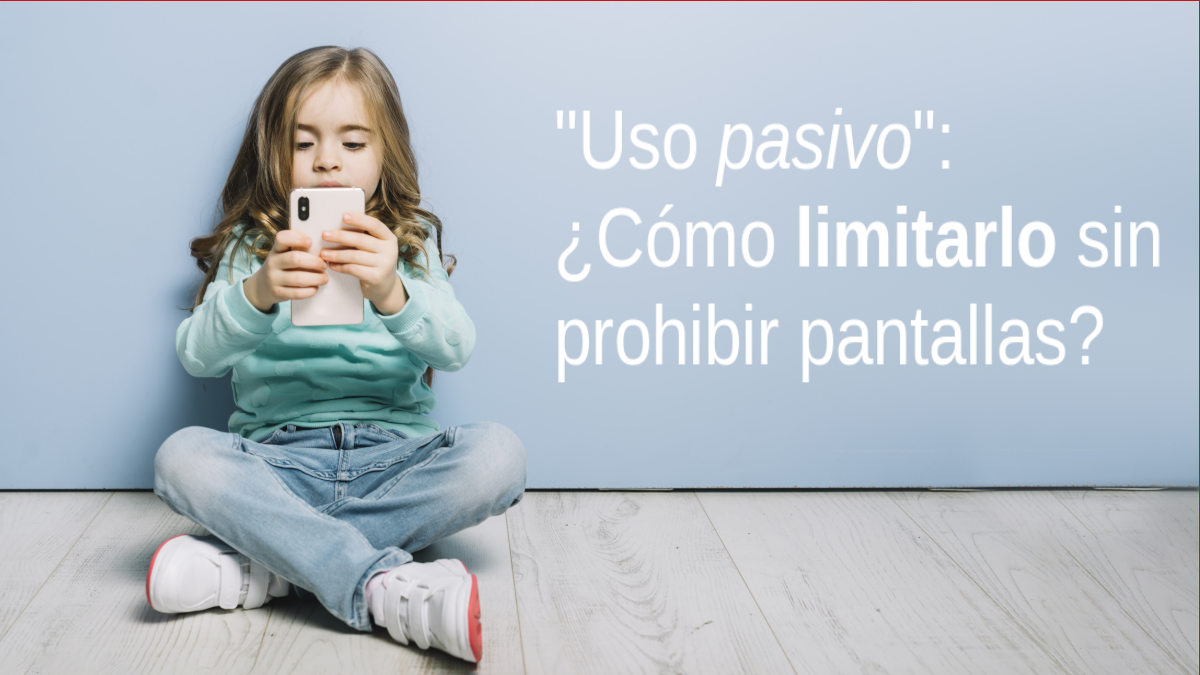
It's wonderful to see how children learn to use electronic devices as if the instructions were pre-installed in their little brains. For a child today, a tablet or a mobile phone is as natural as a board book or a wooden block. However, for parents and caregivers, this reality raises a new dilemma: How much is too much? What real harm do they cause?
La expert recommendation The opinion on screen time for children is quite categorical. For example, the World Health Organization (WHO) and the American Academy of Pediatrics (AAP) suggest:
- Children under 18-24 months: Zero screens (except for video calls with family members).
- From 2 to 5 years: Maximum one hour per day of high-quality content.
But often, the realities of home life force us to use digital devices as "calmers" or "babysitters." And to be honest, in modern family life, screens are integrated into almost every aspect of daily life. Limiting its use is very difficult; prohibiting it, practically impossible..
Faced with such a controversial dilemma, where is the point of equilibrium? To find it, perhaps it is essential Understanding the difference between active and passive use of digital devicesNext, we will briefly discuss what passive use is and how to limit it without banning screens.
What is “passive use” of screens?
Let's look at what passive use is and how to limit it without banning screens. Basically, passive use occurs when the child consumes content unidirectionallywithout significant physical, mental, or social interaction. In other words, the child is merely a spectator: they do not respond to or actively participate in the content they consume.
And to be honest, this is the main way many children use electronic devices. They sit glued to the television without any interaction or play YouTube videos continuously. The problem is that, by doing so, They are not constructing meaning, exercising their complex cognitive skills, or interacting socially..
Characteristics of passive consumption

For children to benefit from digital devices, it is essential that their caregivers know what passive use is and how to limit it without banning screens. This type of use is the digital equivalent of junk food., and has the following characteristics:
- “Zombie” effectThe child is mesmerized by the screen, with a fixed gaze and minimal response to external stimuli.
- Fast-paced contentVideos with camera cuts every two seconds, oversaturated colors, and jarring sounds. They are designed this way to overstimulate the brain's reward system.
- No interactivityThe child doesn't make decisions; the algorithm decides which video to watch next. (autoplay).
- Social disconnectionThe child uses the device alone, without an adult mediating or explaining what is happening.
Speaking of passive use and how to limit it without banning screens, the key is to change your approach. Instead of focusing on the number of minutes (quantitative), it's better monitor what they are watching and how they are watching it (Qualitative). In simple terms, we need to limit passive use by promoting active use. How can we do this? Here are some helpful ideas.
Ideas for preventing passive use and how to limit it without banning screens

So, what can you do to prevent passive use and how can you limit it without banning screens? Yes, it's much more realistic. try to do a active use of digital devices rather than trying to ban them completely. This is especially true for young children between the ages of two and five.
The idea is to turn the screen into a learning tool, and not a substitute for realityIn this regard, it's important to monitor not only screen time, but also the type of content and how it's consumed. With this in mind, try applying the following ideas to optimize how children use digital devices:
Encourage "active use"
The best way to avoid passive use and how to limit it without banning screens is by encouraging active use. For example, instead of just watching videos of other children drawing or playing with Play-Doh, Use apps that allow you to draw, compose music, or solve puzzles.The glasses of augmented reality They offer a very useful immersive experience for active learning.
Accompany whenever possible

Children They learn much more from a screen when an adult is present.Therefore, accompany the child whenever possible and ask them questions such as "Why do you think the character is sad?", "What color is that plane?", "What is happening?", "What do you think will happen next?".
You can also relate what they see on the screen to the real worldFor example, if you're watching a video about tractors, find a toy tractor or go outside to see one at a real construction site. It's also a good idea to pause the video to talk or repeat new words, for example.
Use visual timers
When we talk about passive screen time and how to limit it without banning screens altogether, using visual timers is very helpful. Children understand limits better when they can see them. That's why, an hourglass or a colored timer can help them anticipate the end of screen time.
Passive use and how to limit it without banning screens: Goodbye to Autoplay
El autoplay On platforms like YouTube, this can cause the video to jump from educational content to strange or overstimulating material. This can be dangerous, so it's best to avoid this. use platforms better suited to the childWith strict filters, no advertising, and no general content. Another practical idea is watch previously downloaded educational videos.
Establish screen-free zones and times
Establish sacred zones where viewing screens is not allowed: the dining room and the bedroomFor example. Help the little one understand that they will enjoy it more. outdoor game or of a family reunion If you put aside digital devices. In this sense, it's important that, as adults, we set a good example and be the first to respect those limits.

From a young age, I've been fascinated by all things scientific and technological, especially those advancements that make our lives easier and more enjoyable. I love staying up-to-date on the latest news and trends, and sharing my experiences, opinions, and tips about the devices and gadgets I use. This led me to become a web writer a little over five years ago, focusing primarily on Android devices and Windows operating systems. I've learned to explain complex concepts in simple terms so my readers can easily understand them.