- Phi-4 mini allows you to run advanced AI directly from the Edge browser, without relying on the cloud.
- New Edge APIs open the door to smarter, more private, and more efficient web applications, accessible from a wide range of devices.
- The integration of Phi-4 mini revolutionizes sectors such as education, professional consulting, and document analysis thanks to its efficiency and reasoning capabilities.
The emergence of small artificial intelligence models is revolutionizing the way we interact with technology from the browser. Among these advances, the Phip-4 mini integration in Microsoft Edge, a strategic move that places this browser at the forefront of efficient and accessible AI for all users. The changes that are coming promise transform from text editing to privacy and developer experience on the web.
This article takes an in-depth look at All the relevant information about Phi-4 mini AI in Edge, from its origins, technical evolution, and key features, to practical functionality, cross-platform compatibility, and the real-world impact it will have on users and developers, all supported by the latest official announcements, experiments, and developments from the tech community.
What is Phi-4 mini and why is it different?

Phip-4 mini is a small language model (SLM) from Microsoft, with 3.800 billion parameters, developed to perform complex reasoning and text generation tasks efficiently and locally, without the need for a large deployment of resources. This This radically differentiates it from large-scale models like ChatGPT, which require constant connectivity and tremendous cloud computing capacity.
Its efficiency enables advanced AI to run in resource-limited environmentsFrom laptops and mobile devices to IoT terminals and embedded systems, Phi-4 mini is therefore the key to bringing artificial intelligence to the everyday experience of everyday users, without sacrificing privacy or response speed.

Phi-4 mini in Microsoft Edge: A browser built for AI

Microsoft Edge is taking a decisive turn to become a “AI-first” browser, competing head to head with Chrome thanks to the native integration of Phi-4 mini. The announcement made at the Build 2025 conference revealed the arrival of specific APIs that allow developers to directly leverage this model from web applications, opening up a range of opportunities for both users and those who create web experiences.
The new Edge APIs allow developers to take advantage of AI models built into the browserExperimental features include:
- Prompts API for running LLM tasks with Phi mini.
- Summarization API, to automatically condense texts.
- Writing and rewriting API, ideal for writing, editing, or reformulating content.
- Translation API, which will soon allow text to be translated directly in Edge without relying on the cloud.
These features, until now exclusive to the cloud, can be run locally., taking advantage of the device's own hardware, which represents a leap forward in privacy and agility.

Advantages of on-device AI: privacy, efficiency, and savings
The great added value of integrating Phi-4 mini into Edge is the local data processingThis means AI operations don't require sending sensitive information to external servers, a key improvement for regulated industries like healthcare or finance. According to Microsoft, This approach eliminates intermediaries and significantly reduces the risk of leaks. or unauthorized access.
Besides, Small models like the Phi-4 mini are much more energy efficient. and can run on modest hardware, extending artificial intelligence to a much wider range of devices and situations, from school laptops to professional or even mobile devices.
Comparison: Microsoft Edge vs. Google Chrome

The race between browsers has definitely moved into the realm of artificial intelligence. Google Chrome has already incorporated similar models and APIs for developers., but the proposal of Microsoft Edge with Phi-4 mini puts special emphasis on local execution, without relying on the cloud, and with intrinsic data privacy.
Both platforms They offer capabilities for text generation, automatic summaries, translation, or event creation., but Edge seeks to differentiate itself by focusing on efficiency, transversality (works on both Windows as in MacOS) and allowing developers to test and anticipate the future of the AI-powered web.
Experimental APIs: How Web Developers Can Use Them
Microsoft has launched Experimental APIs in the Edge Canary and Dev channels, which allow any developer to begin integrating Phi-4 mini into their web applications. These APIs are intended as potential future web standards and, according to Microsoft, will work not only with Phi-4 mini, but also with other compatible AI models.
This implies the Possibility of creating web applications with writing assistants, text generators or multilingual translators, all of which operates directly in the browser and without the data needing to leave the user's device.

Advanced Operation: Function Calling on the Phi-4 mini
A disruptive advance of Phi-4 mini is the ability to “Function Calling”, that is, allow the model to call external functions or APIs during a conversationThis not only expands the model's capabilities, but also allows for the creation of intelligent agents capable of interacting with external systems, querying databases, scheduling events, or executing complex actions using natural language.
- Tool integration: The model can be connected to external APIs (e.g., weather, databases, calendar services).
- Flexible definition of functions: Developers can define which functions are available, their parameters, and the expected output formats.
- Context analysis: Phi-4 mini determines when to invoke a specific function based on the user's request.
- Smart answer: Once the external function is executed, the model uses the result to complete the response to the user, combining internal information and external data.
Compatibility and deployment: which devices does Phi-4 mini work on?
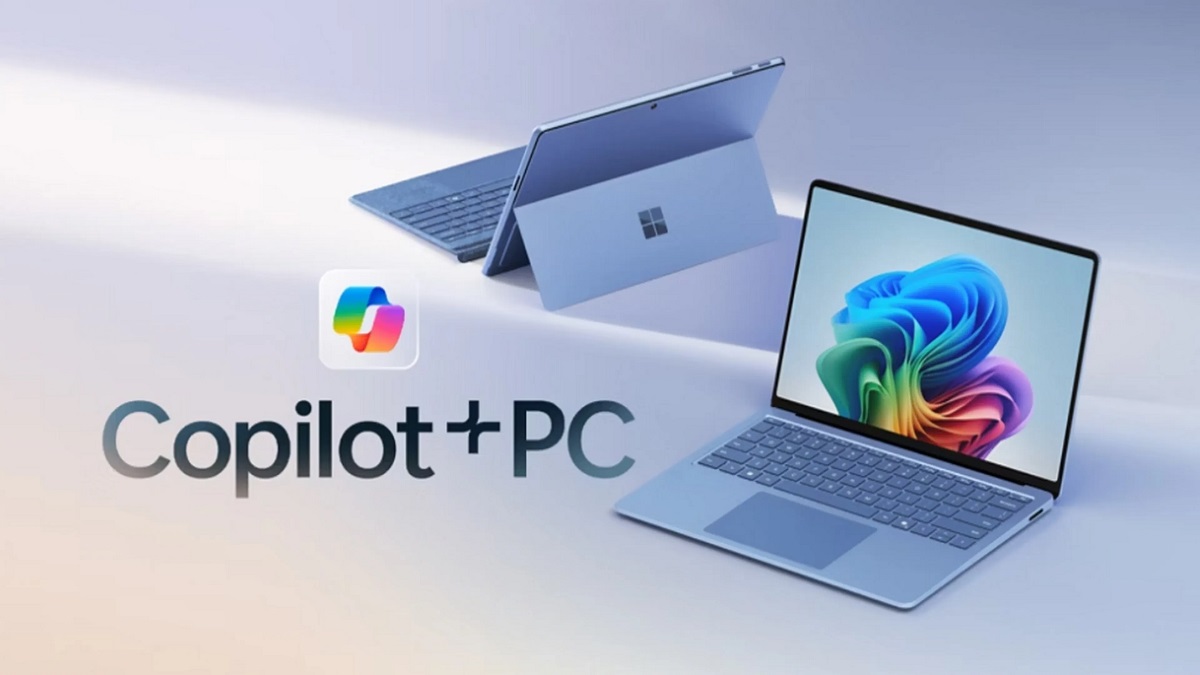
Currently, Phi-4 mini can run locally on conventional CPUs and GPUs, as well as on NPUs for Copilot+ PCs.Microsoft has optimized several versions to ensure that desktop, laptop, mobile, IoT, and virtual environments can seamlessly deploy AI.
The “mini-reasoning” and “Silica” versions make the difference in terms of performance and response times, being designed for local workloads, even under low latencies and minimal power consumption.

Implications for users and web developers
Phi-4 mini's integration into Edge democratizes access to advanced AIUsers will enjoy writing assistants, summaries, instant translation, and customizable tools that are much faster, more private, and more secure. For developers, this represents a quantum leap, as they will be able to create experiences. Richer and more responsive AI, all from standard APIs and without external infrastructures.
Edge, for his part, strengthens its position as an alternative to Chrome, betting on native AI and portability on Windows and Mac devices, with special attention to safety and efficiency.
Phi-4 mini represents the perfect balance between scalability, efficiency, and performance in the new AI ecosystem. Thanks to its integration into Edge and the efforts of Microsoft and the community, AI is no longer exclusive to the cloud or large servers and is becoming an everyday tool, accessible even from modest devices.

I am a technology enthusiast who has turned his "geek" interests into a profession. I have spent more than 10 years of my life using cutting-edge technology and tinkering with all kinds of programs out of pure curiosity. Now I have specialized in computer technology and video games. This is because for more than 5 years I have been writing for various websites on technology and video games, creating articles that seek to give you the information you need in a language that is understandable to everyone.
If you have any questions, my knowledge ranges from everything related to the Windows operating system as well as Android for mobile phones. And my commitment is to you, I am always willing to spend a few minutes and help you resolve any questions you may have in this internet world.