- A V16 beacon without a battery does not signal correctly and can result in a fine and a real risk of accident.
- The regulations require at least 30 minutes of light and 18 months of standby life for batteries.
- Checking, changing batteries annually or recharging the battery and choosing approved models is key to your safety.
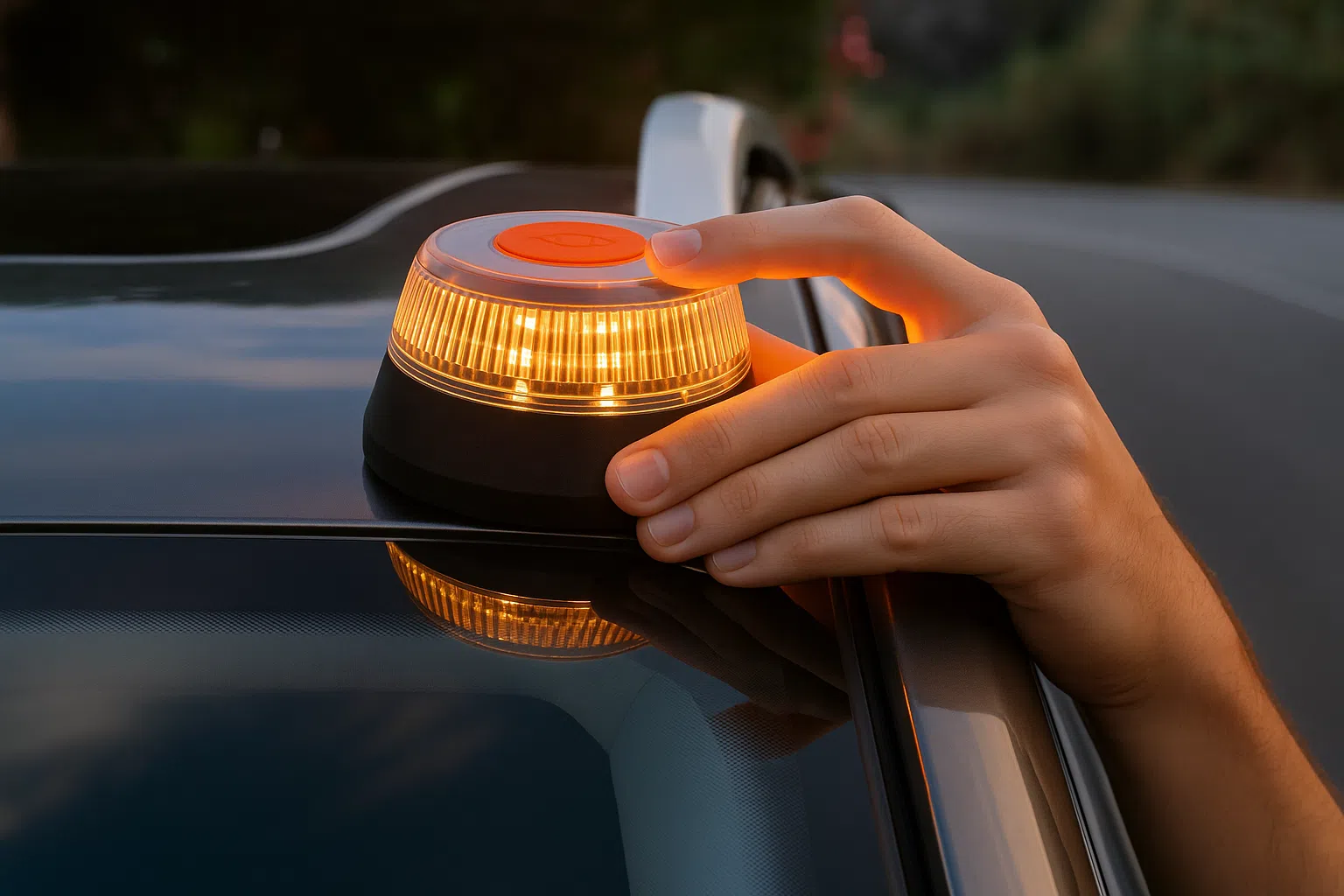
¿What happens if the V16 beacon battery is dead? La The V16 beacon has become the new protagonist of roadside emergencies in Spain. It is gradually replacing the traditional warning triangles and, from 2026, will be the mandatory system for signaling that your car has broken down. But there is a detail that almost no one talks about and that could give you quite a scare: the battery or the cells that power the device.
Yes, the V16 beacon is very useful; it can be installed in a second and also connects to the DGT (Spanish Directorate General of Traffic), but Without energy, it's absolutely useless.And that's where the doubts begin: how long does it last, what happens if it runs out during a breakdown, can you be fined, how to prevent it from discharging on its own, or which model is best suited to the type of battery it uses.
What exactly is the V16 beacon and why has it replaced the triangles?
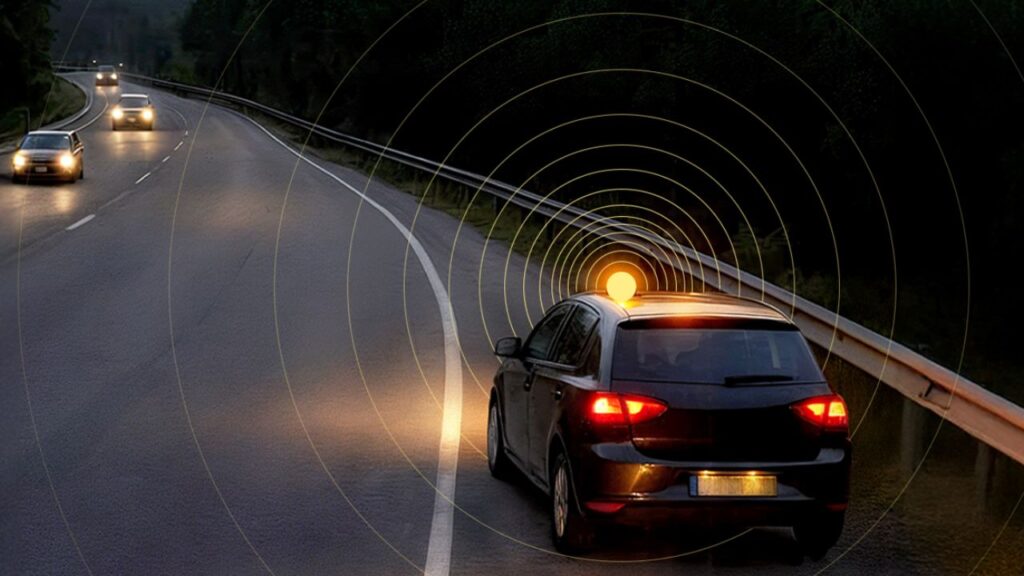
The V16 beacon is a hazard pre-signaling light device Designed to warn other drivers that your vehicle is stopped on the road or that its load has spilled onto the roadway. It is usually mounted on the roof of the car and emits a flashing light visible in 360° so that other drivers can see you from a distance.
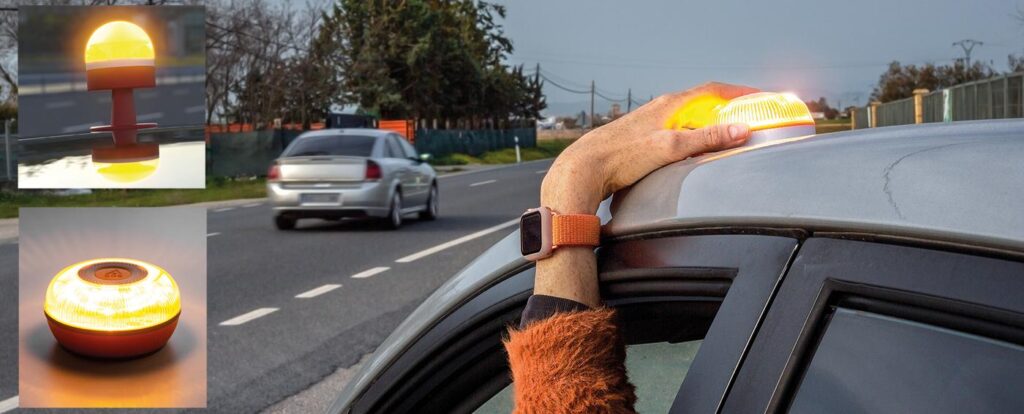
Unlike classic triangles, You don't need to get out of the car to install it.The DGT's idea is to reduce the risk of pedestrian accidents by placing the sign several meters from the vehicle. With the V16, you simply stick your arm out the window, attach it with the magnet, and, in connected models, the device will send your location to the DGT 3.0 platform.
These connected beacons They periodically report the location of the broken-down vehicle.allowing the DGT to update variable message signs, warn other drivers (for example, via the V-27 signal on connected car navigation systems) and facilitate traffic and emergency management in that area.
The obligation to use a connected V16 beacon comes in 2026, but Its widespread use is already being promoted And during the first weeks of mandatory enforcement, some flexibility has been announced, with a more educational than punitive approach by the Traffic Civil Guard.
How long does the V16 beacon battery last and what does the regulation require?
For a V16 beacon to be legal, It must be approved by the DGT (Spanish Directorate General of Traffic).This certification not only affects light intensity or connectivity, but also the minimum energy autonomy that the device must guarantee.
The regulations state that an approved V16 beacon It must be capable of emitting high-intensity flashing light and visible from 360º for at least 30 minutes. That is the minimum time the manufacturer must guarantee to obtain certification, both for battery-powered models and those with rechargeable batteries.
Furthermore, the DGT requires that the device Incorporate a battery with a minimum standby life of 18 months.In other words, it can sit in the car for a year and a half without being used and still have enough capacity to function properly when you need it, provided it is in good condition and has been reasonably maintained.
In practice, many manufacturers go even further and advertise battery lifespans of up to 12 years In certain connected models (especially when the communication system is optimized for low power consumption). However, the actual battery life depends heavily on the internal technology, the type of battery, and, above all, how well you care for it and the heat it's exposed to inside the car.
What happens if the V16 beacon battery is dead in the middle of an emergency?
The biggest fear for many drivers is precisely this: going to use the hazard light and discovering that It won't turn on because the battery is dead.And it's a perfectly possible scenario if you haven't checked it for years or if the batteries have been damaged by heat or humidity.
If the beacon does not emit light, the authorities may assume that There is no adequate signage indicating the immobilized vehicle.For legal purposes, it is as if you were not carrying any warning device, with the risk of receiving a penalty similar to that applied for not carrying triangles: an 80 euro fine for not properly marking an obstacle on the road.
The problem, beyond the fine, is one of safety: without the beacon working, Your car will be much less visible to other usersEspecially at night, in rain, fog, or on a sharp curve. This significantly increases the likelihood that another vehicle won't see you in time and will end up colliding with you.
It should be noted that, although the regulation requires the beacon, That does not replace calling your insurance company or emergency services.You still need to notify your insurance company to send a tow truck and, if the situation is dangerous, call 112 or the Civil Guard. The beacon is an additional safety measure, but it doesn't do all the work on its own.
Power supply types: alkaline batteries versus rechargeable battery
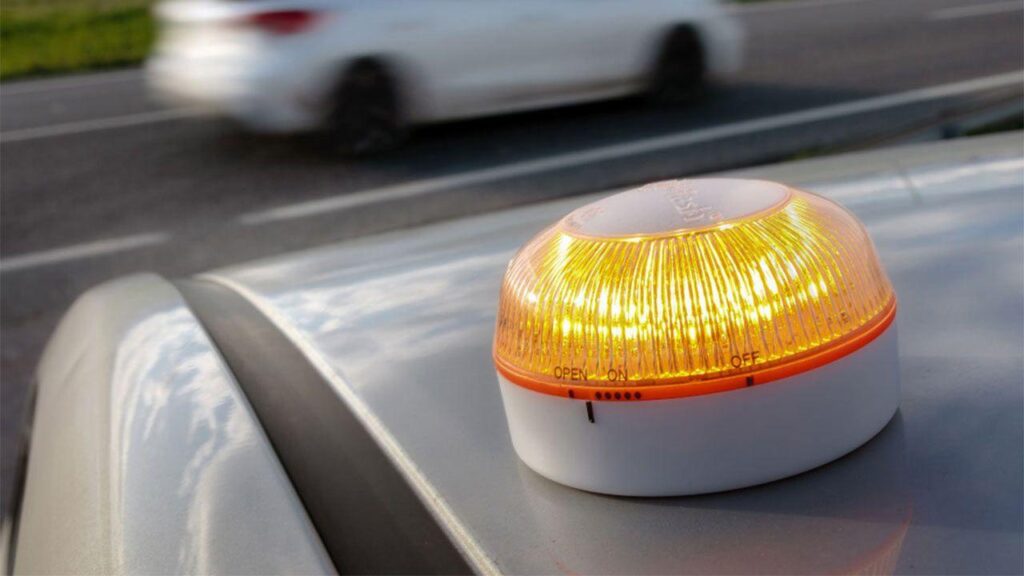
You can find V16 beacons on the market that work with non-rechargeable alkaline batteries (usually AA or AAA) and others that incorporate an internal rechargeable battery via USB. Each option has its advantages and disadvantages, especially when considering long-term battery life.
Experts often point out that alkaline batteries, if they are of good quality and are stored properlyThey have a long and very predictable lifespan. That is precisely one of the reasons why many certified connected models have opted for this system, as it minimizes the risk of finding the beacon completely discharged after long periods of disuse.
Beacons with rechargeable batteries, meanwhile, They allow the energy to be recharged periodically. And they don't depend on you carrying spare batteries. However, if a long time passes without recharging, the battery can degrade, lose capacity, or become unusable, which is common with this type of battery when left discharged for extended periods.
Some manufacturers have implemented solutions such as the so-called “Zero technology”, which isolates the battery from the electronics When the beacon is switched off, power consumption is reduced to virtually zero in standby mode. This way, the battery is much better preserved over time and is more likely to be in good condition when you need to use it.
Self-discharge, sulfation, and other silent enemies of batteries
Even without using the beacon, Alkaline batteries suffer a slow self-discharge over timeThe internal chemical reaction between zinc and manganese dioxide does not stop completely, so each year they lose some of their capacity even when stored in their blister pack.
If they also remain inside the beacon, inside the car, Heat and humidity can accelerate degradationThis is where the phenomenon of sulfation appears: the batteries begin to leak corrosive substances that form a kind of whitish or greenish residue on the metal contacts.
When batteries become sulfated, not only is its capacity to deliver energy reducedbut they can even damage the beacon's terminals, rendering the device unusable precisely when you need it. In that case, it's no longer a matter of changing the batteries, but of repairing or replacing the entire beacon.
That's why many specialists recommend that, if your model is battery-operated and you're not going to use the beacon for a long time, Store the batteries outside the device.inside the car itself, in a small case or bag. This way they are better preserved and you prevent a leak or corrosion from damaging the device.
DGT recommendations for checking and maintaining the V16 beacon
The DGT insists that, for the beacon to be truly effective, It's not enough to just leave it lying around in the glove compartmentIt is necessary to perform minimal preventative maintenance or, at least, check it from time to time to ensure it is still operational.
In the case of battery-powered beacons, the Transition and DGT recommend Replace the batteries preventively every year.even if you've never used them before. This practice greatly reduces the chances that they've degraded to the point of failure and, incidentally, limits the risk of sulfation.
If your beacon runs on a rechargeable battery, the recommended thing to do is perform a full recharge at least once a yearSome experts lower that margin to every three or six months, especially if the car spends time in the sun or if the beacon does not include ultra-low consumption systems.
It's also a good idea to turn on the beacon. once or twice a year for a few seconds to verify that the light works, that the button responds correctly, and that the assembly does not show any bumps, cracks, or signs of moisture inside the casing.
In connected models, although the user does not directly see the status of the communications module, The homologation requires guaranteeing the data service for at least 12 yearsIn other words, during that period the beacon should be able to continue communicating with the DGT 3.0 platform every time you activate it.
Where to store the beacon and how to use it correctly in case of a breakdown
A very common mistake is leaving the beacon in the trunk along with the rest of the junkThe official recommendation is clear: it should be in a place accessible from the driver's seat, preferably the glove compartment or a nearby space in the door, so you don't have to get out of the car to look for it.
If you suffer a breakdown or a minor accident and the car can still be driven, the first thing to do is try to move it as far away from the road as possibleprovided it doesn't pose a greater risk. Then, you should activate your hazard lights and put on your reflective vest before opening the door if necessary.
The V16 is easy to use: with arm outstretched out the windowYou place the beacon on the vehicle's roof, using the magnet to keep it fixed and clearly visible from all angles. The flashing light is activated with the single button it has.
In connected models, Geolocation data is not sent continuously.Instead, starting about 100 seconds after activation, the device begins sending small data packets to the DGT with your position, repeating the process every so often while it is still working.
From there, if there is a safe area off the road, Ideally, you should leave the vehicle and wait there for assistance.with the vest on. If there is no shoulder or it is dangerous to get out (for example, on a fast road with hardly any space), the current recommendation is to remain inside the car with the seatbelt fastened until help arrives.
What to do if the beacon does not turn on: steps and alternatives
It may happen that, when you go to use it, The beacon does not respond when the button is pressed.At that moment you must remain calm and, above all, protect your safety above all else, because moving nervously on the road is the most dangerous thing you can do.
The first thing is to make sure that The vehicle's hazard lights are on. And that you're wearing the vest. If you still have the old triangles and can place them safely (something increasingly rare and, in the future, punishable if used when prohibited), you could use them as a supplementary measure until they are banned.
Next, it's a good idea to review some basic details: check that the button is not stuckMake sure the magnetic base is making good contact and that there are no signs of moisture or severe damage. If the model allows quick access to the batteries, you could try replacing them with spares if you keep them in the glove compartment.
If there's no way to turn on the beacon, use other resources to signalThe mobile phone flashlight can help make you visible temporarily (always from a safe position), a reflective garment can help alert other users, and of course, the car lights must remain on.
In any case, Contact your insurance company or emergency services to report the situation, indicating your position as precisely as possible (kilometer points, nearest exit, direction of travel, etc.), especially if the beacon is not sending data to the DGT because it is completely inoperative.
How to avoid running out of battery: practical maintenance and useful tricks
The key to not getting stranded with a useless beacon is in anticipate with a little organizationYou don't need to be an electronics expert, but you do need to follow some very simple maintenance tips.
For battery-powered beacons, it is recommended Do not mix old batteries with new ones Do not mix different brands of batteries in the same device, as this can lead to uneven discharge and, in the worst-case scenario, leaks or damage. It is best to always use a complete set of batteries from the same brand and with a similar purchase date.
Another good practice is to save batteries. in a cool, dry place inside the carAvoid areas exposed to extreme temperatures, such as the dashboard or a trunk that receives direct sunlight. A simple label with the purchase date will help you know when to replace them before they start causing problems.
The use of good quality alkaline batteries compared to zinc-carbon batteriesbecause the latter are more prone to corrosion. Although they may be somewhat cheaper initially, the potential damage they can cause to the beacon is costly in the long run.
With rechargeable battery beacons, the trick is in prevent the battery from remaining completely discharged for monthsA short charging cycle every so often (three, six or twelve months, depending on the manufacturer's recommendation) is usually enough to prevent premature degradation.
Can your mobile phone help you monitor the beacon's battery life?
Some V16 beacon models, in addition to being connected to the DGT, They offer compatibility with their own mobile applications. or from third parties. These apps allow you to check the device's status, receive maintenance alerts, or even notifications when they detect that the batteries are close to running out.
Applications such as Eye Protect or myIncidence have been integrated with certain beacons, displaying basic information about the device and sending alerts when it's time to replace the batteries or check the battery. They don't usually indicate an exact percentage like on a mobile phone, but they do warn you before you reach a critical point.
If you're thinking of buying a new beacon and don't have a model in mind yet, this might be of interest. Choose an approved version compatible with the app.since its price is not usually much higher and it makes maintenance control much easier.
If you already have a beacon without an app, you can always resort to simple tools like mobile reminders or the calendarFor example, you can create a note with the approximate battery expiration date indicated by the manufacturer or schedule an annual alert to change it preventively.
These types of reminders are especially useful because, since it's a device you almost never use, It's very easy to completely forget that the beacon exists. Until one day you really need it. And by then it might be too late.
Geolocation, IoT networks, and what happens if the connection fails?

The major new feature of the connected V16 beacons is that, in addition to the flashing light, They send your position to the DGT (Spanish Directorate General of Traffic) through specific Internet of Things networks. (IoT). These networks leverage some of the 4G and 5G infrastructure, but are optimized to transmit small data packets with minimal power consumption.
Unlike a traditional mobile connection, where speed and downloading large volumes of information are prioritized, IoT networks use lower frequency bands (below 1 GHz) that have better penetration into buildings and obstacles, and offer greater coverage in complicated areas.
The beacon only needs send position coordinates every so oftenIt operates in a unidirectional manner. It does not receive data nor does it have to maintain a constant flow, which makes the connection more robust and consumes very little energy, something fundamental for battery life.
If for any reason the geolocation function fails (for example, due to a temporary network problem or a malfunction of the internal module), You will continue to see the flashing light provided the battery has a charge. In that case, the recommendation is the same as always: call 112 or your insurance company, explain the problem, and manually provide your location.
What is important to understand is that the beacon It is not permanently geolocating you while you driveIt only transmits data when you deliberately activate it in case of a breakdown or accident, and it does not send personal information, but only the location of the incident to manage traffic.
Triangles, V16 beacon and penalties: where are we now?
During these years of transition, there are still drivers who combine the use of triangles with the V16 beaconEspecially on open roads with good visibility. Currently, carrying both items is not prohibited and, in fact, can add some safety if fitted without endangering the driver.
However, the plan of the DGT That is, starting in 2026, triangles should be discontinued altogether. in favor of the connected V16 light. Placing them on the roadway when they are no longer permitted could be considered incorrect signage and result in the corresponding penalty.
The authorities' focus is on the fact that the driver does not have to get out of the vehicle or walk on the shoulder to signal the danger, thus reducing a type of accident that has become very common in recent years: being run over while placing or collecting triangles.
However, this requirement comes with a clear counterpart: if the beacon does not work due to a lack of battery or dead batteriesThe Administration may interpret that you are not fulfilling your obligation to properly signal the incident, which again highlights the importance of maintenance.
In practice, this means that, in addition to carrying the approved and connected beacon, The state of their energy supply is also your responsibilityIt's not enough to leave it forgotten in the glove compartment for years without checking it.
In day-to-day use, the device is being implemented amid some controversy: some criticize its visibility in bright sunlight, others question its cost, and still others distrust the system because it relies on batteries and certifications that can be withdrawn. Even so, the DGT (Spanish Directorate General of Traffic) maintains that, overall, The beacon reduces serious risks associated with the placement of traditional triangles.
If you're going to be making frequent road trips, assume that Your safety (and that of others) depends in part on a simple battery This is a compelling reason to take maintenance seriously, change batteries on time, choose quality approved models, and, if necessary, set a reminder on your mobile phone so you don't rely solely on memory.

Passionate about technology since he was little. I love being up to date in the sector and, above all, communicating it. That is why I have been dedicated to communication on technology and video game websites for many years. You can find me writing about Android, Windows, MacOS, iOS, Nintendo or any other related topic that comes to mind.