- WhatsApp is already testing ads in Status and Channels in some countries and plans to bring them to Europe.
- Meta is working on an optional subscription to hide advertising in the News/Updates tab.
- The payment option would focus on Europe and the United Kingdom, with a possible price of around 4 euros per month.
- Chats, groups, and calls will remain ad-free, and message content will not be used to personalize advertising.

The stage in which WhatsApp boasted of being a messaging service with no ads, no extras, and no distractions. is coming to an endAt least as far as States and Channels are concerned. Meta's app has begun testing advertising formats in some markets, and all indications are that, in Europe, this strategy will be accompanied by a paid option for those who want to completely avoid advertising.
What is emerging is not a radical change in the basic use of the app, but a shift towards a hybrid model: free user with ads in certain sections or a paying user with a cleaner experience in the What's New (or Updates) tab. For Spain and the rest of the European Union, the key is in How will advertising and the new subscription be combined with the stringent privacy regulations? and regional competition.
How and where will ads appear on WhatsApp?
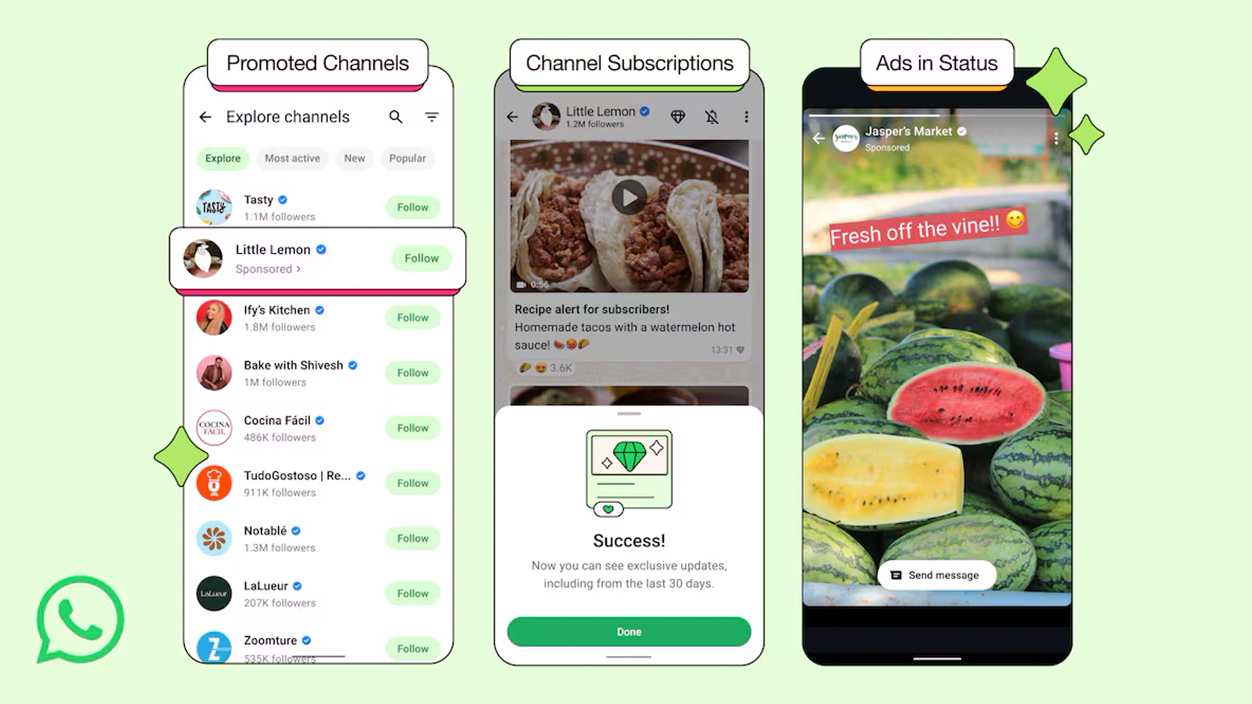
Meta had already announced its intention to introduce advertising on WhatsApp, but in a limited way. The first trials have been seen in countries like the United States, where The ads appear in the News or Updates tab, the section where States and Canals coexist.
In practice, this means that Users will see ads integrated between Sponsored States and Promoted ChannelsThat is, in the content flow closest to a social or informational format. Private conversations, groups, and calls are excluded from this strategy, something the company itself has reiterated on several occasions to try to avoid outright rejection.
The choice is not accidental. Status updates function similarly to Stories on other platforms, a space designed for consuming quick and visual content, where you can even Add a song to your WhatsApp statusAnd advertising can be inserted without disrupting the experience too much. The Canals, meanwhile, have become a notice board for media outlets, creators, and businesses, facilitating the integration of promoted campaigns and sponsored messages.
Meta insists that, for this first phase, Ad personalization will be limitedData such as country, language, or followed channels would be used, but not the content of the messages or chatsThis is a particularly sensitive point in Europe, where WhatsApp's privacy record has been under scrutiny from regulators since its acquisition by Facebook.
Although In Spain and the rest of the EU, these advertisements have not yet been rolled out on a massive scale.The company has already made it clear that its intention is to extend the model throughout this year, provided it can fit it into the European regulatory framework.
A subscription plan to eliminate advertising in Europe
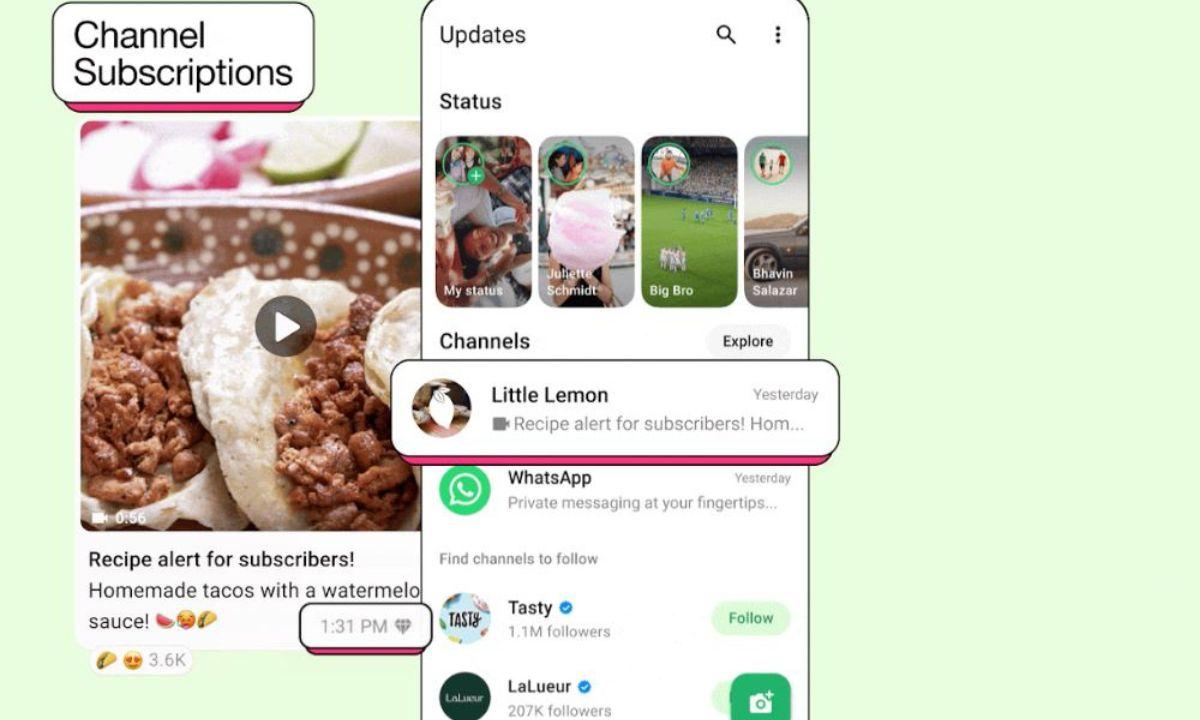
The big new feature being discovered in the latest WhatsApp betas for Android is the preparation of a monthly subscription plan to remove ads from the What's New/Updates tab. The information, revealed by WABetaInfo based on lines of code and screenshots, suggests that Meta will offer a clear alternative in Europe and the UK: accept advertising or pay to avoid it.
This optional subscription would allow completely hide ads in States and ChannelsThis includes Sponsored States and Promoted Channels, so that the section would be ad-free for those willing to pay a monthly fee. It would not affect the rest of the app's features, which would remain free.
Regarding the price, the only thing seen so far in the beta code is a reference to a a figure close to 4 euros per monthHowever, this is not a definitive figure. Meta could adjust the price depending on the country, rates, or even negotiations with regulators, so this amount should be considered a guideline and not an official announcement.
It is also unclear whether this subscription will be exclusive to WhatsApp or if it will be part of a broader service. possible bundle with other Meta appslike Facebook or Instagram. The company has already explored payment methods in other services (such as badges or verification plans) and it wouldn't be surprising if, in the medium term, it tries to unify some of these options under a broader model.
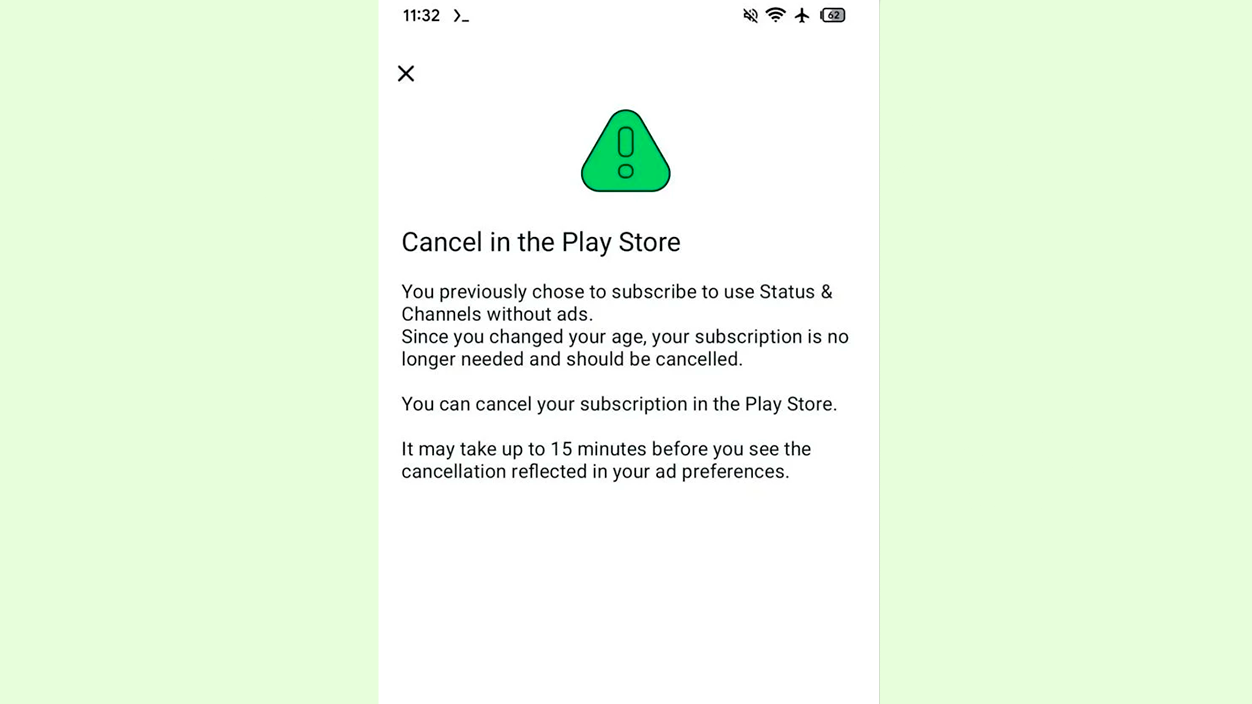
Another relevant detail is payment management: according to the leaked screenshots, the subscription would be managed directly from Google Play on Android devicesThis would allow users to activate, pause, or cancel the service just like any other digital subscription. In the case of iOS, it would make sense for control to reside in the App Store, although no specific screens have been leaked yet.
European regulation: why the payment plan focuses on the EU and the UK
The decision to limit this subscription model primarily to Europe and the United Kingdom is not accidental. The EU regulatory framework, with laws such as the General Data Protection Regulation (GDPR) and the Digital Markets Act (DMA), It requires offering clear alternatives to tracking and personalized advertisingIn other words: it's not enough to force users to accept ads if they want to continue using a service.
In this context, Meta's proposal involves posing a transparent dilemma: accept an environment with advertising In certain sections of the app, users can opt out of ads or pay a monthly subscription to remove them and reduce the processing of their data for commercial purposes. This approach is already being implemented in other company products within the EU, and WhatsApp would be the next to join.
For regulators, this type of approach has nuances: on the one hand, it offers a real option for those who do not want advertising; on the other, there is the debate about whether the price is reasonable enough to be considered a "genuine alternative" and not a covert way of pressuring the user to accept ads. The possible cost is close to 4 euros This will be one of the points that European authorities will likely scrutinize closely.
Furthermore, WhatsApp's very nature adds complexity. It is a basic communication tool for millions of Europeans, meaning that any change to its business model has a greater social impact than that of a typical social network. The European Commission has already demonstrated that it does not hesitate to intervene when it perceives that a dominant platform may be abusing its position.
For now, everything seen about this subscription comes from a preliminary version of the app. There is no official announcement There is no definitive timetable or details for Spain or the rest of the EU, so it is possible that the plan's design may change, the price may be modified, or it may even be delayed if Meta encounters regulatory obstacles.
What remains free: chats, groups, and calls
Amidst all the new features and references to payments, it's important to clarify what remains unchanged. WhatsApp will continue to be a messaging application. free in its basic useSending messages, creating groups, making calls or video calls, and sharing files will continue at no cost to the user.
Meta has reiterated that There are no plans to introduce ads within the chats.Whether individual or group chats, this is a line the company, at least for now, doesn't want to cross, aware that it would be a very delicate move and probably poorly received by users, especially in markets like Spain, where WhatsApp is almost synonymous with messaging.
The promise not to use the content of end-to-end encrypted messages to personalize advertising. Targeting will be based on more general signals (approximate location, language settings, followed channels, etc.), allowing Meta to activate monetization without accessing the private content of conversations.
For the average user who uses WhatsApp primarily to talk to family, friends, or coworkers, the impact of these changes will be limited. If you barely access the States tab (or don't know how) Add stories to WhatsApp Web) or does not follow CanalesYou will probably notice little or no presence of ads and therefore see no point in subscribing.
The situation will be more challenging for those who heavily use Status and Channels as a source of information, entertainment, or communication with brands and creators. It's for this demographic that the choice between enduring ads and paying to remove them may be more delicate.
A déjà vu: from the annual fee to paying for privacy
For those who have been using the app for a while, this whole movement has a certain sense of déjà vu. In its beginnings, WhatsApp used to charge an annual subscription of around €0,89 on Androidand even tried to implement something similar on iOS. That strategy ended up being confusing, with free periods that dragged on and renewals that were almost never applied.
The situation changed when Facebook bought the app. In 2016, The payment was eliminated and WhatsApp became completely free, with the promise of maintaining a service without ads in chats and financed, above all, through complementary business lines such as WhatsApp Business.
However, time has shown that maintaining the infrastructure of the world's most widely used messaging service is not cheap. Although business services generate revenue, various analyses indicated that Meta had not even come close to recouping the multimillion-dollar investment of the purchase. Advertising, sooner or later, was seen as an almost inevitable step.
The difference compared to the annual fee stage is significant. Back then, you paid for the privilege of using the service; now, the emerging model is a payment system focused on... avoid ads and gain more control over the experienceInstead of charging for sending messages, you charge for reducing advertising exposure in the more "social" sections of the app.
This change in approach also partly explains the departure of WhatsApp's original founders, who were always highly critical of advertising and Facebook's pressure to monetize at all costs. The current version of the app, now fully integrated into Meta, adopts a more pragmatic approach: it will either become another advertising platform within the group or evolve into a hybrid model with premium options.
WhatsApp on the global social media stage
What WhatsApp is doing aligns with a general trend in the digital sector. Many platforms have opted for a Dual model: free use with ads and a paid version without adsWe see it in video services, music, social networks, and even in some media outlets.
In this context, Meta's messaging app ceases to be the exception and becomes just another piece of the same puzzle. On the one hand, it remains a free mass communication tool; on the other, Its potential as an advertising showcase is being exploited. in those sections where the user is more predisposed to consume content.
The introduction of subscriptions linked to paid channels also fits into this logic. Media managers, creators, and companies will be able to offer exclusive content in exchange for a fee, of which WhatsApp would keep a portion, and tools for Create a WhatsApp business link This would facilitate promotion. It's a model reminiscent of what already happens in other services, from paid newsletters to closed communities on social media.
All of this comes as Meta tries to diversify its ecosystem's revenue streams. Facebook and Instagram rely heavily on advertising, and the company is looking to new, more stable monetization methodsless exposed to changes in privacy regulations or app store policies. Recurring subscriptions are one such avenue.
For European users, the key will be to determine whether the balance between advertising, subscription price, and respect for privacy is reasonable. Recent history shows that Community authorities will not hesitate to intervene if they believe that the conditions offered by Meta do not comply with the legislation or leave the user without a realistic alternative.
However, WhatsApp is entering a new phase where monetization is no longer taboo, but rather another element of its roadmap. Ads in Status and Channels, along with a possible paid plan to remove them in Europe, paint a picture where each user will have to decide whether it's worth continuing with the free, ad-supported version or opting for a cleaner experience in exchange for a monthly fee.

I am a technology enthusiast who has turned his "geek" interests into a profession. I have spent more than 10 years of my life using cutting-edge technology and tinkering with all kinds of programs out of pure curiosity. Now I have specialized in computer technology and video games. This is because for more than 5 years I have been writing for various websites on technology and video games, creating articles that seek to give you the information you need in a language that is understandable to everyone.
If you have any questions, my knowledge ranges from everything related to the Windows operating system as well as Android for mobile phones. And my commitment is to you, I am always willing to spend a few minutes and help you resolve any questions you may have in this internet world.